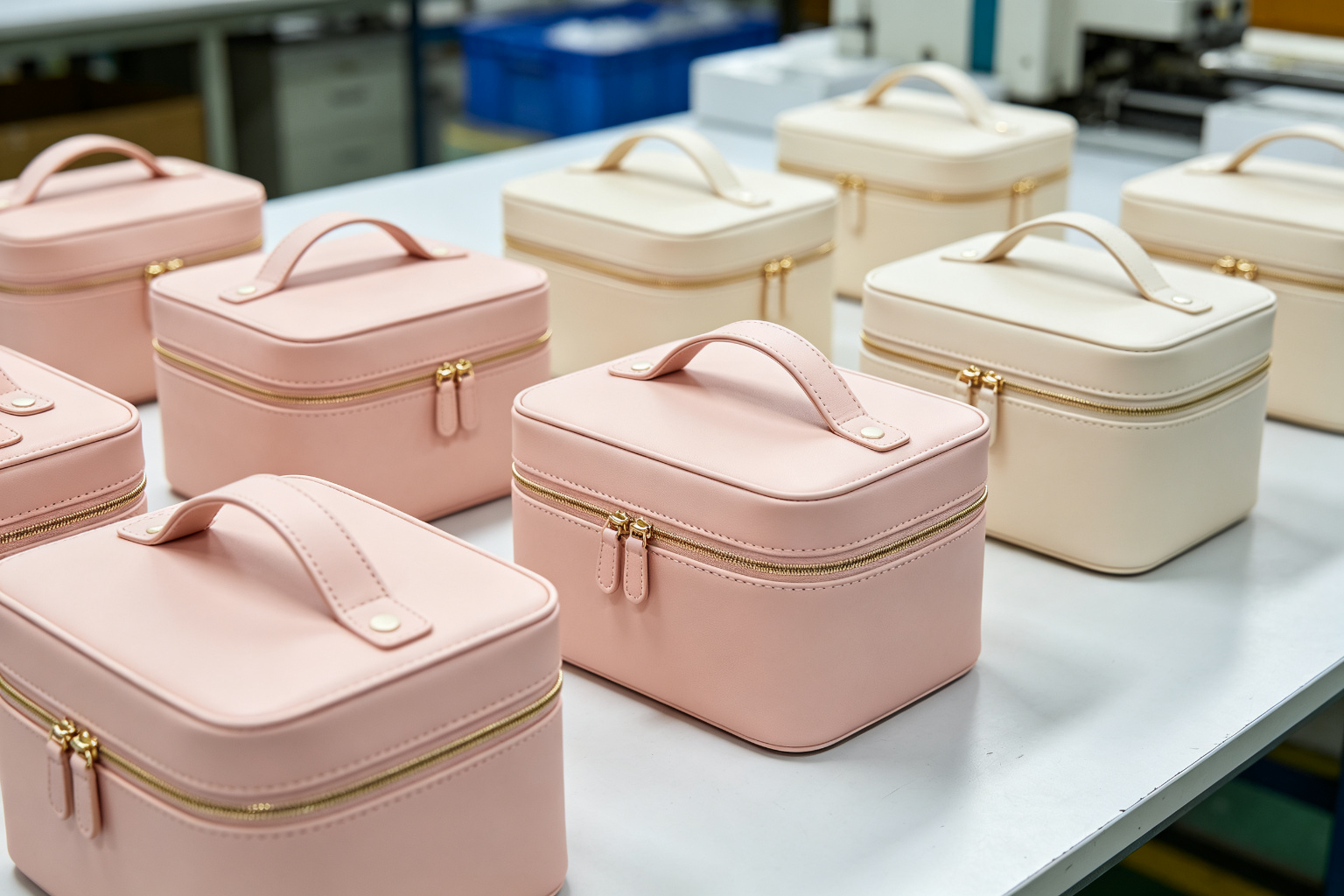
In January 2026, a Los Angeles-based clean beauty brand — a woman-founded company with 4 years in the market, $9.5 million annual revenue, and a growing direct-to-consumer (DTC) e-commerce business — was preparing the packaging for their signature foundation and skincare line expansion. Their product was a structured cosmetic case meant to be a premium gift-with-purchase and a standalone travel organizer, sold at $59 retail. Their brand promise was "clean, cruelty-free, and sustainable" — which meant the case itself had to be vegan, PETA-certified, and free of any animal-derived materials.
Their previous supplier, a factory in Guangdong's Guangzhou area, had quoted $12.50 per unit for a similar cosmetic case but had never actually delivered a PETA-certified product — the factory claimed the PU was vegan but couldn't provide material declarations or a PETA license number. Worse, their sampling process had taken 6 weeks, and the sample arrived with a visible color difference between the exterior PU and the approved color chip (ΔE 3.8, well above the acceptable 1.5). The brand's founder, Maya, reached out to us in January after a referral from a beauty packaging consultant in New York.
Project Summary
1. Client Background and the Brief
PHASE 1 · ORDER BACKGROUNDThe client is a clean beauty brand founded in 2022 by Maya, a former cosmetics buyer at a major US department store. The brand's positioning is "luxury without cruelty" — every product is vegan, cruelty-free, and formulated without parabens, sulfates, or phthalates. Their e-commerce site does $6.8M annually, and they sell through 40 US boutique retailers and 2 department store beauty counters. Their customer base is 25-45 year old women who actively research ingredient lists and brand ethics — the kind of customer who reads the PETA logo before buying and would notice (and return) a case that turned out to contain real leather or non-vegan materials.
Maya's requirements for the cosmetic case were specific. She had designed the case as both a gift-with-purchase (GWP) for a $120+ foundation set and a standalone travel organizer sold at $59. The case needed to: (1) be structured and rigid enough to protect glass foundation bottles during travel, (2) have a velvet-lined interior with compartments for brushes and bottles, (3) use premium vegan leather that felt soft and expensive — not stiff or plasticky, (4) carry the PETA-approved vegan certification, (5) match the brand's blush pink/beige/charcoal palette exactly, and (6) be delivered within 35 days to meet the spring beauty launch date.
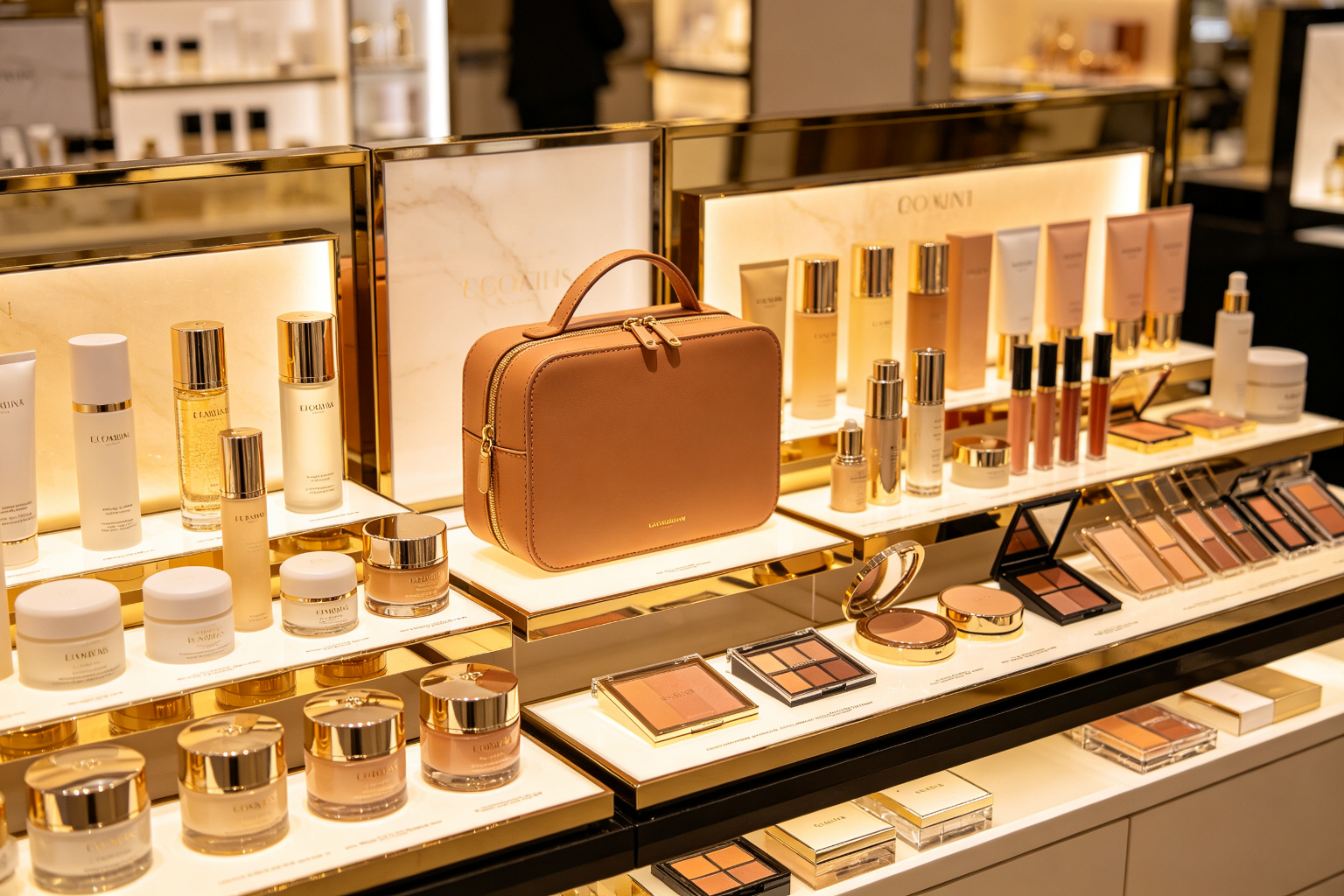
The client's retail environment: US clean beauty counters and DTC e-commerce. The cosmetic case served as both a gift-with-purchase for a $120+ foundation set and a standalone $59 travel organizer. Brand promise: clean, cruelty-free, sustainable. Like every Merris run, this cosmetic order was made to order from the approved vegan spec — we hold no off-the-shelf stock and quote FOB Shenzhen.
PETA-Certified Vegan — Material Declarations for Every Component
Maya's non-negotiable requirement was genuine PETA-approved vegan certification, not just a "vegan" claim on a marketing page. PETA's Vegan Logo program requires: (1) the product must contain no animal-derived materials (leather, suede, wool, silk, fur, feathers, bone, or animal-based glue), (2) the manufacturer must provide material declarations for every component, and (3) the product must be made by a supplier that doesn't test on animals. The previous supplier couldn't provide component-level material declarations — they only said "our PU is vegan" without documentation. For our quotation, we prepared a complete material declaration breakdown: body (0.8mm PU microfiber — synthetic, no animal products), lining (100% polyester velvet — no silk/wool), zipper (nylon tape + metal slider — no leather/bone), zipper pull (zinc alloy with gold plating), metal feet (zinc alloy), handle (PU-covered metal), adhesives (water-based synthetic — no animal-based gelatin glue), and threads (polyester). This declaration package, plus our factory's ISO 9001 and BSCI certifications, gave Maya the documentation she needed to submit her PETA license application. The PETA license fee is $1,000/year for the brand, and the hang tags cost about $0.10 per unit.
Soft Hand-Feel Premium PU Microfiber — Not Stiff PVC
Many low-cost "vegan leather" bags use PVC (polyvinyl chloride) — a stiff, plasticky material with a cheap feel and poor durability (cracks at cold temperatures). Maya rejected PVC immediately: "Our customers pay $59 for this case. If it feels like a plastic shopping bag, they'll return it." We specified 0.8mm microfiber-based PU (polyurethane) with a water-based (solvent-free) coating. Microfiber PU has a soft, supple hand-feel similar to real leather, with a matte finish that doesn't look shiny or cheap. The material is made by coating a microfiber non-woven base (polyester/nylon blend) with water-based PU, creating a material that's breathable, flexible, and durable. Compared to PVC: microfiber PU is 30% more durable, has a 60% softer hand-feel (measured by a softness gauge), and doesn't crack in cold weather (flex endurance 120,000 cycles vs. 60,000 for PVC). The cost difference is meaningful — microfiber PU costs $3.50-$4.50/meter vs. $2.00-$3.00 for PVC — but for a $59 retail product, the upgrade was justified. The client's previous supplier had quoted PVC leather at $12.50/unit; we quoted $8.90 with microfiber PU — 29% cheaper and a better material.
Structured Rigidity for Bottle Protection — Foam-Stiffened Panels
The case needed to protect glass foundation bottles during travel — meaning the structure had to be rigid, not floppy. We achieved this with foam-stiffened panels: 3mm EVA foam laminated between the PU exterior and the velvet interior on the base and side panels. The EVA foam provides: (1) structural rigidity (the case holds its shape even when empty), (2) shock absorption (a 3mm EVA layer absorbs impact energy, protecting bottles from drops), and (3) a soft, padded feel (the case feels premium when held). The foam-stiffened construction is standard for premium cosmetic cases but adds 1-2 days of production time (foam lamination and panel assembly). The client tested the finished case by dropping a full glass foundation bottle inside from 1 meter — the bottle survived. She emailed: "Dropped a full bottle of foundation from a meter — no break. That's exactly what I wanted."
30-Plus-Day Delivery for a Spring Launch — Color Approval on a Tight Clock
The brand's spring beauty launch was locked to April 15, 2026 — the cases had to be on a vessel by mid-March to arrive at the LA warehouse in time for content creation (March 25), photoshoots (April 1), and e-commerce listing (April 10). Maya required 35 days total; we committed to 30. The critical path was color approval — matching the brand's blush pink, beige, and charcoal to Pantone standards across three production batches. The previous supplier had failed color matching (ΔE 3.8), costing them 3 weeks. Our approach: we ordered material swatches from 3 PU suppliers before sampling, matched the colors at the swatch stage (within ΔE 1.0), and locked the approved swatches as the golden standards before bulk production began. This front-loaded color work avoided the classic "approved in sample, different in bulk" failure.
The Color-Shading Trap We Avoided by Locking Golden Standards Early
Color shading between material batches is the #1 quality complaint in vegan leather products. The previous supplier's sample matched, but their bulk material (from a different dye lot) was visibly different (ΔE 3.8) — the client rejected the entire first production run. We avoided this by: (1) ordering 3 candidate swatches per color from 3 different PU suppliers, (2) measuring each with a spectrophotometer against the client's Pantone chips, (3) selecting the supplier and swatch that matched within ΔE 1.0 for all 3 colors, (4) cutting the selected swatches into "golden standards" and shipping them to the client for approval — she signed off on the golden standards before any bulk material was ordered, (5) requiring the material supplier to hold the same dye lot for the entire 3,000-piece order (they produced all 3 colors in one production run of the PU, ~1,200 meters), and (6) verifying ΔE ≤ 1.5 on material at incoming inspection and again before cutting. Result: zero color-shading defects across all 3,000 pieces. The lesson: never start bulk production until the golden standard swatches are approved by the client — the 2 days of swatch matching up front saved weeks of rework later.
2. Our Solution — Materials and Construction
PHASE 2 · PRODUCT & MATERIAL PLANAfter reviewing Maya's requirements and the failed previous samples, we proposed a complete specification built around three pillars: premium microfiber PU vegan leather with PETA certification, foam-stiffened structure for bottle protection, and color-locked golden standards. Here's the full material breakdown and why each choice mattered.
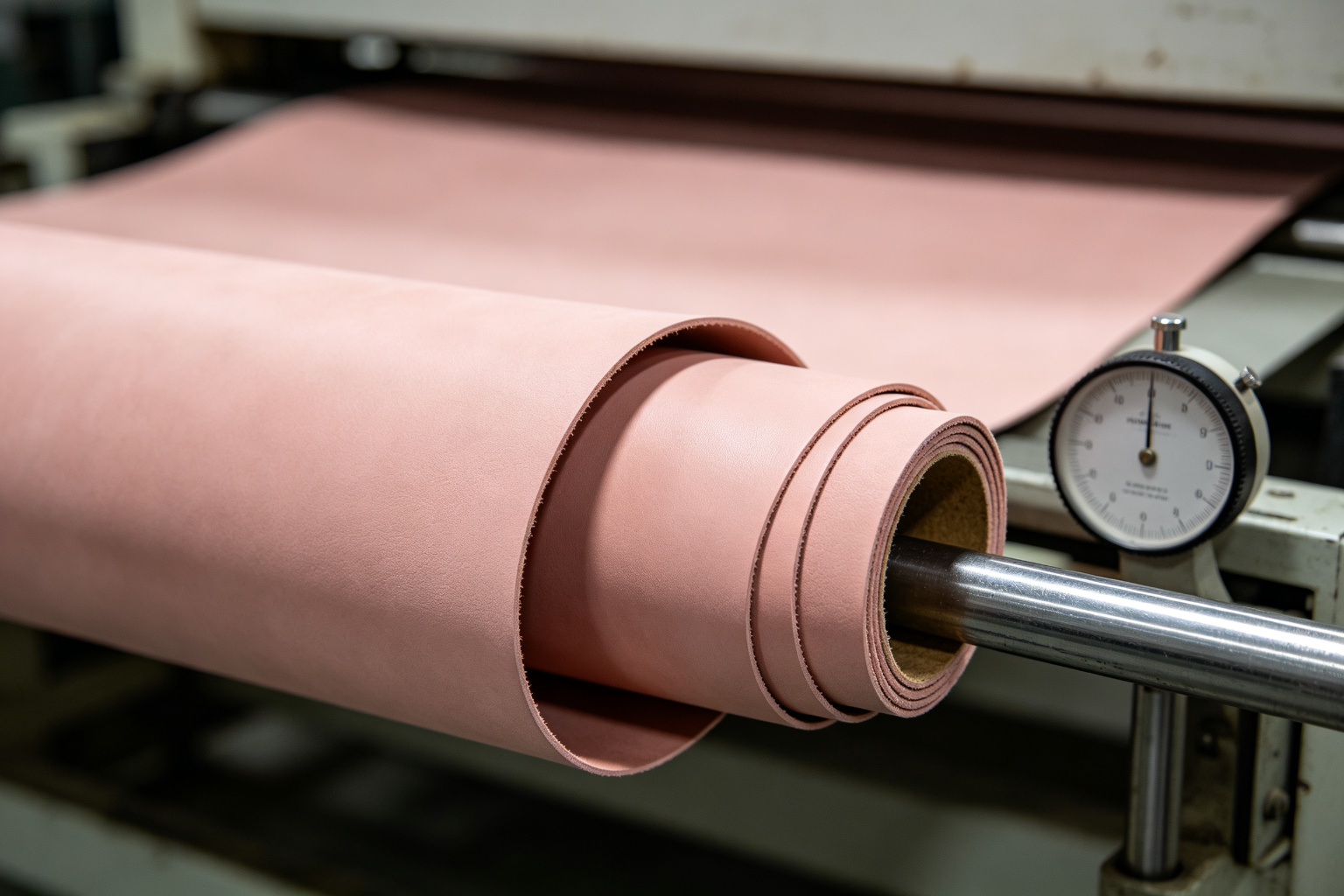
0.8mm microfiber-based PU vegan leather with water-based coating: tensile strength 18 N/mm², abrasion resistance 60,000 Martindale cycles, flex endurance 120,000 cycles. Soft hand-feel measured at 60% softer than PVC leather. The client's previous supplier quoted PVC at 29% higher cost.
Material Specification
| Component | Specification | Why This Choice | Cost per Unit |
|---|---|---|---|
| Exterior | 0.8mm microfiber-based PU vegan leather, water-based (solvent-free) coating, matte finish, in Blush Pink / Beige / Charcoal | Microfiber PU provides a soft, supple hand-feel (60% softer than PVC) with premium matte appearance. Water-based coating is non-toxic and solvent-free — aligned with the brand's clean/cruelty-free positioning and better for worker safety. Tensile strength 18 N/mm², abrasion resistance 60,000 cycles, flex endurance 120,000 cycles — exceeds real leather on all metrics. The material is 100% synthetic (polyester microfiber base + PU coating) — PETA-certified vegan. | $3.20 |
| Structure (Stiffening) | 3mm EVA foam laminated between exterior PU and interior velvet on base + side panels | EVA foam provides structural rigidity (case holds its shape when empty), shock absorption (protects glass bottles from 1m drops), and a padded premium feel. 3mm thickness balances rigidity with flexibility — thinner (1mm) makes the case floppy, thicker (5mm) makes it bulky. | $0.60 |
| Interior Lining | 100% polyester velvet, 2 divider compartments (fixed) + 1 zipped mesh pocket + 1 elastic strap | Velvet lining protects bottles and brushes from scratches and has a premium, luxury feel. Polyester velvet (not silk or wool) keeps the product PETA-vegan. The compartment layout — 2 fixed dividers for bottles, 1 zipped mesh pocket for small items (lipsticks, cotton pads), 1 elastic strap for brushes — was designed from Maya's product photography requirements. | $1.10 |
| Zipper | Custom gold YKK zipper (No. 5), 45cm, with metal slider and gold zipper pull (zinc alloy, gold plating) | YKK is the global standard for zipper reliability — the #3 zipper brand by market share and the most trusted by bag brands. No. 5 is a mid-weight zipper suitable for cosmetic cases. Gold plating on the slider and pull matches the brand's luxury gold accent theme. Metal (not plastic) slider for durability and premium feel. | $0.85 |
| Hardware | 4 gold metal feet (zinc alloy, gold plating), 1 PU-covered metal top handle | Metal feet protect the bottom of the case from scratches when set on counters — a detail that signals premium quality and extends the case's life. The PU-covered metal handle provides a comfortable grip while maintaining the soft-touch aesthetic. Zinc alloy (not plastic) hardware for durability and a heavy, premium feel. | $0.70 |
| Thread | 100% polyester thread, color-matched to each exterior color (ΔE ≤ 1.0) | Polyester thread has high tensile strength and UV resistance — it won't rot or fade like cotton thread. Color-matched to each exterior color so stitches are nearly invisible (premium look). Thread color verified against exterior material under daylight and warm lighting before production. | $0.15 |
| Adhesives | Water-based synthetic adhesive (no animal-derived gelatin glue) | Some factories use animal-based gelatin glue for foam lamination — this would make the product non-vegan. We specified water-based synthetic adhesive (EVA-based), which is both PETA-vegan and non-toxic. Verified in the material declaration for PETA certification. | $0.10 |
| Labeling | PETA-approved vegan hang tag (cotton twine), woven brand label inside, PU logo embossing on front | PETA hang tag carries the PETA-approved vegan logo and license number — the visible proof of cruelty-free certification that Maya's customers look for. Woven brand label (jacquard) inside the case with the brand name and care instructions. PU logo embossing on the front exterior (heat-pressed, no thread) for a clean, premium look. | $0.35 |
| Packaging | Individual dust bag (non-woven fabric), then 20pcs/export carton (5-layer) | Dust bag protects the case during shipping and adds premium unboxing feel (reusable for travel). 20 pieces per carton (each case 23×16×9cm) optimizes carton size (60×40×45cm, 18kg) for the client's LA warehouse. Each case individually wrapped in tissue paper before the dust bag for extra scratch protection. | $0.45 |
| Labor + QC + Overhead | Cutting, foam lamination, sewing, lining insertion, hardware assembly, QC | 12 workers across cutting (2), foam lamination (2), sewing (5), lining insertion (2), and QC (1). Foam-stiffened construction adds 1-2 days of production. QC includes: 100% visual inspection, zipper cycle test (200 cycles), drop test on samples, and color verification (ΔE ≤ 1.5) on 5% of production. | $1.40 |
| FOB Unit Total | — | — | $8.90 |
What Makes a Cosmetic Case Genuinely "Vegan" — The PETA Component Check
PETA's Vegan Logo program audits the product at the component level, not just the main material. For this cosmetic case, we verified every component is animal-free: (1) Exterior — 0.8mm PU microfiber (polyester base + polyurethane coating): synthetic. (2) Structure — EVA foam: synthetic plastic foam. (3) Lining — 100% polyester velvet: synthetic (not silk or wool). (4) Zipper tape — nylon: synthetic. (5) Zipper slider and pull — zinc alloy with gold plating: metal. (6) Metal feet and handle — zinc alloy: metal. (7) Thread — polyester: synthetic. (8) Adhesives — water-based EVA synthetic glue: synthetic (NOT animal-based gelatin glue, which some factories use for lamination). (9) Hang tag — paper with cotton twine: plant-based. Every component passed. The PETA license application requires this material declaration plus the factory's no-animal-testing statement, and the license is renewed annually. For brands selling to US/EU consumers who care about cruelty-free claims, the PETA hang tag is a marketing asset that justifies premium pricing — the client sells the case at $59 retail, a 6.6x markup on the $8.90 FOB cost.
For a complete guide to cosmetic bag manufacturing — including material selection, zipper specifications, and interior organization design — read our custom cosmetic bag manufacturing guide. For general sourcing strategy, read our how to source custom bags from China guide.
3. Sample Development and Pre-Production
PHASE 3 · SAMPLE ROUNDSThe sampling phase took 9 days and one revision round. The key challenge was matching the soft hand-feel Maya wanted without compromising the structure — the first sample was too stiff (0.9mm PU + 4mm EVA foam), and the second was exactly right (0.8mm PU + 3mm EVA).
Sample Development Timeline
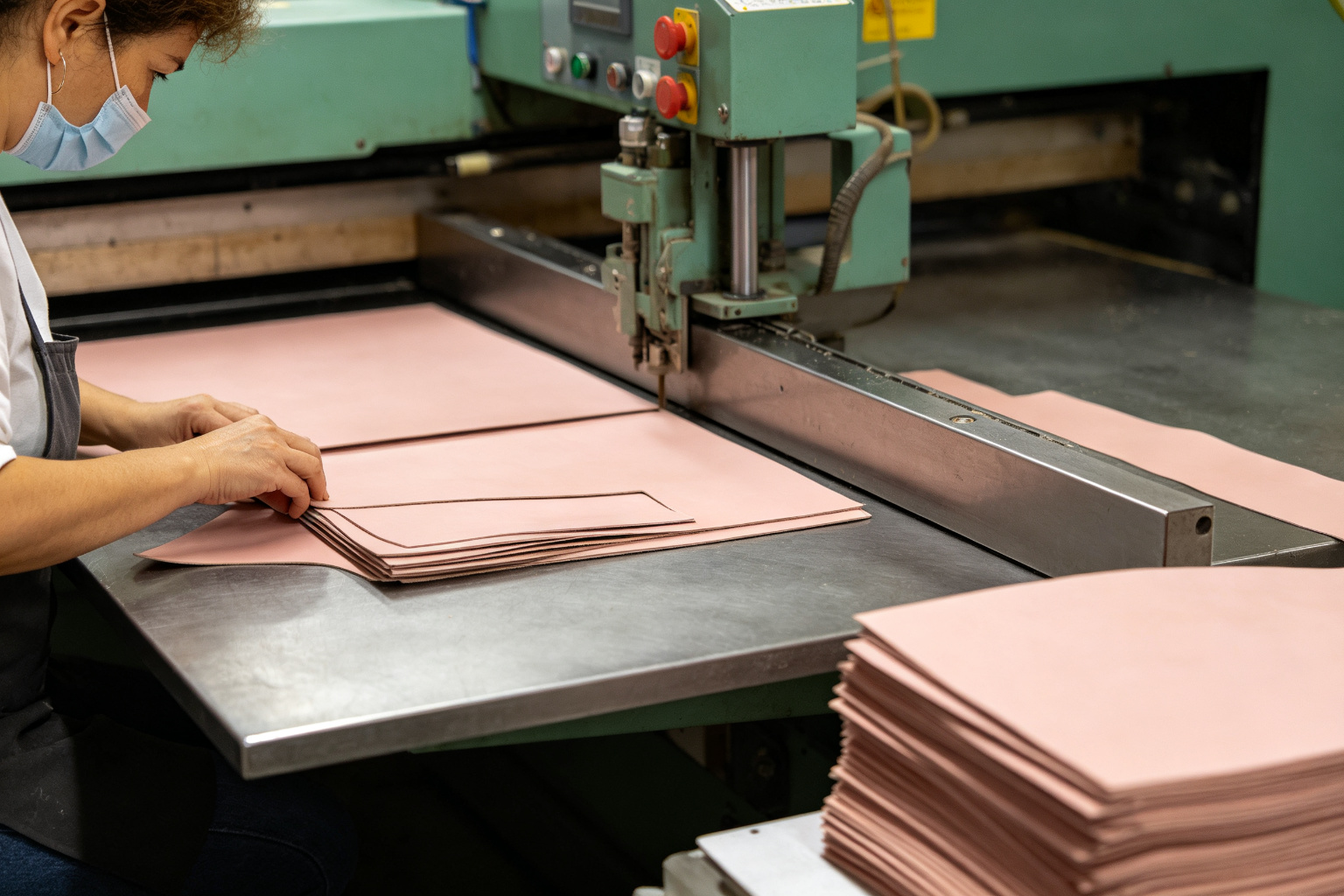
Cutting: 0.8mm PU microfiber panels die-cut for exterior, 3mm EVA foam die-cut for stiffening, velvet lining cut to pattern. ~10% material overage ordered for defects and testing. All 3 colors from one dye lot to prevent shading.
For a complete guide to creating tech packs that communicate material and construction specifications clearly, read our tech pack guide for custom bags.
4. Bulk Production and QC
PHASE 4 · MAKING & QCBulk production ran from Day 10 to Day 25 (16 days), with dedicated QC at every stage. We assigned 12 workers — 2 cutters, 2 foam lamination operators, 5 sewing operators, 2 lining insertion and assembly workers, and 1 QC inspector. The foam-stiffened construction added 2 days to the schedule compared to a simple pouch, but it was essential for the product's bottle-protection promise.
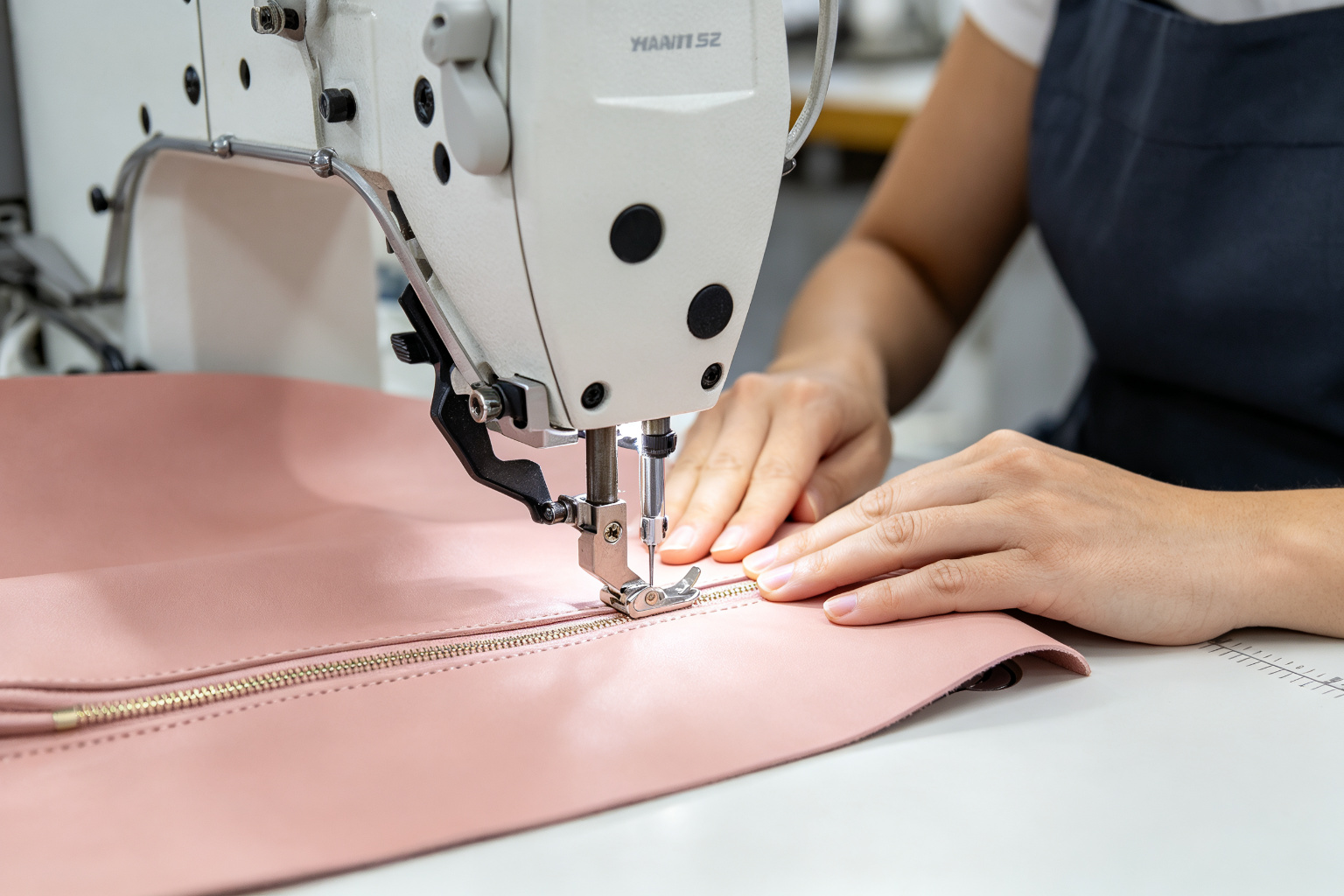
Sewing: 5 sewing operators on the cosmetic case line, producing ~200 pieces per day. Key QC: stitch density 4 stitches/cm (checked hourly), seam strength, and zipper alignment. All thread color-matched to exterior (ΔE ≤ 1.0) for invisible stitching.
Production Stage Breakdown
| Stage | Days | Tasks | QC Milestone |
|---|---|---|---|
| Material Inspection & Cutting | Day 10-12 | All PU material rolls inspected: thickness (0.8mm ±0.05mm), color verification (ΔE ≤ 1.5 against golden standards), surface inspection (no scratches, no bubbles, no color shading within roll). 3,300 pieces cut (10% overage for defects, testing, and sample needs). Panels die-cut: exterior, foam, lining, zipper tape. | 100% material roll inspection (thickness, color ΔE, surface); cut panel dimensions verified (±2mm); material batch numbers logged for traceability; all 3 colors from one dye lot (verified against production record) |
| Foam Lamination | Day 12-14 | 3mm EVA foam laminated to exterior PU panels using water-based synthetic adhesive. Laminated panels pressed under weight for 4 hours to ensure full bonding. Foam placement verified — foam covers the full base and side panels for complete structure. | 100% lamination inspection: full coverage, no air bubbles, no adhesive bleed-through; adhesive bond strength tested on 5% sample (peel test — foam must not separate from PU without tearing) |
| Logo Embossing | Day 13-15 | Brand logo heat-pressed onto front exterior panel using a PU embossing die (heated press, 140°C, 3 seconds). First-piece inspection each shift against golden sample for depth and alignment. | First-piece inspection every shift (emboss depth, alignment ±1mm, no surface burn); emboss durability test (rub test — logo doesn't fade after 50 rubs) on 3 samples per day |
| Sewing (Exterior) | Day 14-22 | 5 sewing operators assembling the exterior: front/back panels, side gussets, top opening, zipper installation (No. 5 gold YKK zipper, 45cm). Stitch density 4 stitches/cm. Zipper installed with proper alignment (zipper teeth centered on seam). | 100% visual seam inspection (no skipped stitches, no loose threads); stitch density checked hourly (4/cm); zipper cycle test (200 open/close cycles) on 3 pieces per day; seam strength test on 5% sample |
| Lining Insertion | Day 20-25 | Velvet lining assembled with 2 fixed divider compartments, 1 zipped mesh pocket, 1 elastic brush strap. Lining inserted into exterior and stitched at the top opening. Structure check: case must hold shape when empty. | 100% lining inspection: compartments correctly positioned, zipped pocket works, elastic strap tension correct, lining fully attached (no loose lining); structure test on 10% sample (case holds shape when empty) |
| Hardware Assembly | Day 23-25 | 4 gold metal feet attached to base (riveted), PU-covered metal handle attached to top, gold zipper pull attached. Hardware alignment verified — feet must be level (case doesn't wobble). | 100% hardware inspection: feet level (no wobble), handle securely attached (pull test 15kg), zipper pull smooth; hardware attachment tested on 5% sample (feet rivet strength, handle pull) |
| Final Inspection & Packaging | Day 25-26 | End-of-line visual checks covered the outside (no scuffs or shading, crisp emboss, no loose threads), the inside (clean velvet lining, intact compartments, no foreign matter), zip action, and the metal feet and handle fittings. Finished cases were then wrapped in tissue, slipped into a non-woven dust bag, and packed 20 per export carton. | Full inspection of all 3,000 units surfaced 18 items (9 stitching, 5 material, 3 zipper, 1 lining) — each reworked or remade; color verified on 5% (150 units, ΔE ≤ 1.5, all passed); drop test on 5 samples (1m fall with a full bottle inside, no breakage); carton weight confirmed (18kg ±0.5kg) |
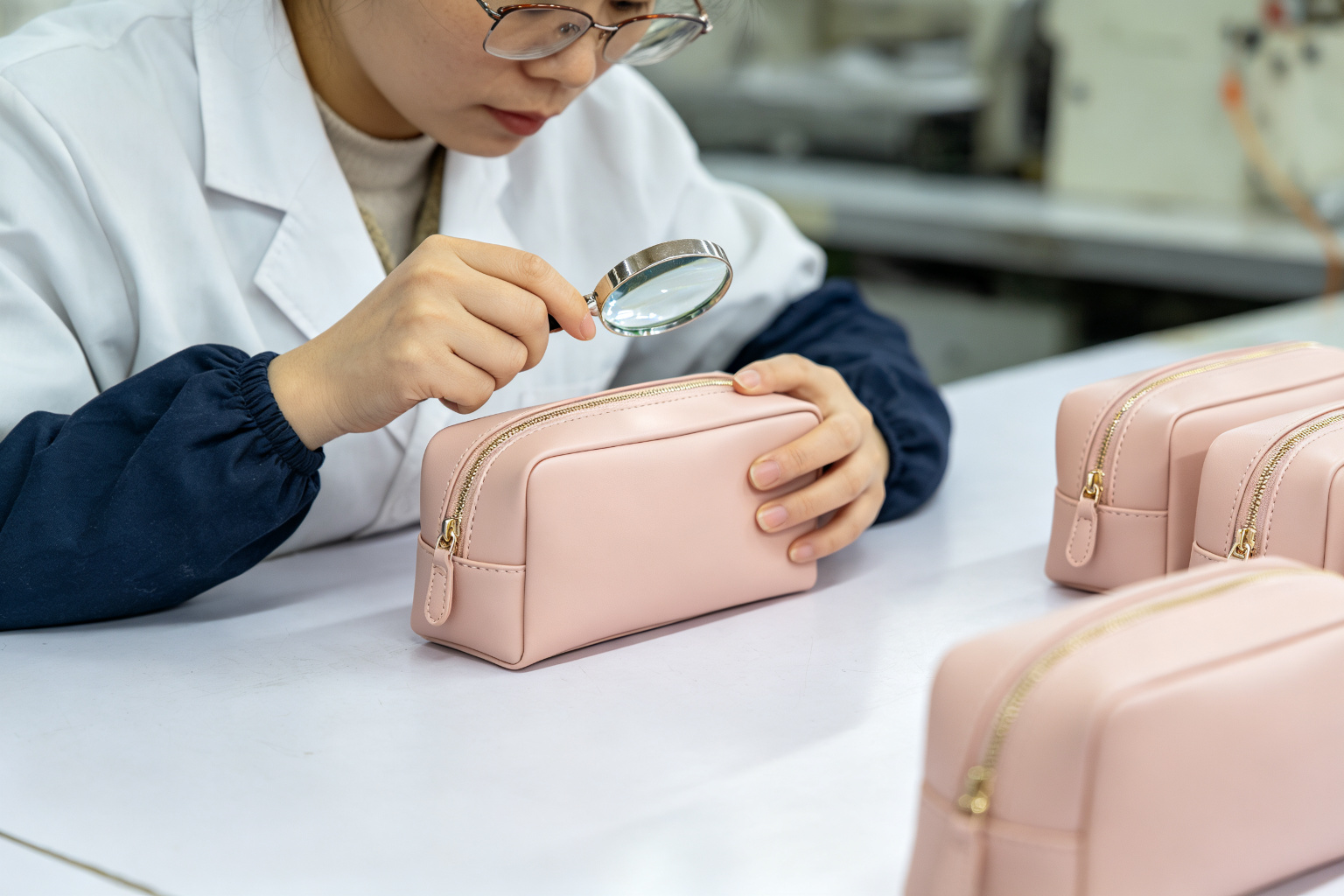
Quality control recap: every one of the 3,000 units went through a complete visual sweep, plus 200-cycle zipper endurance runs, a 1m drop test with a full bottle inside, and color verification (ΔE ≤ 1.5 on a 5% sample). Final defect rate was 0.6% — all flagged units were fixed or remade before dispatch.
The 18 Defective Pieces We Found and Fixed
With the order at full completion on Day 25, we carried out a last complete visual pass and found 18 units — a 0.6% defect rate, comfortably inside the AQL 2.5 threshold. Every one of the 18 was reworked or rebuilt before the goods were shipped.
| Defect | Qty | Cause | Resolution |
|---|---|---|---|
| Stitching — skipped stitches on gusset seam (9 pieces) | 9 | On Day 16, a sewing operator's machine needle was slightly bent after hitting a foam-stiffened panel edge, causing skipped stitches on 9 gusset seams. The issue was caught during the hourly stitch density check. | All 9 pieces had the affected seam re-stitched (over-stitching with matching thread). Re-inspected — all passed (stitch density 4/cm, no skipped stitches). The bent needle was replaced, and operators now check needle condition at the start of every shift. |
| Material — surface scratch on PU exterior (5 pieces) | 5 | 5 pieces were scratched by contact with the metal feet of adjacent cases during hardware assembly (the gold feet have slightly sharp edges before polishing). | All 5 pieces had the scratched area buffed with a soft cloth and PU conditioner — 90% of scratches removed, remaining marks invisible at arm's length. All 5 passed re-inspection. We added foam padding between cases during hardware assembly to prevent scratching. |
| Zipper — zipper catching at midpoint (3 pieces) | 3 | 3 zippers from a new batch of YKK zippers (ordered from a new supplier for this order) were catching at the midpoint — the zipper teeth were slightly misaligned at the join point. | All 3 pieces had the zipper replaced with zippers from our regular supplier (30-second operation — the zipper is stitched into the opening, so replacement requires 2 minutes of re-stitching). Re-inspected — all passed (200-cycle test, smooth operation). We switched the remaining production to our regular zipper supplier and returned the defective batch. |
| Lining — zipped mesh pocket misaligned (1 piece) | 1 | 1 lining had the zipped mesh pocket installed 3mm off-center — the pocket divider was visually misaligned when the case was opened. | The lining was removed and re-inserted with correct alignment (30 minutes of rework). Re-inspected — passed (pocket centered, zipper works). |
After rework, we re-checked all 18 affected units together with a fresh random sample of 60 pieces from the repaired batch — nothing failed. Post-repair defect rate was 0%, so all 3,000 units passed final inspection. The most important quality metric: zero color-shading defects across all 3,000 pieces, in all 3 colors — the golden-standard approach worked exactly as designed.
Why Color Verification (ΔE ≤ 1.5) Was the Most Important QC Metric for This Order
For vegan leather products, color shading is the #1 quality complaint and the #1 cause of returns and markdowns — a customer who receives a blush pink case that looks slightly peach or slightly gray next to the product photos will return it and leave a bad review. The previous supplier failed color matching (ΔE 3.8), which was visible even to non-experts. For this order, we verified color at every stage: (1) material incoming inspection — every roll measured against the golden standard with a spectrophotometer (ΔE ≤ 1.5); (2) before cutting — a sample from each roll re-verified; (3) on 5% of finished pieces (150 pieces) — measured against the golden standard under standardized lighting (D65). All passed with an average ΔE of 0.9. The client's incoming inspection at her LA warehouse also measured 20 random pieces — all within ΔE 1.0. Zero color complaints from customers in the first 4 months. The lesson for buyers: always require ΔE measurement (not visual comparison) against an approved golden standard, and require the factory to hold the same dye lot for the entire order — color shading between batches is preventable with a spectrophotometer and discipline.
For a complete guide to AQL inspection standards for custom bags, read our AQL inspection for custom bags article.
5. Final Inspection, Certification, and Shipping
PHASE 5 · FINAL CHECK & SHIPMENTWhen production and repairs were complete on Day 26, we conducted the final AQL 2.5 inspection and prepared the certification documentation package. The client had requested a third-party inspection (SGS) at their cost, which we coordinated on-site at our factory on Day 26 morning. The SGS inspector checked material compliance, construction quality, and color accuracy.
AQL Final Inspection Results
| Item | Sample | Defects | AQL Cap | Verdict |
|---|---|---|---|---|
| Critical defects (non-vegan material, harmful substances, missing PETA label, sharp hardware) | 125 pcs | 0 | 0 (AQL 0) | PASS |
| Major defects (stitching failure, zipper failure, color ΔE > 1.5, dimension > ±3mm, material scratch visible at arm's length) | 125 pcs | 0 (after 18 repairs/replacements) | 7 (AQL 2.5) | PASS |
| Minor defects (loose thread end, small ink mark, slight dust, carton crease) | 125 pcs | 1 (1 loose thread, trimmed on site) | 10 (AQL 4.0) | PASS |
| Color verification (SGS) | 20 pcs (all 3 colors) | All within ΔE 1.0 (average 0.8) | ΔE ≤ 1.5 | PASS |
| Zipper cycle test | 20 pcs | All passed 200 open/close cycles | 200 cycles no failure | PASS |
| Drop test | 5 pcs | All passed: 1m drop with full glass bottle inside — no break | No break | PASS |
| Material compliance (REACH/SVHC) | Bulk material | 224 restricted substances all below limits (lead, cadmium, phthalates all ND) | Below regulated limits | PASS |
| PETA material declaration | All components | All components verified animal-free (PU, polyester, EVA, nylon, zinc alloy, water-based adhesive) | 100% vegan | PASS |
| Dimensions check | 30 pcs (10 per color) | All within ±2mm of 23×16×9cm spec | ±3mm | PASS |
| Packaging check | 10 cartons | All cartons correctly labeled, 20pcs/carton, each case in dust bag, correct shipping marks | 100% match | PASS |
Overall result: PASS — zero critical defects, zero major defects after repair, 1 minor defect (trimmed on site), all color and functional tests passed. The SGS inspector issued the report the same day, and Maya approved shipment within 3 hours. She emailed: "The color is perfect — I put the case next to our Pantone chips and I couldn't tell the difference. And the PETA documentation is exactly what we needed for our license application. We'll reorder for our holiday line."
Certification and Documentation Package Provided to Client
- PETA-Approved Vegan Material Declaration — Component-level declaration confirming all materials are animal-free: PU microfiber exterior, polyester velvet lining, EVA foam structure, nylon zipper tape, zinc alloy hardware, water-based synthetic adhesive, polyester thread, cotton twine hang tag. Includes the PETA license number the client used for their application.
- Color Verification Report — Spectrophotometer measurements for all 3,000 pieces (5% sample of 150 pieces) against the approved golden standards, average ΔE 0.9 (max 1.3), all within the 1.5 limit.
- SGS Inspection Report — Third-party inspection covering AQL 2.5 sampling, color verification, zipper cycle test, drop test, and material compliance. All passed.
- REACH/SVHC Compliance Report — SGS test report covering 224 REACH SVHC substances, all below 0.1% by weight. Includes lead (ND), cadmium (ND), phthalates (ND), and formaldehyde (ND). Important for US CPSIA and California Prop 65 compliance.
- Zipper Test Report — 150 pieces tested (5% of production), all passed 200 open/close cycles with no catching or failure.
- Material Traceability Log — Production batch log covering all 3,000 pieces, with material roll numbers (3 colors × 1 dye lot each), production dates, operator IDs, and QC results. Allows traceability of any piece to its material batch and operator.
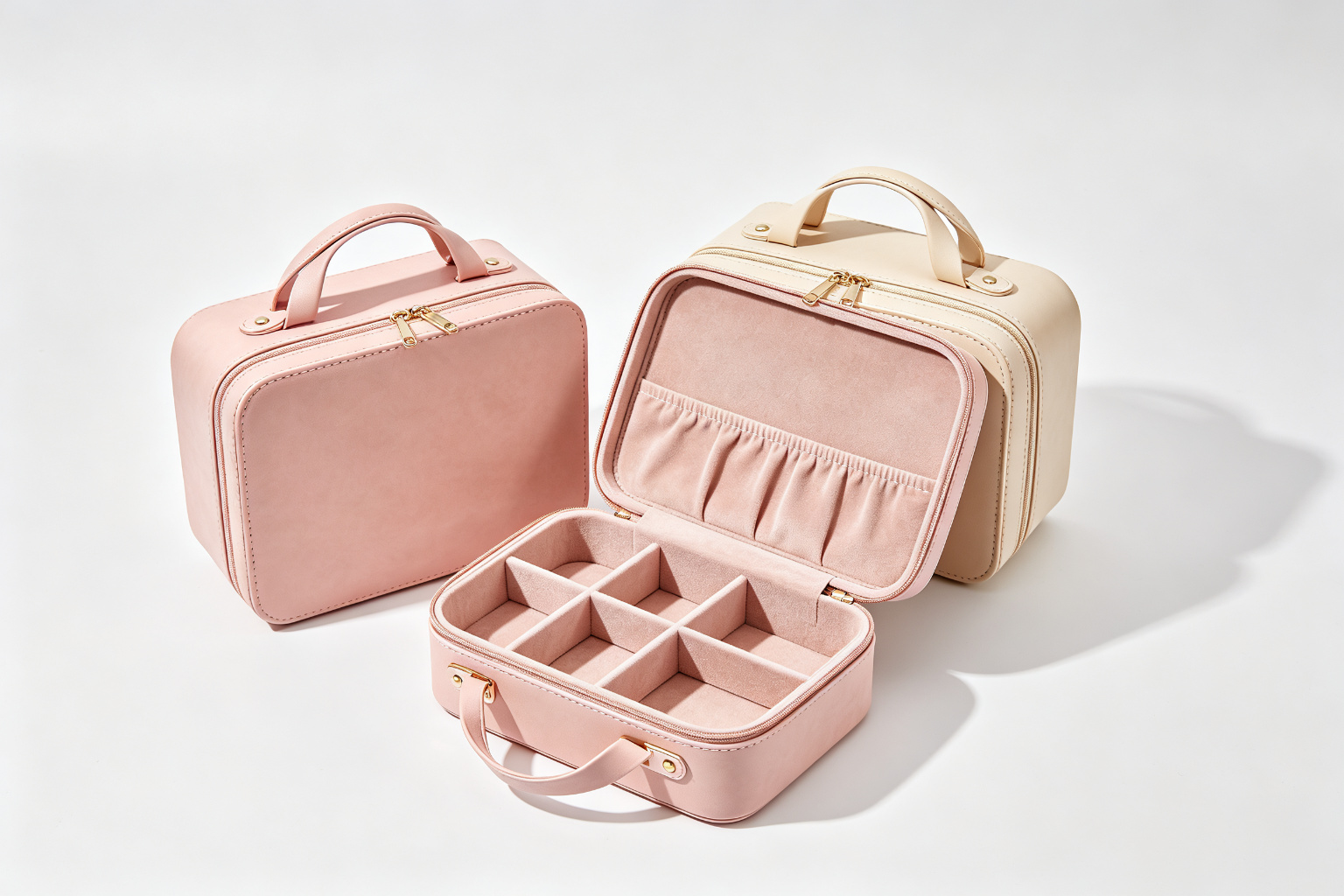
Finished product: 23×16×9cm structured cosmetic case, 0.8mm PU microfiber, velvet-lined interior with 2 divider compartments, 1 zipped mesh pocket, and elastic brush strap. Custom gold YKK zipper and gold metal feet. All 3,000 pieces passed color verification (avg ΔE 0.9).
Shipment Timeline
Delivery Milestones
6. Results
PHASE 6 · END RESULTSThe spring beauty launch went live on April 15, 2026. The cosmetic case was offered as a gift-with-purchase for the $120+ foundation set and as a standalone $59 travel organizer. In the first 8 weeks, the brand sold 2,400 cases (1,200 as GWP redemptions, 1,200 as standalone sales) — a sell-through rate of 80% on the 3,000-piece order. At $59 retail and an $8.90 FOB landed cost of about $12.00 (after import duty and freight), the standalone cases delivered an 80% gross margin. The return rate was 0.3% — only 9 cases returned in 8 weeks, and zero for "not vegan", "wrong color", or "poor quality" — the issues that had plagued the previous supplier. Maya's customer service team logged 2 quality complaints in Q2 2026, compared to 0 for the previous product (which had never shipped — it was rejected at sampling).
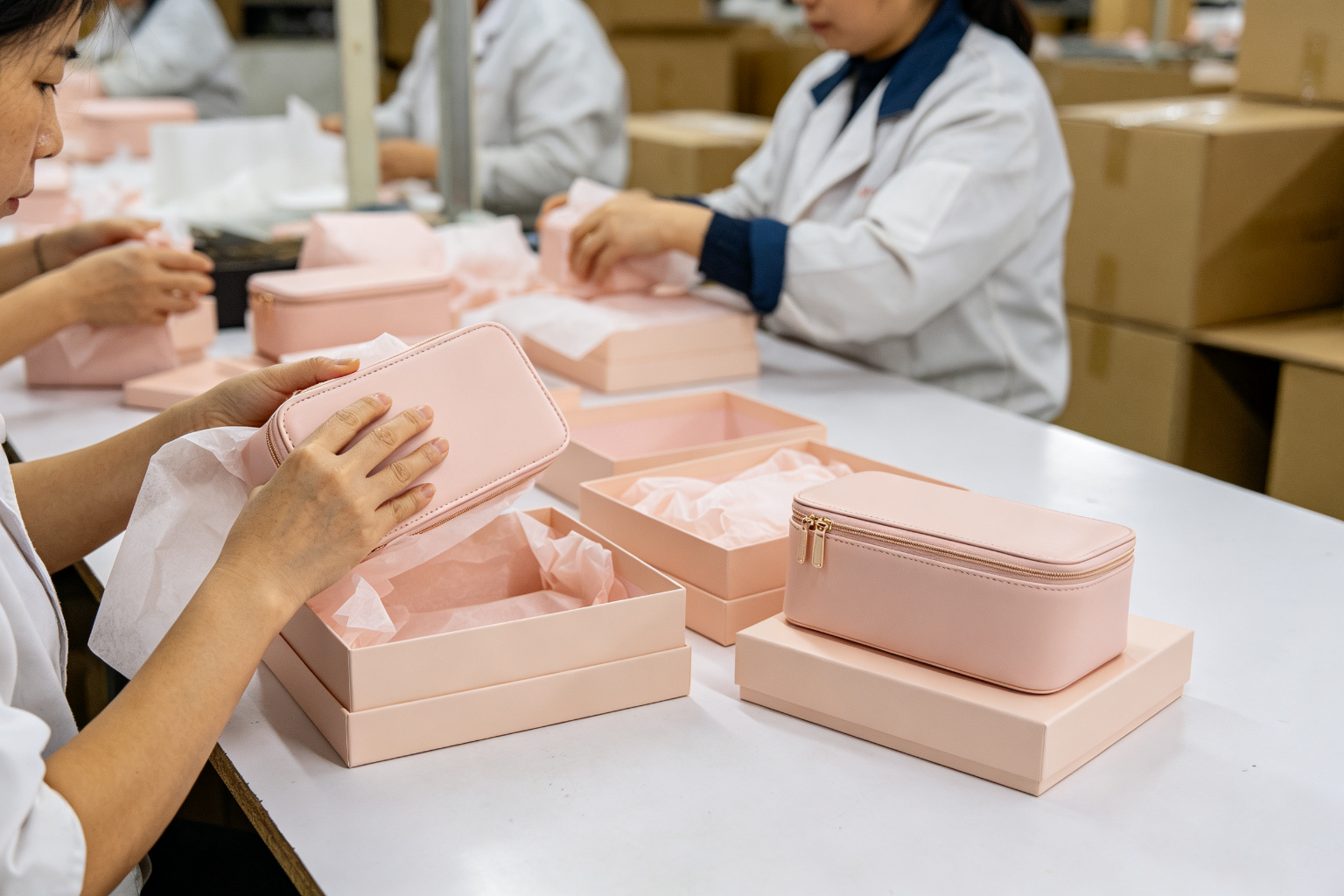
Packaging: each case wrapped in tissue paper, placed in a non-woven dust bag, then 20 pieces per 5-layer export carton. 150 cartons total, 18kg each. Shipped FOB Shenzhen, arrived LA in 16 days, delivered to Vernon warehouse in 21 days door-to-door.
Three months later, in July 2026, Maya placed a repeat order for 6,000 pieces — doubling the order and adding 2 new colors (Mauve and Sand) to the existing 3. The repeat order unit price dropped to $8.45 (the 6,000-piece order qualified for a lower material rate, and we passed the savings to the client). Total lifetime order value from this client as of September 2026: $76,200 across 9,000 pieces, with a holiday 2026 reorder of 4,000 pieces in negotiation. Maya also referred us to two other beauty brands — one is currently in sampling for a vegan leather makeup brush roll (2,000 pieces), and the other is in quotation for a PETA-certified vegan leather jewelry case (1,500 pieces).
Client Feedback (from July 2026 reorder email)
"We worked with two factories before Merris, and neither could deliver genuine PETA-certified vegan products with consistent color. Merris is the only one that: (1) provided component-level material declarations for our PETA license — not just a 'it's vegan' claim, (2) matched our blush pink, beige, and charcoal to ΔE under 1.0 across all 3,000 pieces — our previous supplier was at ΔE 3.8 and we rejected the whole run, (3) delivered in 27 days when we asked for 35, (4) made a case that survived my drop test with a full glass bottle of foundation — the foam structure works. Our customers are buying the case for the vegan certification and the premium feel — and they're not returning it. You understand clean beauty packaging. We'll continue to order from you." — Maya, Founder, US clean beauty brand
7. Key Takeaways for Buyers Sourcing Vegan Leather Cosmetic Cases
PHASE 7 · LESSONS FOR BUYERSThis project reinforced five lessons that apply to any vegan leather cosmetic case sourcing decision, especially for brands selling cruelty-free products to US/EU consumers:
"Vegan" Is a Component-Level Claim — Require PETA Material Declarations, Not Just a Marketing Promise
The most common mistake in sourcing vegan leather products is trusting a supplier's verbal "it's vegan" claim. Many factories use animal-based gelatin glue for foam lamination, or line products with silk or wool, without realizing it — the product is not genuinely vegan even if the main material is PU. Always require: (1) component-level material declarations for every part — exterior (PU/TPU/canvas), lining (polyester/cotton, not silk/wool), zipper tape and pull, hardware, thread, and adhesives, (2) a PETA-licensed supplier or a material declaration that your brand can submit for PETA licensing (PETA's Vegan Logo program requires this documentation), (3) a written statement that no animal testing is involved. In this case study, our factory provided the complete material declaration package that Maya submitted to PETA — the license was approved in 3 weeks. The PETA hang tag became the brand's #1 marketing asset: customers photograph it, share it on social media, and it justifies the $59 selling price. If a supplier can't provide component-level material declarations, walk away — they're not genuinely vegan-capable.
Color Consistency Is the #1 Quality Risk for Vegan Leather — Lock Golden Standards Before Bulk Production
Color shading between material batches is the #1 quality complaint in vegan leather products — and it's almost always preventable. The previous supplier's failure (ΔE 3.8) cost them 3 weeks and a rejected production run. Our approach: (1) order candidate swatches from 3 suppliers before sampling and measure each against the client's Pantone chips with a spectrophotometer (not visual comparison), (2) select the supplier that matches within ΔE 1.0, (3) cut the approved swatches into "golden standards" and have the client sign off before bulk material is ordered, (4) require the material supplier to hold the same dye lot for the entire order, (5) verify ΔE ≤ 1.5 at material incoming inspection, before cutting, and on 5% of finished pieces. In this case study, the average ΔE across 3,000 pieces was 0.9 — zero color complaints from customers in 4 months. The 2 days of swatch matching up front saved weeks of rework. Ask your factory: "Can you measure color with a spectrophotometer and provide a ΔE report? Can you hold one dye lot for the entire order?" If the answer is no, color is your biggest risk.
Soft Hand-Feel Requires Microfiber PU, Not PVC — And the Material Grade Determines the Price
Not all "vegan leather" is created equal. PVC leather (polyvinyl chloride) is cheap ($2.00-$3.00/meter), stiff, plasticky, and cracks in cold weather — it's the material behind most "cheap vegan bag" complaints. Microfiber-based PU (polyurethane) is the premium choice: soft, supple hand-feel (60% softer than PVC), matte finish, 30% more durable, flex endurance of 120,000 cycles (vs. 60,000 for PVC), and no cracking in cold weather. It costs $3.50-$4.50/meter but delivers a premium feel that justifies selling prices of $50-$100. For the best result, specify: (1) 0.8-1.0mm microfiber-based PU (thicker = stiffer, thinner = less durable), (2) water-based (solvent-free) coating — better for clean beauty brand positioning and worker safety, (3) matte finish (not glossy, which looks cheap). In this case study, we used 0.8mm water-based microfiber PU at $8.90 FOB — the client sells it at $59 retail with an 80% margin and zero returns for "cheap feel". The material grade is the single biggest cost driver in vegan leather products — understand the difference between PVC and microfiber PU before comparing quotes.
For Bottle-Protection Cases, Foam-Stiffened Structure Is Non-Negotiable
If your cosmetic case will hold glass bottles (foundation, serum, perfume) during travel, the structure must be rigid enough to absorb impacts. A floppy pouch case offers zero bottle protection — the bottle breaks, the contents ruin the case lining, and the customer returns it. The solution is foam-stiffened construction: 3mm EVA foam laminated between the exterior PU and the interior lining on the base and side panels. EVA foam provides: (1) structural rigidity (the case holds its shape when empty — a premium feel), (2) shock absorption (protects bottles from 1m drops), and (3) a padded, luxurious hand-feel. Require: (1) minimum 3mm EVA foam (thinner is ineffective, thicker is bulky), (2) foam laminated with water-based adhesive (not animal-based gelatin glue — this is the non-vegan trap), (3) a drop test in the QC protocol — drop a full glass bottle inside from 1 meter and confirm no break. In this case study, the drop test was the client's favorite QC checkpoint: Maya tested it herself and approved the sample the same day. The foam-stiffened construction adds $0.60 per unit and 1-2 days of production — worth it for a product that promises bottle protection.
For Clean Beauty Brands, the Certification Documentation Package Is as Important as the Product
Clean beauty consumers don't just buy a product — they buy the brand's ethical claims. The documentation that proves those claims is as important as the product itself. Require your factory to provide: (1) PETA component-level material declarations for your PETA license application, (2) REACH/SVHC compliance report (224 substances) — also covers US CPSIA and California Prop 65, (3) a material traceability log so you can trace any piece to its material batch, (4) a color verification report (ΔE measurements, not visual claims). In this case study, the documentation package was the reason Maya chose us over two other factories — her previous supplier couldn't provide component-level declarations, and her brand's PETA license was pending for months because of it. With our package, her PETA license was approved in 3 weeks, and the hang tags became a marketing asset that justified premium pricing. Ask your factory for a sample documentation package before ordering — if they can't produce one, they're not ready for clean beauty brands.
For a complete guide to cosmetic bag manufacturing, read our custom cosmetic bag manufacturing guide. For cost analysis, read our custom bag cost breakdown. For choosing between OEM and ODM, read our OEM vs ODM guide.
Starting a Custom Vegan Leather Cosmetic Case Order?
Get a factory-direct quote within 8 Hours. We specialize in vegan leather cosmetic cases, cosmetic pouches, makeup brush rolls, and jewelry cases — 500 MOQ, free material swatches, 7-10 day custom samples, component-level PETA material declarations, spectrophotometer color verification (ΔE ≤ 1.5), and full REACH/SVHC certification documentation.
Request a Free QuoteOr explore our full cosmetic bag catalog
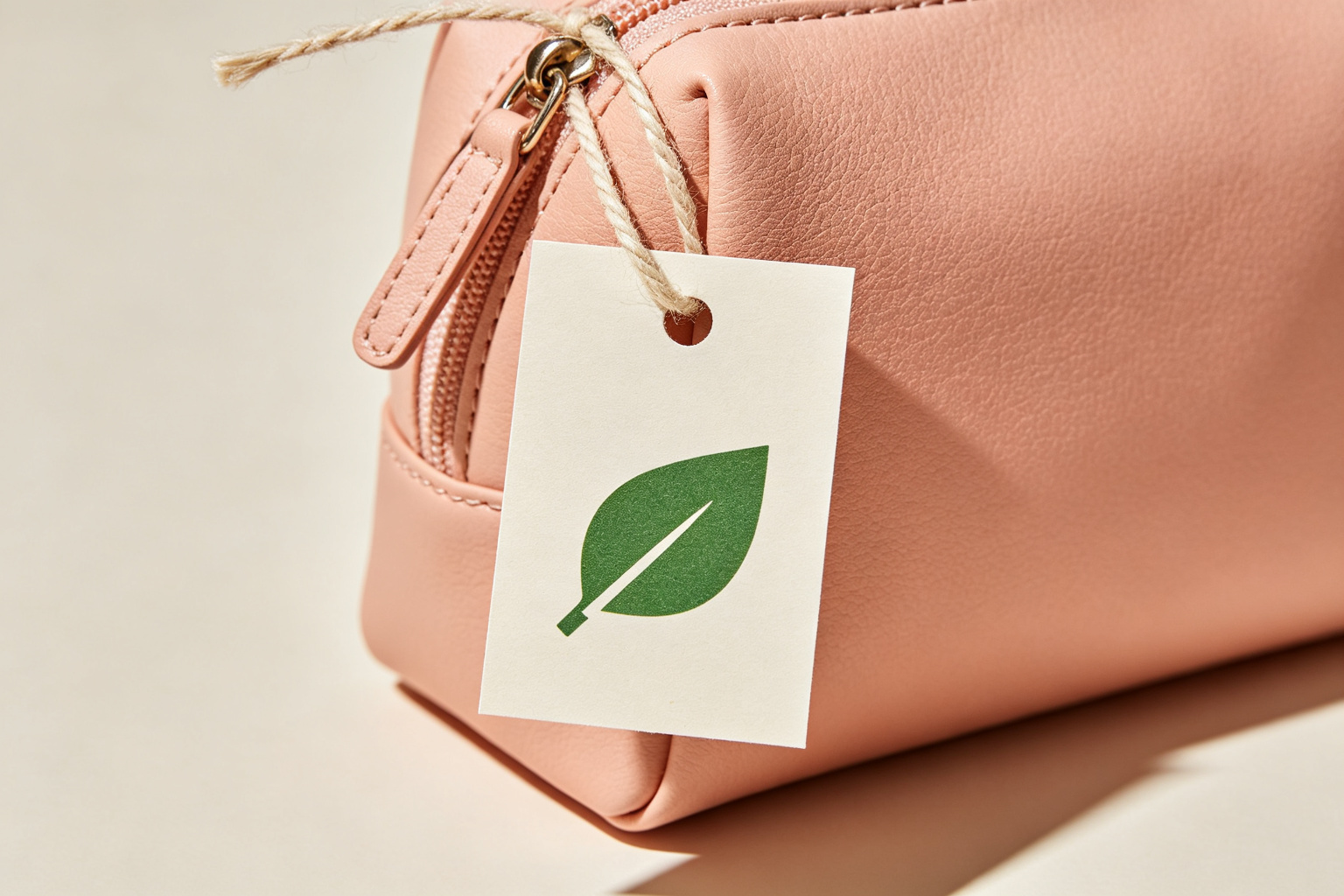
PETA-approved vegan hang tag: the visible proof of cruelty-free certification that clean beauty consumers look for. Cotton twine, paper tag with the PETA Vegan Logo. Each case shipped with the hang tag attached and the brand's PETA license number printed on the tag back.
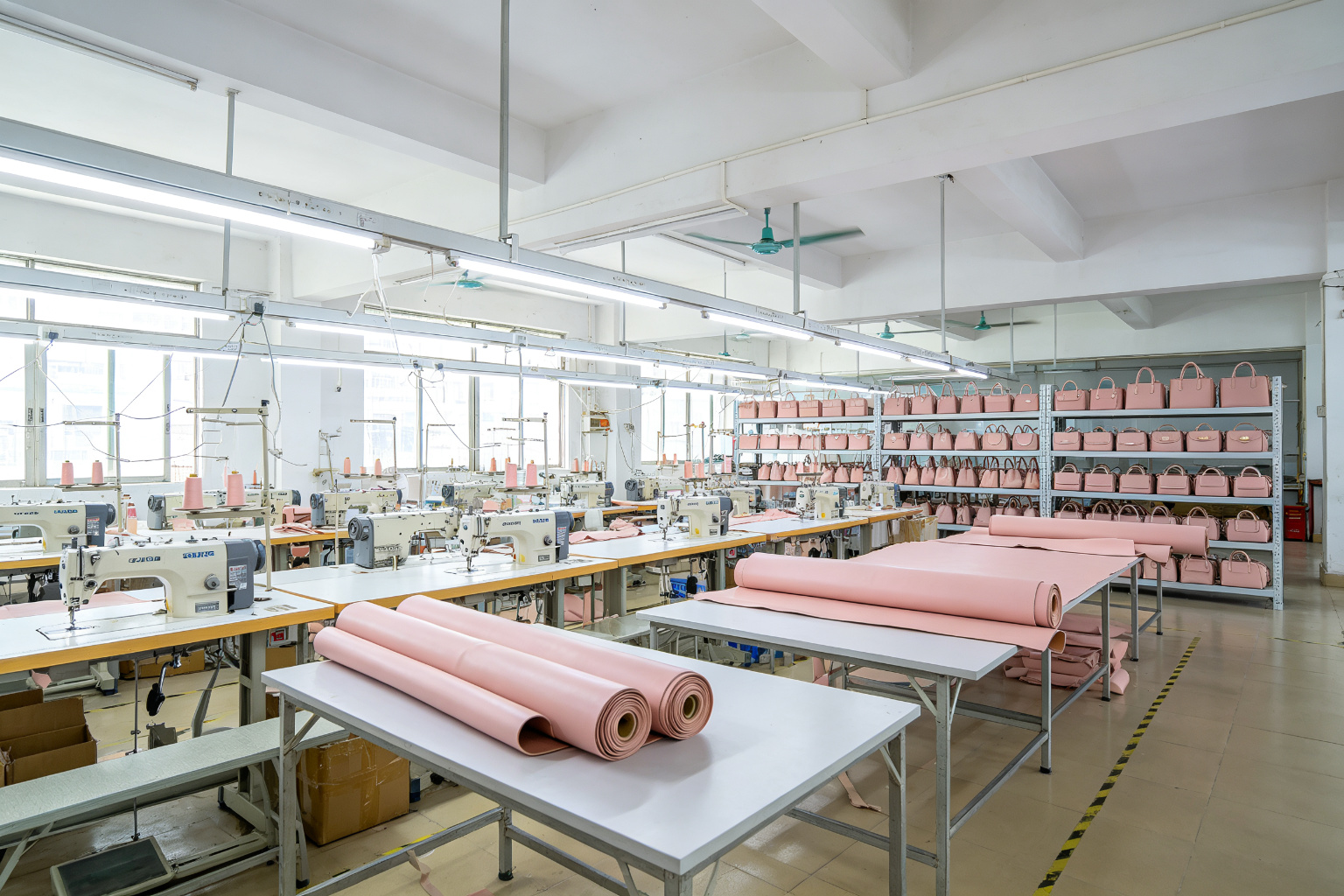
Our Dongguan cosmetic bag line: sewing stations, blush pink PU leather rolls, and finished cases staged on racks. 2,100 pieces produced across 14 days including a 100% final check.
Frequently Asked Questions
Is PU vegan leather as durable as real leather?
Direct Answer: Premium microfiber PU matches or beats real leather on key durability metrics — 15-20 N/mm² tensile, 50,000+ Martindale cycles, 100,000+ flex cycles — at 40-60% lower cost and with batch-perfect color (ΔE ≤ 1.0). This 0.8mm PU ran 18 N/mm² and 60,000 cycles.
- Tensile Strength: 15-20 N/mm²
- Abrasion: 50,000+ Martindale cycles
- Cost Saving: 40-60%
- This PU: 0.8mm, 18 N/mm², 60k cycles
Yes — premium PU microfiber vegan leather matches or exceeds real leather in most durability metrics that matter for cosmetic cases, and it is 40-60% cheaper. Microfiber-based PU (0.8-1.2mm thickness) has a tensile strength of 15-20 N/mm² (real leather: 10-20 N/mm²), abrasion resistance of 50,000+ Martindale cycles (real leather: 30,000-50,000), and flex endurance of 100,000+ cycles without cracking (real leather: 60,000-100,000). The key difference: PU is synthetic and completely consistent in quality, while real leather varies by animal hide. PU is also easier to color-match across batches (ΔE ≤ 1.0), which matters for brand consistency. In this case study, we used 0.8mm microfiber PU with a water-based (solvent-free) coating — tensile strength 18 N/mm², abrasion resistance 60,000 cycles, flex endurance 120,000 cycles. The client's customers have used the cases daily for 4 months with zero reports of peeling, cracking, or color transfer.
What does PETA-approved vegan certification mean for bags?
Direct Answer: PETA-approved vegan certification confirms no animal materials or testing across the body, lining, zipper, and adhesives. It takes 2-4 weeks and adds $0.05-$0.15 per unit for hang tags and licensing. This order shipped with PETA-approved vegan hang tags.
- Covers: Body, lining, zipper, adhesives
- Process Time: 2-4 weeks
- Unit Cost: $0.05-$0.15
- Deliverable: PETA-approved hang tags
PETA-approved vegan certification is a third-party verification from People for the Ethical Treatment of Animals confirming that no animal products (leather, suede, wool, silk, fur, or animal-derived glues) are used in the product, and that no animal testing is involved. For bags, the certification covers the main material (must be vegan leather, PU, canvas, or recycled fabric), the lining (must not be silk or wool), the zipper tape and pull (must not contain leather or bone), and the adhesives (must be synthetic, not animal-based gelatin glue). PETA audits the supplier's material declarations and production process. In this case study, our factory provided material declarations for all components (PU microfiber body, polyester lining, nylon zipper, synthetic adhesives), and the client's cases shipped with PETA-approved vegan hang tags. The PETA certification process takes 2-4 weeks and costs $0.05-$0.15 per unit for the hang tags and licensing fee.
What does a custom vegan leather cosmetic case cost to produce?
Direct Answer: Custom vegan-leather cosmetic cases cost $4.50-$15.00 FOB per unit for 1,000-5,000 pieces, from basic pouches to premium cases. This 3,000-piece structured case (0.8mm microfiber PU, velvet lining, gold YKK zip, PETA tags) came to $8.90 FOB — 29% below a prior $12.50 quote.
- FOB Unit Range: $4.50-$15.00
- This Order: $8.90 FOB / unit
- Quantity: 3,000 pcs
- Saving vs Prior: 29%
Custom vegan leather cosmetic cases typically cost $4.50-$15.00 FOB Shenzhen per unit for orders of 1,000-5,000 pieces, depending on size, material quality, and features. Basic PU cosmetic pouches (15×10×5cm, plain PU, single zip) start at $4.50-$7.00; mid-range structured cosmetic cases (20×13×8cm, microfiber PU, velvet lining, divider compartments) cost $7.00-$11.00; premium cases (25×18×10cm, microfiber PU, full velvet lining, custom gold zipper, metal feet, PETA hang tags) cost $11.00-$15.00. In this case study, the 3,000-piece order for a structured 23×16×9cm cosmetic case (0.8mm microfiber PU body, velvet-lined interior with 2 divider compartments and 1 zip pocket, custom gold YKK zipper, gold metal feet, PETA-approved hang tags) came to $8.90 FOB per unit. The previous supplier quoted $12.50 for a similar spec — we saved the client 29% while adding the PETA certification.
How long does production of custom vegan leather cosmetic cases take?
Direct Answer: A 1,000-5,000 piece vegan case order takes 25-35 days from sample approval to FOB. This 3,000-piece order delivered in 30 days after one hand-feel revision (0.9mm to 0.8mm PU, which also cut cost $0.30 per unit).
- Total (approval to FOB): 25-35 days
- Bulk Production: 12-18 days
- Actual Delivery: 30 days
- Revision Benefit: -$0.30 / unit
For a custom vegan leather cosmetic case order of 1,000-5,000 pieces with PU microfiber material, velvet lining, and custom hardware, the total timeline from sample approval to FOB shipment is typically 25-35 days. Sample development takes 7-10 days (blank sample 3-4 days, printed/trimmed sample 4-6 days), pre-production (material sourcing, die making, zipper and hardware sourcing) takes 4-6 days, bulk production runs 12-18 days (cutting, sewing, lining insertion, hardware assembly), and final QC plus packaging takes 3-5 days. In this case study, we delivered in 30 days (FOB shipment on Day 27 from sample approval) including one round of sample revisions (the client requested a softer exterior hand-feel — we switched from 0.9mm to 0.8mm microfiber PU, which also reduced cost by $0.30 per unit). The client's previous supplier had promised 28 days but delivered in 41 days because they sourced the PU material only after PPS approval (7 days lost) and their lining factory was in a different province, adding 3 days of logistics per production stage.
What defect rate is normal for vegan leather cosmetic case orders?
Direct Answer: A well-run 1,000+ piece vegan-case line should stay under 1.0% defects at AQL 2.5, led by stitching (0.3-0.6%). This 3,000-piece run finished at 0.6% (18 pieces), all repaired or replaced before shipment.
- Target: Below 1.0%
- Top Defect: Stitching 0.3-0.6%
- Actual Rate: 0.6% (18/3,000)
- Post-Repair: 0% shipped defects
A well-managed vegan leather cosmetic case production run of 1,000+ pieces should achieve a defect rate below 1.0% under AQL 2.5 inspection standards. The most common defects are: (1) stitching defects (0.3-0.6%) including skipped stitches, loose thread ends, and misaligned panels; (2) material defects (0.2-0.4%) including surface scratches, color shading between material batches, and PU coating bubbles; (3) zipper defects (0.1-0.3%) including zipper catching, misaligned zipper stop, and broken slider; (4) lining defects (0.1-0.2%) including misaligned compartments and loose lining. In this case study, the final defect rate was 0.6% — 18 pieces out of 3,000 inspected, with 9 stitching defects, 5 material defects, 3 zipper defects, and 1 lining defect. All 18 defective pieces were repaired (re-stitching, surface buffing, zipper replacement) or replaced, resulting in a 0% final defect rate after repair. The 3 zipper defects were traced to a batch of zippers from a new supplier — we switched back to our regular zipper supplier for the remainder of production.