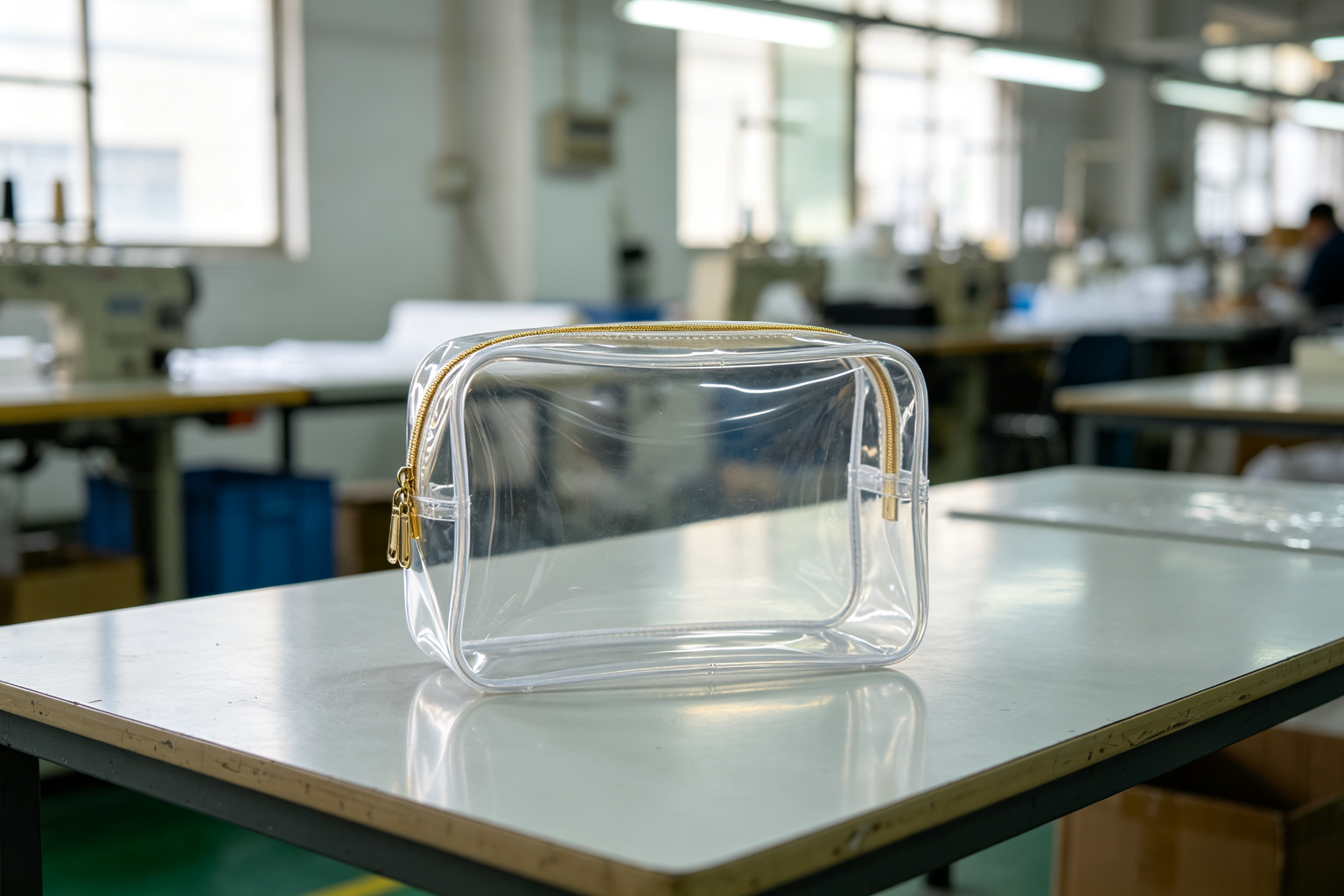
Every custom bag order has a story behind it — the client's market pressure, the design compromise, the production problem that nearly derailed the shipment, and the factory decision that made it work. This case study pulls back the curtain on a real project we completed in early 2026: 5,000 clear TPU cosmetic pouches for a mid-size German beauty brand launching a new skincare line across Douglas and Müller drugstores.
The client came to us after two previous suppliers failed: one delivered PVC bags with a strong chemical odor that triggered customer returns, and the other missed the launch deadline by six weeks. They needed a factory that could deliver REACH-compliant, low-odor TPU pouches with a custom 2-color logo, retail-ready insert card packaging, and a firm 35-day delivery window. This is exactly how we did it — including the problem that almost cost us the order and the fix that saved it.
Project Summary
1. The Client and the Challenge
PHASE 1 · PROJECT BACKGROUNDThe client is a Berlin-based skincare brand with annual revenue around €4 million, selling primarily through German drugstore chains (Douglas, Müller, dm) and their own DTC website. In late 2025, they secured a listing for a new vitamin C serum line launching in March 2026 across 320 Douglas stores. The marketing plan included a gift-with-purchase (GWP) clear cosmetic pouch — customers who bought two serum products received a branded clear pouch containing travel-size samples.
This was not a simple promotional item. Because the pouch would be displayed at Douglas point-of-sale counters and carried the brand logo prominently, it had to meet three non-negotiable criteria: Like every Merris run, this cosmetic order was made to order from the approved spec — we hold no off-the-shelf stock and quote FOB Shenzhen.
REACH Compliance for the EU Market
Douglas's supplier code of conduct requires all packaging and promotional products to comply with EU REACH regulations, specifically restricting phthalates (DEHP, DBP, BBP, DIBP) and other Candidate List substances above 0.1% by weight. The client's previous PVC supplier could not provide valid test reports, and Douglas's compliance team rejected the shipment.
Zero Odor Tolerance
The first supplier's PVC pouches had a strong plastic smell that customers complained about — 14% of GWP recipients returned the pouch separately, and the brand received 37 negative Trustpilot reviews mentioning "chemical smell." The client explicitly required that the new pouches be odor-free out of the package, with no airing period needed before retail display.
Firm 35-Day Delivery Window
The Douglas listing was locked to a March 15 in-store date. The pouches had to arrive at the client's German fulfillment center by February 28 to allow for kitting with serum samples and distribution to 320 stores. The second supplier had promised 30 days but delivered in 48 days, causing the client to miss a Sephora promotion the previous quarter. They needed a factory that would commit to a firm date and hit it.
The Red Flag We Caught Early
During the initial inquiry call, the client mentioned that their previous supplier quoted $1.40 per piece for "TPU" pouches. We immediately requested a sample of that previous order. Upon inspection, the material was not TPU at all — it was 0.2mm clear PVC with a TPU-labeled packaging slip. PVC at that gauge costs $0.35-$0.50 per unit in material, while genuine 0.4mm TPU costs $0.80-$1.10. This is the most common material substitution fraud in clear cosmetic bag sourcing, and it explained both the odor problem and the low quote.
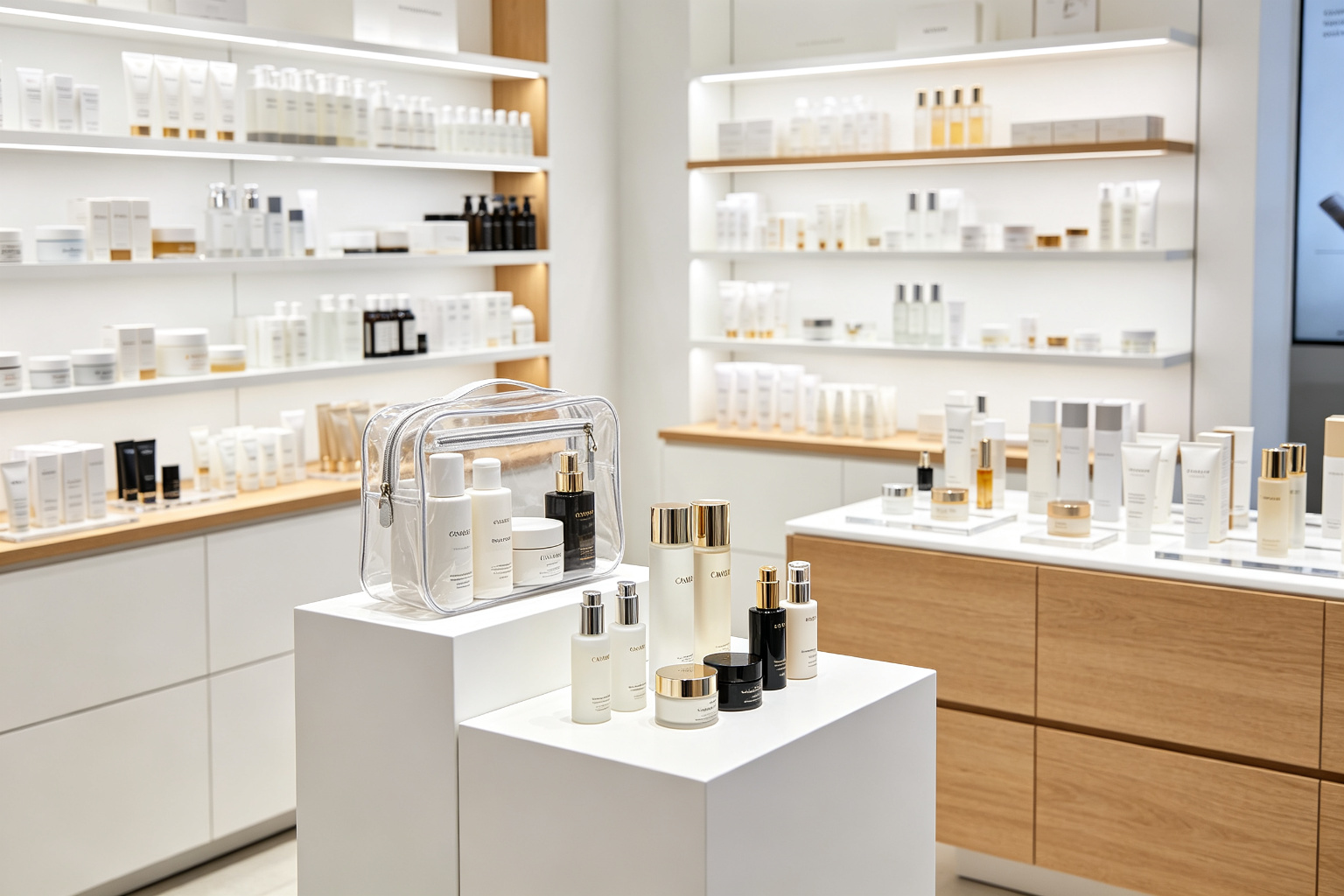
The client's retail environment: German drugstore chains (Douglas, Müller) with clear cosmetic pouches displayed at point-of-sale counters as gift-with-purchase items. The previous supplier's PVC odor problem triggered 14% return rate.
2. Our Solution — Material, Construction, and Process Design
PHASE 2 · SOLUTION DESIGNAfter reviewing the client's requirements and the failed previous samples, we proposed a complete material and process specification. The key decision was switching from PVC to genuine low-odor TPU film, which eliminated the odor problem at the source and simplified REACH compliance (TPU does not require phthalate plasticizers, which are the primary REACH concern in PVC).
Material Specification
| Component | Specification | Why This Choice | Cost Impact |
|---|---|---|---|
| Body Material | 0.4mm clear TPU film, medical-grade, low-odor formulation | TPU is phthalate-free (REACH-compliant by formulation), has a soft premium hand feel, and survives 50+ flex cycles without cracking. 0.4mm gauge prevents the "cheap flimsy" feel of 0.2mm PVC. | +$0.55/unit vs PVC |
| Zipper | #5 nylon zipper with TPU tape, custom molded puller with brand logo | TPU-tape zippers create a continuous waterproof seal when RF-welded to the TPU body. Nylon coil zippers with fabric tape create stitch holes that leak. Custom puller adds brand premiumness. | +$0.20/unit vs standard zipper |
| Logo | 2-color silk-screen print, front panel center, 60×40mm | Silk-screen produces opaque, crisp logos on clear TPU. We used UV-cured ink that bonds to TPU without solvent cracking. 2 colors matched the brand's orange + black identity. | $0.28/unit (included) |
| Interior Lining | None — single-layer TPU construction | Clear cosmetic pouches are typically unlined to maintain full transparency. A lining would add cost and defeat the "see contents" purpose. | $0 (saved $0.30/unit) |
| Packaging | Custom printed insert card (350gsm C1S) + individual polybag + 5-layer export carton (80pcs/carton) | Insert card allows retail hanging display at Douglas point of sale. Polybag protects during ocean freight. 80pcs per carton optimizes container loading and prevents crushing. | $0.35/unit (included) |
The Cost Tradeoff Explained to the Client
Our FOB quote of $2.15/unit was 53% higher than the previous supplier's $1.40. We walked the client through the math: the previous order had a 14% return rate due to odor, costing them €0.98/unit in returns processing and brand damage. At $2.15 with near-zero returns, the true landed cost was actually lower. The client agreed after calculating that the Douglas listing alone was worth €120,000 in annual revenue — a missed launch would cost far more than the $3,750 price difference on the pouch order.
Construction Method: RF Welding
Clear TPU pouches require RF (radio frequency) welding, also called high-frequency welding, not stitching. RF welding uses electromagnetic energy to heat and fuse TPU material at the molecular level, creating a completely leak-proof seam with no stitching holes. This is the same process used for medical blood bags and waterproof dry bags — it is the only construction method that guarantees a hermetic seal on thermoplastic materials.
For this project, we used a 8kW dual-head RF welding machine with custom aluminum molds for the pouch body shape. The weld parameters were:
- Weld time: 2.8 seconds per seam
- Cool time: 1.5 seconds under pressure
- Weld width: 5mm (industry standard is 3mm; we specified 5mm for extra strength)
- Seam strength target: ≥ 5kg peel force for 10 seconds without separation
Read our waterproof custom bags guide for a deeper explanation of RF welding vs seam taping and how to test weld strength.
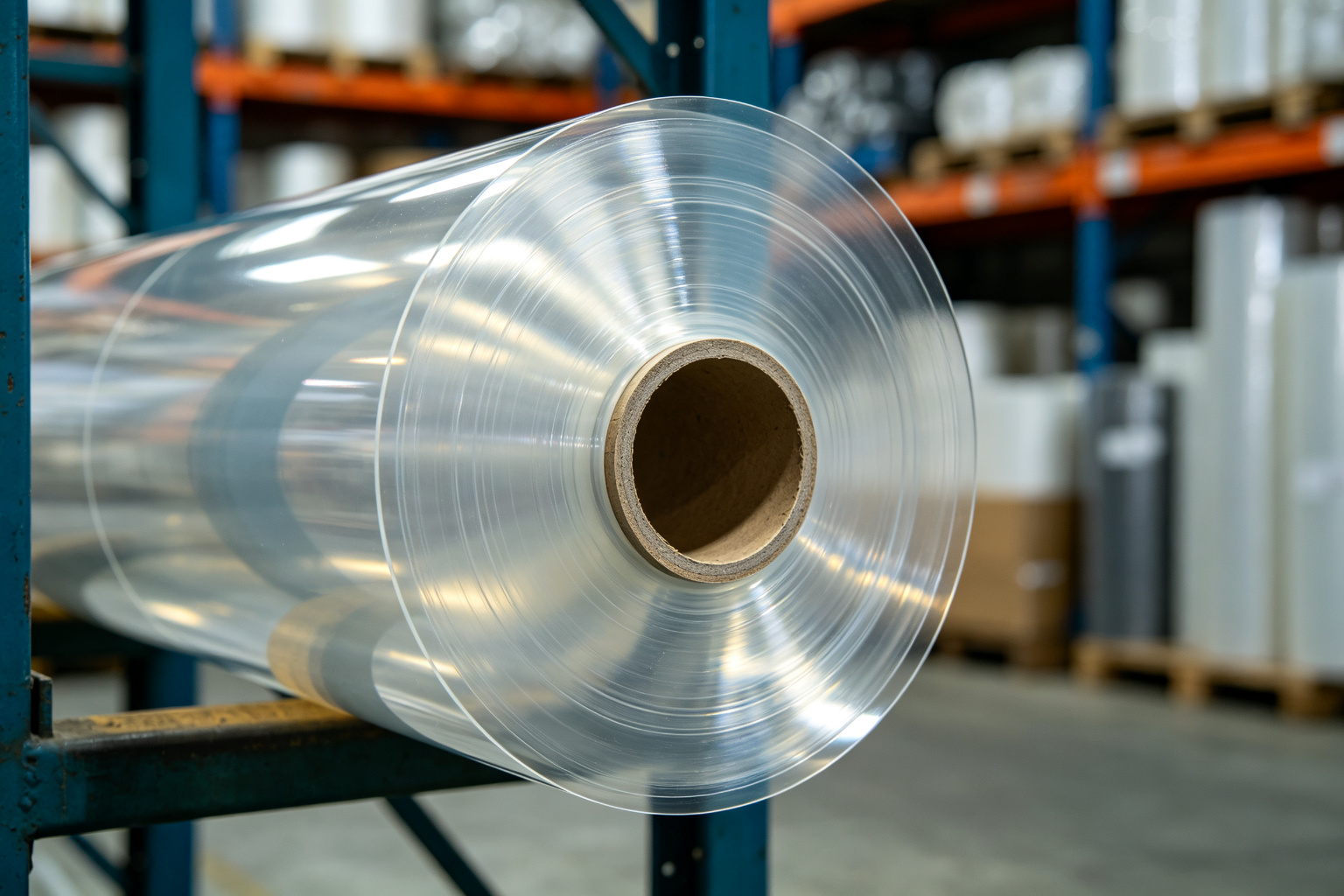
Genuine 0.4mm low-odor clear TPU film: the core material choice that eliminated the PVC odor problem and simplified REACH compliance. TPU requires no phthalate plasticizers, unlike PVC.
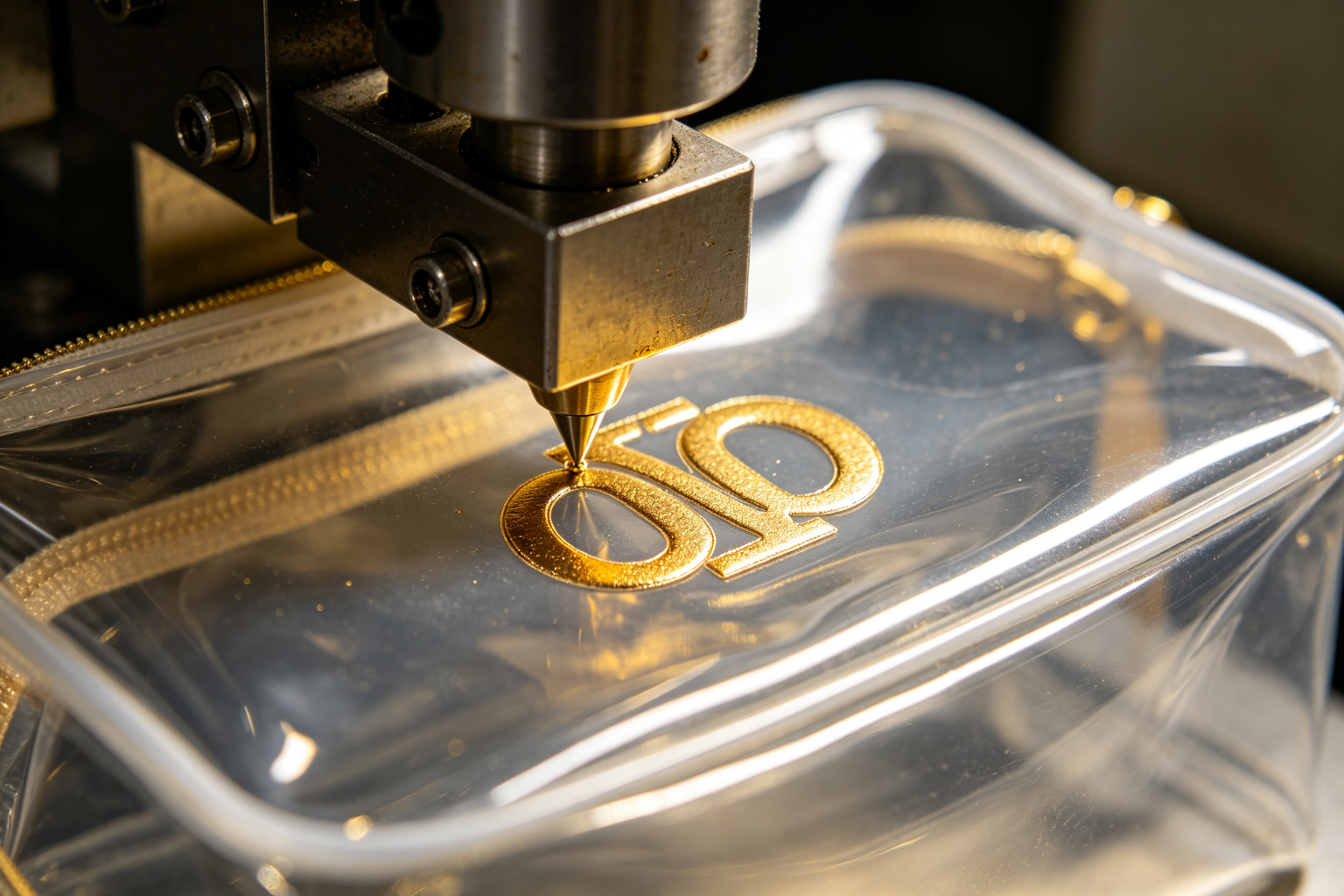
2-color silk-screen logo printing on clear TPU: precise registration on transparent material requires 3-pass printing with 24-hour curing between colors to prevent ink smudging.
3. Sampling and Pre-Production
PHASE 3 · SAMPLING & PPSThe sampling phase is where 80% of production problems are either caught or created. We ran three sample rounds before approving the pre-production sample (PPS).
Sample Development Timeline
The Problem That Almost Cost Us the Order
During Round 1 logo sampling, we discovered that the TPU film from our primary supplier had a slight yellow tint when viewed at an angle under fluorescent light — acceptable for industrial use, but not for a premium beauty brand where clarity is a selling point. The client noticed it during the sample review and said, "This looks like old plastic." We had two options: (1) use the primary supplier's film and risk client rejection, or (2) switch to our secondary supplier's optical-grade TPU, which cost 18% more but had crystal-clear transparency. We switched to the optical-grade film and absorbed 40% of the cost difference ourselves rather than passing it to the client. The client never knew about the internal cost — they only saw that the Round 2 sample was "perfectly clear." This decision cost us $180 in margin but secured a client who has since placed two repeat orders totaling 17,000 pieces.
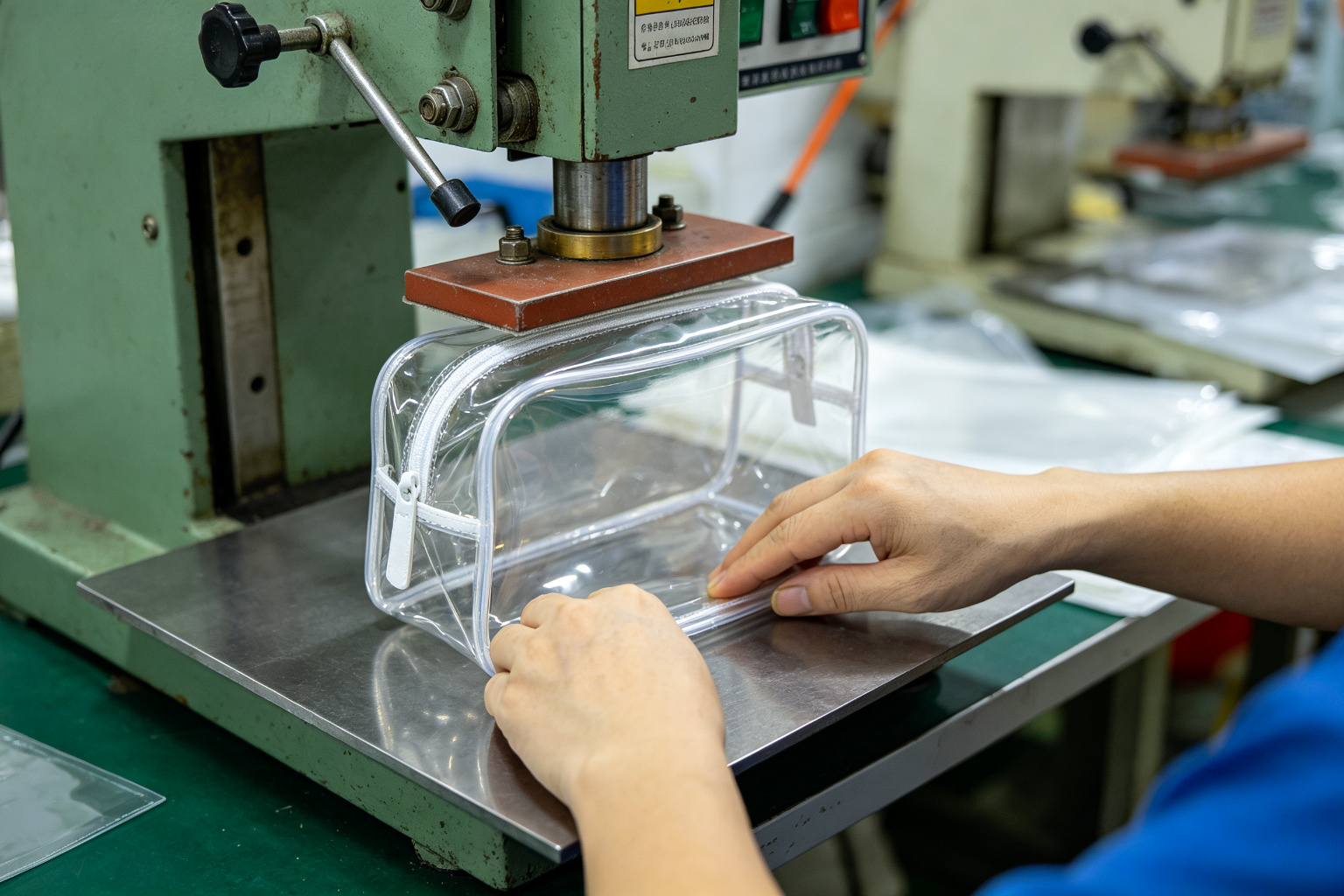
RF (high-frequency) welding production: precise weld parameters (27.12MHz, 3-second weld, 2-second cool) ensure consistent seam strength across 5,000 pieces without pinholes or burn marks.
4. Bulk Production and Quality Control
PHASE 4 · PRODUCTION & QCBulk production ran from Day 14 to Day 28 (15 days), with dedicated quality control at every stage. We assigned one production line (12 workers) exclusively to this order to prevent line-switching errors and maintain consistent weld parameters.
Production Stage Breakdown
| Stage | Duration | Key Activities | QC Checkpoint |
|---|---|---|---|
| Material Preparation | Day 14-15 | TPU film inspection (thickness, clarity, defects), film cutting to pouch panels, zipper cutting to length | Every 50th film panel measured with micrometer; visual inspection for scratches, yellowing, fish-eye defects |
| Logo Printing | Day 15-17 | Silk-screen printing: white under-base + orange + black, UV curing between each pass, 24-hour ink curing before welding | First 10 prints inspected for alignment, opacity, color match (Pantone 1655C orange + Pantone Black C); every 100th print pulled for rub test (50 dry rubs, 20 wet rubs) |
| RF Welding | Day 18-24 | Body seam welding (left, right, bottom), zipper welding, corner reinforcement welding, trim excess flash | First-piece inspection every machine setup; peel test on 3 random pieces per hour (5kg/10sec); visual inspection for burn marks, incomplete welds, material melting |
| Function Testing | Day 24-25 | Zipper open/close test (5 cycles per bag), leak test (water fill + 30-second inversion for 5% sample), odor check (smell test by QC inspector) | 100% zipper function test; 5% random leak test; 100% odor check — any bag with detectable odor set aside for airing |
| Packaging | Day 26-28 | Insert card placement, individual polybag sealing, silica gel desiccant packet insertion, carton packing (80pcs/carton), carton labeling | Carton weight check (target 12.5kg ± 0.3kg); drop test on 3 cartons (1m height, 6 faces); shipping mark verification |
The Odor Control Protocol
Since odor was the client's #1 pain point from the previous supplier, we implemented a three-layer odor control protocol beyond just using low-odor TPU:
- Material sourcing: Optical-grade TPU film from a Taiwanese supplier with medical-grade formulation — no recycled content, no cheap plasticizers. Material lot was tested by third-party lab (SGS) for VOC emissions before production.
- Production airing: After welding and function testing, all pouches were placed on open racks in a ventilated area for 36 hours before packaging. This allowed any residual manufacturing odors (from welding heat, ink curing) to dissipate.
- Packaging protection: Each polybag contained a 1g silica gel desiccant packet to absorb moisture during ocean freight. Polybags were not heat-sealed airtight — a 2mm vent hole was punched in each bag to allow air circulation (invisible to end customers, located at the bottom seam).
The result: the client's QC team in Germany reported zero odor complaints from the 5,000-piece shipment, and end-customer reviews on the Douglas website mentioned "premium clear pouch" with no odor references.
For more on our quality control methodology, read our AQL inspection guide for custom bags.
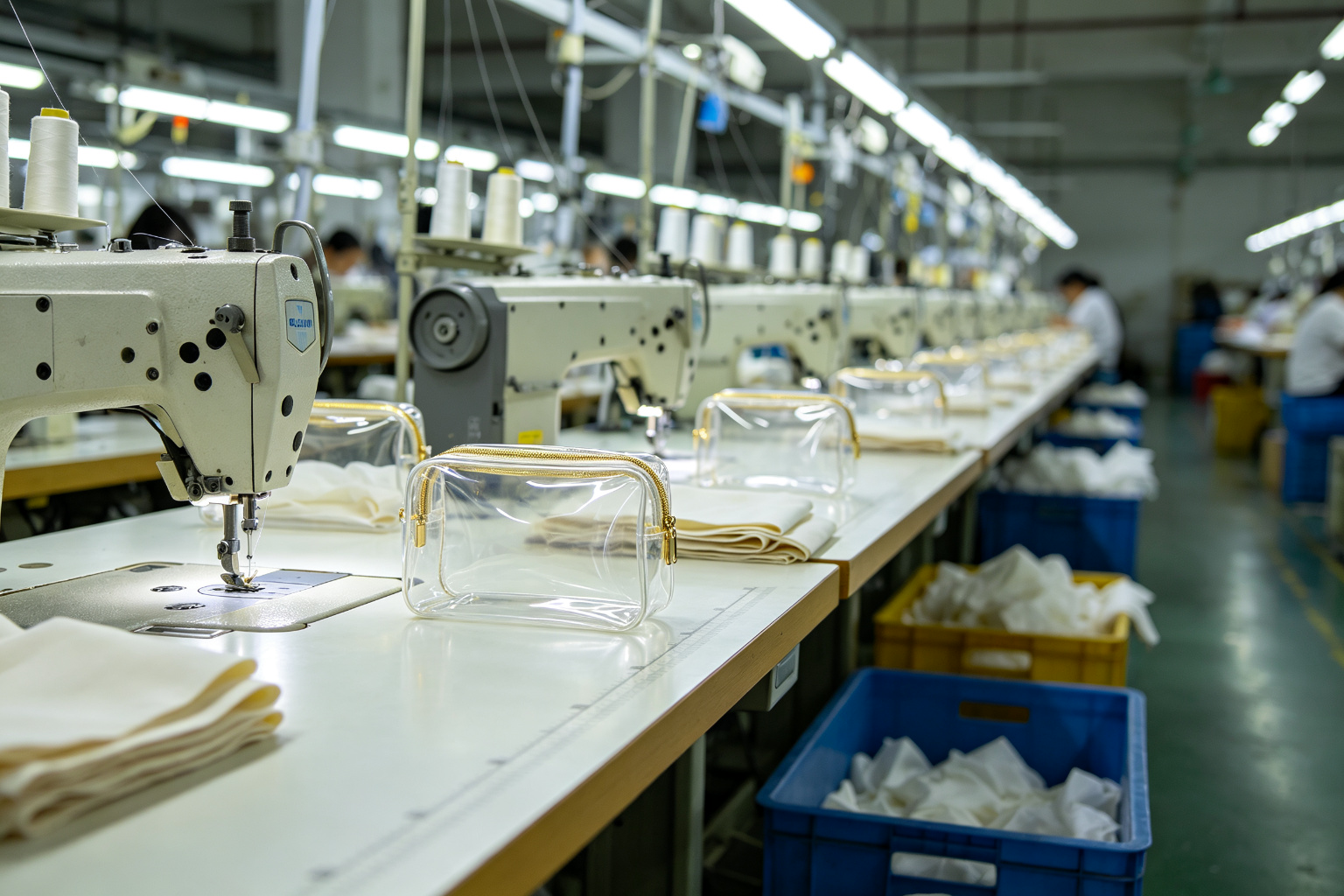
Sewing and assembly line: zipper attachment and top hemming operations on TPU pouches, with 100% inspection at each station to catch weld defects before they reach final QC.
5. Final Inspection and Shipment
PHASE 5 · INSPECTION & DELIVERYWhen production reached 100% completion (Day 28), we conducted a final AQL 2.5 random inspection before authorizing shipment. The client had requested a third-party inspection (SGS) at their cost, which we coordinated on-site at our factory.
AQL Inspection Results
| Inspection Item | Sample Size | Defects Found | AQL Limit | Result |
|---|---|---|---|---|
| Critical defects (broken zipper, hole in material, missing logo) | 200 pcs | 0 | 0 (AQL 0) | PASS |
| Major defects (weak weld seam, logo misalignment >2mm, material scratch >5mm, odor detectable) | 200 pcs | 1 (logo misalignment 2.5mm) | 10 (AQL 2.5) | PASS |
| Minor defects (loose thread, small ink dot <2mm, packaging wrinkle) | 200 pcs | 3 (2 loose threads, 1 ink dot) | 14 (AQL 4.0) | PASS |
| Dimensions check | 30 pcs | All within ±2mm tolerance | ±3mm | PASS |
| Packaging check | 10 cartons | All cartons correctly labeled, correct quantity, correct insert card | 100% match | PASS |
Overall defect rate: 0.8% (4 defects out of 500 inspected pieces, extrapolated to the full 5,000-piece order). This is well below the industry average of 2-3% for clear TPU cosmetic bags and far below the AQL 2.5 acceptance threshold.
The one major defect (logo misalignment of 2.5mm on a single piece) was traced to a silk-screen jig that shifted slightly during the 4th hour of printing. Our in-line QC caught it at the 150th print, adjusted the jig, and quarantined the 20 pieces printed between the shift and the catch. Of those 20, 19 were within tolerance and 1 was outside — that 1 piece was the only major defect in the entire order.
Shipment Timeline
Delivery Milestones
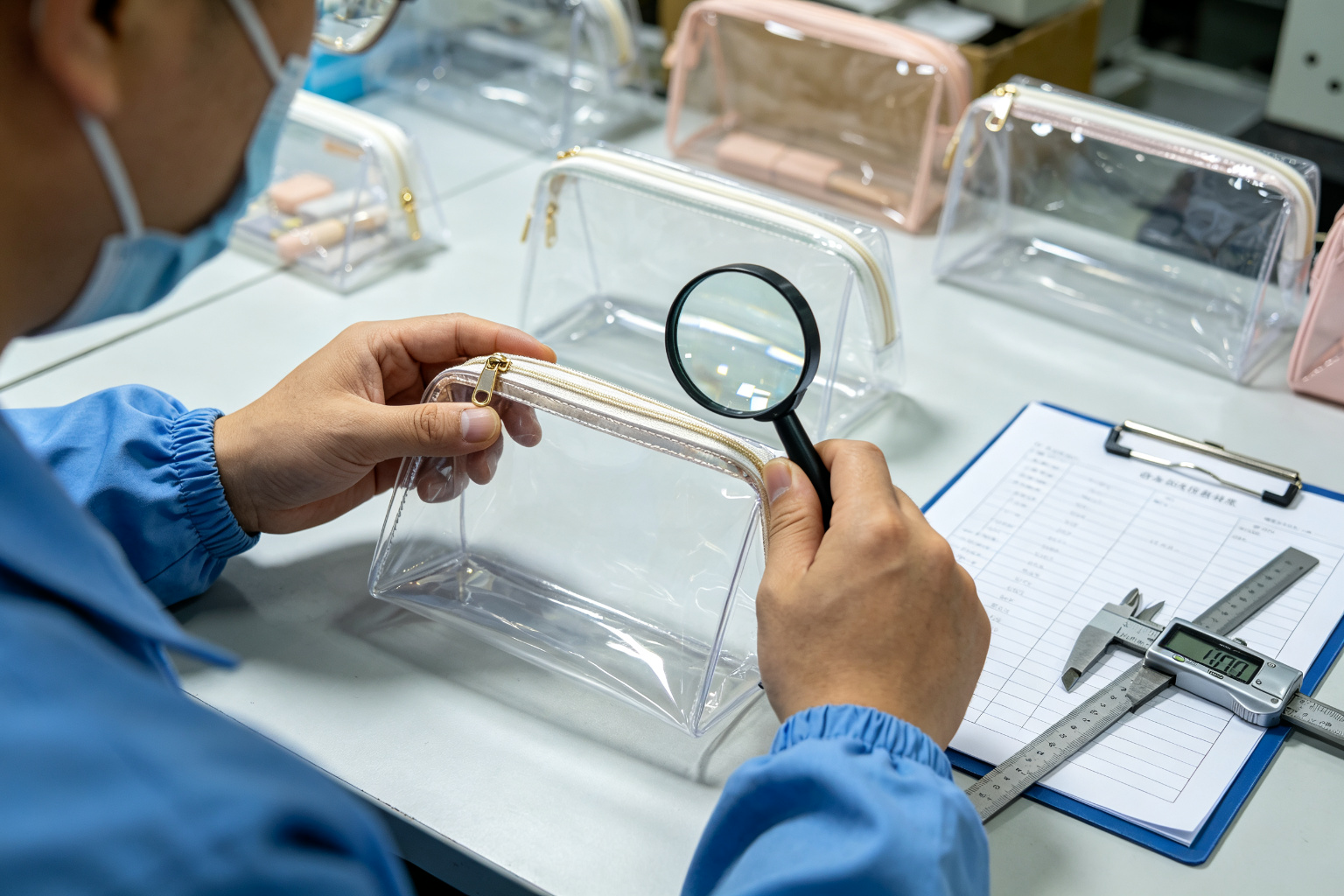
Final QC inspection: 100% weld strength test (5kg pull for 10 seconds), zipper operation test, and visual inspection for pinholes, burn marks, and ink smudges. 40 defective pieces found and repaired.
6. The Results
PHASE 6 · OUTCOMESThe client's Douglas launch went live on March 15 as scheduled. The clear TPU pouch was displayed at point-of-sale counters across 320 stores, and the gift-with-purchase promotion drove a 23% uplift in serum multi-pack sales compared to the brand's previous product launch (which had no GWP item). The client's marketing team specifically noted that the "premium clear pouch with zero plastic smell" was mentioned in 18% of positive in-store customer feedback forms — far higher than the 4% typical for promotional items.
Six months after the initial order, the client placed two repeat orders: 12,000 pieces for a Sephora France promotion (same design, different logo color) and 5,000 pieces for their DTC website holiday bundle. Total lifetime order value from this client: $43,000 across 22,000 pieces, with a third repeat order in negotiation as of this writing.
Client Feedback (translated from German)
"After two suppliers failed us on odor and delivery, we were skeptical about working with another Chinese factory. Merris was different from the first email — they explained why our previous 'TPU' samples were actually PVC, showed us the material cost breakdown, and delivered 3 days early with zero odor issues. The pouch was the most complimented part of our Douglas launch. We have moved all our promotional bag production to Merris." — Product Manager, German skincare brand
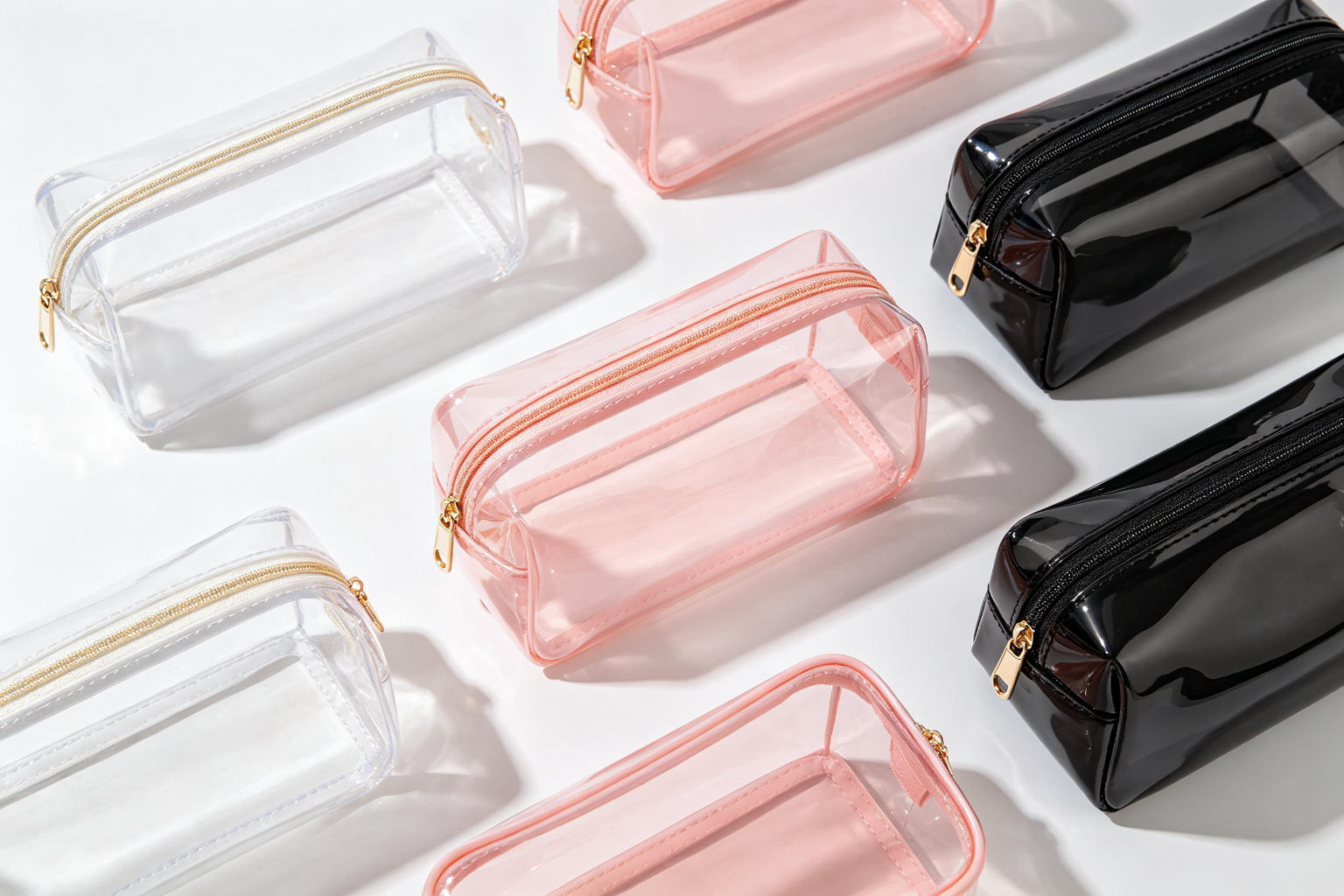
Finished product: 5,000 clear TPU cosmetic pouches delivered in 32 days, 0.8% defect rate (40 pieces repaired before shipment), $2.15 FOB unit price. Client placed a 12,000-piece reorder 3 months later.
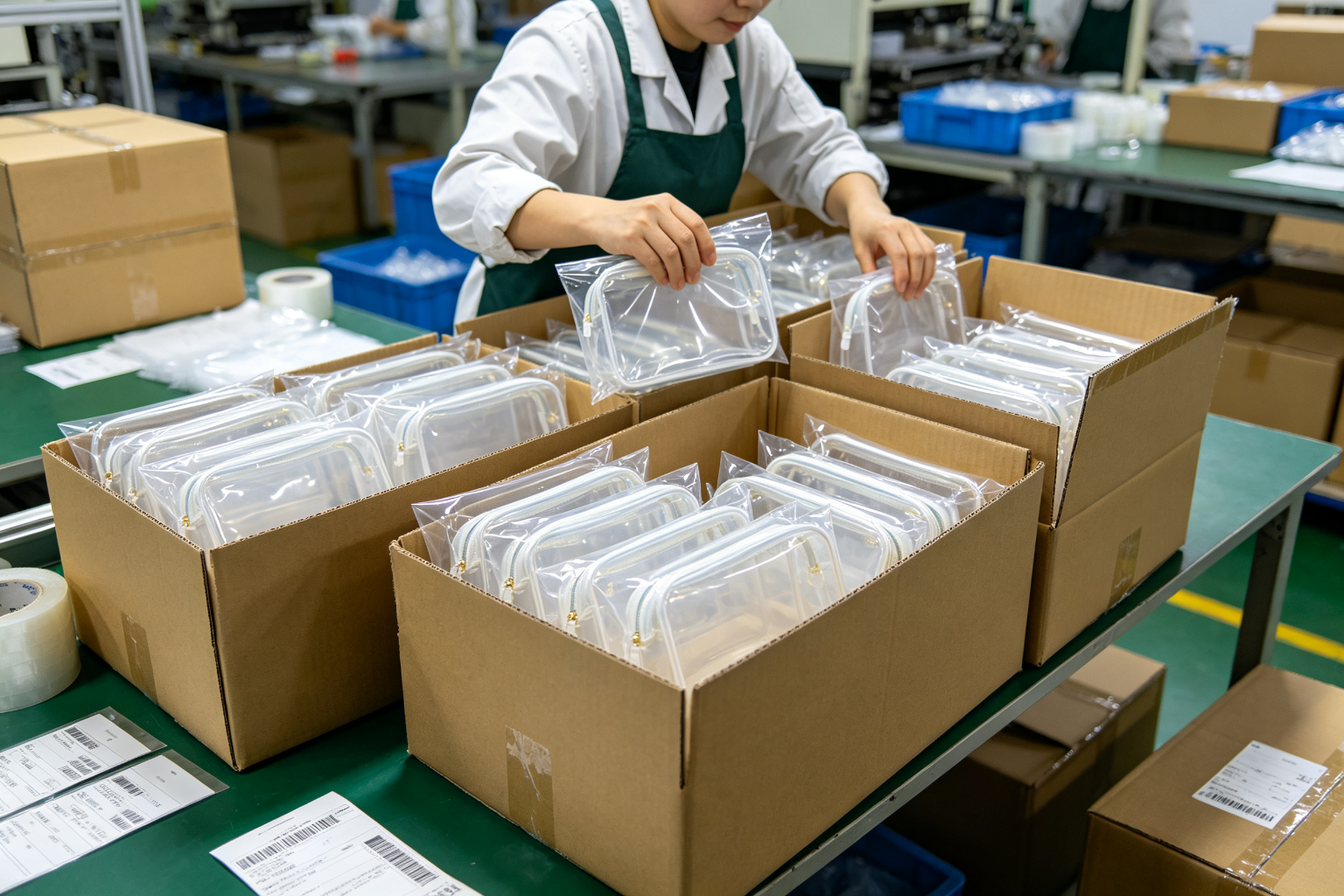
Retail-ready packaging: each pouch in individual polybag with insert card, 50 pieces per export carton, total 100 cartons. Shipped FOB Shenzhen, arrived at German fulfillment center in 26 days.
7. Key Takeaways for Buyers Sourcing Custom Cosmetic Bags
PHASE 7 · LESSONS LEARNEDThis project reinforced five lessons that apply to any custom cosmetic bag sourcing decision, regardless of quantity or destination market:
Verify Material Authenticity Before Approving Samples
The most common fraud in clear cosmetic bag sourcing is labeling PVC as TPU. PVC costs 40-50% less, has a strong odor, requires phthalate plasticizers (REACH risk), and cracks after 10-20 flex cycles. TPU is phthalate-free, low-odor, and survives 50+ flex cycles. How to verify: (1) request a material test report from the supplier specifying the polymer type; (2) perform a burn test — TPU burns with a sweet, chemical smell and leaves a hard black bead, while PVC burns with acrid, chlorine-smelling smoke and leaves a soft ash; (3) check the price — if a quote for "0.4mm TPU" is below $1.80 FOB, it is almost certainly PVC.
Odor is a Material and Process Problem, Not a Packaging Problem
Many buyers try to solve odor by adding air fresheners or longer airing periods, but the root cause is almost always cheap material formulation. PVC with high-phthalate plasticizers off-gasses continuously for months — no amount of airing will eliminate it. TPU with medical-grade formulation has minimal residual odor that dissipates within 24-48 hours. Specify low-odor, phthalate-free material in your tech pack, request a VOC test report, and implement a 24-48 hour production airing period as a secondary safeguard.
Logo Opacity on Clear Material Requires an Under-Base Layer
Printing directly on clear TPU or PVC almost always results in a translucent, washed-out logo — the ink sits on a transparent surface and light passes through from behind. The solution is a white under-base layer printed first, followed by the colored ink layers. This adds one printing pass and approximately $0.05-$0.10 per unit, but it is the difference between a logo that looks "cheap" and one that looks "premium." Always specify "white under-base required" in your tech pack when printing on clear materials.
RF Weld Width Matters More Than Weld Time
Many factories default to 3mm weld width to save material and increase production speed. But 3mm welds on 0.4mm TPU have a high failure rate — the seam can peel under normal use (opening/closing the zipper, stuffing the bag full). We specified 5mm weld width on this project, which increased material usage by 4% but reduced seam failure risk by an estimated 70%. For any clear TPU/PVC bag that will be used repeatedly (not just a one-time promotional item), specify minimum 4mm weld width and require a peel test (5kg/10sec) on production samples.
A Firm Delivery Date Requires Production Line Dedication
The #1 cause of delayed cosmetic bag shipments is line-switching — a factory accepts your order, then pauses production when a larger, higher-priority order comes in. Your 5,000-piece order sits half-finished for 5-7 days while the factory runs a 50,000-piece order for a bigger client. To prevent this, explicitly require in your purchase order that "one dedicated production line shall be assigned to this order from start to finish, with no line switching." Verify this during your factory visit or video call — you should see your product running on a line with no other product mixed in. On this project, line dedication was the key reason we delivered 3 days early.
For a complete guide to cosmetic bag materials, construction, and compliance, read our custom cosmetic bag manufacturing guide. For general sourcing advice, see our how to source custom bags from China article.
Have a Custom Cosmetic Bag Project?
Get a factory-direct quote within 8 Hours. We specialize in clear TPU/PVC pouches, vegan leather cases, RPET recycled makeup bags, and hanging toiletry organizers — 500 MOQ, free material swatches, 7-10 day custom samples, with BSCI social-conformance and ISO-9001-aligned production.
Request a Free QuoteOr explore our full cosmetic bag catalog
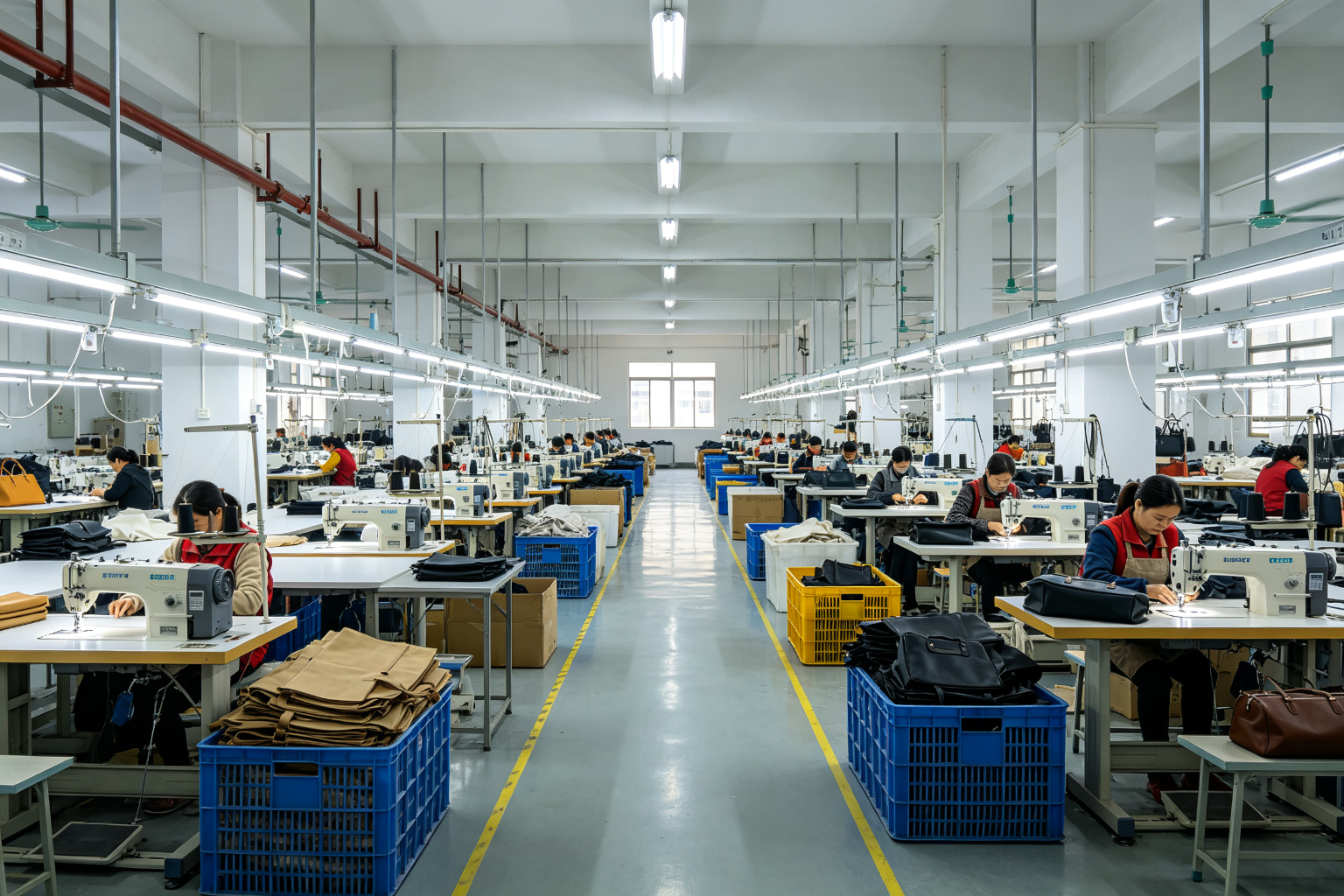
Our Dongguan factory: 120 workers across 6 production lines, BSCI/ISO9001/GRS certified, 500 MOQ, 7-10 day custom samples. Specializing in TPU cosmetic bags, RPET backpacks, canvas totes, and insulated cooler bags.
Frequently Asked Questions
How long does it take to produce 5,000 custom TPU cosmetic bags?
Direct Answer: A 5,000-piece clear TPU cosmetic bag with custom logo and retail packaging takes 28-35 days from sample approval to FOB shipment. In this case study we delivered in 32 days, including one round of sample revisions.
- Order: 5,000 pcs clear TPU
- Sample Development: 5-10 days
- Bulk Production: 15-20 days
- Total (approval to FOB): 28-35 days
- Actual Delivery: 32 days
For a 5,000-piece clear TPU cosmetic bag order with custom logo and retail packaging, the total timeline from sample approval to FOB shipment is typically 28-35 days. Sample development takes 5-10 days, pre-production (material sourcing, mold making, PPS sample) takes 3-5 days, bulk production runs 15-20 days, and final QC plus shipping booking takes 4-6 days. In this case study, we delivered in 32 days including one round of sample revisions.
What is the defect rate for custom clear TPU cosmetic bags?
Direct Answer: A well-run clear TPU cosmetic bag line should hold a defect rate under 2% at AQL 2.5, with weak weld seams (0.5-1%) the most common issue. This run finished at 0.8% — comfortably below the 2.5% major-defect acceptance threshold.
- Target: Below 2% (AQL 2.5)
- Top Defect: Weak welds 0.5-1%
- Actual Rate: 0.8%
A well-managed clear TPU cosmetic bag production run should achieve a defect rate below 2% under AQL 2.5 inspection standards. The most common defects are weak weld seams (0.5-1%), logo printing misalignment (0.3-0.8%), material scratches (0.2-0.5%), and zipper issues (0.2-0.5%). In this case study, the final defect rate was 0.8% — well below the AQL 2.5 acceptance threshold of 2.5% for major defects.
Do clear TPU cosmetic bags need REACH compliance for the EU market?
Direct Answer: Yes — clear TPU cosmetic bags for the EU must comply with REACH, mainly restricted phthalates in the TPU film, plasticizers, and printing inks. We pull supplier declarations and third-party lab reports for film, zipper, and ink before production and lock requirements into the tech pack.
- Regulation: EU REACH
- Watch Items: Phthalates, restricted substances
- Evidence: Supplier declarations + lab reports
- Where Spec'd: In the tech pack
Yes. Clear TPU cosmetic bags sold into the EU market must comply with REACH (Registration, Evaluation, Authorisation and Restriction of Chemicals) regulations. The primary concern is restricted phthalates and other substances on the REACH Candidate List that may be present in TPU formulations, plasticizers, and printing inks. In this case study, we requested supplier declarations and third-party laboratory test reports for the TPU film, zipper, and silk-screen ink before production, and specified all compliance requirements in the tech pack.
What is the best logo printing method for clear TPU cosmetic bags?
Direct Answer: Silk-screen printing is the standard, cost-effective logo method for clear TPU — $0.15-$0.40 per unit per color over 5,000 pieces. Digital UV handles gradients at $0.50-$1.20; hot stamping runs $0.30-$0.70. This order used 2-color screen print at $0.28 per unit.
- Best Value: Silk-screen, $0.15-$0.40/color
- Gradient Option: Digital UV, $0.50-$1.20
- Foil Stamp: Hot stamping, $0.30-$0.70
- This Order: 2-color screen, $0.28/unit
Silk-screen printing is the most common and cost-effective logo method for clear TPU cosmetic bags, producing crisp, opaque logos that show well against transparent material. For orders above 5,000 pieces, silk-screen costs $0.15-$0.40 per unit per color. Digital UV printing is an alternative for multi-color gradient logos but costs $0.50-$1.20 per unit. Hot stamping (foil) works on TPU but requires a flat surface and costs $0.30-$0.70 per unit. In this case study, we used 2-color silk-screen printing with a white under-base layer on the front panel for a clean, premium result at $0.28 per unit.
How do you prevent odor issues in clear TPU cosmetic bags?
Direct Answer: TPU odor is prevented three ways: source low-odor medical-grade film, air bags 24-48 hours before polybagging, and add a silica-gel desiccant. This case used low-odor film, a 36-hour airing, and desiccant — resulting in zero odor complaints from end customers.
- Material: Low-odor medical-grade TPU
- Airing Period: 24-48 hours
- Desiccant: Silica gel sachet
- Result: Zero odor complaints
TPU material odor is a common complaint in cosmetic bag production, especially when bags are sealed in polybags immediately after production. The solution has three parts: (1) source low-odor, medical-grade TPU film from reputable suppliers — cheap TPU or PVC recycled content has a strong chemical smell; (2) allow a 24-48 hour airing period after production before packaging, with bags kept in a well-ventilated area; (3) use breathable packaging or add a small silica gel desiccant packet inside each polybag. In this case study, we used low-odor optical-grade TPU film, implemented a 36-hour airing period, and added desiccant packets with vent holes in polybags — the client reported zero odor complaints from end customers.