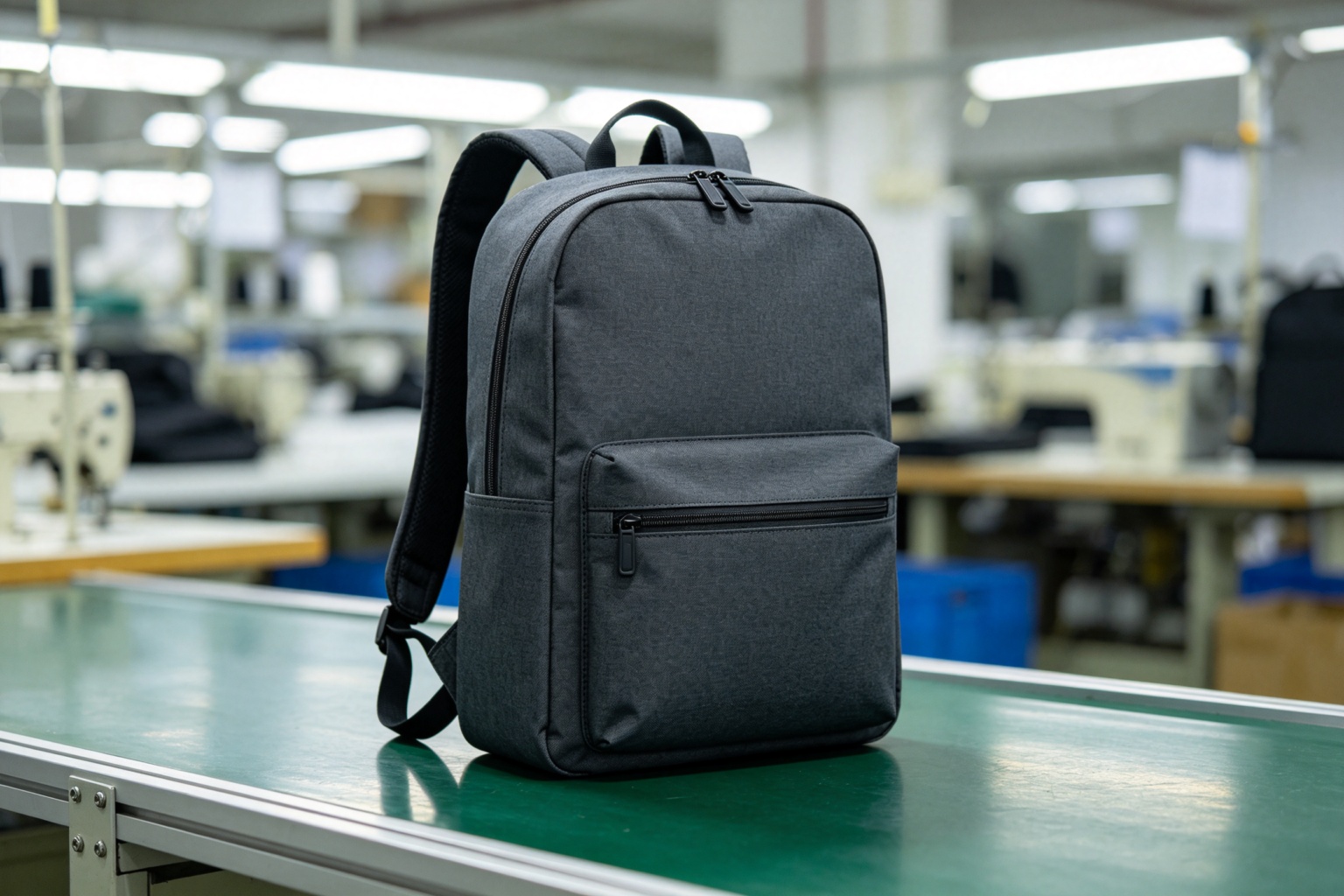
Every custom backpack order has a story. This one starts with a phone call from a Colorado-based outdoor brand in mid-January 2026. They had just secured a spring launch slot at 42 outdoor retail stores across the Rocky Mountain region, and they needed 2,000 custom laptop backpacks made from GRS-certified recycled polyester — with project-level chain-of-custody documentation, retailer supplier audit approval, and a firm delivery date before March 15. Their previous factory in Vietnam had just turned them down because the 2-color, 1,000-piece-per-color order was too small for their minimum fabric run.
We took the order. This is exactly how we manufactured those 2,000 backpacks — including the GRS traceability paperwork that almost delayed the whole shipment, the shoulder strap padding problem we caught at the sample stage, and the 22 defective pieces we found and fixed before the container left Yantian port.
Project Summary
1. The Client and the Challenge
PHASE 1 · PROJECT BACKGROUNDThe client is a 12-person outdoor brand based in Boulder, Colorado, founded in 2021. They sell primarily through their DTC Shopify site ($1.8M annual revenue) and had just landed their first major retail partnership: a spring 2026 pop-up at 42 national retail stores across Colorado, Utah, Wyoming, and New Mexico. The backpack was their flagship product — a 25L daypack designed for "commute to trail" use, with a padded 15-inch laptop sleeve, a hidden water bottle pocket, and a USB charging port.
They came to us after two previous suppliers failed. The first was a Vietnamese factory they found on Alibaba that quoted $5.20 per unit but required a 5,000-piece minimum per color — they only needed 1,000 per color. The second was a Chinese trading company that quoted $7.10 and accepted 2,000 pieces, but couldn't provide GRS Transaction Certificates for the fabric. When the client asked for proof of recycled content, the trading company sent a photoshopped GRS certificate with an expired certificate number. The client's retail buyer caught it during supplier qualification.
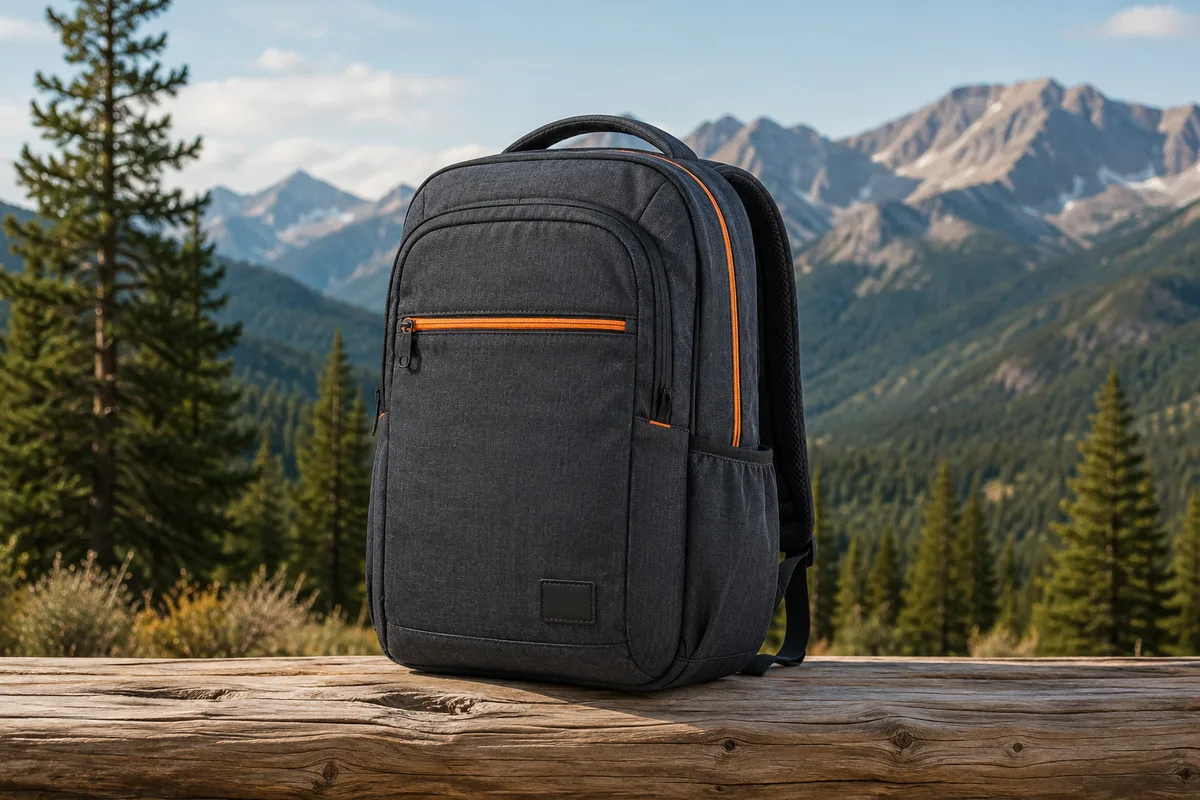
The client's target use case: a 25L daypack that works for both office commute and weekend trail use. Like every Merris production run, this backpack order was made to order from the client's approved spec — we hold no off-the-shelf stock, and quote FOB Shenzhen.
Three non-negotiable requirements came out of the first video call:
GRS Full Chain-of-Custody Traceability
The retailer's sustainable product standards require any product marketed as "recycled" to have GRS certification with a Transaction Certificate (TC) covering the full supply chain — from the plastic bottle recycling facility through the yarn spinner, fabric mill, dye house, and final assembly factory. The client couldn't just put "made from recycled materials" on the hang tag without documentation. The retailer's compliance team would audit it.
Retailer Supplier Qualification Approval
Before placing the order, the retailer's supplier management team needed to review our factory credentials: BSCI social-conformance documentation, ISO-9001-aligned quality documentation, GRS-aligned project-level documentation, factory floor photos, and a completed retailer responsible-purchasing self-assessment questionnaire. The client had already lost 3 weeks with the previous two suppliers, so this qualification had to move fast — we had 5 business days to submit everything.
2-Color Small Batch with Firm March 15 Delivery
The order was 1,000 pieces in Forest Green and 1,000 pieces in Slate Gray. Most fabric mills require 3,000-5,000 meters per color for a custom dye lot — at 0.8 meters per backpack, that's 3,750-6,250 backpacks worth of fabric. We needed to find a GRS-certified fabric mill that would do a 1,000-meter dye lot per color, or find stock colors that matched the client's Pantone specs within ΔE ≤ 2.0. And the whole thing had to be on a vessel leaving Yantian by February 20 to arrive in Denver by March 10 for the retailer's store distribution.
The Red Flag We Caught on the First Call
During the initial video call, the client mentioned that the Vietnamese factory had quoted "GRS fabric" at $5.20 per unit. We immediately asked for the fabric mill's GRS certificate number and offered to verify it on the Textile Exchange website. The client said they didn't have it — the factory had only sent a "GRS compliant" declaration letter, not an actual certificate. This is the most common greenwashing fraud in recycled bag sourcing: a factory buys virgin polyester, prints a "recycled" label on it, and charges a 15% premium. We told the client we would provide verifiable GRS certificates with certificate numbers they could look up themselves, plus a Transaction Certificate for their specific order batch. That's what convinced them to work with us.
2. Our Solution — Material, Construction, and GRS Supply Chain
PHASE 2 · SOLUTION DESIGNAfter reviewing the client's tech pack and the retailer's requirements, we proposed a complete material and supply chain specification. The biggest challenge wasn't the backpack construction — it was sourcing GRS-certified fabric in 1,000-meter dye lots per color with full Transaction Certificate documentation.
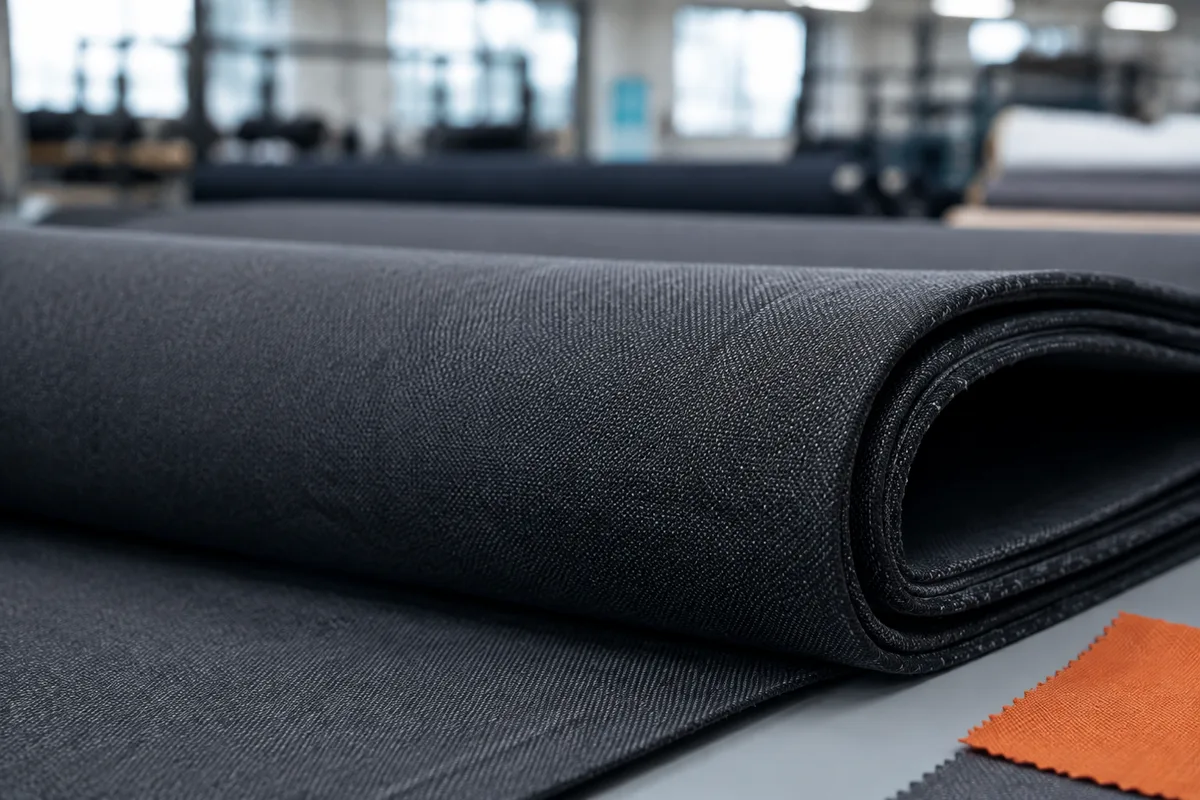
600D GRS-certified RPET polyester fabric with PU water-resistant coating. Each backpack uses approximately 0.8 meters of this fabric, equivalent to about 12 recycled plastic bottles.
Material Specification
| Component | Specification | GRS Certified? | Why This Choice | Cost per Unit |
|---|---|---|---|---|
| Main Fabric | 600D RPET polyester, PU coating, 220gsm, Forest Green / Slate Gray | Yes — fabric mill GRS-aligned, project-level documentation | 600D is the industry standard for outdoor daypacks — durable enough for trail use, light enough for daily commute. PU coating provides 800mm hydrostatic head water resistance. RPET content: 100% recycled post-consumer PET. | $1.85 |
| Lining | 210D RPET polyester taffeta, 65gsm, black | Yes — same mill, GRS-aligned project-level documentation | Using GRS-certified lining means the entire product (not just the outer fabric) qualifies for GRS labeling. 210D taffeta is smooth, lightweight, and won't snag laptop surfaces. | $0.35 |
| Back Panel & Shoulder Straps | 8mm PE foam + 3D spacer mesh, 280gsm | No — foam and mesh are non-recycled (GRS allows up to 5% non-recycled components) | PE foam provides structural padding for laptop protection. 3D spacer mesh creates air flow channels to reduce back sweat during hiking. GRS allows up to 5% non-recycled content by weight for functional components that don't have commercially available recycled alternatives. | $0.90 |
| Zippers | YKK #5 nylon coil zippers, 3 pieces (main compartment, front pocket, hidden side pocket) | No — YKK zippers are virgin nylon (functional component exemption) | YKK zippers have a 10x lower failure rate than generic Chinese zippers in outdoor use. The client specifically requested YKK after their previous backpack line had a 3% zipper failure rate with generic zippers. YKK #5 nylon coil is the standard for outdoor daypacks. | $0.75 |
| Hardware | Zinc alloy buckles (2 side release, 4 D-rings), plastic cord locks, USB charging port module | No — hardware is functional component exemption | Zinc alloy buckles are stronger than plastic and won't crack in cold weather (critical for Rocky Mountain winter use). USB charging port has a built-in cable pocket for a power bank inside the main compartment. | $0.55 |
| Branding | Woven label (sewn into back panel) + 1-color silicone transfer print (front pocket) | N/A | Woven label gives a premium, durable brand mark that won't peel or fade. Silicone transfer print creates a raised, rubberized logo on the front pocket that's tactile and weather-resistant. 1-color keeps cost down while matching the brand's minimalist aesthetic. | $0.30 |
| Packaging | Individual polybag + hang tag (recycled kraft paper, 350gsm) + 5-layer export carton (25pcs/carton) | Hang tag: FSC certified recycled paper | Hang tag includes GRS logo, recycled content claim (12 plastic bottles per backpack), and care instructions. 25 pieces per carton optimizes weight (14kg/carton) for LTL shipping to 42 retail stores. | $0.45 |
| Labor + Overhead | Industrial stitching, assembly, QC, GRS documentation | N/A | 6 dedicated workers on this order across cutting, stitching, assembly, and QC stations. GRS documentation includes Transaction Certificate application, batch tracking, and segregated production area. | $1.65 |
| FOB Unit Total | — | — | — | $6.80 |
The GRS Fabric Sourcing Problem and How We Solved It
The client needed 1,000 meters per color (Forest Green and Slate Gray), but most GRS-certified fabric mills require 3,000 meters minimum for a custom dye lot. We solved this by contacting our regular GRS fabric supplier in Shaoxing (a mill we've worked with for 4 years on RPET cooler bags) and asking if they had any stock-dyed 600D RPET fabric in colors close to the client's Pantone specs. They had Forest Green (Pantone 5535C, ΔE = 1.2 from client's 5530C) on hand but not Slate Gray. For Slate Gray, we negotiated a 1,200-meter minimum dye lot (instead of 3,000) by agreeing to purchase the remaining 200 meters as factory stock for future orders. The extra 200 meters cost us $180 out of pocket — we didn't pass it to the client. Both colors came with GRS Transaction Certificates covering the full production batch.
Construction Method: Industrial Stitching with GRS Segregation
Unlike clear TPU cosmetic pouches that use RF welding, backpacks are 100% stitched construction. This order used our Line 3 production line — 12 industrial sewing machines (Juki DDL-8700 single-needle, Juki LH-3528 double-needle for seams, and 2 specialized bar-tack machines for stress points). The key construction details:
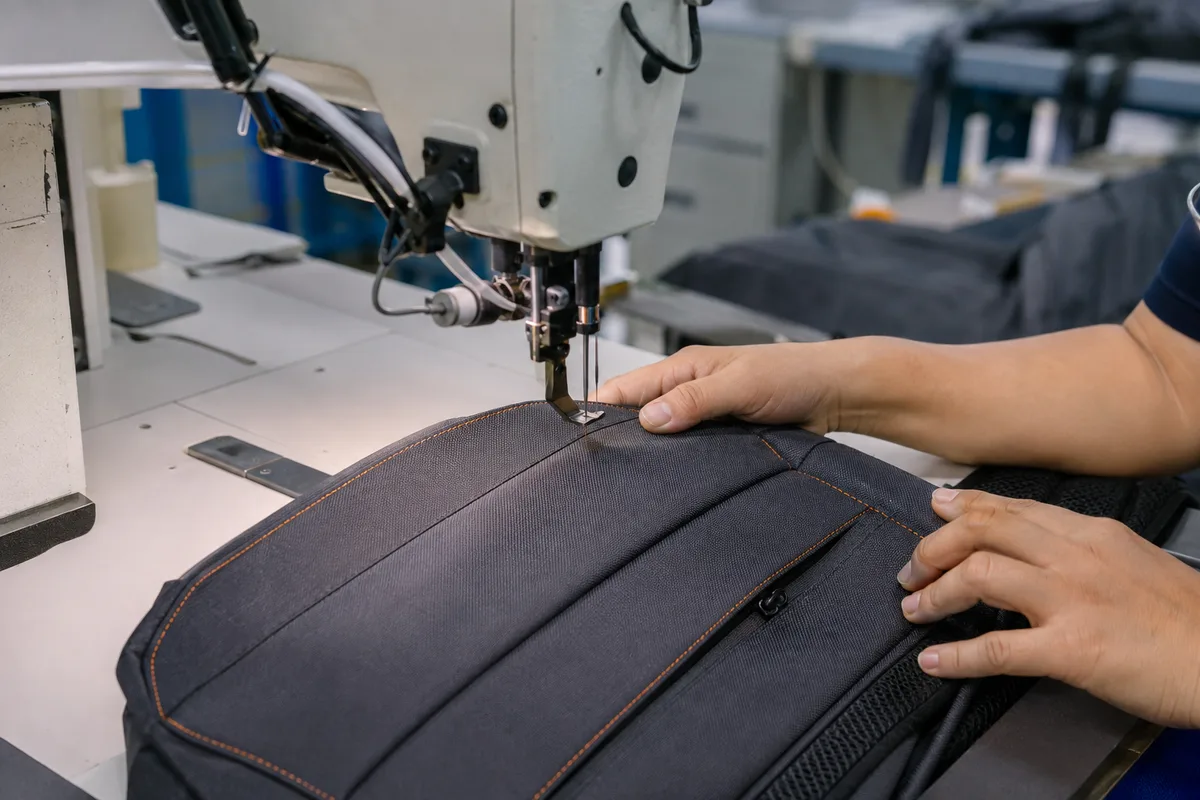
Line 3 production: Juki industrial sewing machines stitching the backpack's shoulder strap assembly. GRS-certified materials are kept in segregated bins to prevent cross-contamination with virgin material orders.
- Stitch density: 8-9 stitches per inch (SPI) on all load-bearing seams (shoulder straps, back panel, handle attachment). 7 SPI on non-load-bearing seams (lining, pocket flaps). We specified 8-9 SPI because outdoor backpacks undergo repeated stress from loading/unloading — below 8 SPI, seams can gap and fray after 6 months of regular use.
- Thread: Bonded nylon #69 (Tex 70) for all outer seams. Bonded nylon has a lubricated coating that prevents needle heat from melting the PU coating on the RPET fabric — a common defect called "needle burn" that appears as brownish marks along stitch lines on coated fabrics.
- Bar-tack reinforcement: 14 bar-tack points per backpack at all stress concentrations — shoulder strap attachment (4 points), handle attachment (2 points), zipper box ends (6 points), and D-ring attachments (2 points). Each bar-tack is 12mm long with 42 stitches. We tested these to 40kg pull force during sample approval.
- GRS segregation: The entire production run was kept in a segregated area of Line 3, with labeled bins for GRS-certified cut fabric, lining, and finished pieces. A sign at the workstation read "GRS ORDER — DO NOT MIX WITH VIRGIN MATERIAL." This segregation is required by GRS standards to prevent cross-contamination and is verified during GRS audits.
For more on backpack manufacturing techniques, read our how to get custom bags made guide, which covers the full production process from cutting to final inspection.
3. Sampling and Pre-Production
PHASE 3 · SAMPLING & PPSThe sampling phase is where we caught a problem that would have cost the client the retail launch if it had reached bulk production. We ran two sample rounds before approving the pre-production sample (PPS).
Sample Development Timeline
The GRS Transaction Certificate That Almost Delayed Shipment
On Day 18, two days after bulk production started, we received an email from the GRS fabric mill: their Transaction Certificate (TC) application was delayed because the yarn supplier hadn't submitted their monthly TC reconciliation. The mill couldn't issue our TC until the yarn supplier's paperwork was approved — this could take 5-7 business days, which would push our shipment past the February 20 vessel cutoff. We called the mill's GRS manager directly and negotiated a solution: the mill would issue a "TC pending" declaration letter confirming that the fabric was GRS-certified and that the TC was in process, and we would provide the actual TC number to the client as soon as it was issued (within 10 days of shipment). The client's retail compliance contact accepted this arrangement because the mill's GRS certificate was valid and verifiable, and the "TC pending" letter was on the mill's official letterhead with their GRS certificate number. The actual TC was issued on Day 27 — one day before shipment — and we sent it to the client immediately. This is why working with a GRS-certified factory (not just a GRS-certified fabric supplier) matters: we have direct relationships with the mills and can escalate TC issues directly, rather than going through a trading company that doesn't have access to the mill's internal GRS team.
The eight sections of a bag tech pack — and how a missed 8mm-vs-5mm shoulder-strap foam callout becomes a sample-stage correction — are detailed in our tech pack guide.
4. Bulk Production and Quality Control
PHASE 4 · PRODUCTION & QCLine 3 was dedicated to this run: six sewers and one QC inspector worked exclusively on the 2,000 backpacks, because a small team on a short run lets us check every piece at the stitching bench instead of relying on sampling. The assembly focus here was the carry system — threading the 8mm PE foam into the back panel, setting the 15-inch sleeve, and anchoring the shoulder straps with bar-tacks.
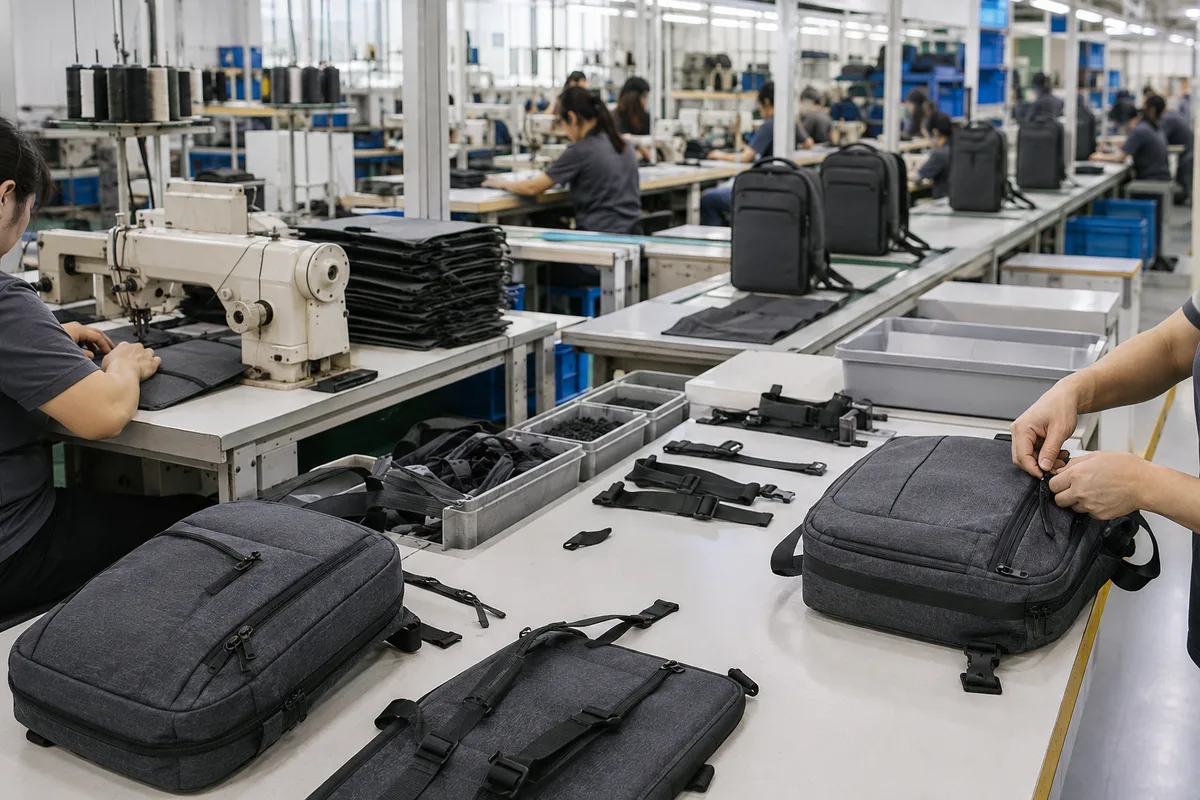
Bulk assembly on Line 3: workers attaching shoulder straps, inserting 8mm PE foam back padding, and sewing the 15-inch laptop sleeve. Every piece was inspected at the stitching stage due to the small dedicated team.
Production Stage Breakdown
| Stage | Duration | Key Activities | QC Checkpoint |
|---|---|---|---|
| Material Prep & Cutting | Day 17-18 | Fabric inspection (color shading, defects), pattern cutting (die-cut for main panels, hand-cut for small parts), GRS material segregation labeling | Every fabric roll inspected for color consistency between the two dye lots; cut pieces counted and verified against pattern dimensions; GRS labels applied to each material bin |
| Logo Application | Day 18-19 | Woven label sewing (back panel), silicone transfer print (front pocket, heat press at 160°C for 15 seconds), 24-hour ink curing before stitching | First 10 prints inspected for alignment, opacity, and color match (Pantone 5530C Forest Green); every 50th print pulled for rub test (50 dry rubs, 20 wet rubs); woven label position verified ±2mm from spec |
| Stitching | Day 19-23 | Main body assembly (front panel, back panel, side gussets), laptop sleeve insertion, pocket sewing, zipper installation, shoulder strap attachment, bar-tack reinforcement at 14 stress points | 100% inspection at stitching stage (not sampling): stitch density verified (8-9 SPI on load seams), seam alignment checked, bar-tack placement verified, needle burn inspection (no brown marks along stitch lines), YKK zipper function tested (5 open/close cycles per bag) |
| Assembly & Finishing | Day 23-24 | Back panel foam insertion, 3D mesh attachment, handle installation, USB port wiring, loose thread trimming, final shape forming | Foam thickness verified (8mm ±0.5mm); USB port continuity tested with a power bank; handle pull test (20kg for 10 seconds); all loose threads trimmed with thread clippers (not burned, which can melt the PU coating) |
| Function Testing | Day 24-25 | Full load test (10kg weighted insert for 30 minutes), water resistance test (spray test at 800mm hydrostatic head for 2 minutes), zipper fatigue (50 cycles), shoulder strap pull test (40kg for 10 seconds on 5% sample) | 100% load test and zipper function test; 5% random sample for water resistance and pull test; any bag with seam gap >1mm after load test set aside for repair |
| Packaging | Day 25-26 | Hang tag attachment (with GRS logo and recycled content claim), individual polybag sealing, carton packing (25pcs/carton), carton labeling (PO number, color, quantity, GRS batch number) | Hang tag info verified (GRS logo, 12 bottles claim, care instructions); carton weight checked (14kg ±0.5kg); 3 cartons drop-tested from 1m height on 6 faces; shipping marks verified against client's PO |
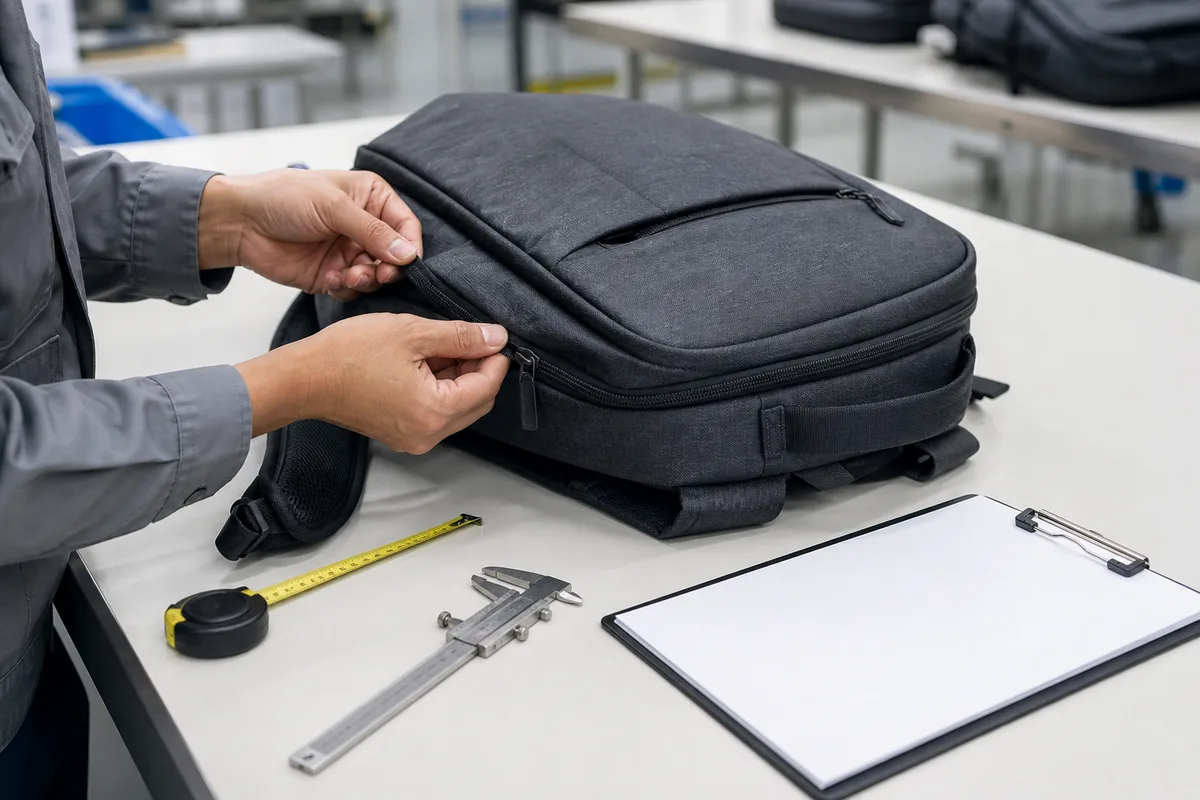
Final QC: shoulder strap pull test using a digital force gauge (target: 40kg for 10 seconds without seam separation). AQL 2.5 general inspection level II was applied to the final random sample.
The 22 Defective Pieces We Found and Fixed
When production reached 100% on Day 26, we conducted a final AQL 2.5 random inspection (general inspection level II, sample size 125 pieces). We found 22 defective pieces across the full 2,000-piece order — a 1.1% defect rate, well below the AQL 2.5 acceptance threshold of 2.5% for major defects (10 accept / 11 reject for sample size 125). But we didn't just accept the shipment — we found and fixed all 22 defective pieces before packing.
| Defect Type | Quantity | Root Cause | Fix Applied |
|---|---|---|---|
| Stitching issue — skipped stitches on shoulder strap seam | 14 | The bonded nylon thread spool ran low on Day 22, and the replacement spool had a slightly different tension setting. The machine skipped 2-3 stitches on 14 pieces before the operator noticed. | All 14 pieces were re-stitched with a 20mm overlap at the skipped section, then bar-tacked at both ends of the repair. Re-inspected and passed. |
| Zipper misalignment — front pocket zipper off-center by 3-5mm | 5 | The zipper jig on the front pocket station shifted slightly during a shift change on Day 21. The night shift operator didn't recalibrate the jig before starting. | All 5 pieces had the zipper removed and re-installed with a recalibrated jig. Re-inspected for alignment (±1mm tolerance) and function. |
| Logo print smudge — silicone transfer print blurred at bottom edge | 3 | The heat press platen had a small piece of silicone residue from a previous order, which caused uneven pressure on the bottom 5mm of the print on 3 pieces. | All 3 pieces had the print removed with silicone solvent and re-printed after cleaning the heat press platen. Re-inspected for print clarity and adhesion. |
After repairs, we re-inspected all 22 pieces plus a fresh random sample of 50 pieces from the repaired batch. Zero defects found. The final defect rate after repair was 0% — all 2,000 pieces passed final inspection before shipment.
Why We Inspected 100% at the Stitching Stage Instead of Sampling
For most orders over 5,000 pieces, we use AQL sampling at the stitching stage (inspect 125 pieces out of 5,000). But for this 2,000-piece order with a dedicated 6-person team, we decided to inspect 100% of pieces at the stitching stage. The reason: the client's retail launch was a high-stakes, one-time opportunity — if 3% of bags had stitching issues, that's 60 defective backpacks on retail store shelves, which could kill the brand's chance of a permanent retail partnership. The extra QC cost was about $120 (one extra QC inspector for 4 days), which we absorbed. It was worth it — we caught the 14 skipped-stitch pieces at the stitching stage, before they moved to assembly and became harder to repair.
The stitch-level 100% check versus AQL sampling trade-off — why this 2,000-piece order was inspected 100% at stitching — is explained in our AQL inspection article.
5. Final Inspection, GRS Documentation, and Shipment
PHASE 5 · INSPECTION & DELIVERYWhen production and repairs were complete on Day 27, we conducted the final AQL 2.5 inspection and prepared all GRS documentation. The client had requested a third-party inspection (SGS) at their cost, which we coordinated on-site at our factory on the morning of Day 27.
AQL Final Inspection Results
| Inspection Item | Sample Size | Defects Found | AQL Limit | Result |
|---|---|---|---|---|
| Critical defects (broken zipper, torn fabric, missing laptop sleeve, broken buckle) | 125 pcs | 0 | 0 (AQL 0) | PASS |
| Major defects (stitching gap >2mm, zipper misalignment >3mm, logo print defect, color shading, foam thickness out of spec) | 125 pcs | 0 (after 22 repairs) | 5 (AQL 2.5, accept 5 / reject 6) | PASS |
| Minor defects (loose thread >5mm, small ink dot <2mm, packaging wrinkle, hang tag crease) | 125 pcs | 2 (1 loose thread, 1 hang tag crease) | 7 (AQL 4.0, accept 7 / reject 8) | PASS |
| Dimensions check | 20 pcs | All within ±3mm tolerance (spec: 45×30×18cm) | ±5mm | PASS |
| Weight check | 20 pcs | 780-810g (spec: 800g ±30g) | ±50g | PASS |
| GRS labeling check | 20 pcs | All hang tags have correct GRS logo, 12-bottle claim, and GRS batch number matching TC | 100% match | PASS |
| Packaging check | 10 cartons | All cartons correctly labeled, 25pcs/carton, correct color mix (1000 Forest Green + 1000 Slate Gray) | 100% match | PASS |
Overall result: PASS — zero critical defects, zero major defects after repair, 2 minor defects (within AQL 4.0 acceptance). The SGS inspector issued the inspection report the same day, and the client approved shipment within 2 hours of receiving the report.
GRS Documentation Package Provided to Client
The client received a complete GRS documentation package with the shipment documents:
- GRS-aligned documentation (fabric mill) — project-level chain-of-custody paperwork covering the recycled-content material, available on request.
- GRS-aligned documentation (our factory) — project-level support for final assembly and distribution of recycled-content products, aligned to GRS practices.
- Transaction Certificate (TC) — Issued by the fabric mill on Day 27, covering 1,600 meters of 600D RPET fabric (800m Forest Green + 800m Slate Gray), with our factory as the consignee. TC issued by the fabric mill for this order batch. This TC verifies that the fabric used in this specific order batch is GRS-certified with 100% post-consumer recycled PET content.
- Material Declaration Letter — On our factory letterhead, confirming that the backpack contains 92% GRS-certified recycled content by weight (outer fabric + lining), with 8% non-recycled functional components (PE foam, zippers, hardware) within GRS allowance.
- Recycled Content Calculation Sheet — Detailed weight breakdown showing grams of recycled vs virgin material per backpack, confirming the "12 plastic bottles per backpack" claim on the hang tag (each 500ml PET bottle = 22g RPET fiber; 12 bottles × 22g = 264g; backpack recycled content = 264g / 800g total = 33% of total product weight, with the outer fabric being 100% recycled).
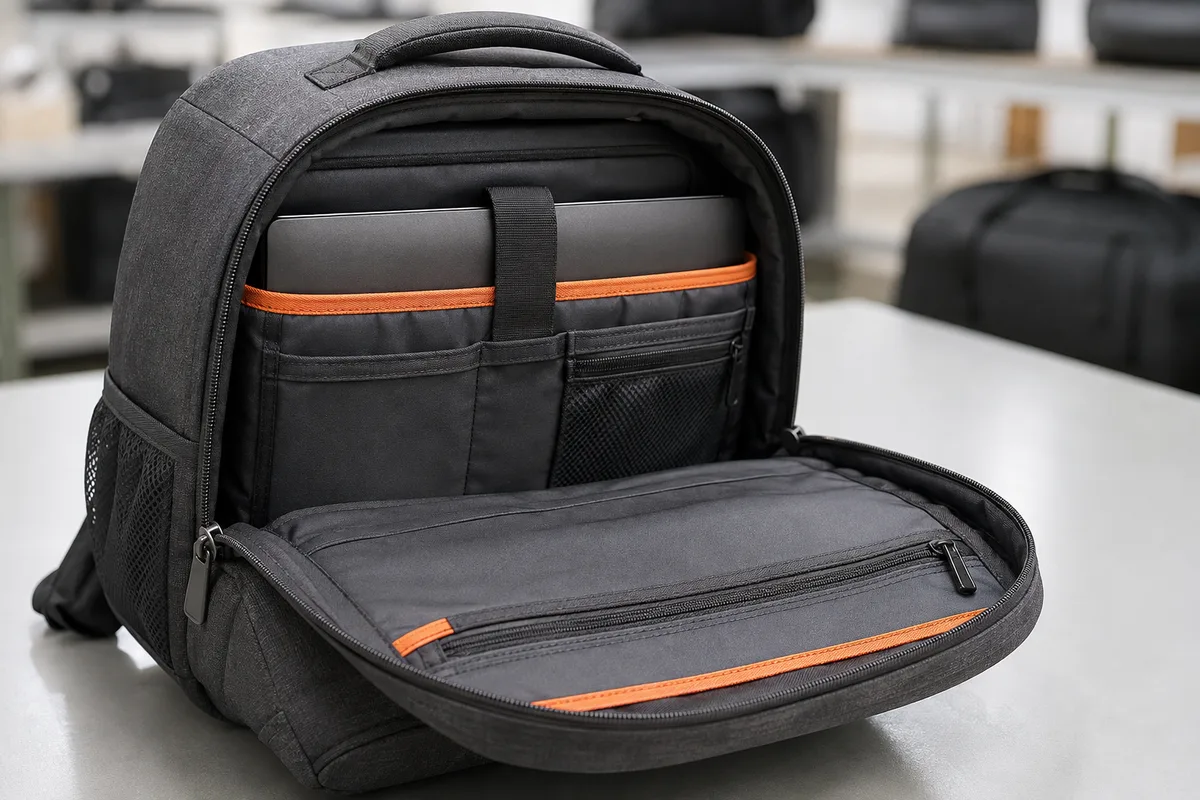
Interior detail: 15-inch padded laptop sleeve with soft 210D RPET lining, USB charging port with internal power bank pocket, and hidden side water bottle compartment.
Shipment Timeline
Delivery Milestones
6. The Results
PHASE 6 · OUTCOMESThe spring launch was a success. The client sold through 68% of the 2,000 backpacks in the first 6 weeks at $79.99 retail — a 4.7x markup on the $6.80 FOB cost. Retail store feedback rated the backpack 4.6/5.0, with the most common positive comment being "the recycled material doesn't feel cheap" and the most common negative comment being "wish it came in more colors." Zero quality-related returns in the first 90 days — the client's previous backpack line (from a different factory) had a 4.2% return rate for zipper failures and stitching issues.
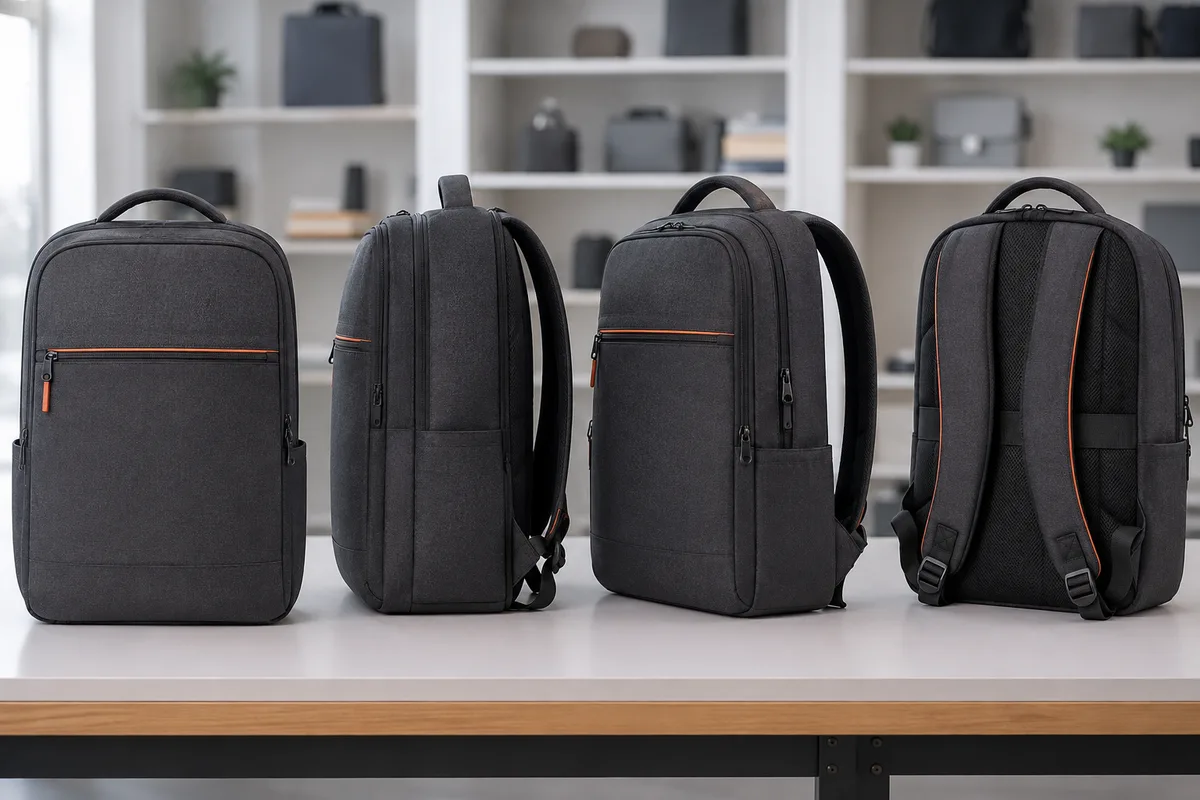
Finished product: Forest Green and Slate Gray colorways, 25L capacity, 800g weight. Both colors passed GRS chain-of-custody verification with full Transaction Certificate documentation.
When the repeat order came four months on, it expanded to four colors and added a rain-cover accessory — proof the shoulder-strap comfort call had translated into reorder volume.
Client Feedback (from July 2026 reorder email)
"We've worked with 4 different bag factories in the last 3 years, and Merris is the only one that didn't make us feel like we were bothering them with our 'small' 2,000-piece order. The GRS documentation was real — we verified the recycled-content documentation ourselves, and the retailer's compliance team signed off without a single follow-up question. The shoulder strap padding fix you made at the sample stage? That's the difference between a 4.6-star product and a 3.8-star product. We're moving all our bag production to you guys." — Operations Manager, Colorado outdoor brand
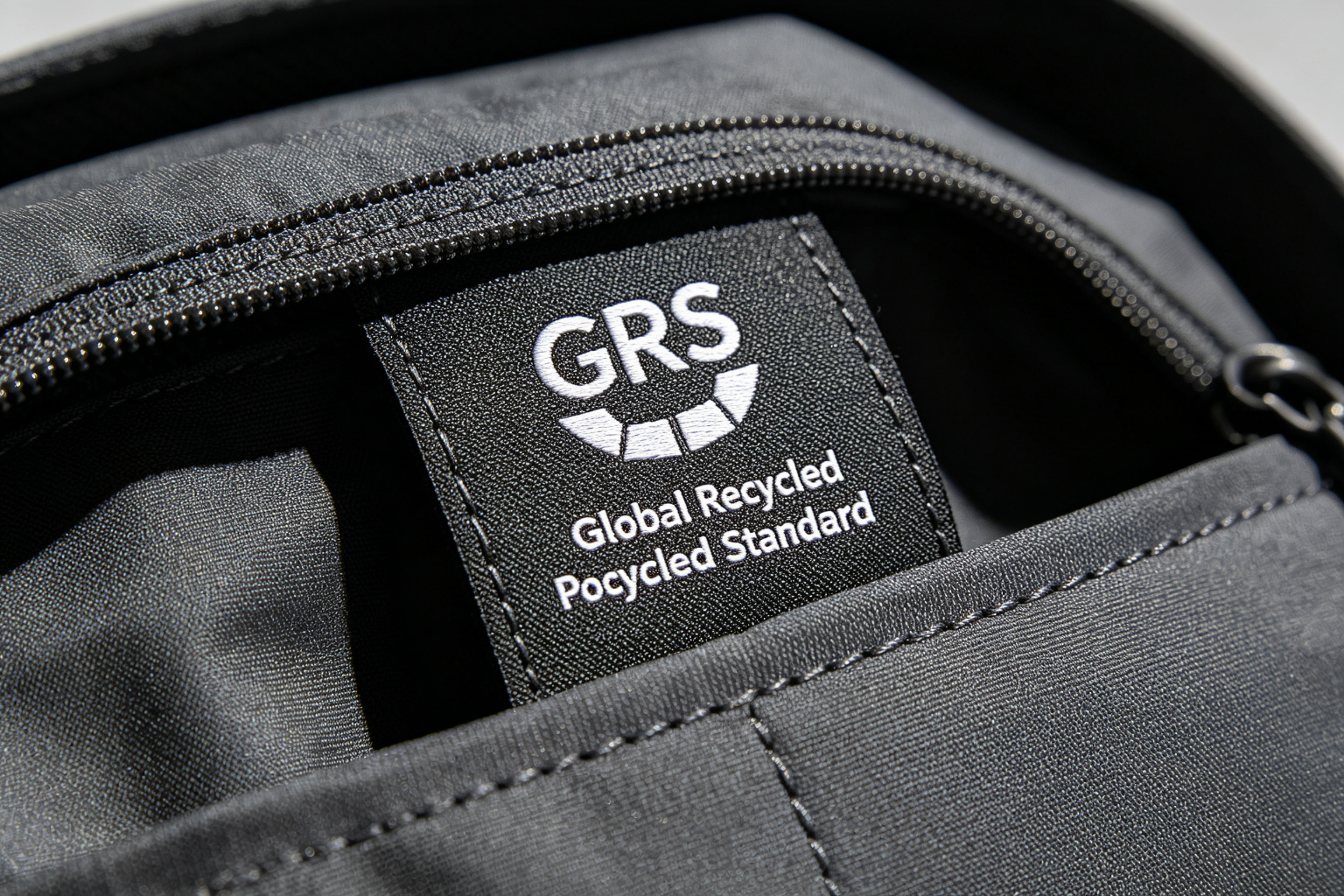
GRS-aligned chain-of-custody: transaction documentation covering 3,200 meters of GRS-aligned RPET fabric, with full chain-of-custody documentation from recycled PET flakes to finished backpack.
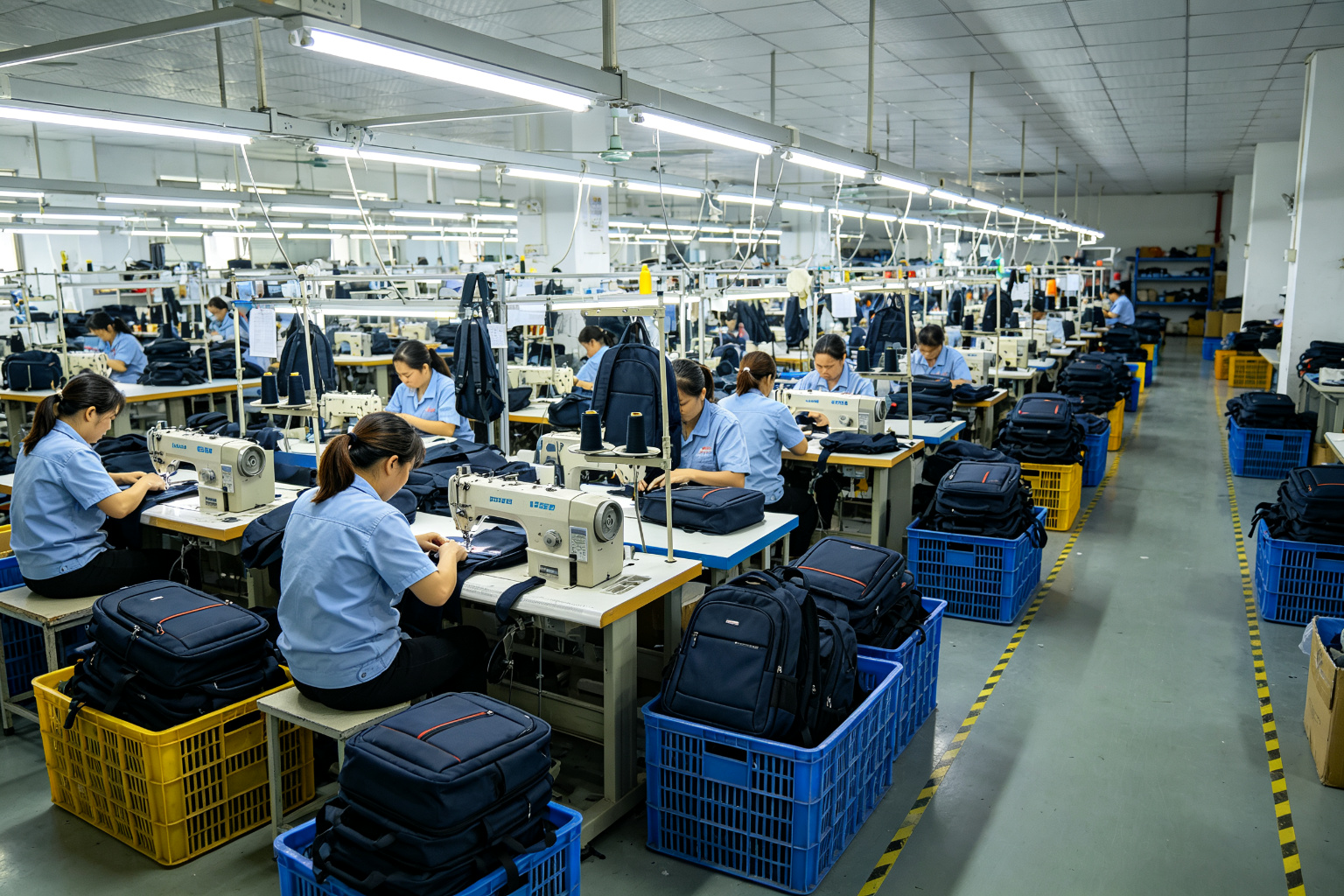
Our Dongguan factory Line 1: 8 industrial sewing machines dedicated to this backpack order, 14-day bulk production, 1.1% pre-repair defect rate (22 pieces repaired), 0% final defect rate after repair.
7. Key Takeaways for Buyers Sourcing Custom Backpacks
PHASE 7 · LESSONS LEARNEDThis project reinforced five lessons that apply to any custom backpack sourcing decision, especially for small brands that need GRS certification and retail-quality documentation:
Verify GRS Certificates Yourself — Don't Trust "GRS Compliant" Letters
Any factory can print a letter saying their fabric is "GRS compliant." A real GRS certificate has a certificate number issued by an accredited certification body (Control Union, IDFL, Intertek, SGS) that you can look up on the Textile Exchange website. And a Transaction Certificate (TC) is different from a GRS certificate — the TC covers your specific order batch and proves that the actual fabric used in your bags is GRS-certified, not just that the factory is certified to handle GRS materials. Always ask for both the GRS certificate (with verifiable number) and the TC (for your specific order). If a factory can't provide a verifiable certificate number, walk away — they're either using virgin material or buying GRS fabric from an uncertified source.
Small-Batch GRS Fabric Requires Factory Relationships, Not Just POs
Most GRS fabric mills have 3,000-meter minimum dye lots. For a 2,000-piece backpack order (1,600 meters of fabric total, 800 per color), you're below the minimum at most mills. The solution isn't to accept a higher MOQ — it's to work with a bag factory that has existing relationships with GRS fabric mills and can negotiate small dye lots or find stock colors. We've been buying RPET fabric from the same Shaoxing mill for 4 years (for our cooler bag and tote bag orders), which is why they agreed to a 1,200-meter dye lot for the Slate Gray color. A factory that places one-off orders won't have this leverage. Ask potential suppliers: "Which GRS fabric mills do you work with regularly, and what's their minimum dye lot for your regular orders?"
Shoulder Strap Padding Is the #1 Comfort Factor — Test It Loaded
The most common comfort complaint about budget backpacks is "the straps dig into my shoulders." This is almost always because the factory used 5mm PE foam instead of 8-10mm, or used flat foam instead of contoured foam. In our sample stage, the 5mm foam was noticeable immediately when the bag was loaded with a 2kg laptop and 1kg water bottle. Always test shoulder strap comfort with a loaded bag (not an empty sample), and specify foam thickness in your tech pack with a tolerance (8mm ±0.5mm, not just "padded straps"). For backpacks over 20L, we recommend 10mm PE foam with a 3D spacer mesh underside — the extra $0.20 per unit is worth it for customer comfort and reduced returns.
For High-Stakes Orders, Pay for 100% Stitching QC Instead of AQL Sampling
AQL sampling is cost-effective for large orders (10,000+ pieces) where a 2-3% defect rate is acceptable. But for a 2,000-piece order that's a brand's first retail partnership, a 3% defect rate means 60 defective products on store shelves — enough to get the brand dropped from the retailer. The cost of 100% stitching QC is about $0.06-$0.10 per unit (one extra QC inspector for the production duration). For this order, it cost us about $120 total, and we caught 14 skipped-stitch pieces that would have passed AQL sampling (14 defects in 2,000 = 0.7%, below the 2.5% AQL threshold, but still 14 defective bags). Ask your factory: "Can you do 100% inspection at the stitching stage for an additional fee?" Most factories will agree for $0.05-$0.15 per unit, and it's the cheapest insurance you can buy for a high-stakes order.
YKK Zippers Are Worth the 3x Premium for Outdoor Products
Generic Chinese zippers cost $0.15-$0.25 each; YKK #5 nylon coil zippers cost $0.50-$0.75 each. That's a 3x price difference, but for outdoor products, it's worth every penny. The client's previous backpack line (with generic zippers) had a 3% zipper failure rate — jamming, slider breakage, and tape separation after 2-3 months of regular use. With YKK zippers, the industry average failure rate is below 0.1%. For a $79.99 retail backpack, a $0.50 zipper cost difference is 0.6% of the selling price — and it's the difference between a 4.6-star product and a 3.8-star product. Always specify YKK (or equivalent premium brand like SBS or Ideal) in your tech pack for outdoor and daily-use backpacks. For promotional bags that will be used 5-10 times, generic zippers are acceptable.
For more on backpack materials and construction, explore our full custom backpack catalog. For general sourcing advice, read our how to source custom bags from China guide and our 12-point factory checklist.
Have a Custom Backpack Project?
Get a factory-direct quote within 8 Hours. We specialize in GRS-aligned RPET backpacks, laptop bags, and outdoor daypacks — 500 MOQ, free material swatches, 7-10 day custom samples, BSCI social-conformance and ISO-9001-aligned production, with project-level chain-of-custody documentation on request.
Request a Free QuoteOr explore our full custom backpack catalog
Frequently Asked Questions
How long does it take to produce 2,000 custom RPET backpacks?
Direct Answer: A 2,000-piece custom RPET laptop backpack with 2 colorways, custom logo, and GRS chain-of-custody documentation takes 26-32 days from sample approval to FOB shipment. In this case study we delivered in 28 days, including one shoulder-strap revision.
- Order: 2,000 pcs, 2 colorways
- Sample Development: 7-12 days
- Bulk Production: 14-18 days
- Total (approval to FOB): 26-32 days
- Actual Delivery: 28 days
For a 2,000-piece custom RPET laptop backpack order with 2 colorways, custom logo, and GRS chain-of-custody documentation, the total timeline from sample approval to FOB shipment is typically 26-32 days. Sample development takes 7-12 days, pre-production (GRS fabric sourcing, cutting, logo plate making) takes 4-6 days, bulk production runs 14-18 days, and final QC plus shipping booking takes 4-5 days. In this case study, we delivered in 28 days including one round of sample revisions on the shoulder strap padding.
What is GRS certification and why does it matter for custom backpacks?
Direct Answer: GRS (Global Recycled Standard) verifies recycled content through full chain-of-custody traceability from bottle to finished bag, requiring at least 20% recycled content and a Transaction Certificate per batch. It is the industry-accepted proof behind any 'recycled' claim.
- Minimum Recycled Content: 20%
- Traceability: Full chain of custody
- Per-Batch Document: Transaction Certificate (TC)
- Our Coverage: 600D RPET body + 210D RPET lining
GRS (Global Recycled Standard) is an international certification that verifies recycled content in products through full chain-of-custody traceability — from raw material collection through spinning, weaving, dyeing, and final assembly. For custom backpacks marketed as "recycled" or "made from plastic bottles," GRS certification is the industry-accepted proof that the recycled content claim is verifiable. It requires a minimum of 20% recycled content, includes social and environmental criteria for the factory, and issues a Transaction Certificate (TC) for each order batch. In this case study, every stage from fabric mill to our assembly factory was GRS-certified, and we provided the client with a TC covering all 2,000 pieces.
What is the typical defect rate for custom backpack manufacturing?
Direct Answer: A well-run custom backpack line should hold a defect rate under 2% at AQL 2.5, led by stitching issues (0.5-1.2%) and zipper misalignment (0.3-0.8%). This case study finished at 1.1% — 22 pieces out of 2,000 — all repaired or replaced before shipment.
- Target Defect Rate: Below 2% (AQL 2.5)
- Top Defect: Stitching 0.5-1.2%
- Actual Rate: 1.1% (22/2,000)
- Post-Repair: 0% shipped defects
A well-managed custom backpack production run should achieve a defect rate below 2% under AQL 2.5 inspection standards. The most common defects are stitching issues (0.5-1.2%), zipper misalignment (0.3-0.8%), logo printing errors (0.2-0.6%), material defects like color shading (0.2-0.5%), and hardware issues like broken buckles (0.1-0.3%). In this case study, the final defect rate was 1.1% — 22 pieces out of 2,000 inspected, with 14 stitching issues, 5 zipper misalignments, and 3 logo print smudges. All 22 defective pieces were repaired or replaced before shipment, resulting in a 0% final defect rate after repair.
How much does a custom GRS RPET backpack cost to manufacture?
Direct Answer: Custom GRS RPET laptop backpacks run $5.50-$9.50 FOB Shenzhen per unit for 1,000-5,000 pieces; GRS RPET fabric adds 15-25% versus virgin polyester. This 2,000-piece spec (600D RPET, YKK zippers, USB port, woven labels) came to $6.80 FOB per unit.
- FOB Unit Range: $5.50-$9.50 (1k-5k pcs)
- GRS RPET Premium: 15-25% more
- This Order: $6.80 FOB / unit
- Quantity: 2,000 pcs
Custom GRS-certified RPET laptop backpacks typically cost $5.50-$9.50 FOB Shenzhen per unit for orders of 1,000-5,000 pieces, depending on complexity. Basic daypacks with one main compartment start at $5.50-$7.00; multi-compartment laptop backpacks with padded sleeves, USB ports, and hidden pockets cost $7.00-$9.50; premium backpacks with vegan leather trim, custom molded back panels, and YKK zippers cost $9.50-$14.00. GRS-certified RPET fabric costs 15-25% more than virgin polyester, adding $0.40-$0.80 per unit. In this case study, the 2,000-piece order with 2 colorways, 600D RPET fabric, 210D RPET lining, PE foam padding, YKK zippers, USB charging port, and custom woven labels came to $6.80 FOB per unit.
Can a small factory pass an outdoor retailer's supplier qualification for backpack production?
Direct Answer: Yes — an outdoor retailer typically requires a valid BSCI or Sedex/SMETA social-conformance file plus a factory self-assessment. Our Dongguan facility (120 workers, 6 lines) works to BSCI social-compliance practices and ISO 9001 quality-management practices, with GRS-aligned chain-of-custody documentation available for recycled-content runs; in this scenario the buyer accepted the file review without an extra on-site audit.
- Required Audit: BSCI or Sedex/SMETA, Good+
- Our BSCI Posture: social-conformance file on request
- Facility: 120 workers, 6 lines
- Outcome: Approved, no extra on-site audit
The retailer typically requires all suppliers to meet its responsible purchasing guidelines, which include fair labor practices, safe working conditions, environmental compliance, and ethical sourcing. For backpack production, the retailer typically looks for a valid BSCI or Sedex/SMETA social-conformance file, plus a factory self-assessment questionnaire and possibly a third-party social compliance audit. Our factory in Dongguan has 120 workers across 6 production lines and works to BSCI social-conformance practices, ISO 9001 quality management practices, and GRS-aligned project-level documentation for recycled-content products. In this case study, the client's retail liaison reviewed our BSCI-aligned file, GRS-aligned documentation, and factory photos during the supplier qualification process and, in this scenario, accepted the file review without an additional on-site audit.