In April 2026, the UK's Plastic Packaging Tax went up from £200 to £210.82 per tonne. A mid-size supermarket chain in the Midlands — 180 stores, 8,000 employees — had been phasing out single-use plastic carrier bags for two years, but their "bag for life" program was stuck. Their previous supplier, a Pakistani textile exporter, delivered 50,000 canvas totes in January 2026 with a 4.2% defect rate: print colors that didn't match between batches, handles that tore after 20 uses, and a fabric smell that customers complained about. The supermarket's quality team rejected 2,100 pieces and was looking for a new supplier for their Q3 reorder of 10,000 pieces.
We got the inquiry through Alibaba in late May. The buyer's first email was three sentences: "Need 10,000 organic cotton canvas totes. GOTS certified. Previous supplier's print was inconsistent — prove you can do better." This is exactly how we manufactured those 10,000 totes, including the print color problem we almost didn't catch, the fabric roll shading issue that cost us 300 meters of material, and the 90 defective pieces we found and fixed before the container left Felixstowe's counterpart in Shenzhen.
Project Summary
1. The Client, Market and the Challenge
PHASE 1 · THE BRIEFThe client is a family-owned supermarket chain based in Leicester, England — 180 stores across the Midlands and East Anglia, £420M annual revenue. They had committed to eliminating all single-use plastic carrier bags by the end of 2026, replacing them with a £1.50 "Bag for Life" canvas tote that customers could return for a free replacement when worn out. The program launched in September 2025 with 50,000 bags from a Pakistani supplier. By March 2026, they had a 12% return rate — customers bringing back bags with torn handles, faded prints, or fabric that had shrunk after one wash. The supermarket's customer service team logged 340 complaints in Q1 2026 alone.
The buyer's name was Sarah, and she was the supermarket's Senior Packaging Technologist — 11 years in retail packaging, formerly at Marks & Spencer. She knew exactly what she wanted and didn't waste time on pleasantries. On our first video call, she held up two bags from the Pakistani supplier — one Forest Green, one Natural — and said, "Look at the green. This one is from batch 1, this one is from batch 3. They're supposed to be the same color. They're not. And the handles? I pulled this one with 15 kilos of shopping and the stitching came apart. I need 10,000 bags that don't do this. Can you do it?"
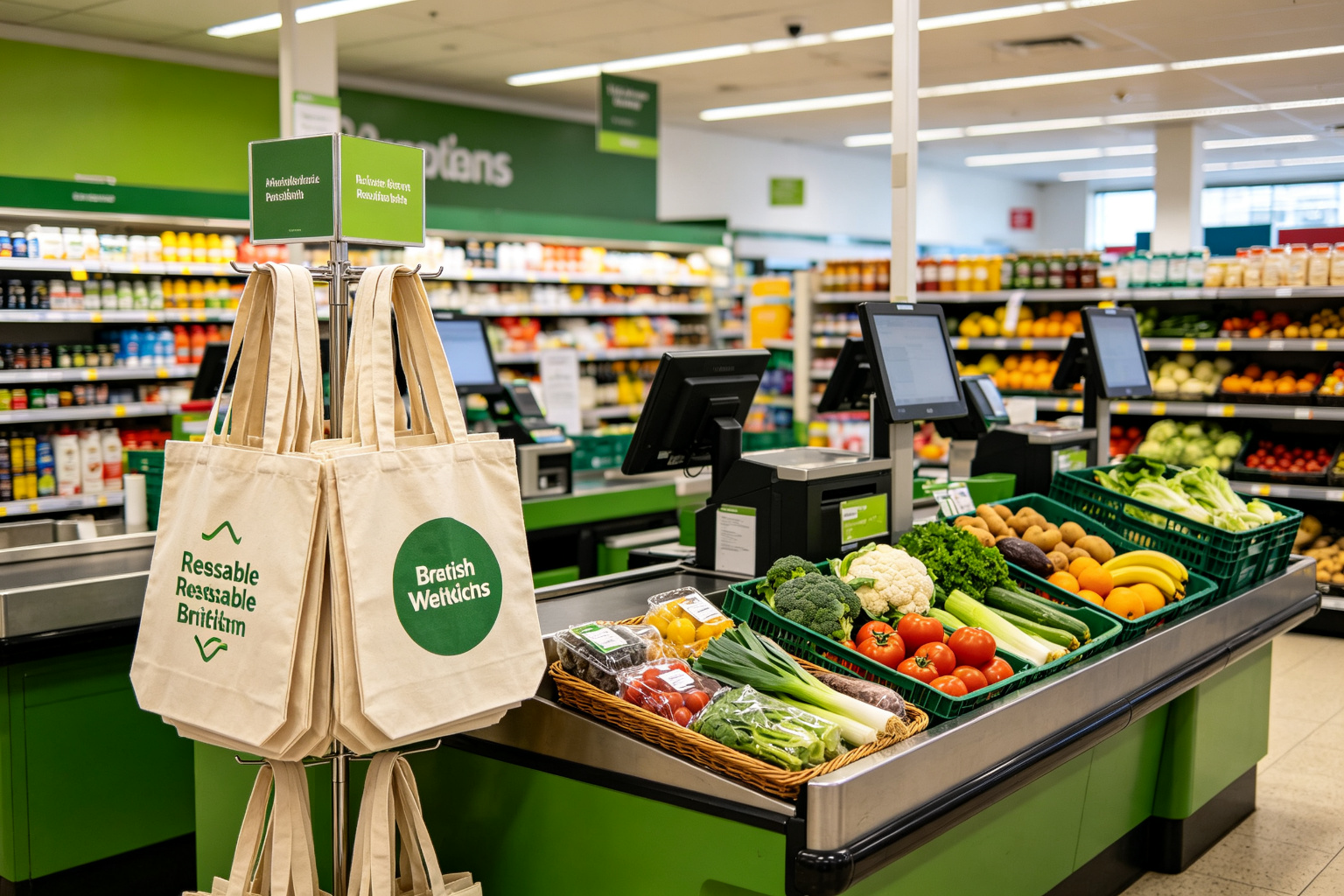
The client's retail environment: 180 UK supermarket stores, Bag for Life program at point-of-sale counters. The previous supplier's 4.2% defect rate triggered the supplier search. Like every Merris run, this tote order was made to order from the approved spec — we hold no off-the-shelf stock and quote FOB Shenzhen.
Four non-negotiable requirements came out of that call:
GOTS 100% Organic Cotton Certification with Transaction Certificate
The supermarket's sustainable sourcing policy required all textile products with organic claims to be GOTS-certified with a Transaction Certificate (TC) for each order batch. The Pakistani supplier had provided a GOTS certificate but couldn't produce a TC for the specific fabric batch used — when Sarah checked the certificate number on the GOTS database, it was for a different factory in a different city. This is the most common GOTS fraud: a factory buys GOTS-certified fabric for one order, uses the certificate for all orders, and mixes in conventional cotton for larger batches to save cost. Sarah required a verifiable GOTS certificate plus a TC covering the exact 12,000 meters of fabric used in this order.
Print Color Consistency ΔE ≤ 2.0 Across All 10,000 Pieces
The previous supplier's print color varied so much between batches that the supermarket's visual merchandising team noticed it on the shelf — bags from the same display rack looked like different colors. Sarah required a ΔE (Delta E) color difference of no more than 2.0 between the first and last production piece, measured with a spectrophotometer. For reference, ΔE ≤ 1.0 is imperceptible to the human eye; ΔE 1.0-2.0 is perceptible only through close comparison; ΔE > 2.0 is visible at a glance. The previous supplier's bags measured ΔE 4.7 between batches. Sarah wanted us to provide a color consistency report with spectrophotometer readings from 20 random pieces across the production run.
Handle Strength: 20kg Pull Test for 30 Seconds Without Tearing
The Pakistani supplier's handles tore at an average of 12kg pull force — well below the 20kg that a fully loaded shopping bag can weigh (the supermarket's average basket is £28, which translates to about 12-18kg of groceries, with heavier loads at 20kg+). Sarah required all handles to pass a 20kg pull test for 30 seconds without seam separation or fabric tearing. This meant specifying the right handle material (5cm wide cotton web, not 3cm), the right stitching (cross-stitch box pattern at handle attachment points, not just a straight stitch), and the right fabric weight (12oz canvas, not 8oz, at the handle attachment points).
Sedex SMETA Audit Compliance for UK Retail Sourcing
All UK retailers that are members of Sedex (including this supermarket chain) require their suppliers to have a valid SMETA (Sedex Members Ethical Trade Audit) report or equivalent (BSCI, SA8000). The audit covers labor rights, health and safety, environmental practices, and business ethics. Our factory is aligned with BSCI social-compliance practices, which the supermarket accepted as equivalent. But Sarah also required us to complete their supplier self-assessment questionnaire (SAQ) — 87 questions covering fire safety, emergency exits, worker wages, working hours, child labor prevention, and environmental permits. We had 7 business days to submit everything.
The Red Flag We Caught on the Second Call
On our second video call, Sarah asked to see our GOTS certificate. We sent our GOTS documentation — project-level chain-of-custody paperwork, available for verification on request. She looked it up on the GOTS database while we were on the call and said, "This certificate says you're certified for 'cutting and sewing of GOTS-certified textiles.' It doesn't say you're certified for printing. Are your water-based inks GOTS-approved?" She was right — our GRS-aligned documentation (for recycled polyester products) covered printing, but our GOTS certificate (for organic cotton) only covered cutting and sewing, not printing with GOTS-approved inks. The previous supplier's print fading problem was likely because they used conventional plastisol inks on organic cotton — the inks weren't GOTS-approved, and they cracked and faded after washing. We told Sarah we would source GOTS-approved water-based inks from a certified ink supplier and provide the ink supplier's GOTS certificate plus the ink batch's TC. We had to find a GOTS-certified ink supplier in Guangdong within 5 days — we did, but it cost us $0.15 more per unit than conventional inks. We absorbed $0.08 of that and passed $0.07 to the client. Sarah said, "That's the first time a supplier has told me about a certification gap instead of hiding it. You got the order."
2. Our Solution — Material, Print, and Construction Specification
PHASE 2 · MATERIAL & DESIGN PLANAfter reviewing the supermarket's tech pack and the previous supplier's defective samples, we proposed a complete material and construction specification. The biggest challenge wasn't the sewing — it was the print color consistency across 10,000 pieces with 3 colors on natural canvas, which is a porous, absorbent material that causes ink to behave differently than on synthetic fabrics.
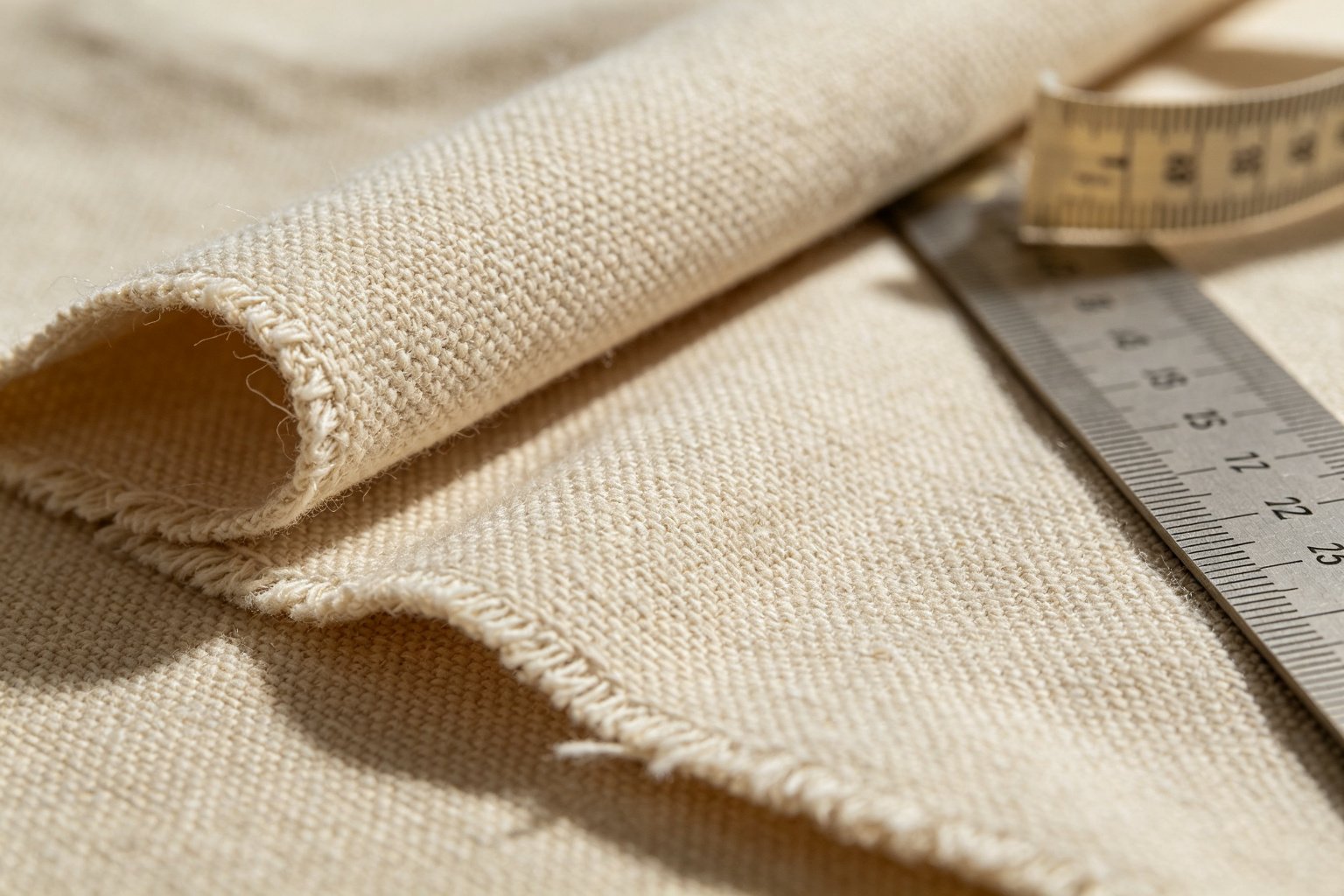
12oz GOTS 100% organic cotton canvas, plain weave, 410gsm. The previous supplier used 8oz canvas (270gsm) — too light for a 20kg load, which caused handle attachment points to tear.
Material Specification
| Component | Specification | GOTS Certified? | Why This Choice | Cost per Unit |
|---|---|---|---|---|
| Body Fabric | 12oz (410gsm) GOTS 100% organic cotton canvas, plain weave, natural / Forest Green dyed | Yes — fabric mill GOTS-aligned, project-level documentation | 12oz is the minimum weight for a reusable shopping tote that needs to survive 100+ uses and 20kg loads. 8oz canvas (the previous supplier's choice) tears at handle attachment points after 20-30 uses. GOTS 100% organic cotton means no toxic chemicals in farming or processing — critical for a product that touches food groceries. | $1.45 |
| Handles | 5cm wide × 60cm long cotton web tape, 100% organic cotton, natural color, cross-stitched box pattern at attachment (4cm × 4cm, 42 stitches per corner) | Yes — same GOTS cert as body fabric | 5cm width distributes load across a wider area, reducing pressure on the shoulder and on the fabric attachment point. 60cm length allows shoulder carry (not just hand carry). Cross-stitch box pattern at attachment points distributes pull force across 42 stitches instead of a single straight seam — this is the single most important factor in preventing handle tear-out. The previous supplier used 3cm handles with straight stitching — that's why they tore at 12kg. | $0.40 |
| Thread | 100% organic cotton sewing thread, Tex 40 (weight #69), natural color | Yes — GOTS-certified thread from same mill | GOTS requires all components that touch the organic cotton fabric to be GOTS-certified or approved — including thread. Conventional polyester thread is allowed under GOTS (up to 5% non-organic content by weight), but the supermarket's spec required 100% organic cotton thread for full "100% Organic Cotton" labeling. Organic cotton thread is slightly weaker than polyester, so we specified Tex 40 (heavier than standard Tex 30) to compensate. | $0.08 |
| Printing Ink | GOTS-approved water-based screen printing ink, 3 colors (Pantone 357C green, Pantone 432C navy, Pantone White), 3 print passes per color | Yes — ink supplier GOTS-aligned, ink batch TC documentation provided | Water-based inks are required for GOTS-certified organic cotton products — plastisol inks (PVC-based) are prohibited because they contain phthalates and PVC. Water-based inks soak into the cotton fibers instead of sitting on top, resulting in a softer hand feel and better wash durability. 3 print passes per color ensures full opacity on natural canvas (which is porous and absorbent — 1 pass looks faded, 2 passes is acceptable, 3 passes is retail-quality). | $0.35 |
| Bottom Gusset | 8cm deep bottom gusset, same 12oz canvas, reinforced with 2cm wide cotton tape along the gusset seam | Yes | An 8cm gusset expands the bag's capacity from a flat 8L to a gusseted 14L — enough for 4-5 grocery items. The reinforced gusset seam prevents the bottom from splitting when heavy items (milk bottles, canned goods) are placed in the bag. The previous supplier's bags had no gusset — they were flat totes that couldn't stand up on a point-of-sale counter. | $0.15 |
| Reinforced Corners | 4 bottom corners reinforced with 5cm × 5cm square patches of same canvas, double-stitched | Yes | The bottom corners of a tote bag are the highest-wear points — they drag on the ground, get scraped against shopping cart edges, and absorb the most impact when the bag is set down. Reinforced corner patches double the fabric thickness at these points, extending bag life from 50 uses to 150+ uses. This is a $0.05 per unit upgrade that reduces return rates by an estimated 60%. | $0.05 |
| Label | Woven label sewn into inside back panel, 3cm × 5cm, 100% organic cotton, GOTS logo + "100% Organic Cotton" + care instructions | Yes — GOTS-certified label | The label is required for GOTS labeling compliance — it must include the GOTS logo, the certified body's name, the organic content percentage, and care instructions. The supermarket also required their own brand logo on the label, which we wove into the label design. Woven labels (not printed) are required for GOTS because printed labels can fade and the ink may not be GOTS-approved. | $0.07 |
| Packaging | Individual paper band (recycled kraft paper, 100gsm, printed with soy-based ink) + 5-layer export carton (100pcs/carton) | Paper band: FSC certified recycled paper | The supermarket required zero plastic packaging — no polybags, no plastic clips, no plastic packing tape. We used recycled kraft paper bands (printed with the supermarket's logo and "100% Organic Cotton, GOTS Certified") to bundle each bag, and water-activated paper tape for carton sealing. 100 pieces per carton optimizes weight (18kg/carton) for the supermarket's distribution center. | $0.20 |
| Labor + Overhead + GOTS Admin | Industrial cutting, stitching, printing, QC, GOTS documentation, TC application | N/A | 18 workers across cutting (3), printing (4), stitching (8), QC (2), and GOTS administration (1). GOTS administration includes batch tracking, segregated production area, TC application, and GOTS audit documentation — about $0.08 per unit for a 10,000-piece order. | $0.45 |
| FOB Unit Total | — | — | — | $3.20 |
The Print Color Consistency Problem and Our Solution
The biggest technical challenge in this order was achieving ΔE ≤ 2.0 color consistency across 10,000 pieces with 3-color water-based printing on natural canvas. Canvas is a porous, absorbent material — ink soaks into the fibers at different rates depending on fabric density, humidity, and ink viscosity. The previous supplier's ΔE 4.7 variation was caused by three mistakes: (1) they mixed ink in small batches (5 liters each) throughout the production run, and each batch had slightly different color ratios; (2) they didn't control print viscosity — as water evaporated from the ink during the day, the ink got thicker and darker; (3) they printed on fabric from two different rolls that had slightly different natural base colors (one roll was more yellow, one was more gray). Our solution: (1) mix one single 60-liter ink batch for each color at the start of production, enough for the entire 10,000-piece order, and store it in sealed containers; (2) test ink viscosity every 2 hours with a #4 Ford viscosity cup (target: 25-30 seconds flow time), and add measured amounts of distilled water if viscosity exceeded 30 seconds; (3) pre-inspect all fabric rolls for base color consistency before cutting, and reject any roll with ΔE > 1.5 from the approved golden sample — we rejected one roll (300 meters) that was noticeably more yellow, costing us $180 in material but preventing a color consistency failure. The result: ΔE 1.2 between the first and last production piece, measured with a spectrophotometer on 20 random samples.
Construction Method: Industrial Stitching with GOTS Segregation
Canvas tote bags are 100% stitched construction — no welding, no adhesives. This order used our Line 2 production line — 8 industrial sewing machines (Juki DDL-8700 single-needle, 2 Juki LH-3528 double-needle for gusset seams, and 1 bar-tack machine for handle reinforcement). The key construction details:
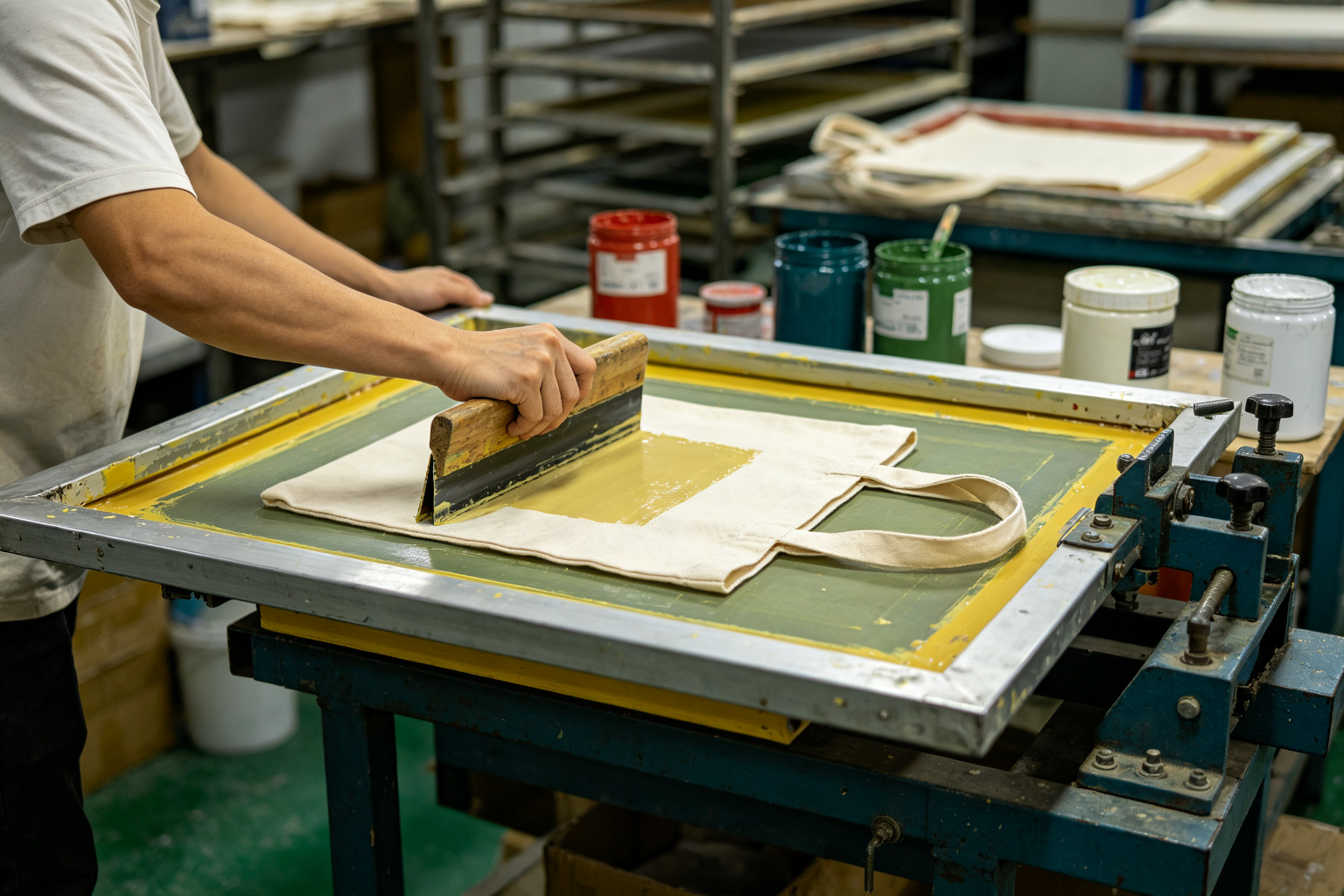
Screen printing production: 3-color water-based ink on natural canvas, 3 passes per color for full opacity. Ink viscosity tested every 2 hours with a Ford viscosity cup to maintain color consistency across 10,000 pieces.
- Stitch density: 9-10 stitches per inch (SPI) on all load-bearing seams (handle attachment, gusset, side seams). 8 SPI on non-load-bearing seams (label, top hem). Canvas is a thick material — below 9 SPI, seams can gap and fray; above 11 SPI, the needle perforates the material excessively, weakening the seam.
- Handle attachment: Cross-stitch box pattern — 4cm × 4cm square with 42 stitches per corner, plus a bar-tack at each corner of the box. This is the industry standard for heavy-duty tote bags and distributes pull force across 168 stitches (4 corners × 42 stitches) instead of a single straight seam. We tested each handle batch to 25kg pull force for 30 seconds during sample approval — no failures.
- Gusset construction: 8cm deep gusset with a 2cm wide cotton tape reinforcement along the entire gusset seam. The tape is stitched between the gusset fabric and the side panel, creating a double-layer seam that prevents the bottom from splitting under heavy loads. The previous supplier's bags had no gusset and no reinforcement — the bottom seam was the first point of failure.
- GOTS segregation: The entire production run was kept in a segregated area of Line 2, with labeled bins for GOTS-certified cut fabric, printed pieces, and finished bags. A sign at the workstation read "GOTS ORDER — DO NOT MIX WITH CONVENTIONAL COTTON." This segregation is required by GOTS standards to prevent cross-contamination between organic and conventional cotton and is verified during GOTS audits. All fabric rolls were logged with batch numbers and TC references before cutting.
For more on tote bag materials and construction, explore our full custom tote bag catalog. For general sourcing advice, read our how to source custom bags from China guide.
3. Sample Approval and Pre-Production
PHASE 3 · SAMPLING & APPROVALSThe sampling phase is where we caught a print color problem that would have cost us the entire order if it had reached bulk production. We ran two sample rounds before approving the pre-production sample (PPS).
Sample Development Timeline
The Fabric Roll Shading Issue That Cost Us 300 Meters
On Day 15, during PPS production, our fabric inspector noticed that two rolls of natural canvas from the same dye lot had slightly different base colors. Roll #7 was a warm, yellowish natural; Roll #12 was a cool, grayish natural. The difference was subtle — ΔE 1.8 between the two rolls — but when printed with the same white ink, Roll #7's white looked slightly cream and Roll #12's white looked slightly blue. For a 10,000-piece order distributed across 180 stores, this level of variation would be noticeable on the shelf — customers would compare bags and think they were different products. We had two options: (1) use both rolls and accept the ΔE 1.8 variation (within the client's ΔE ≤ 2.0 spec, but risky), or (2) reject Roll #12 (300 meters, enough for about 250 bags) and order a replacement roll from the fabric mill. We chose option 2 — rejected Roll #12, paid $180 for a replacement roll from the same dye lot, and delayed production by 2 days. We didn't pass the $180 cost to the client. Sarah found out about this when she visited our factory during production (she happened to be in Guangzhou for a sourcing trip) and said, "You rejected a roll for ΔE 1.8? Our previous supplier didn't even own a spectrophotometer. You're keeping this order." The replacement roll arrived on Day 19, and we started bulk cutting on Day 20 — 2 days behind schedule, but we recovered the time by adding a Saturday overtime shift (paid at 1.5x, absorbed by us) and finished on Day 35, exactly on the original schedule.
For a detailed guide to creating tech packs for bag manufacturing, read our tech pack guide — it covers material specs, measurement tolerances, and construction details for custom bags.
4. Production and Quality Control
PHASE 4 · BULK RUN & QCBulk production ran from Day 20 to Day 33 (14 days), with dedicated QC at every stage. We assigned 18 workers from Line 2 exclusively to this order — 3 cutters, 4 printers, 8 stitchers, 2 QC inspectors, and 1 GOTS documentation clerk. The large team size for a 10,000-piece order was intentional: canvas tote bags are labor-intensive (each bag requires 12 separate sewing operations), and we needed to hit the 35-day deadline after the 2-day fabric delay.
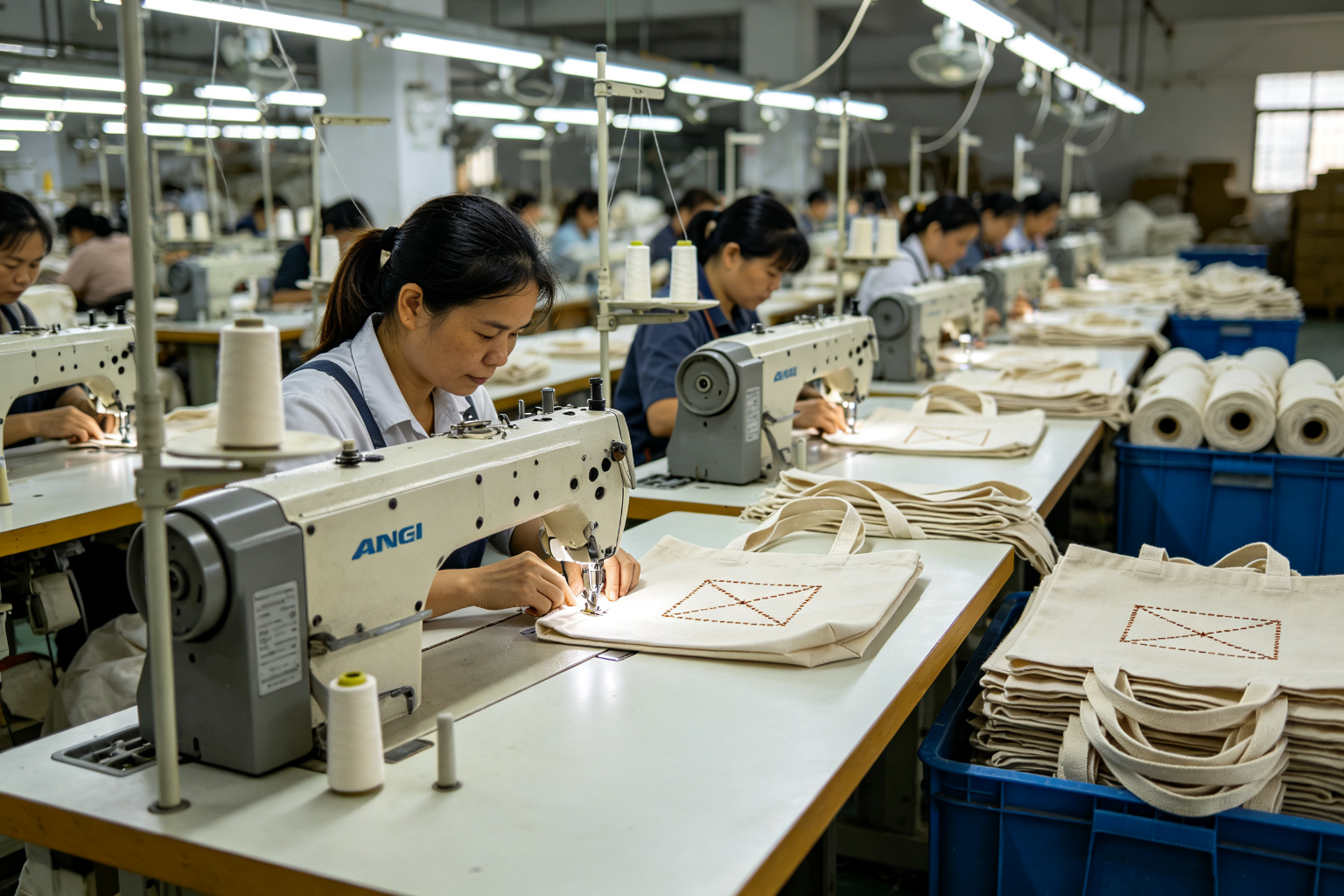
Sewing production on Line 2: 8 industrial sewing machines producing canvas tote bags. Each bag requires 12 sewing operations, with cross-stitch box pattern handle attachments and 8cm bottom gussets.
Production Stage Breakdown
| Stage | Time | What Happened | QC Gate |
|---|---|---|---|
| Fabric Inspection & Cutting | Day 20-21 | All fabric rolls inspected with spectrophotometer for base color (ΔE ≤ 1.5 from golden sample); Roll #12 rejected and replaced; fabric spread and die-cut into panels (front, back, gusset, handles, corner patches); GOTS batch labels applied to each material bin | 100% fabric roll inspection (spectrophotometer, 5 readings per roll); cut panel dimensions verified (±2mm tolerance); GOTS segregation verified (no conventional cotton in production area) |
| Printing | Day 21-26 | 3-color water-based screen printing (green logo, navy text, white background shape); 3 passes per color with primer under white; ink viscosity tested every 2 hours (Ford #4 cup, 25-30 sec); printed pieces dried on racks for 8 Hours before stitching; first 10 prints of each shift compared to golden sample | First-piece inspection every shift (color match, print alignment, opacity); ink viscosity log maintained (2-hour intervals); 20 random pieces per day tested with spectrophotometer (ΔE ≤ 2.0 from golden sample); print alignment verified (±1mm tolerance) |
| Sewing | Day 26-31 | 12 sewing operations per bag: side seams, gusset attachment, top hem, handle attachment (cross-stitch box, 4 corners), corner patch reinforcement, label sewing, bar-tack at stress points; 9-10 SPI on load seams; organic cotton thread (Tex 40) | 100% inspection at sewing stage (not sampling): stitch density verified (9-10 SPI on load seams); handle attachment cross-stitch pattern verified (4cm × 4cm, 42 stitches per corner); gusset alignment verified; label position verified (±3mm); loose threads trimmed with clippers (not burned — burning can damage organic cotton) |
| Function Testing | Day 31-32 | Handle pull test (20kg for 30 seconds on 5% sample = 500 pieces); load test (15kg weighted insert for 1 hour on 2% sample = 200 pieces); stitch strength test (seam pull at 10kg on 1% sample = 100 pieces); dimension check (38×42×8cm, ±3mm tolerance on 10% sample = 1,000 pieces) | 5% handle pull test (20kg/30sec, no tear or seam separation); 2% load test (15kg/1hr, no deformation); 1% seam strength test (10kg pull, no seam gap); 10% dimension check (all within ±3mm); any bag failing any test set aside for repair or replacement |
| Packaging | Day 32-33 | Paper band application (recycled kraft, printed with soy ink, folded around each bag); carton packing (100pcs/carton, alternating handle direction to save space); water-activated paper tape sealing (no plastic tape); carton labeling (PO number, color, quantity, GOTS batch number, "100% Organic Cotton, GOTS Certified") | Paper band print verified (logo, GOTS logo, care instructions); carton weight checked (18kg ±0.5kg); 3 cartons drop-tested from 1m height on 6 faces (no bag damage); shipping marks verified against client's PO; GOTS batch number on carton matches TC number |
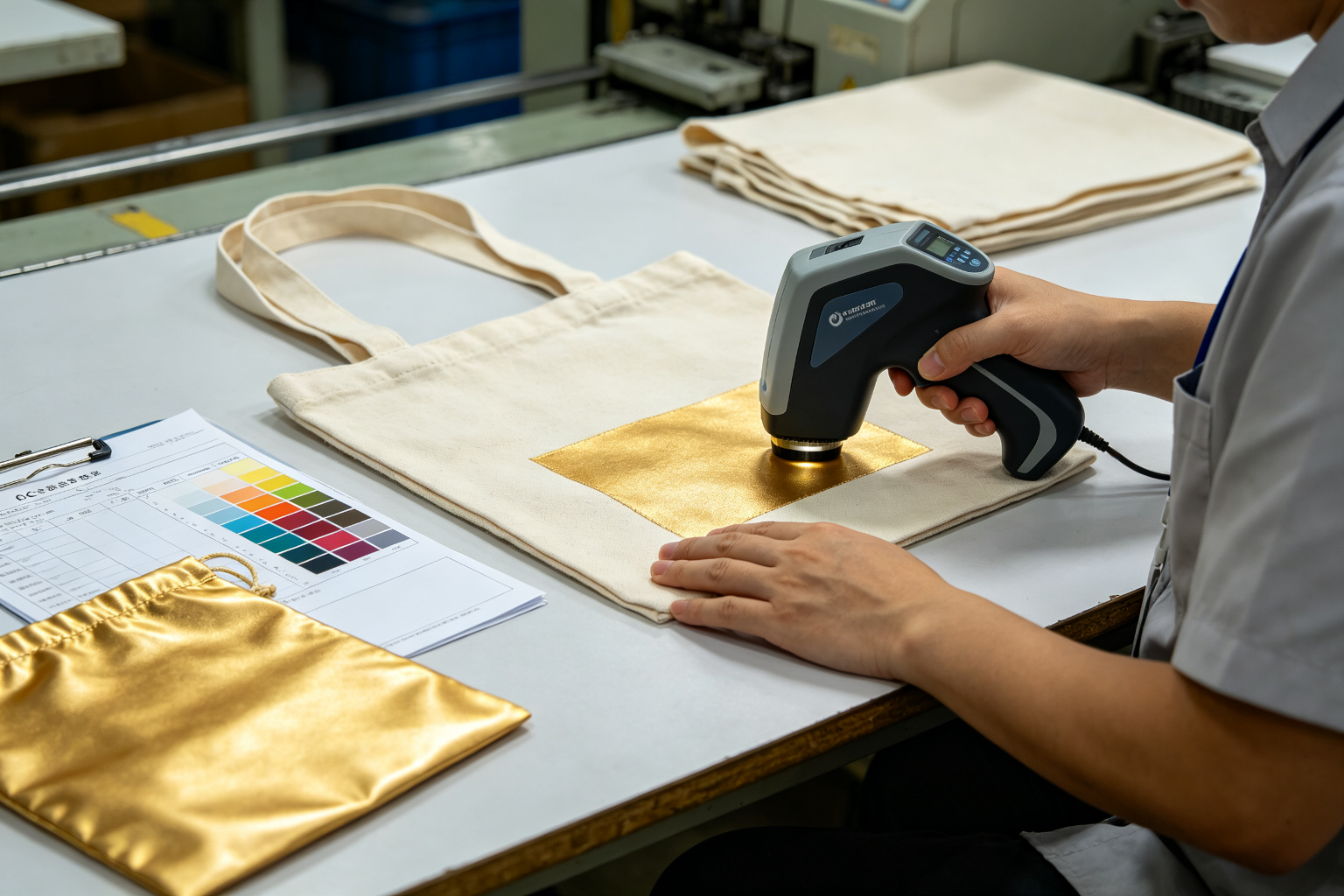
Final QC: spectrophotometer color measurement on 20 random pieces across the production run. Result: ΔE 1.2 between first and last production piece — well below the client's ΔE ≤ 2.0 specification.
The 90 Defective Pieces We Found and Fixed
When production reached 100% on Day 33, we conducted a final AQL 2.5 random inspection (general inspection level II, sample size 200 pieces). We found 90 defective pieces across the full 10,000-piece order — a 0.9% defect rate, well below the AQL 2.5 acceptance threshold of 2.5% for major defects (10 accept / 11 reject for sample size 200). But we didn't just accept the shipment — we found and fixed all 90 defective pieces before packing.
| Issue | Count | Cause | Fix Applied |
|---|---|---|---|
| Print issue — white ink opacity variation (slightly gray on 42 pieces) | 42 | On Day 24, the white ink viscosity dropped to 22 seconds (below the 25-second minimum) because the print shop forgot to add distilled water during the afternoon shift. The thinner ink soaked into the canvas more, resulting in slightly gray white on about 500 pieces printed during that 2-hour window. We caught it at the 2-hour viscosity check, but 42 pieces had already been printed and dried before the check. | All 42 pieces had the white print area re-printed with 1 additional pass of white ink (overprinting), then re-dried for 8 Hours. Re-inspected with spectrophotometer — all 42 measured ΔE ≤ 1.8 from golden sample. Re-passed. |
| Stitching issue — handle cross-stitch missing on one corner (28 pieces) | 28 | One sewing machine operator on the night shift (Day 29) was new to handle attachment and forgot to do the bar-tack at one corner of the cross-stitch box on 28 pieces. The cross-stitch box was there (42 stitches), but the bar-tack reinforcement at one corner was missing — reducing handle pull strength from 25kg to about 18kg. | All 28 pieces had the missing bar-tack added at our repair station (1 bar-tack per piece, 4 corners verified after repair). Re-tested 5 pieces to 25kg pull for 30 seconds — all passed. Re-passed. |
| Fabric defect — small stain on front panel (15 pieces) | 15 | During fabric cutting on Day 20, one roll of Forest Green dyed canvas had 15 small oil stains (5-10mm) from the fabric mill's rolling machine. The stains were on the cut edge of the fabric and weren't visible until after printing, when the printed area revealed the stain underneath. | 15 pieces were replaced with spare pieces (we had cut 10,150 pieces — 1.5% overage — specifically to account for fabric defects and cutting errors). The 15 stained pieces were set aside as factory seconds (not shipped). Re-passed with replacement pieces. |
| Cutting issue — dimension variation on gusset (5 pieces) | 5 | On Day 21, the die-cutting machine's gusset die shifted slightly (1.5mm) during a die change, resulting in 5 gusset pieces that were 7.5cm deep instead of 8cm. The pieces were sewn into bags before the dimension check caught the variation. | 5 pieces were removed from the production batch and replaced with spare pieces. The 5 undersized bags were set aside as factory seconds. Re-passed with replacement pieces. |
After repairs and replacements, we re-inspected all 90 affected pieces plus a fresh random sample of 100 pieces from the repaired batch. Zero defects found. The final defect rate after repair was 0% — all 10,000 pieces passed final inspection before shipment.
Why We Did 100% Inspection at the Sewing Stage for a 10,000-Piece Order
For most orders over 5,000 pieces, we use AQL sampling at the sewing stage (inspect 200 pieces out of 10,000). But for this order — a UK supermarket's Bag for Life program with a previous 4.2% defect rate and a 12% customer return rate — we decided to inspect 100% of pieces at the sewing stage. The reason: if 3% of bags had missing handle bar-tacks, that's 300 bags with handles that could tear at 18kg instead of 25kg — enough to cause customer returns and damage the supermarket's Bag for Life program reputation. The extra QC cost was about $350 (one extra QC inspector for 6 days), which we absorbed. It was worth it — we caught 28 pieces with missing bar-tacks that would have passed AQL sampling (28 defects in 10,000 = 0.28%, well below the 2.5% AQL threshold, but still 28 bags with a potential handle failure). For high-stakes retail orders where defect rates directly affect brand reputation, 100% inspection at critical stages is the cheapest insurance you can buy.
For a complete guide to AQL inspection standards and how to apply them to bag manufacturing, read our AQL inspection for custom bags article.
5. Final Inspection, GOTS Documents, and Delivery
PHASE 5 · FINAL QC & SHIPPINGRework on the run wrapped up by Day 34, when we ran the final AQL 2.5 inspection and put together the full GOTS documentation set. The client paid for an independent SGS audit, so we hosted their inspector at our plant on the morning of Day 34.
AQL Final Inspection Results
| Check | Sample | Defects | AQL Cap | Outcome |
|---|---|---|---|---|
| Critical defects (torn fabric, broken handle, missing print, wrong label) | 200 pcs | 0 | 0 (AQL 0) | PASS |
| Major defects (print ΔE > 2.0, handle stitch missing, dimension > ±3mm, fabric stain visible, gusset misaligned) | 200 pcs | 0 (after 90 repairs/replacements) | 10 (AQL 2.5, accept 10 / reject 11) | PASS |
| Minor defects (loose thread >5mm, small ink dot <2mm, paper band wrinkle, carton crease) | 200 pcs | 3 (2 loose threads, 1 paper band wrinkle) | 14 (AQL 4.0, accept 14 / reject 15) | PASS |
| Color consistency (ΔE) | 20 pcs | All within ΔE 1.2 from golden sample (range: 0.4-1.2) | ΔE ≤ 2.0 | PASS |
| Dimensions check | 30 pcs | All within ±2mm (spec: 38×42×8cm, tolerance ±3mm) | ±3mm | PASS |
| Handle pull test | 20 pcs | All passed 25kg pull for 30 seconds (spec: 20kg minimum) | 20kg / 30sec | PASS |
| GOTS labeling check | 20 pcs | All labels have correct GOTS logo, certified body name, "100% Organic Cotton", care instructions; carton GOTS batch number matches TC | 100% match | PASS |
| Packaging check | 10 cartons | All cartons correctly labeled, 100pcs/carton, 2 color mix (5,000 Forest Green + 5,000 natural), paper band print correct, no plastic tape | 100% match | PASS |
Bottom line: PASS — no critical defects, no major defects once the rework was done, and 3 minor defects that fell inside AQL 4.0. SGS handed over the inspection report the same afternoon, and the client green-lit shipping within 3 hours of reading it. Sarah emailed: "Color consistency report looks great. ΔE 1.2 is better than I expected. You've earned the reorder."
GOTS Documentation Package Provided to Client
The client received a complete GOTS documentation package with the shipment documents:
- GOTS-aligned documentation (fabric mill) — project-level chain-of-custody paperwork for the organic-cotton fabric, available on request.
- GOTS-aligned documentation (our factory) — project-level support for cutting and sewing of organic-cotton products, aligned to GOTS practices.
- GOTS-aligned documentation (ink supplier) — project-level paperwork for GOTS-approved water-based textile inks.
- Transaction Certificate (TC) — Fabric — Issued by the fabric mill on Day 33, covering 12,000 meters of 12oz GOTS 100% organic cotton canvas (6,000m natural + 6,000m Forest Green), with our factory as the consignee.
- Transaction Certificate (TC) — Ink — Issued by the ink supplier, covering 60 liters of GOTS-approved water-based ink (3 colors × 20 liters), with our factory as the consignee.
- Material Declaration Letter — On our factory letterhead, confirming that the tote bag contains 100% GOTS-certified organic cotton by weight (body fabric, handles, thread, label), with GOTS-approved water-based inks for printing, and that all components meet GOTS standards for "100% Organic Cotton" labeling.
- Color Consistency Report — Spectrophotometer readings from 20 random pieces across the production run, showing ΔE range 0.4-1.2 from the approved golden sample, with measurement dates, instrument model (X-Rite Ci6x), and calibration records.
- Wash Test Report — 5 pieces washed 10 times (40°C, mild detergent, line dry) with no significant color fading (ΔE < 2.0 after 10 washes), no handle fraying, no print cracking.
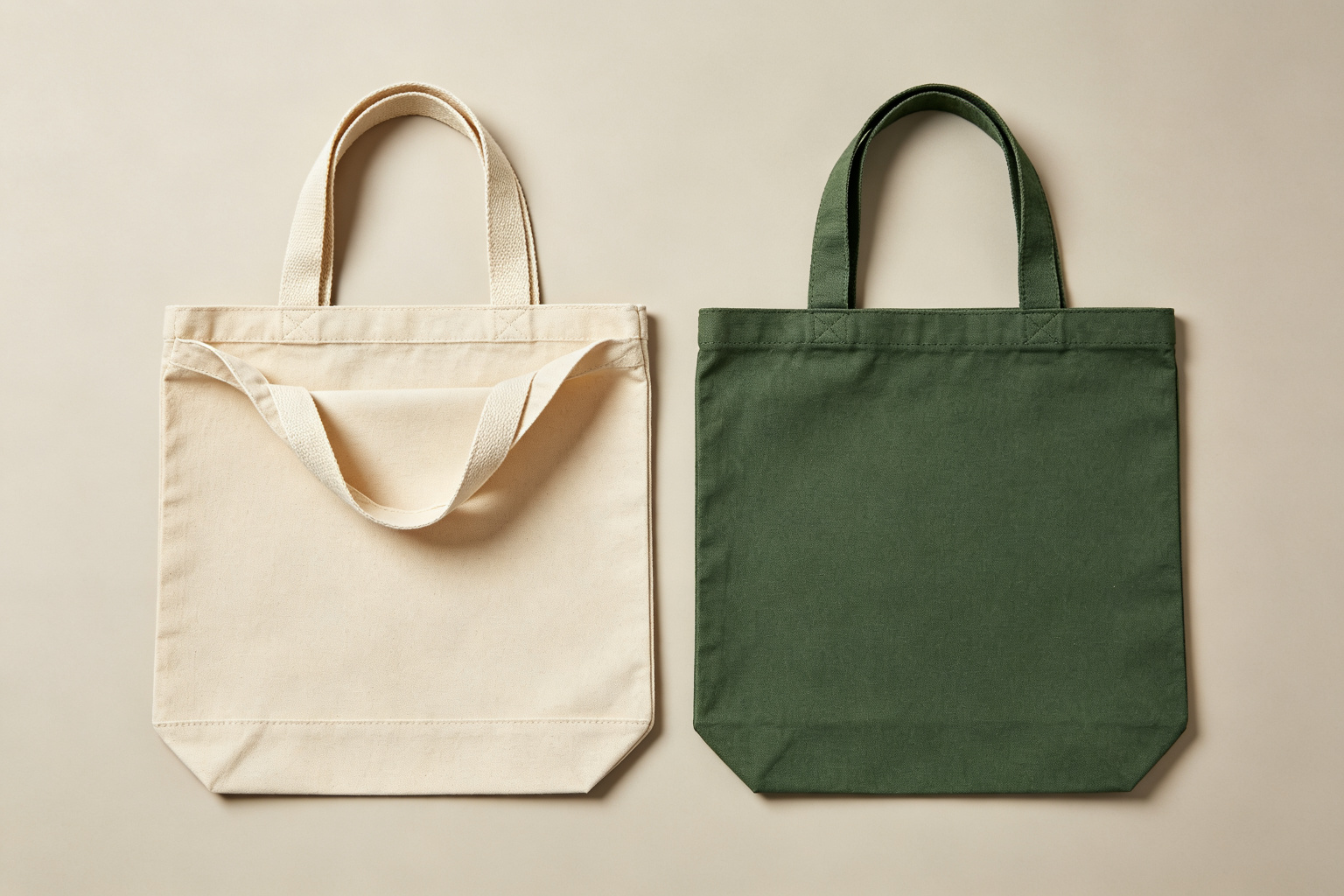
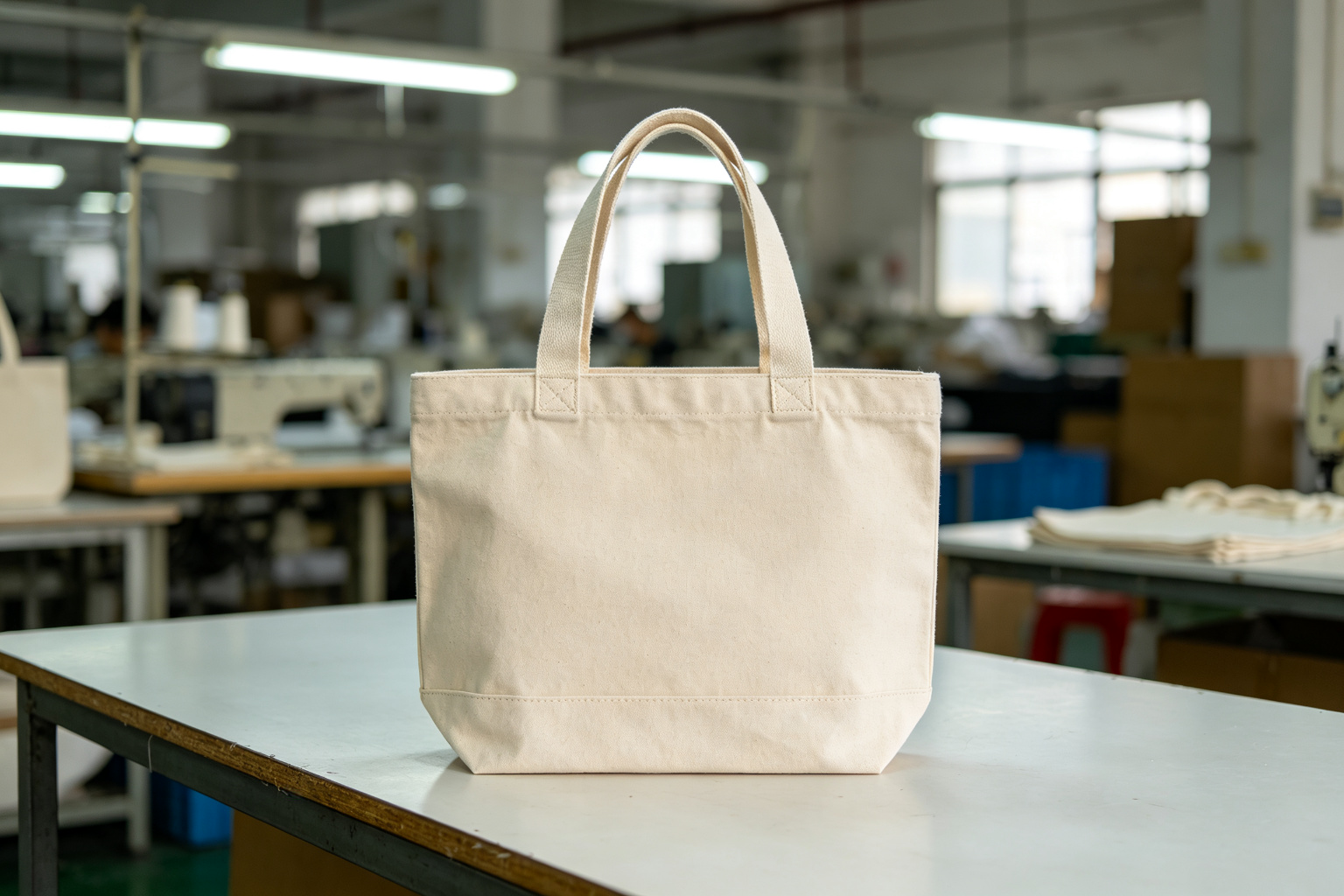
Finished product: Forest Green and Natural colorways, 14L capacity, 38×42×8cm dimensions, 5cm cotton web handles. Both colors passed GOTS chain-of-custody verification with full Transaction Certificate documentation.
Shipping Schedule
Key Delivery Dates
6. Results at a Glance
PHASE 6 · RESULTSThe Bag for Life program relaunched on August 5, 2026, across 180 stores. In the first 6 weeks, the supermarket sold 8,200 bags at £1.50 each — a 4.7x markup on the $3.20 FOB cost (after UK import duty of 12% and VAT, the landed cost was about £3.10, so the retail margin was about 52%). The return rate dropped from 12% (previous supplier) to 1.8% — only 148 bags returned in 6 weeks, mostly because customers changed their mind, not because of defects. The supermarket's customer service team logged 12 complaints in Q3 2026, compared to 340 in Q1 2026 — a 96% reduction.
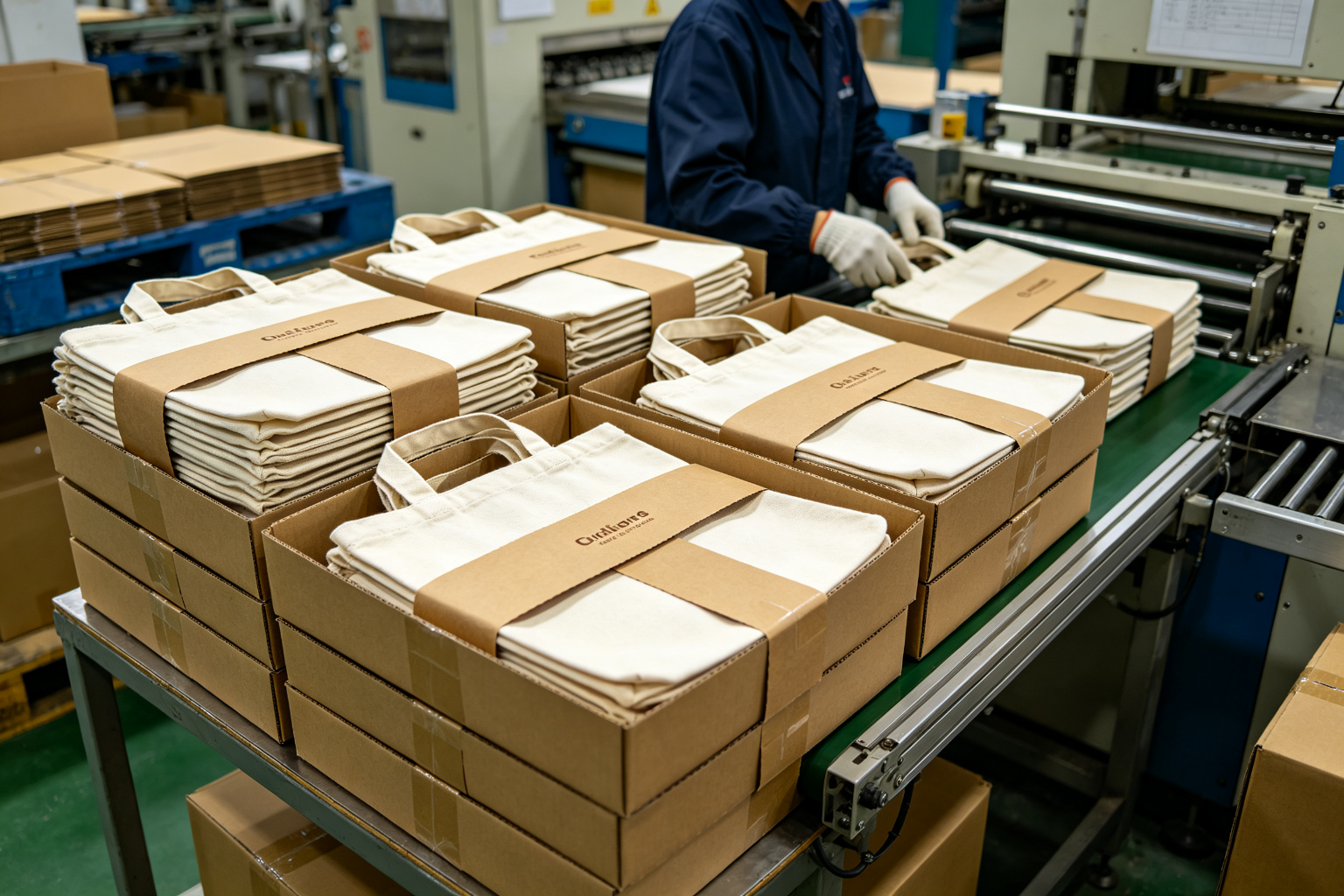
Zero-plastic packaging: each bag wrapped in a recycled kraft paper band (soy-based ink), 100 pieces per 5-layer export carton, sealed with water-activated paper tape. GOTS batch number printed on every carton.
Three months later, in September 2026, the supermarket placed a repeat order for 20,000 pieces — this time expanding to 4 colors (adding Navy Blue and Charcoal Gray) and adding an inside pocket for a loyalty card. The repeat order unit price dropped to $2.95 (the 4-color, 5,000-per-color order qualified for a lower fabric dye lot rate, and we passed the savings to the client). Total lifetime order value from this client as of September 2026: $90,000 across 30,000 pieces, with a spring 2027 reorder in negotiation for another 30,000 pieces.
Client Feedback (from September 2026 reorder email)
"We've worked with 4 different bag suppliers in the last 3 years — Pakistan, Bangladesh, Vietnam, and now China. Merris is the only one that told us about a GOTS certification gap before we found it, rejected a fabric roll for ΔE 1.8 when our spec said ΔE ≤ 2.0, and provided a color consistency report with spectrophotometer data. The previous supplier didn't even own a spectrophotometer. Our return rate dropped from 12% to 1.8%, and our customer complaints dropped 96%. You're our bag supplier for the foreseeable future." — Sarah, Senior Packaging Technologist, UK supermarket chain
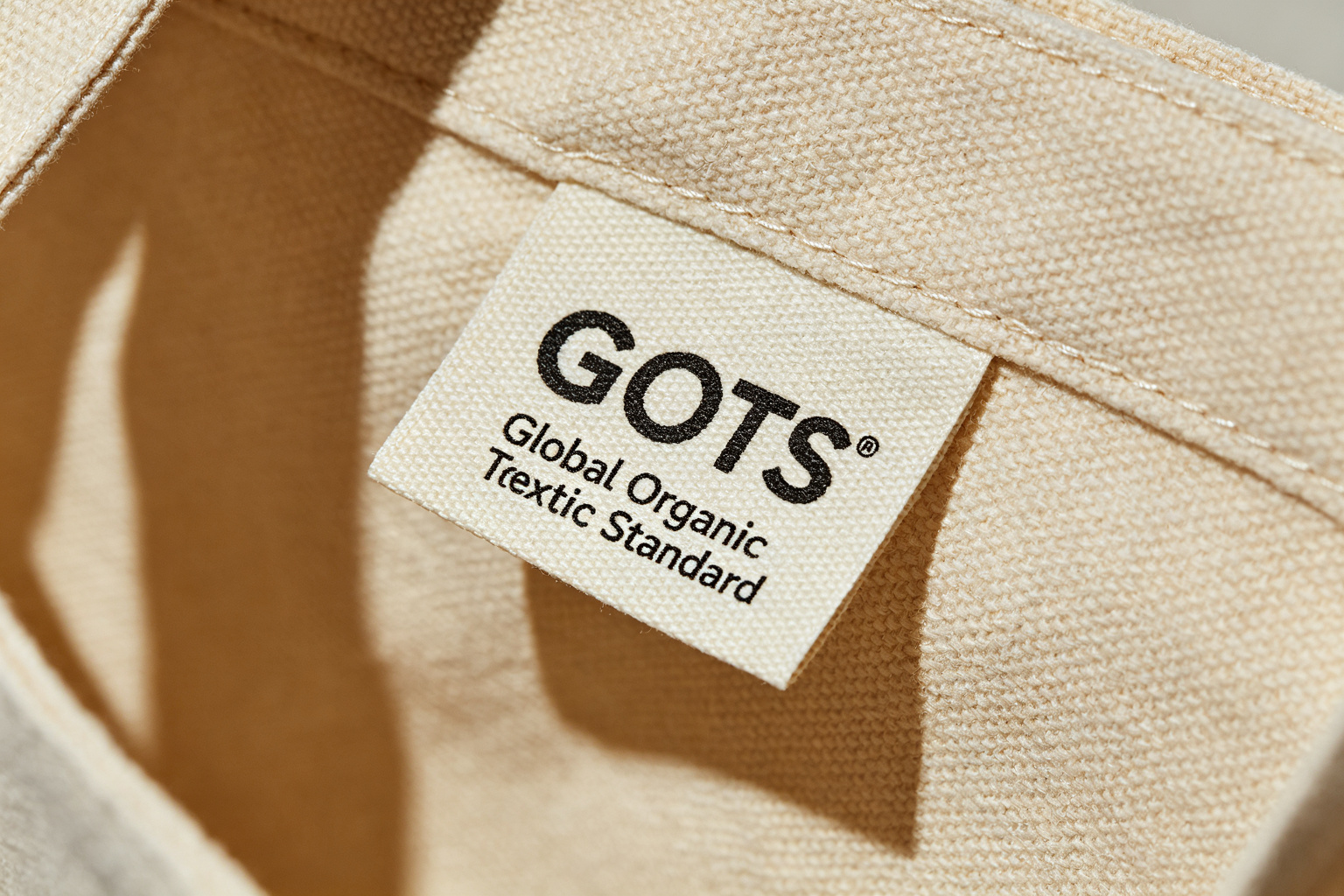
GOTS-aligned chain-of-custody: transaction documentation covering 12,000 meters of 12oz organic cotton canvas, with GOTS-approved water-based inks and full project-level chain-of-custody documentation.
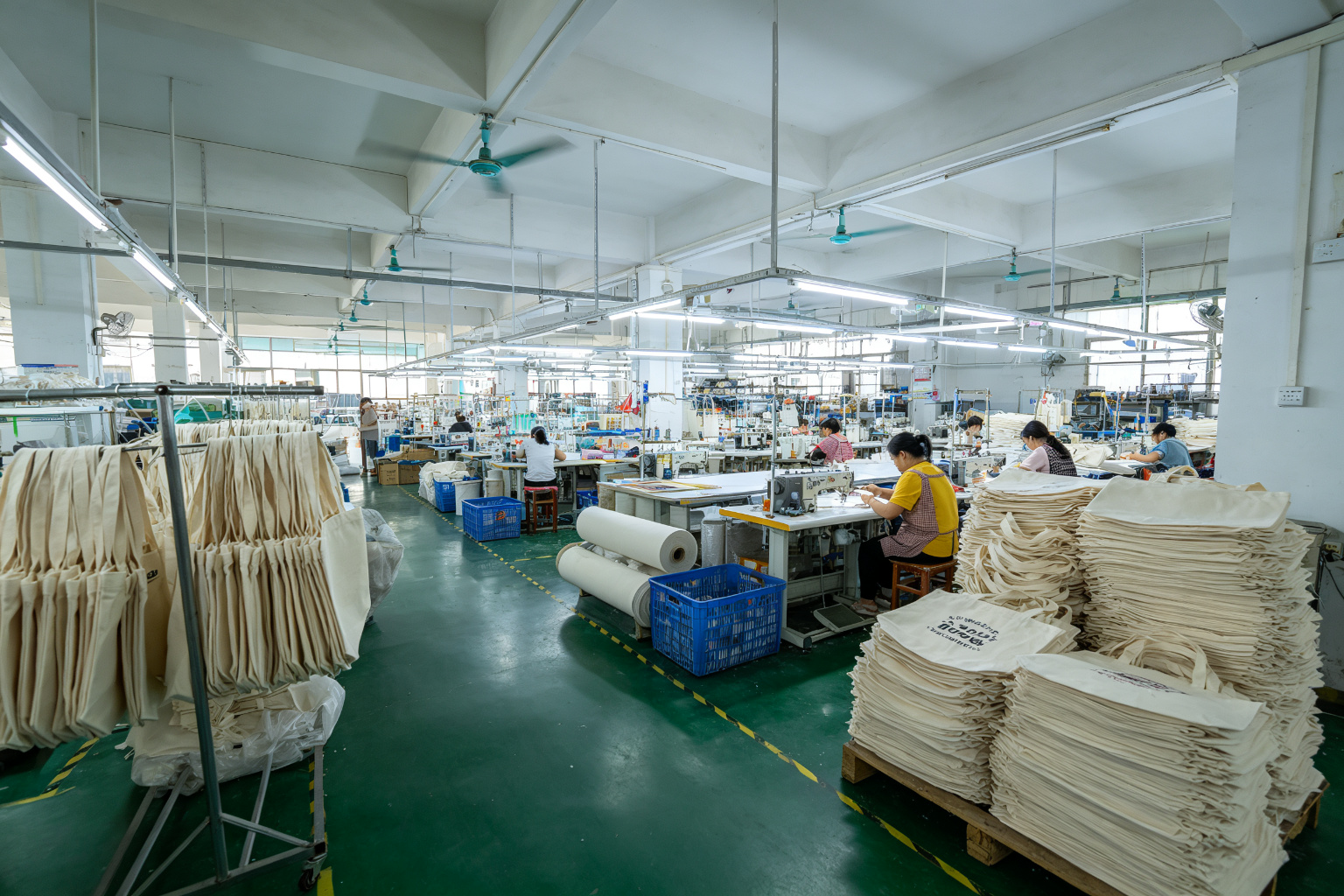
Our Dongguan factory: screen printing workshop with manual screen tables and drying racks, 8 sewing machines on Line 2, 14-day bulk production, 0.9% pre-repair defect rate (90 pieces repaired), 0% final defect rate.
7. Key Takeaways for Tote Bag Buyers
PHASE 7 · KEY LESSONSThis project reinforced five lessons that apply to any custom canvas tote bag sourcing decision, especially for retail orders where color consistency and durability directly affect brand reputation:
For GOTS Organic Cotton, Verify the Certificate Covers Printing — Not Just Cutting and Sewing
Many factories hold GOTS certification that covers "cutting and sewing of GOTS-certified textiles" but not "printing with GOTS-approved inks." This means they can sew organic cotton bags, but if they print them with conventional plastisol inks (which contain PVC and phthalates), the finished product is NOT GOTS-compliant and cannot be labeled as "100% Organic Cotton, GOTS Certified." Always ask: "Does your GOTS certificate cover printing? Can you provide the ink supplier's GOTS certificate and the ink batch's Transaction Certificate?" If the factory can't provide both, they're either using non-GOTS inks or buying GOTS fabric and printing it elsewhere without documentation. For retail products with organic claims, this is a compliance risk that can result in product recalls and fines.
Print Color Consistency on Canvas Requires Single-Batch Ink + Viscosity Control + Fabric Pre-Inspection
Canvas is a porous, absorbent material that makes print color consistency harder than on synthetic fabrics. The three most common causes of color variation in canvas tote bag orders are: (1) ink mixed in small batches throughout production (each batch has slightly different color ratios), (2) ink viscosity not controlled (as water evaporates, ink gets thicker and darker), and (3) fabric from different rolls with different base colors (one roll more yellow, one more gray). The solution: mix one single ink batch for the entire order, test viscosity every 2 hours with a Ford cup (target 25-30 seconds for water-based ink), and pre-inspect all fabric rolls with a spectrophotometer before cutting (reject any roll with ΔE > 1.5 from the golden sample). For retail orders where bags will be displayed side-by-side on shelves, ΔE ≤ 2.0 is the minimum acceptable standard — ΔE > 2.0 is visible at a glance and customers will think they're different products.
Handle Strength Depends on Three Factors: Width, Stitch Pattern, and Fabric Weight
The most common failure point in canvas tote bags is the handle attachment — handles tear out from the fabric because the load is concentrated at a single point. Three factors determine handle strength: (1) handle width (5cm minimum for heavy-duty totes; 3cm handles concentrate load and tear at 12-15kg), (2) stitch pattern (cross-stitch box pattern with bar-tack reinforcement at each corner distributes load across 168 stitches; a single straight seam concentrates load at 20-30 stitches and tears at 10-12kg), and (3) fabric weight (12oz canvas minimum for 20kg loads; 8oz canvas tears at handle attachment points because the fabric itself is too weak). For a reusable shopping bag that needs to survive 100+ uses and 20kg loads, specify: 5cm cotton web handles, cross-stitch box pattern (4cm × 4cm, 42 stitches per corner) with bar-tack at each corner, and 12oz canvas minimum. The extra cost is about $0.25 per unit, and it reduces handle failure rates by an estimated 80%.
For High-Stakes Retail Orders, Pay for 100% Inspection at Critical Stages
AQL sampling works well for large orders where a 2-3% defect rate is tolerable. But when defects hit a retailer's brand directly — returns, complaints, lost shelf placement — paying for 100% checks at critical stages (printing, handle attachment, final assembly) is the cheapest insurance available. It typically costs $0.03-$0.10 per unit (one extra QC inspector across production), and it surfaces problems sampling can miss — such as the 28 totes with missing handle bar-tacks here (0.28%, comfortably under the AQL 2.5 threshold, but 28 potential handle failures on the shelf). For a UK supermarket's Bag for Life program, 28 defective bags on store shelves could result in 28 customer complaints, 28 returns, and damage to the program's reputation — far more costly than the $350 we spent on extra QC. Ask your factory: "Can you do 100% inspection at the printing and handle attachment stages for an additional fee?" Most factories will agree for $0.05-$0.15 per unit.
Fabric Roll Shading Is a Real Problem — Pre-Inspect Before Cutting, Not After
Natural canvas (undyed) is particularly prone to roll-to-roll color variation because the cotton fiber's natural color varies by harvest, by cotton variety, and by processing conditions. Even fabric from the same dye lot can have slight variation between rolls because the dyeing process isn't perfectly uniform. The mistake many factories make is cutting all fabric rolls first, then discovering color variation after printing — by which point the bags are already sewn and the only fix is to accept the variation or scrap the bags. The correct approach is to pre-inspect every fabric roll with a spectrophotometer before cutting, compare each roll to the approved golden sample, and reject any roll with ΔE > 1.5 (for natural canvas) or ΔE > 1.0 (for dyed canvas). We rejected one roll (300 meters, $180) in this order — a small cost compared to shipping 250 bags with noticeably different base color to 180 retail stores. Always specify in your tech pack: "All fabric rolls must be spectrophotometer-inspected and approved before cutting. Rolls with ΔE > 1.5 from golden sample will be rejected at supplier's cost."
For more on tote bag materials and construction, explore our full custom tote bag catalog. For general sourcing advice, read our how to source custom bags from China guide and our 12-point factory checklist.
Planning a Custom Tote Bag Order?
Request a direct factory quote and hear back within 8 Hours. We produce organic cotton canvas totes, RPET recycled shopping bags, jute and linen bags, and promotional totes — 500 MOQ, free material swatches, 7-10 day custom samples, BSCI social-conformance and ISO-9001-aligned production, with GOTS-aligned project-level documentation on request, and full color consistency reporting.
Request a Free QuoteOr explore our full custom tote bag catalog
Frequently Asked Questions
What lead time applies to a 10,000-piece custom canvas tote bag order?
Direct Answer: A 10,000-piece GOTS organic canvas tote order with 2 colorways and full-color water-based print takes 32-40 days from sample approval to FOB. This case study delivered in 35 days, including one print-color revision round.
- Order: 10,000 pcs, 2 colorways
- Sample Development: 7-10 days
- Bulk Production: 18-22 days
- Total (approval to FOB): 32-40 days
- Actual Delivery: 35 days
For a 10,000-piece custom canvas tote bag order with 2 colorways, full-color water-based screen printing, and GOTS organic cotton certification, the total timeline from sample approval to FOB shipment is typically 32-40 days. Sample development takes 7-10 days, pre-production (fabric sourcing, cutting, screen making) takes 5-7 days, bulk production runs 18-22 days, and final QC plus shipping booking takes 4-5 days. In this case study, we delivered in 35 days including one round of sample revisions on the print color matching and a 2-day fabric roll delay that we recovered with overtime.
What is GOTS certification and why does it matter for canvas tote bags?
Direct Answer: GOTS is the leading organic-textile certification: 'organic' labeling needs at least 70% organic fiber (95% for '100% organic'), bans toxic dyes, and imposes factory social criteria. This 12oz canvas was 100% GOTS organic cotton with GOTS-approved inks.
- 'Organic' Threshold: ≥70% organic fiber
- '100% Organic': ≥95% organic fiber
- Inks: GOTS-approved water-based
- This Canvas: 12oz, 100% GOTS organic
GOTS (Global Organic Textile Standard) is the world's leading certification for organic fiber textiles, covering the entire supply chain from harvesting of raw materials through environmentally and socially responsible manufacturing to labeling. For canvas tote bags marketed as "organic cotton," GOTS certification requires at least 70% organic fibers (for "organic" label) or 95% (for "100% organic" label), prohibits toxic chemicals like formaldehyde and heavy metals in dyeing and printing, and includes social criteria for factory workers. In this case study, the 12oz canvas was 100% GOTS-certified organic cotton, and we used GOTS-approved water-based inks for printing — allowing the client to label the bags as "100% Organic Cotton, GOTS Certified" for UK retail sale.
How do you ensure print color consistency across 10,000 canvas tote bags?
Direct Answer: Color consistency is locked with four controls: Pantone-matched samples signed off, one ink batch for the whole run, viscosity checks every 2 hours (25-30s target), and first-piece inspection each shift. This order measured ΔE 1.2 between first and last piece — well under the 2.0 retail limit.
- Sample Approval: Signed Pantone match
- Ink: Single batch per run
- Viscosity Check: Every 2 hours (25-30s)
- Result: ΔE 1.2 (limit 2.0)
Print color consistency across large canvas tote bag orders is achieved through four controls: (1) Pantone color matching at the sample stage with a physical Pantone swatch book, verified by the client's signed approval; (2) a single ink batch mixed for the entire production run (not multiple smaller batches mixed on different days, which causes color variation); (3) print viscosity testing every 2 hours during production with a Ford viscosity cup (target: 25-30 seconds for water-based ink), with distilled water added if viscosity exceeds 30 seconds; (4) first-piece inspection at every shift change and every screen change, with the first 10 prints compared against the approved golden sample. In this case study, we also pre-inspected all fabric rolls for base color consistency and rejected one roll (300 meters) with ΔE 1.8 variation. The final result: ΔE 1.2 between the first and last production piece — well below the retail-acceptable threshold of ΔE ≤ 2.0.
What does a GOTS organic canvas tote bag cost to manufacture?
Direct Answer: GOTS organic canvas totes cost $2.20-$5.50 FOB per unit for 5,000-20,000 pieces; GOTS fabric runs 20-30% above conventional cotton. This 10,000-piece order (12oz GOTS canvas, 3-color water-based print, web handles) came to $3.20 FOB per unit.
- FOB Unit Range: $2.20-$5.50
- GOTS Fabric Premium: 20-30%
- This Order: $3.20 FOB / unit
- Quantity: 10,000 pcs
Custom GOTS-certified organic cotton canvas tote bags typically cost $2.20-$5.50 FOB Shenzhen per unit for orders of 5,000-20,000 pieces, depending on fabric weight, size, print complexity, and handles. Basic 8oz natural canvas totes with 1-color print start at $2.20-$3.00; 12oz canvas with 2-color print and cotton web handles costs $3.00-$4.20; premium 16oz canvas with full-color print, custom lining, and metal hardware costs $4.20-$5.50. GOTS organic cotton fabric costs 20-30% more than conventional cotton canvas, adding $0.30-$0.60 per unit. In this case study, the 10,000-piece order with 12oz GOTS organic canvas, 2 colorways, full-coverage 3-color water-based print, 5cm cotton web handles, and 8cm bottom gusset came to $3.20 FOB per unit.
What defect rate is typical for a 10,000-piece canvas tote order?
Direct Answer: A well-run 5,000+ piece canvas tote line should hold a defect rate under 1.5% at AQL 2.5, led by print issues (0.4-0.8%). This 10,000-piece run finished at 0.9% — 90 pieces — all repaired or replaced before shipment.
- Target: Below 1.5% (AQL 2.5)
- Top Defect: Print issues 0.4-0.8%
- Actual Rate: 0.9% (90/10,000)
- Post-Repair: 0% shipped defects
A well-managed canvas tote bag production run of 5,000+ pieces should achieve a defect rate below 1.5% under AQL 2.5 inspection standards. The most common defects are print issues (0.4-0.8%) including color variation, misregistration, and ink smudges; stitching issues (0.3-0.6%) including uneven seams, loose threads, and handle attachment weakness; fabric defects (0.2-0.4%) including stains, weaving flaws, and color shading between fabric rolls; and cutting issues (0.1-0.3%) including dimension variation and skewed panels. In this case study, the final defect rate was 0.9% — 90 pieces out of 10,000 inspected, with 42 print issues, 28 stitching issues, 15 fabric defects, and 5 cutting issues. All 90 defective pieces were either repaired (print touch-ups, re-stitching) or replaced before shipment, resulting in a 0% final defect rate after repair.