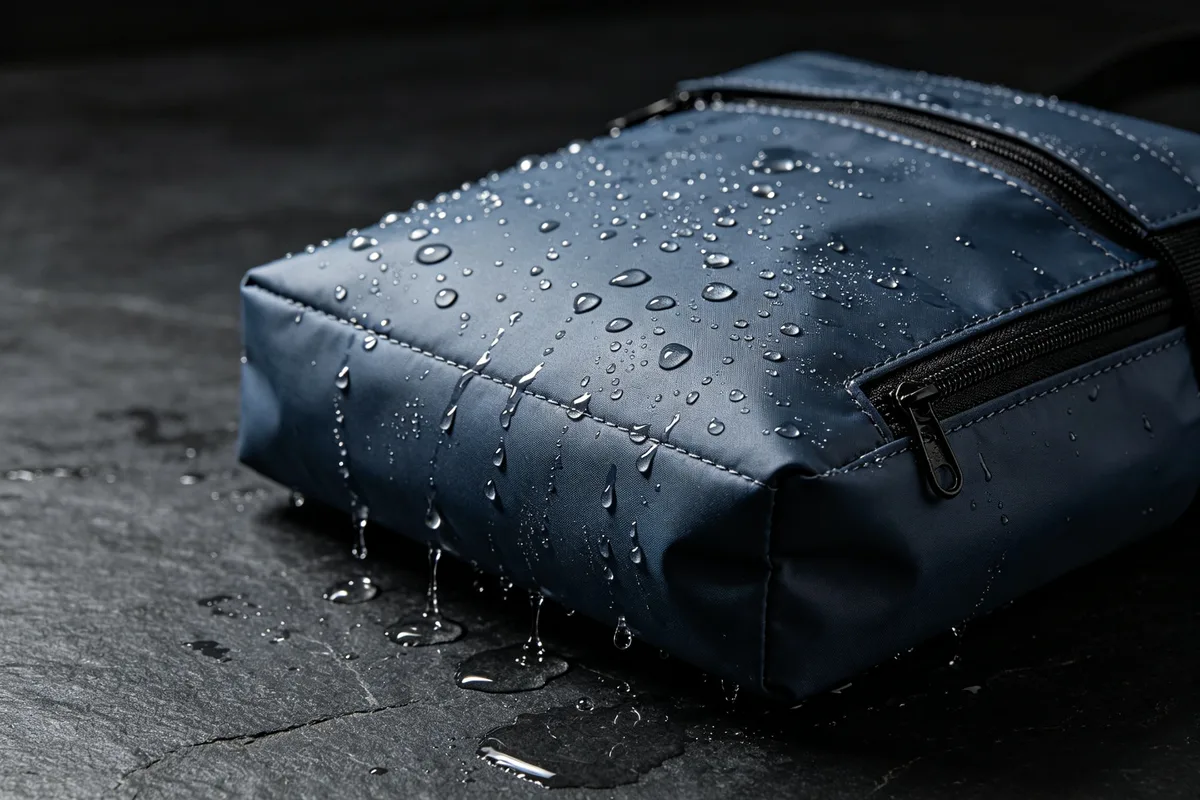
A custom bag is waterproof only when three things are solved at once: the face fabric stops water, every seam is sealed or welded so no needle holes leak, and the opening is engineered so water cannot run in around the closure. Most brands get the fabric right and then watch their product fail at the zipper or the stitch line. This guide covers the factory-level detail that actually decides waterproofing: RF welding of TPU/PVC, hot-air seam taping, waterproof zippers and roll-top closures, IPX ratings, hydrostatic head, and the production QC that keeps a good sample reproducible at scale. It is written from the factory floor at Dongguan Merris Bag Co., Ltd., where we have run welded construction for cooler bags and outdoor products since 2013.
Waterproofing Is a System, Not a Fabric
Here is the mistake we see most often. A buyer picks a coated fabric, pays for a "waterproof" finish, and never thinks about the seams. Then the bag leaks along every stitch line, because a sewing needle punches a hole through the coating, and water follows those holes under pressure or sustained rain.
A genuinely waterproof bag has three layers of defense, and the weakest one sets the ceiling:
The three layers that decide waterproofing
- Face fabric: the shell must shed or block water through a PU/TPU/PVC coating, a laminated film, or a solid TPU/PVC sheet. Measured by hydrostatic head in mm H2O.
- Seams: every stitch line must be sealed (hot-air tape), fused (RF welding), or eliminated entirely (welded panel construction). This is where most cheap "waterproof" bags fail.
- Opening: the zipper, roll-top, or flap is the first entry point in real use. A welded body with a regular zipper still leaks in the rain.
Decide the rating you actually need before you spend on materials. A commuter backpack that sits on a scooter in the rain needs dependable splash resistance, not immersion. A cooler bag for the beach needs to survive splashing and a sudden downpour without soaking through. A dry bag for kayaking needs submersion-proof construction. These are different products with different price points, and over-specifying is the fastest way to blow a budget that should have gone into the seams.
Material Systems: TPU, PVC, and Coated Fabrics
The shell material defines the whole manufacturing route. There are three workable systems, and they are not interchangeable.
| System | How it works | Hydrostatic head (typical) | Best for | Watch out for |
|---|---|---|---|---|
| TPU film / TPU-laminated fabric | Thermoplastic polyurethane film welded by RF; food-contact safe, stays flexible in cold | 3,000-10,000+ mm H2O | Dry bags, cooler liners, outdoor gear, food-contact bags | Higher material cost; weld dies needed per shape |
| PVC coated / PVC sheet | Polyvinyl chloride, RF-weldable, cheaper, high abrasion resistance | 2,000-8,000 mm H2O | Heavy-duty totes, industrial covers, budget welded bags | Stiffens below ~0°C, phthalate concerns, weaker UV resistance |
| PU-coated nylon / polyester | Coated woven fabric; seams sealed with hot-air tape over stitches | 1,000-3,000 mm H2O (fabric); taping needed for seams | Commuter packs, travel bags, soft cooler bags | Only splash-resistant unless fully taped; coating can peel after years |
Our default for a genuinely waterproof custom bag is TPU. It welds cleanly, passes food-contact requirements where that matters (think cooler food liners), and keeps working when the temperature drops, which PVC does not. PVC still has a place where budget dominates and the bag stays indoors or in mild climates. The coated woven route is what most brands mean by "water resistant": it works for daily commuters, but do not sell it as submersion-proof.
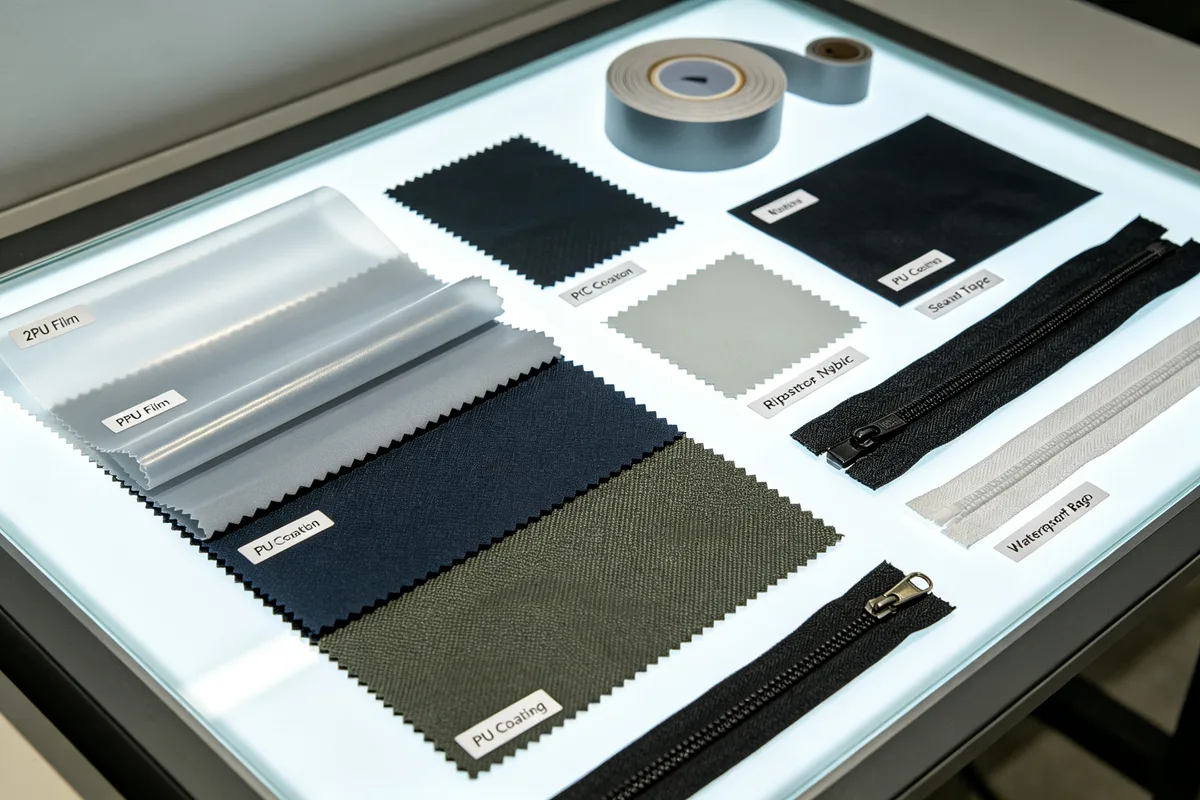
Material swatches tell you more than any spec sheet: film feel, coating adhesion, and weld response differ by supplier.
Seam Construction: Welding vs. Taping vs. Stitching
This is the section that separates a real waterproof manufacturer from a bag factory that happens to sell "waterproof" products. Ask any supplier which of these three they actually do, and ask to see the machine.
1. RF (high-frequency) welding: the only fully watertight route
RF welding works on TPU and PVC. A 27.12 MHz radio-frequency field excites the molecules inside the film, generating heat from within while a metal die presses the two layers together. The materials fuse into one solid seam — no adhesive, no thread, no needle holes. Because the die is the mold, each panel shape needs its own tool, which is the main reason welded bags carry a one-time tooling cost (typically a few hundred dollars per die at a factory like ours).
The weld itself should be 5-15 mm wide depending on the load the seam carries. A narrow weld is fine for a light liner; a cooler bag or a load-bearing dry bag needs a wider weld and a fillet or radius at corners, because sharp corners concentrate stress and fail first under repeated folding. Good welded construction also keeps the film continuous: the fewer stitched sub-panels a welded bag has, the fewer places water can find a path.
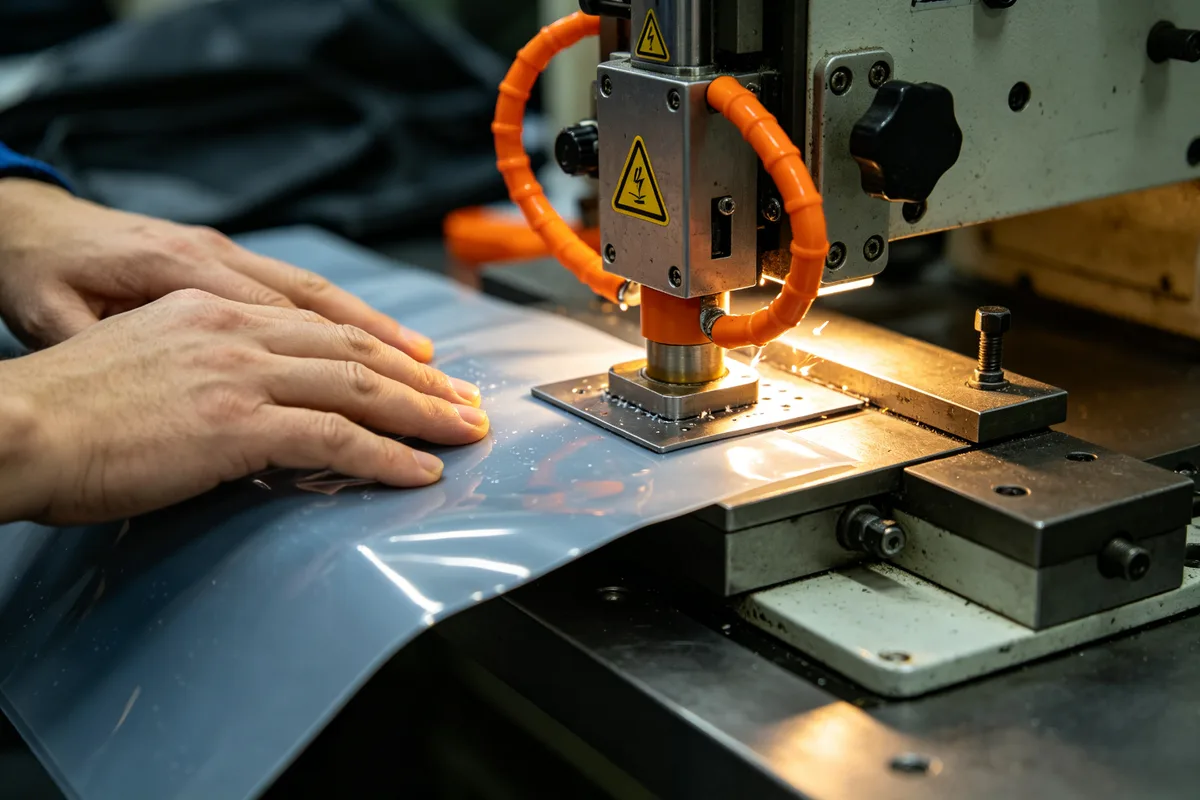
RF welding fuses TPU/PVC from within — no needle holes, no adhesive to fail later.
2. Hot-air seam taping: the right answer for sewn coated fabrics
If your design needs the softness, drape, and structure of a sewn bag, hot-air seam taping is the correct tool. You sew the bag normally, then run a heat-sealing machine over every interior seam, bonding a waterproof tape (usually 20-25 mm wide polyurethane tape) over the stitch line to cover the needle holes. The result is a bag that keeps its sewn look but has watertight seams.
Taping has limits. The tape must match the fabric's coating (PU tape on PU coating; the adhesive has to bond to the same resin family), and it only protects the seam line; the face fabric still determines the overall rating. We have seen cheap taping fail in two ways: tape that delaminates in hot humid climates after a few months, and tape applied over dusty or contaminated fabric that never fully bonds. Both are preventable with the right material pairing and operator discipline, but they are why you should ask a factory for its taped-seam track record, not just its tape machine.
3. Plain stitching with seam sealant: budget only, know the trade
Some low-cost "waterproof" bags just sew the panels and brush or spray a sealant on the seams. This covers needle holes in a cosmetic way, wears off quickly, and cannot survive sustained exposure. Use it only for very light splash protection on a low-price product, and never claim a rating for it. If a supplier quotes "waterproof" with no welding, no taping, and no test method, that is what you are being sold.
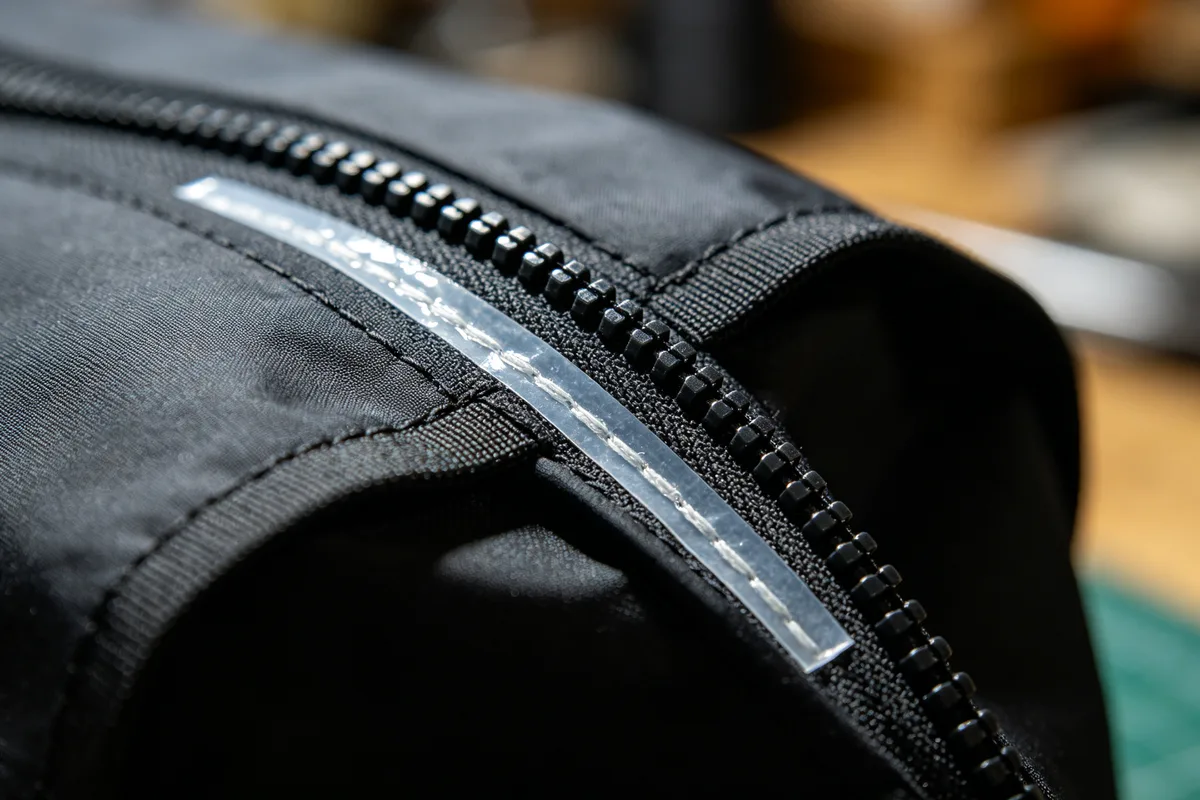
The seam and the zipper decide whether the bag holds water under real use.
The Opening Is Where Water Gets In
Water never respects a fabric. It finds the zipper, the flap, the buckle holes, the strap stitching. Engineers the opening before anything else if you want a bag that survives a downpour.
Closure options ranked by water resistance
- Roll-top (fold 3 times, then buckle): the most reliable waterproof opening without a zipper. Used on dry bags. Each fold adds a water barrier; the side rails and buckles must be welded or reinforced.
- Waterproof zipper with a welded/taped zip flap: a coated or welded zip (like YKK AquaGuard-style or a welded TPU zip) plus an over-flap that sheds water before it reaches the slider. Right for commuter and cooler bags where roll-tops are inconvenient.
- Flap + gusset with a good overhang: works for splash resistance only. The flap has to overhang enough and the gusset has to drain, because a shallow flap just channels water onto the opening.
- Regular zipper with no protection: acceptable for "water resistant" marketing on commuter bags in mild drizzle. Not a waterproof product. Say so honestly.
A regular zipper is the number one leak point we see in products that otherwise have taped seams and coated fabric. If you need the zipper convenience, budget for a waterproof zipper and a molded or taped zip flap; the incremental cost is small relative to the claims you can then make.
Hardware and Trim That Respect Water
Straps and hardware leak too. Where a bag must stay dry, we weld D-rings and webbing attachment points directly into the construction instead of stitching them through the shell, because a stitch through a waterproof panel is a hole. Where stitching is unavoidable, the attachment point goes through a reinforced patch whose edges are taped or welded. For outdoor use, check that buckles, sliders, and zipper pulls are salt-water and UV rated; cheap hardware corrodes or embrittles and the bag "stops being waterproof" long before the material fails.
One honest note: if you add a drainage grommet, you are accepting that water gets in. Drainage is a valid design choice for beach and sports bags, but it means the product is water-resistant with a deliberate water path, not waterproof. Decide which story your product tells before the spec sheet is written.
Testing: IPX, Hydrostatic Head, and Weld Strength
Waterproofing claims need a test method, or they are marketing. Three tests cover the three layers, and a serious buyer writes all three into the PO.
| Test | What it measures | Typical pass levels | Where it runs |
|---|---|---|---|
| IPX water ingress (IEC 60529) | Water entry into the finished unit from spray or immersion | IPX4 splash-proof / IPX6 jet-proof / IPX7 1m-30min immersion | Finished bag, spray booth or immersion tank |
| Hydrostatic head (ISO 811 / AATCC 127) | Fabric penetration under a rising water column | 2,000 mm H2O = good rainwear; 10,000 mm = serious submersion fabric | Face fabric, lab |
| Weld / seam strength | Force to break a welded or taped seam | Set per construction; check weld width and peel resistance | Seam samples, lab or bench |
A factory that can talk about these three tests, name the standards, and show you a test report is a real waterproof manufacturer. A factory that answers "it's waterproof" without a method is selling hope. When you request a quotation, specify the target IPX rating, the minimum hydrostatic head for the fabric, the seam method, and an AQL sampling level (AQL 2.5 is standard for apparel and bags), and ask for test reports on the pre-production sample.
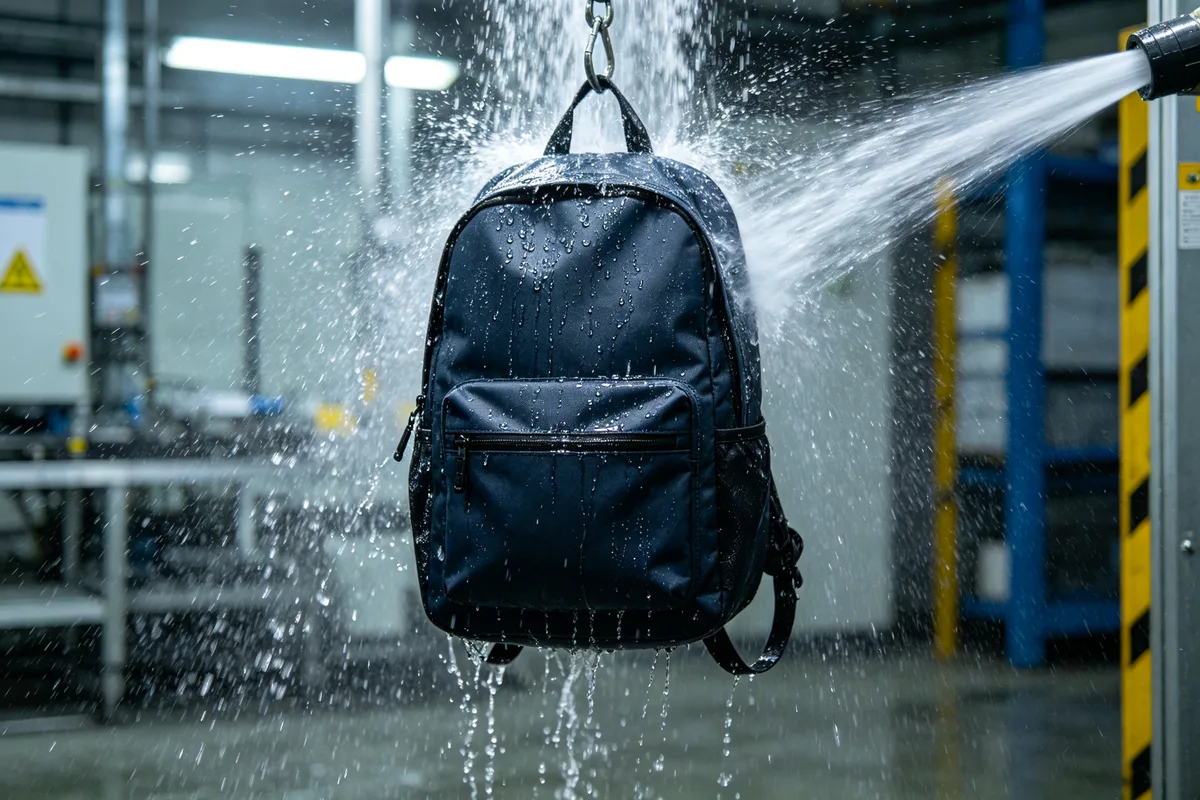
A finished-unit spray test is the only honest way to confirm the whole bag, not just the fabric, holds water.
Production QC That Keeps a Sample Reproducible
The hardest part of waterproof manufacturing is not making one good sample — it is reproducing it at 10,000 pieces. Weld quality depends on temperature, pressure, and weld time, and those drift with operator skill, ambient temperature, and die wear. On a welded line we lock the process: documented weld parameters per style, inline checks of weld width and visual integrity at set intervals, and a random finished-unit water test on every batch. The same discipline applies to taping: tape width, heat, and pressure settings are recorded, and a tape adhesion pull test runs at the start of each shift.
Ask any factory three questions before you commit: What weld or tape parameters do you document? How many finished units per batch get a real water test? And can you reproduce a failed batch's settings to trace the root cause? The third question is the one that separates factories that manage quality from factories that discover it after the container ships.
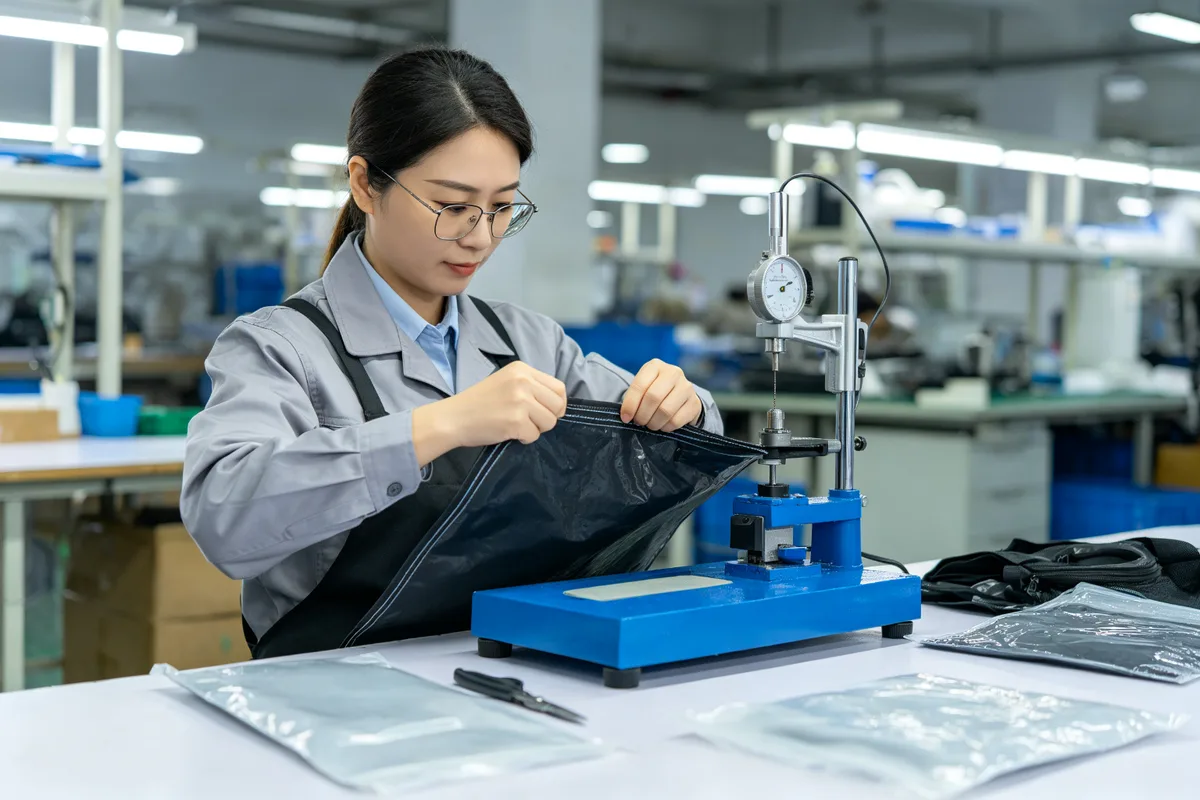
Inline weld checks and batch water tests are what keep a waterproof sample reproducible at scale.
Cost Reality: What Waterproofing Adds
Waterproof construction is not a mystery premium, but it is real. Plan for these line items so nobody is surprised at the quotation stage:
Where waterproof money goes
- Material upgrade: TPU film or TPU-laminated fabric costs meaningfully more than plain 600D polyester; the coating itself is a per-meter cost.
- Weld tooling: each welded panel shape needs an RF die; the one-time tooling cost is recovered across your order volume.
- Seam sealing labor: taping or welding is a skilled operation and runs slower than plain sewing; labor cost per unit rises.
- Waterproof zippers and hardware: a waterproof zip and molded zip flap cost several times a regular zipper.
- Testing: lab tests for hydrostatic head and IPX, plus finished-unit water testing, add a small but necessary cost, and they are the only thing that makes the claim legal to make.
The practical spread: a sewn coated-fabric bag with taped seams typically lands 15-25% above its plain equivalent; a fully RF-welded TPU bag can run 30-50% above, with the delta mostly in material, tooling, and skilled labor. For a fuller line-by-line view of where bag costs come from, our custom bag cost breakdown walks through the whole quotation.
Common Mistakes When Sourcing Waterproof Bags
| Mistake | What actually happens | Fix |
|---|---|---|
| Buying "waterproof" on the fabric spec alone | Seams and zipper leak; the bag fails in the first rain | Specify seam method and opening in the same document as the fabric |
| No test method or pass/fail standard | Factory and buyer disagree about "waterproof" after shipment | Write IPX target, hydrostatic head minimum, and AQL level into the PO |
| Regular zipper on a welded body | Water enters at the only unprotected point | Waterproof zipper plus a taped or welded zip flap |
| PVC in a cold-climate market | Bag stiffens and cracks in winter | Specify TPU for low-temperature or food-contact use |
| Sharp corners on welded panels | Stress concentration; weld fails after repeated folding | Radiuse corners and widen the weld on load-bearing seams |
| No batch water test in QC | First good sample, then drift at scale | Random finished-unit water test on every batch; document weld parameters |
How to Specify a Waterproof Bag to a Factory
When you are ready to brief a factory, a waterproof spec needs six lines that a normal bag spec does not. Our guide on sourcing custom bags from China covers the general process; the waterproof-specific additions are these:
- Target rating: "Splash-proof (IPX4)" or "Submersible (IPX7)", stated in writing, not implied.
- Material system: TPU film at X thickness, PVC at X thickness, or PU-coated woven at X denier and X mm H2O.
- Seam method: RF welding (name the panel die list) or hot-air taping (name the tape width and coating family).
- Opening: roll-top fold count, waterproof zipper model, or flap overhang (with a welded or taped zip flap if a zipper is used).
- Test standard: IPX level, hydrostatic head minimum, weld strength requirement, and AQL sampling level, all in the PO.
- QC commitment: documented weld parameters, inline checks, and a batch water test, agreed before production starts.
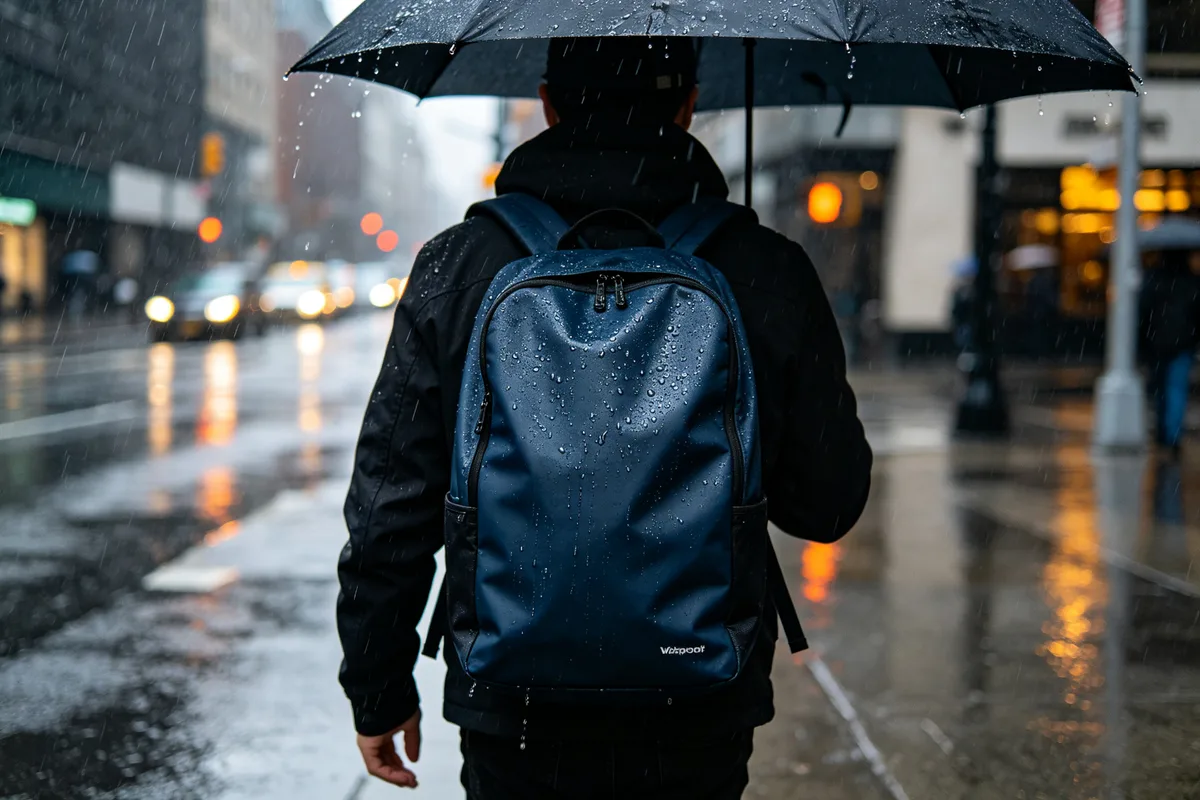
A welded or fully taped bag earns its price the first time it sits through a real downpour.
Bottom Line
Waterproofing is a chain, and it breaks at the weakest link. Set the rating you actually need, pick a material system that fits the market (TPU for cold and food-contact, coated woven for commuter splash resistance), seal every seam with welding or taping, engineer the opening so water cannot run in, and put a real test method plus batch QC behind every claim. A factory that can weld, name the standards, and reproduce its own quality is worth far more than one that quotes "waterproof" with no method behind it. We have run welded and taped construction on our cooler bags and outdoor lines for over a decade. If you are briefing a waterproof product, send us the target rating and we will show you what it takes to hit it.
Spec a Waterproof Bag with a Factory That Welds
RF welding, hot-air taping, waterproof zippers, and IPX testing in-house. 13 years of custom bag manufacturing, aligned with BSCI social-compliance and ISO 9001 practices. Send your target rating and get an honest line-by-line quotation within 8 Hours.
Send Your SpecFrequently Asked Questions
What is the difference between water-resistant and waterproof bags?
Direct Answer: Water-resistant means the face fabric sheds light rain but seams and zippers will leak under sustained exposure; waterproof means seams are sealed or welded and the opening is protected, keeping contents dry in rain or shallow immersion. A bag is only as waterproof as its weakest seam or zipper.
- Water-Resistant: Faces light rain only
- Waterproof: Sealed/welded seams
- Weakest Point: Seam or zipper
Water-resistant means the face fabric sheds light rain but the seams and zipper will leak under sustained exposure. Waterproof means the seams are sealed or welded and the opening is protected, so the bag keeps contents dry under rain, submersion in shallow water, or sustained spray. A bag is only as waterproof as its weakest point — usually the seam or the zipper.
What does IPX rating mean for bags?
Direct Answer: IPX rates water-ingress resistance from IPX0 (none) to IPX8 (continuous submersion): IPX4 handles splashing, IPX6 powerful jets, IPX7 1m immersion for 30 minutes. Most commuter bags target IPX4-6; dry bags target IPX7-8. Fabric penetration is measured separately as hydrostatic head.
- IPX4: Splashing
- IPX6: Powerful jets
- IPX7: 1m / 30 min immersion
- Dry Bag Target: IPX7-8
IPX rates water ingress resistance from IPX0 (none) to IPX8 (continuous submersion). IPX4 handles splashing from any direction, IPX6 handles powerful water jets, IPX7 handles immersion up to 1 meter for 30 minutes, and IPX8 handles deeper or longer submersion. Most waterproof commuter and cooler bags are built to IPX4-6; dry-bag style products target IPX7-8. IPX does not test fabric penetration — that is measured separately as hydrostatic head.
How do you weld seams on waterproof bags?
Direct Answer: RF welding uses 27.12MHz energy to fuse TPU/PVC film into a needle-hole-free watertight seam, 5-15mm wide. Each panel shape needs its own die, so welded bags carry a one-time tooling cost — the seam outlasts the fabric itself.
- Frequency: 27.12 MHz
- Seam Width: 5-15mm
- Tooling: One die per panel shape
- Bond Strength: Stronger than the fabric
RF (radio-frequency) welding uses a 27.12 MHz field to vibrate the molecules inside TPU or PVC film, generating heat within the material and fusing two layers together under pressure from a metal die. The result is a fused, watertight seam with no needle holes. The die is the mold, so each panel shape needs its own die, which is why welded bags carry a one-time tooling cost. The weld should be 5-15 mm wide depending on load and is strongest when the film is continuous rather than built from stitched panels.
Can a normal sewn bag be made waterproof?
Direct Answer: Partly. Sew a coated-fabric bag then tape every interior seam to cover needle holes — highly water-resistant for coolers and commuters. For true immersion, RF-welded TPU removes needle holes entirely rather than just covering them.
- Sewn + Tape: Highly water-resistant
- RF-Welded TPU: True immersion-proof
- Best For: Immersion = RF weld
Partly. You can sew a coated fabric bag and apply hot-air seam tape over every interior seam to cover the needle holes, which makes the seams watertight while keeping the soft, sewn construction. The result is highly water-resistant and suits most cooler, commuter, and travel bags. For a bag that must survive immersion, RF welding of TPU is the stronger route because it removes needle holes entirely rather than covering them.
How is waterproof quality tested in a bag factory?
Direct Answer: Factories test three layers: fabric (hydrostatic head 2,000-10,000mm H2O plus spray), seams (weld width, water-box or spray test), and the finished bag (IPX spray, immersion for IPX7). Buyers should specify the test, pass/fail standard, and AQL level in writing.
- Fabric Test: Hydrostatic head 2,000-10,000mm
- Seam Test: Weld width + water box
- Finished Bag: IPX spray / immersion
- Buyer Duty: Spec test + AQL in writing
Factories test three layers: fabric (hydrostatic head test, typically 2,000-10,000 mm H2O depending on grade, plus a spray test), seams (weld strength and visual width checks plus a water box or spray test on the assembled bag), and the finished unit (water spray per IPX, and immersion for IPX7 claims). Buyers should specify the test, the pass-fail standard, and an AQL sampling level in writing before production, then have a third party spot-check the shipment.