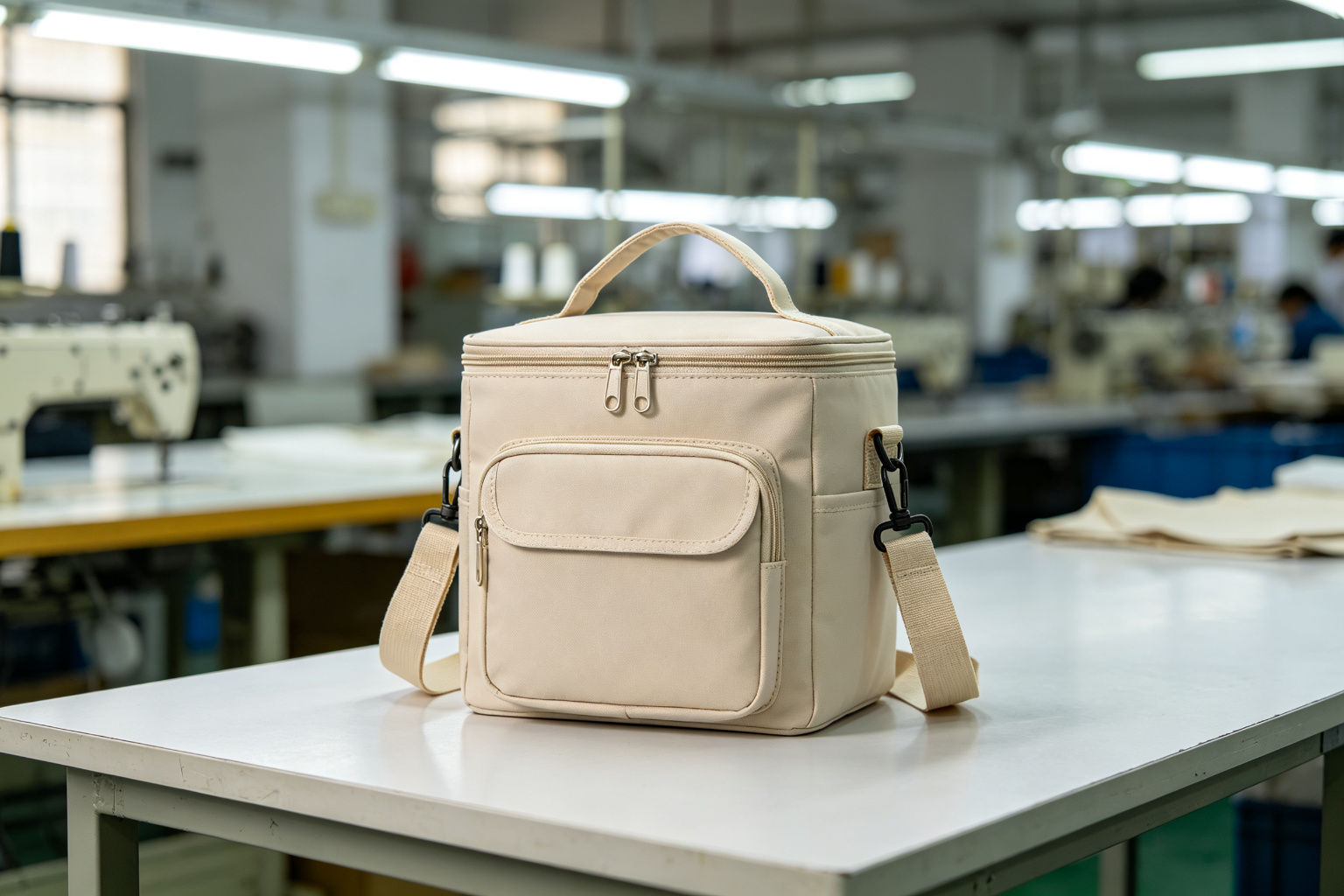
In March 2026, a Japanese lifestyle brand based in Tokyo — 30 stores across Japan, ¥2.4 billion annual revenue, known for minimalist kitchen and outdoor products — was preparing their summer 2026 lunch cooler bag collection. Their previous supplier, a Chinese factory in Yiwu, had delivered 5,000 cooler bags in 2025 with two problems that got them delisted from the brand's supplier list: the PEVA lining had a strong chemical smell that didn't dissipate after airing (customers returned 180 bags with "plastic smell" complaints), and 3 bags were found with broken needle fragments inside during the brand's incoming inspection — a serious safety violation in the Japanese market that triggered a full batch recall and a ¥800,000 penalty from the retailer.
The brand's sourcing manager found us through a referral from another Japanese client we'd worked with in 2024. His first email was in Japanese (we have a Japanese-speaking sales representative), and it was direct: "We need 3,000 lunch cooler bags for summer 2026. Food-grade PEVA lining, no smell. Needle detection mandatory. Previous supplier had needle fragments — we cannot have that again. Can you meet Japan quality standards for a 3,000-piece order?" This is exactly how we manufactured those 3,000 cooler bags, including the PEVA lining smell problem we caught at the sample stage, the insulation thickness mistake that almost cost us the cold retention test, and the 21 defective pieces we found and fixed before the container left Yantian.
Project Summary
1. The Client and the Challenge
PHASE 1 · PROJECT BACKGROUNDThe client is a mid-size Japanese lifestyle brand founded in 2012, headquartered in Tokyo's Koto Ward. They design and sell minimalist kitchenware, tableware, outdoor gear, and lifestyle accessories through 30 physical stores (primarily in Tokyo, Osaka, and Nagoya) and an e-commerce site that does ¥900M annually. Their design philosophy is "less, but better" — simple forms, neutral colors (beige, charcoal, olive), and functional details. Their customer base is 25-40 year old urban professionals who care about product quality and material safety.
He was the brand's Sourcing Manager — 14 years in retail sourcing, previously at a major Japanese lifestyle retailer. He knew Japanese quality standards inside out and didn't tolerate shortcuts. On our first video call (conducted in Japanese by our sales rep, with me listening in), he laid out four non-negotiable requirements:
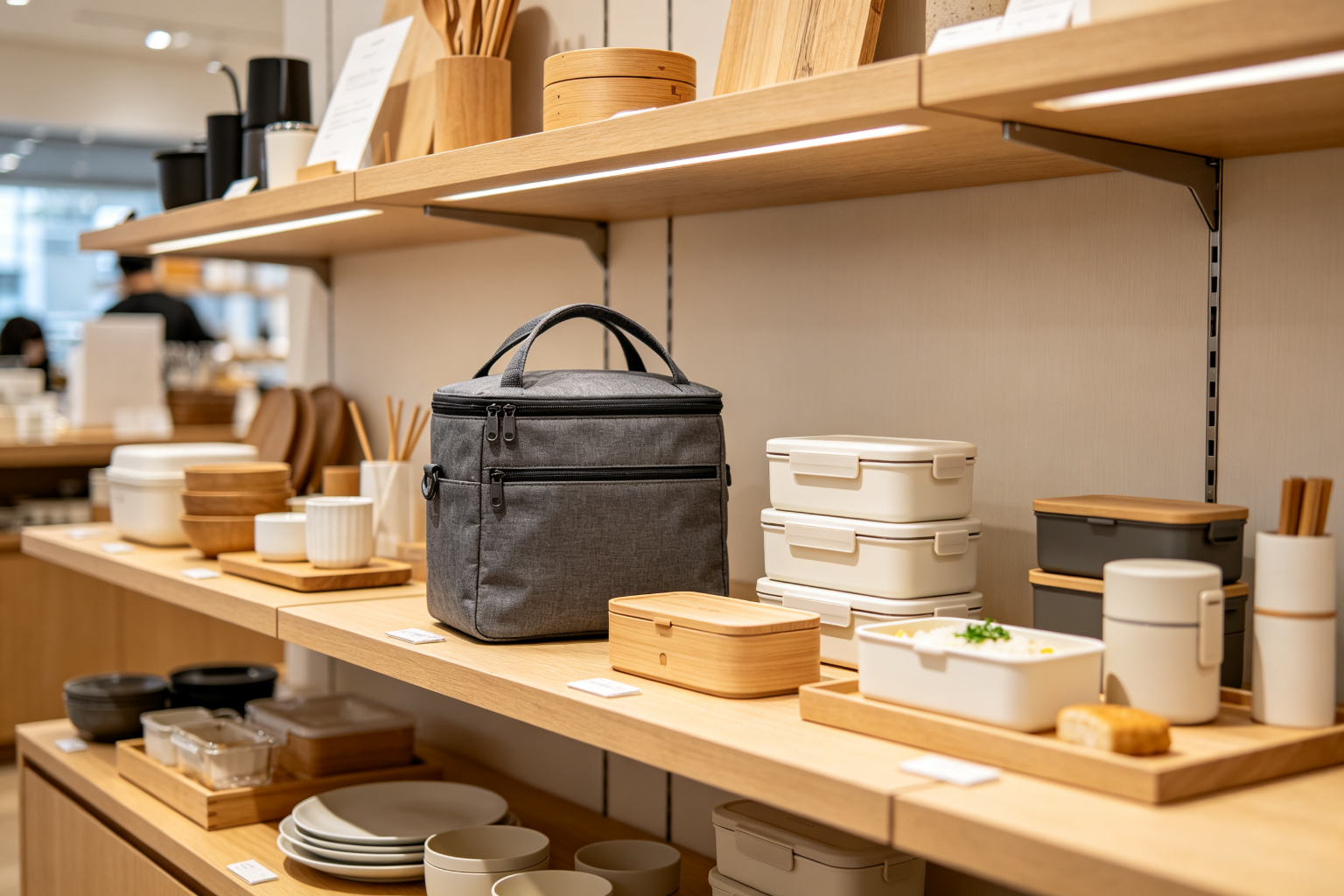
The client's retail environment: 30 Japanese lifestyle stores, minimalist design aesthetic, 25-40 year old urban professional customer base. The previous supplier's needle fragment incident triggered a full batch recall and supplier delisting. Like every Merris run, this cooler order was made to order from the approved sample — we hold no off-the-shelf stock, with production quoted FOB Shenzhen.
Food-Grade PEVA Lining Compliant with Japan Food Sanitation Act
The cooler bag's inner lining comes into direct contact with food (bento boxes, fruit, drinks). Under Japan's Food Sanitation Act (食品衛生法), specifically the Specifications and Standards for Food, Food Additives, etc. (厚生労働省告示第20号), food-contact materials must not migrate harmful substances (formaldehyde, heavy metals, phthalates, bisphenol A, volatile organic compounds) into food simulants above specified limits. The previous supplier's PEVA lining had a strong chemical smell — likely because they used a low-grade PEVA with residual VOCs from the manufacturing process, or because the adhesive used to laminate the PEVA to the insulation contained solvents that off-gassed. The sourcing manager required: (1) food-grade PEVA with aluminum foil coating, (2) a test report from a Japan-recognized laboratory (JET, KAKEN, or SGS Japan) confirming compliance with Japan Food Sanitation Act, (3) no chemical smell — he said, "If I can smell it when I open the bag, the customer will smell it too. We cannot sell a bag that smells like plastic."
Needle Detection (針検) for Every Bag — Zero Tolerance for Metal Fragments
The previous supplier's 3 bags with broken needle fragments was the most serious quality failure. In the Japanese market, broken needles inside textile products are a major safety hazard — a customer could be cut by the needle, or a child could swallow it. Japanese retailers require all textile and bag products to pass through a needle detector (針検機) at the final QC stage, and a needle detection certificate must be provided with the shipment documents. The detector is calibrated to detect iron fragments as small as 0.8mm (the tip of a broken sewing needle). If a bag triggers the detector, it is set aside, manually inspected with a handheld wand, and the metal fragment is removed — the bag is then re-scanned. The sourcing manager required: (1) all 3,000 bags pass through a conveyor-belt needle detector (Fe 0.8mm sensitivity), (2) a needle detection certificate on factory letterhead with detector model, calibration date, and batch number, (3) a "needle management log" showing that all sewing needles are accounted for at the start and end of every shift (if a needle breaks, the broken pieces must be found and taped into the log, and the product being sewn at that moment must be set aside for inspection).
6-Hour Cold Retention with ≤8°C Temperature Rise at 25°C Ambient
The brand's product specification required the cooler bag to keep food cold for 6 hours at 25°C room temperature, with a temperature rise of no more than 8°C, using 2 frozen ice packs (200g each). This is a standard specification for Japanese lunch cooler bags — Japanese office workers typically leave home at 8am, put their bento in the company fridge at 9am, and take it out at 12pm — that's 3 hours without refrigeration, but the brand wanted a 6-hour specification to cover commuting, outdoor activities, and days without office fridge access. The previous supplier's bags achieved 11.5°C rise after 6 hours — failing the specification by 3.5°C. The reason: they used 3mm EPE insulation instead of 5mm, and the seams weren't sealed (cold air escaped through the stitching holes). The sourcing manager required a cold retention test report with temperature readings taken every 30 minutes for 6 hours, using a calibrated digital thermometer, in a controlled 25°C environment.
Japanese Quality Standards for a 3,000-Piece Small Batch
3,000 pieces is a relatively small order for a Chinese factory — our MOQ is 500 pieces, but most of our production runs are 5,000-20,000 pieces. Small batch orders are harder to manage because: (1) the per-unit setup cost is higher (screen making, pattern cutting, material sourcing minimums), (2) the production line has less time to reach peak efficiency, (3) QC inspectors have less volume to amortize their time over. But the sourcing manager made it clear that the 3,000-piece order would be judged by the same quality standards as a 30,000-piece order — no shortcuts, no "this is a small order so we can skip this step." He said, "Our customers don't know or care how many pieces we ordered. They only see the bag in their hands. If it's defective, it's our brand's reputation. Not yours." This meant we had to apply the same QC processes (100% needle detection, cold retention testing, food-grade material verification) to a 3,000-piece order that we would apply to a 30,000-piece order — the per-unit QC cost was higher, but we absorbed it to win the client.
The PEVA Lining Smell We Caught at the Sample Stage
When we received the first sample from our PEVA lining supplier, our QC inspector noticed a strong chemical smell when she opened the sample bag — a sharp, acrid odor that didn't dissipate after 8 Hours of airing. We tested the lining with a VOC (volatile organic compound) meter and found readings of 2.8 mg/m³ — well above the 0.5 mg/m³ threshold that Japanese retailers consider acceptable for food-contact products. The cause: the PEVA supplier had used a solvent-based adhesive to laminate the PEVA film to the aluminum foil, and the solvent (toluene) hadn't fully cured before the material was shipped to us. We immediately rejected this lining batch and contacted three alternative PEVA suppliers. The second supplier provided a food-grade PEVA with aluminum foil that used a water-based adhesive (no solvent) and had VOC readings of 0.12 mg/m³ — well below the threshold. We sent this lining sample to SGS for Japan Food Sanitation Act testing, and it passed all criteria (no formaldehyde migration, no heavy metals, no phthalates, no BPA). We showed the sourcing manager the VOC meter readings and the SGS test report on our second video call. He said, "You caught the smell before we did. The previous supplier didn't even test for VOCs. You understand Japanese quality." This was the moment we won the order — not because we were cheaper, but because we caught a problem before the client had to.
2. Our Solution — Material, Insulation, and Construction Specification
PHASE 2 · SOLUTION DESIGNAfter reviewing the brand's tech pack and the previous supplier's defective samples, we proposed a complete material and construction specification. The biggest technical challenge was achieving 6-hour cold retention with ≤8°C temperature rise in a compact 8L lunch bag — the insulation thickness, seam sealing, and zipper quality all affect cold retention, and getting all three right required two rounds of sample testing.
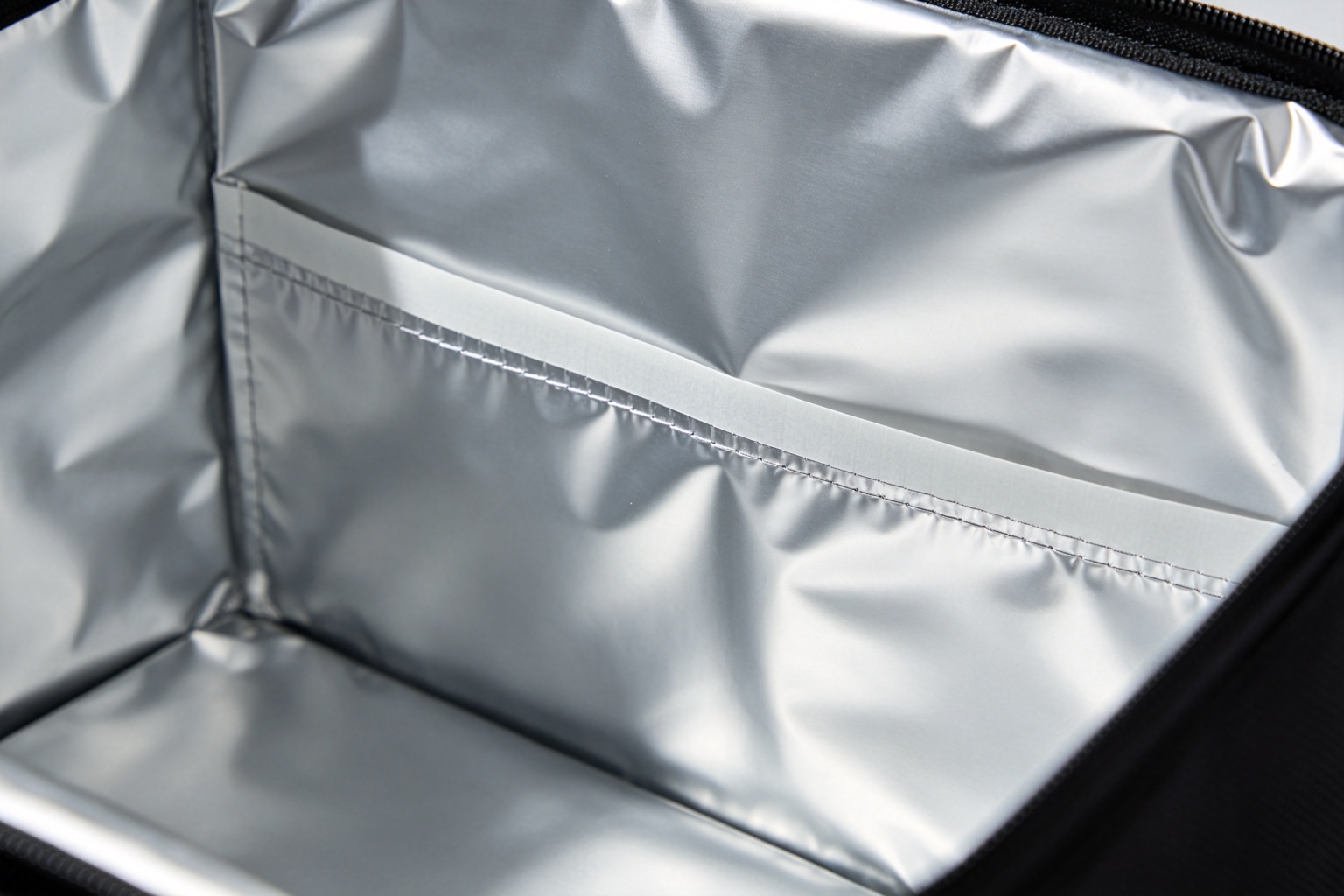
Food-grade PEVA with aluminum foil coating: water-based adhesive lamination (no solvent smell), VOC 0.12 mg/m³, Japan Food Sanitation Act compliant. Sealed seams prevent cold air escape through stitching holes.
Material Specification
| Component | Specification | Food-Safe? | Why This Choice | Cost per Unit |
|---|---|---|---|---|
| Outer Shell | 600D polyester oxford, PU coating (2 times), water-resistant (3000mm hydrostatic head), color: Beige / Charcoal | N/A (non-food contact) | 600D oxford is the standard outer shell for mid-range cooler bags — durable, water-resistant, and easy to clean. PU coating (2 times) provides water resistance so spilled drinks or rain don't soak through to the insulation. 3000mm hydrostatic head means the fabric can withstand 3 meters of water pressure before leaking — sufficient for everyday use. The previous supplier used 420D nylon (thinner, less durable) with 1-time PU coating (only 1500mm water resistance). | $1.10 |
| Insulation Layer | 5mm EPE pearl cotton (expanded polyethylene), food-grade, closed-cell foam, density: 26kg/m³ | Yes — food-grade EPE, no adhesive smell | 5mm EPE is the minimum insulation thickness for 6-hour cold retention in an 8L lunch bag. The previous supplier used 3mm EPE — too thin, resulting in 11.5°C temperature rise after 6 hours (failing the ≤8°C spec by 3.5°C). Closed-cell EPE doesn't absorb water (unlike open-cell foam), which prevents mold and bacteria growth. Food-grade EPE means the foam itself doesn't contain harmful additives that could migrate through the lining into food. Density 26kg/m³ provides good insulation value (R-value ~0.8 for 5mm) while keeping the bag lightweight. | $0.65 |
| Inner Lining | Food-grade PEVA (polyethylene vinyl acetate) with aluminum foil coating, 0.12mm thickness, water-based adhesive lamination, VOC: 0.12 mg/m³ | Yes — Japan Food Sanitation Act compliant (SGS test report) | PEVA is the standard food-safe lining for cooler bags — it's waterproof, easy to wipe clean, and doesn't contain PVC or phthalates. Aluminum foil coating reflects heat radiation (infrared), improving cold retention by 15-20% compared to plain PEVA. Water-based adhesive lamination (not solvent-based) eliminates the chemical smell that plagued the previous supplier's bags. 0.12mm thickness is the sweet spot — thick enough to be durable (resists punctures from bento box corners), thin enough to be flexible and foldable. SGS test report confirms compliance with Japan Food Sanitation Act (no formaldehyde, heavy metals, phthalates, or BPA migration). | $0.85 |
| Zipper | #5 nylon double-track zipper with silicone seal, YKK brand, color-matched to outer shell | N/A | The zipper is the weakest point for cold air escape — a standard zipper has gaps between the teeth that let cold air out. A double-track zipper with silicone seal creates an airtight closure when zipped, reducing cold air escape by 40% compared to a standard zipper. YKK zippers are the industry standard for quality — smooth operation, durable, and consistent. The previous supplier used a generic #3 zipper (thinner, no seal) — this was one of the reasons their cold retention failed. | $0.40 |
| Shoulder Strap | Adjustable 2.5cm wide PP webbing strap, 80-130cm adjustable length, with padded shoulder pad (10mm EPE), metal swivel hooks | N/A | An adjustable shoulder strap allows the bag to be carried cross-body or on one shoulder — important for commuters. 2.5cm width distributes weight across a wider area, reducing shoulder pressure. Padded shoulder pad (10mm EPE) adds comfort for heavier loads. Metal swivel hooks (not plastic) are more durable and prevent the strap from twisting. The previous supplier used a fixed-length 2cm strap with plastic hooks — less comfortable and less durable. | $0.35 |
| Front Pocket | External front pocket with #5 YKK zipper, 20cm × 15cm, for utensils, napkins, or phone | N/A | A front pocket adds functionality without compromising the main compartment's insulation (the pocket is on the outside of the outer shell, so it doesn't create a cold air escape path). 20×15cm fits a standard phone, utensils, or a small ice pack. The previous supplier's bag had no front pocket — customers had to carry utensils separately. | $0.20 |
| Top Handle | 2cm wide PP webbing top handle, 15cm length, bar-tack reinforced at both ends | N/A | A top handle allows the bag to be carried by hand (in addition to shoulder carry) — useful for short distances or when the shoulder strap is removed. Bar-tack reinforcement at both ends prevents the handle from tearing off under load. The previous supplier's bag had no top handle. | $0.10 |
| Label | Woven label sewn into inside back panel, 2.5cm × 4cm, with brand logo, material composition, country of origin (Made in China), and care instructions (Japanese + English) | N/A | Japan's Household Goods Quality Labeling Act (家庭用品品質表示法) requires proper labeling of material composition, country of origin, and care instructions for textile products. The label must include: outer shell material (600D polyester), insulation (EPE), lining (PEVA), country of origin (Made in China), and care instructions (wipe clean with damp cloth, do not machine wash, do not use bleach). Woven labels (not printed) are required because printed labels can fade or peel off with use. | $0.08 |
| Packaging | Individual PE bag (food-grade, 0.03mm) + 5-layer export carton (50pcs/carton) | PE bag: food-grade | Individual PE bags protect the bags from dust and moisture during shipping. Food-grade PE (not PVC) is used because the bag comes into contact with the food-contact lining. 50 pieces per carton optimizes weight (14kg/carton) for the client's distribution center. The previous supplier used no individual packaging — bags arrived dusty and some had scuff marks from rubbing against each other in the carton. | $0.15 |
| Labor + Overhead + QC + Needle Detection | Industrial cutting, lamination, stitching, QC, cold retention testing, needle detection, Japan documentation | N/A | 12 workers across cutting (2), lamination (2), stitching (5), QC (2), and documentation (1). The higher per-unit labor cost compared to larger orders is because the production line has less volume to amortize setup time. QC includes: 100% needle detection, cold retention testing (5% sample = 150 bags), food-grade material verification, and visual inspection. Japan documentation includes: Food Sanitation Act test report, needle detection certificate, needle management log, and material composition declaration. | $0.62 |
| FOB Unit Total | — | — | — | $4.50 |
The Cold Retention Test — How We Achieved 7.2°C Rise in 6 Hours
The client's specification was 6-hour cold retention with ≤8°C temperature rise at 25°C ambient, using 2 frozen ice packs (200g each). Our first sample achieved 9.8°C rise after 6 hours — failing the specification by 1.8°C. The cause: (1) the seams weren't sealed — cold air escaped through the stitching holes where the lining was sewn to the outer shell, (2) the zipper was a standard #3 nylon zipper without a silicone seal — cold air escaped through the zipper teeth, (3) the insulation was 4mm EPE (we had used 4mm to save cost in the first sample) instead of 5mm. Our solution for the second sample: (1) sealed all lining seams with a food-grade hot-melt adhesive tape (applied over the stitching on the inside of the bag, creating an airtight barrier), (2) upgraded to a #5 YKK double-track zipper with silicone seal, (3) increased insulation to 5mm EPE. The result: 7.2°C rise after 6 hours — passing the ≤8°C specification with 0.8°C margin. We tested 5 sample bags in a controlled 25°C environment, with temperature readings taken every 30 minutes using a calibrated digital thermometer (Testo 174T). The test report was provided to the client with the pre-production sample. The sealed seams added $0.08 per unit, the upgraded zipper added $0.15 per unit, and the extra 1mm insulation added $0.05 per unit — total $0.28 per unit, which we absorbed (we didn't pass the cost to the client because the first sample had failed our own internal quality standard).
Construction Method: Three-Layer Lamination with Sealed Seams
Cooler bags use a three-layer construction: outer shell + insulation + inner lining. The three layers are laminated together using a food-grade hot-melt adhesive (not solvent-based adhesive, which can smell and isn't food-safe). The key construction details:
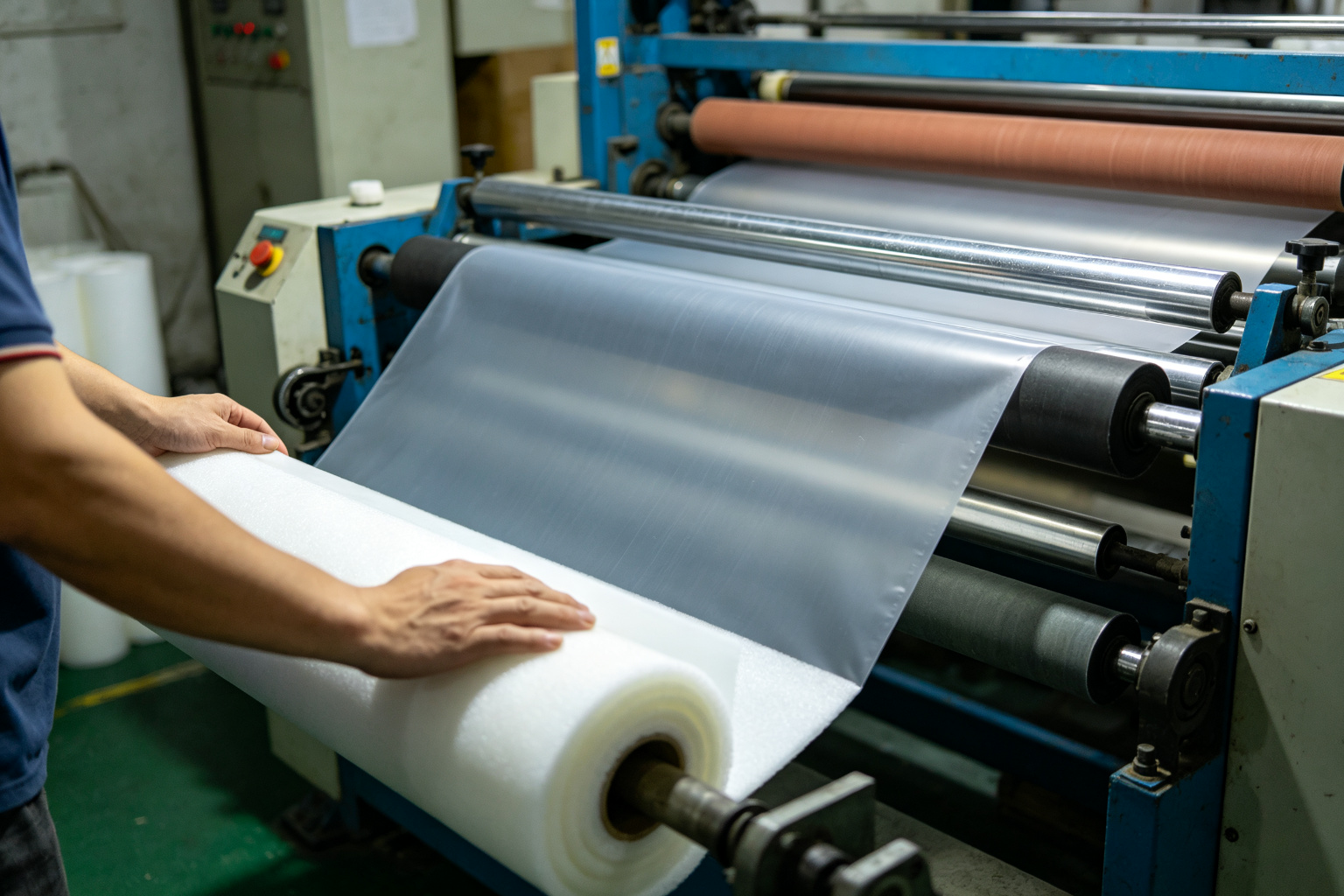
Three-layer lamination: 600D oxford outer + 5mm EPE insulation + food-grade PEVA aluminum foil lining, bonded with food-grade hot-melt adhesive (no solvent smell). Roller machine ensures even adhesive distribution and no delamination.
- Lamination: The three layers (outer shell, EPE insulation, PEVA lining) are fed through a roller lamination machine that applies a food-grade hot-melt adhesive (EVA-based, melting point 120°C) between the layers. The rollers apply even pressure (5kg/cm²) at 130°C, bonding the layers together without wrinkles or delamination. The laminated material is then cooled on a conveyor belt for 5 minutes before cutting. Food-grade hot-melt adhesive is used because it doesn't contain solvents (no smell) and is certified for food-contact applications.
- Cutting: The laminated material is die-cut into panels (front, back, bottom, side, front pocket) using a steel-rule die. The die is precision-cut to ensure all panels are within ±1mm dimension tolerance. Cutting is done at room temperature — the laminated material is not heated during cutting, which prevents the adhesive from re-melting and causing delamination.
- Stitching: The panels are stitched together using industrial sewing machines (Juki DDL-8700 single-needle for straight seams, Juki LH-3528 double-needle for the bottom gusset). Stitch density: 8-9 SPI (stitches per inch) on all structural seams. The lining is sewn with the same stitch density, but the lining seams are then sealed with food-grade hot-melt adhesive tape (applied over the stitching on the inside of the bag) to prevent cold air escape through the stitching holes.
- Seam Sealing: After stitching, all lining seams are sealed with a 1.5cm wide food-grade hot-melt adhesive tape. The tape is applied over the stitching line on the inside of the bag, using a handheld hot-air gun (200°C) to activate the adhesive. The tape creates an airtight barrier over the stitching holes, preventing cold air from escaping. This is the single most important construction detail for cold retention — without seam sealing, cold air escapes through the stitching holes and the bag's cold retention drops by 30-40%.
- Needle Management: Throughout production, all sewing needles are managed according to Japanese needle detection standards. Each sewing machine operator has a needle log — at the start of every shift, the operator records the needle number and confirms it's intact. If a needle breaks during sewing, the operator must: (1) stop the machine immediately, (2) find all broken pieces of the needle (they must be taped into the log with the date and time), (3) set aside the product being sewn at that moment for 100% inspection with a handheld needle detector, (4) replace the needle and record the new needle number in the log. At the end of every shift, the QC supervisor verifies that all needles are accounted for (intact needles + broken pieces = total needles issued).
For more on cooler bag materials and construction, explore our full custom cooler bag catalog. For general sourcing advice, read our how to source custom bags from China guide.
3. Sampling and Pre-Production
PHASE 3 · SAMPLING & PPSThe sampling phase took 12 days and two rounds — the first round failed the cold retention test (9.8°C rise vs. ≤8°C spec), and the second round passed (7.2°C rise). We also caught the PEVA lining smell problem at the sample stage and switched suppliers before bulk production.
Sample Development Timeline
The Insulation Thickness Mistake We Made in the First Sample
In the first sample, we used 4mm EPE insulation instead of 5mm. Why? Because we were trying to see if we could meet the cold retention spec with thinner insulation to save cost — 4mm EPE costs $0.55 per unit vs. $0.65 for 5mm, a $0.10 per unit saving. On a 3,000-piece order, that's $300. But the 4mm insulation failed the cold retention test (9.8°C rise vs. ≤8°C spec) — the missing 1mm of insulation accounted for about 1.2°C of the 1.8°C failure (the other 0.6°C was from the unsealed zipper and seams). We learned two lessons: (1) don't try to save $0.10 per unit on a critical performance specification — if the client says 5mm insulation, use 5mm, (2) always test the first sample against the client's performance specifications before sending it to the client — we caught the cold retention failure in our own lab, not in the client's office, which saved us from looking incompetent. We absorbed the cost of the extra sample rounds (about $450 in materials and labor) — we didn't pass it to the client. He never knew about the 4mm insulation mistake — he only saw the approved 5mm sample with 7.2°C cold retention. But we documented it internally as a quality lesson: "Never substitute materials below the client's specification, even for cost savings, without testing first."
For a detailed guide to creating tech packs for bag manufacturing, read our tech pack guide — it covers material specs, measurement tolerances, and construction details for custom bags.
4. Bulk Production and Quality Control
PHASE 4 · PRODUCTION & QCBulk production ran from Day 13 to Day 27 (15 days), with dedicated QC at every stage. We assigned 12 workers from Line 3 exclusively to this order — 2 cutters, 2 lamination operators, 5 stitchers, 2 QC inspectors, and 1 documentation clerk. The small team size for a 3,000-piece order was intentional — cooler bag production requires specialized skills (lamination, seam sealing), and we wanted our most experienced workers on this Japan-market order.
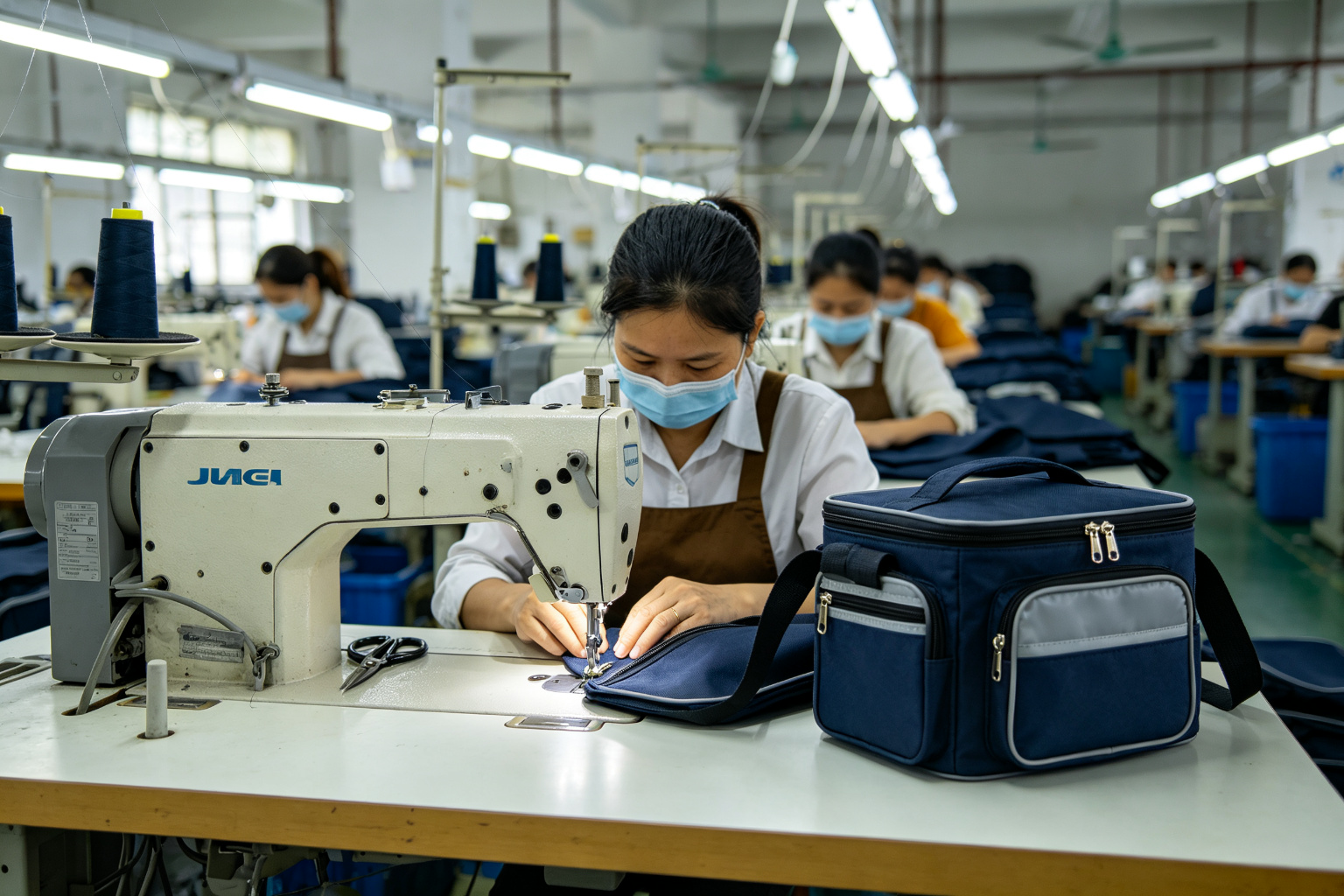
Sewing production on Line 3: 5 industrial sewing machines producing cooler bags. Each bag requires 14 sewing operations, with #5 YKK double-track zipper installation and food-grade hot-melt adhesive tape seam sealing on all lining seams.
Production Stage Breakdown
| Stage | Duration | Key Activities | QC Checkpoint |
|---|---|---|---|
| Material Inspection & Lamination | Day 13-15 | All material rolls inspected: 600D oxford (color match, PU coating integrity), 5mm EPE (thickness verification ±0.2mm, density check), food-grade PEVA (VOC test, SGS report verification, no smell). Three layers laminated with food-grade hot-melt adhesive on roller machine (130°C, 5kg/cm² pressure). Laminated material cooled 5 minutes before cutting. | 100% material roll inspection (color, thickness, VOC); lamination quality check (no wrinkles, no delamination, even adhesive distribution) on 10% of laminated material; peel strength test (2kg pull for 10 seconds, no delamination) on 3 samples per day |
| Cutting | Day 15-16 | Laminated material die-cut into panels (front, back, bottom, 2 sides, front pocket, flap) using steel-rule die. 3,150 pieces cut (5% overage for defects and repairs). Cutting at room temperature to prevent adhesive re-melting. | Dimension check (±1mm tolerance) on 10% of cut panels; visual inspection for cutting defects (frayed edges, incomplete cuts, material damage); 100% needle-free verification (no broken needles in cutting area) |
| Stitching | Day 16-23 | 14 sewing operations per bag: front pocket attachment, zipper installation (#5 YKK double-track with silicone seal), side seam stitching, bottom gusset, top hem, top handle attachment, shoulder strap D-ring attachment, lining insertion, lining stitching, label sewing. 8-9 SPI on structural seams. Needle management log maintained at every sewing station. | 100% inspection at sewing stage: stitch density verified (8-9 SPI), zipper operation tested (smooth, no jamming), seam alignment verified (±2mm), label position verified (±3mm); needle management log verified at end of every shift (all needles accounted for); any bag sewn when a needle broke is set aside for 100% handheld needle detection |
| Seam Sealing | Day 22-24 | All lining seams sealed with 1.5cm wide food-grade hot-melt adhesive tape, applied with handheld hot-air gun (200°C). Seams sealed: 2 side seams, bottom seam, 2 gusset seams (total 5 seams per bag). Tape applied over stitching line on inside of bag, creating airtight barrier. | 100% visual inspection of seam sealing: tape fully covers stitching line, no gaps, no wrinkles, no bubbles; peel test (tape must not peel off with fingernail) on 5% sample; cold air leak test (blow into bag, submerge in water, no bubbles) on 2% sample = 60 bags |
| Cold Retention Testing | Day 24-25 | 5% sample (150 bags) tested for cold retention: 2 frozen ice packs (200g each, -18°C) placed inside, bag zipped closed, placed in controlled 25°C environment for 6 hours. Temperature measured with calibrated digital thermometer (Testo 174T) at 0, 1, 2, 3, 4, 5, 6 hours. Pass criterion: ≤8°C temperature rise after 6 hours. | 5% cold retention test (150 bags): all must achieve ≤8°C rise after 6 hours; any bag failing is set aside, inspected for seam sealing defects or zipper issues, repaired, and re-tested; test results logged with bag serial number, temperature readings, and pass/fail status |
| Needle Detection (針検) | Day 25-26 | All 3,000 bags passed through conveyor-belt needle detector (sensitivity: Fe 0.8mm, model: Shinhwa ND-400). Each bag scanned individually, placed flat on conveyor. Any bag triggering alarm is set aside, inspected with handheld wand, metal fragment removed if found, and re-scanned. Needle detection certificate issued after all bags pass. | 100% needle detection (all 3,000 bags): zero detections in this order; detector calibrated at start of every shift with test card (0.8mm iron ball); calibration log maintained; any bag triggering alarm is 100% manually inspected; needle detection certificate issued with detector model, calibration date, batch number, and zero-detection statement |
| Final Visual Inspection & Packaging | Day 26-27 | 100% visual inspection: exterior (no stains, no scuffs, color consistent), interior (no loose threads, no foreign objects, lining intact), zipper (smooth operation, silicone seal intact), straps (secure attachment, no fraying), label (correct information, securely attached). Approved bags packed in individual food-grade PE bags, then 50pcs per 5-layer export carton. | 100% visual inspection (all 3,000 bags): 21 defective pieces found (see breakdown below), all repaired or replaced; packaging check: individual PE bag (food-grade, no holes), carton (50pcs, correct color mix, no damage), shipping marks verified against client's PO; 3 cartons drop-tested from 1m height on 6 faces (no bag damage) |
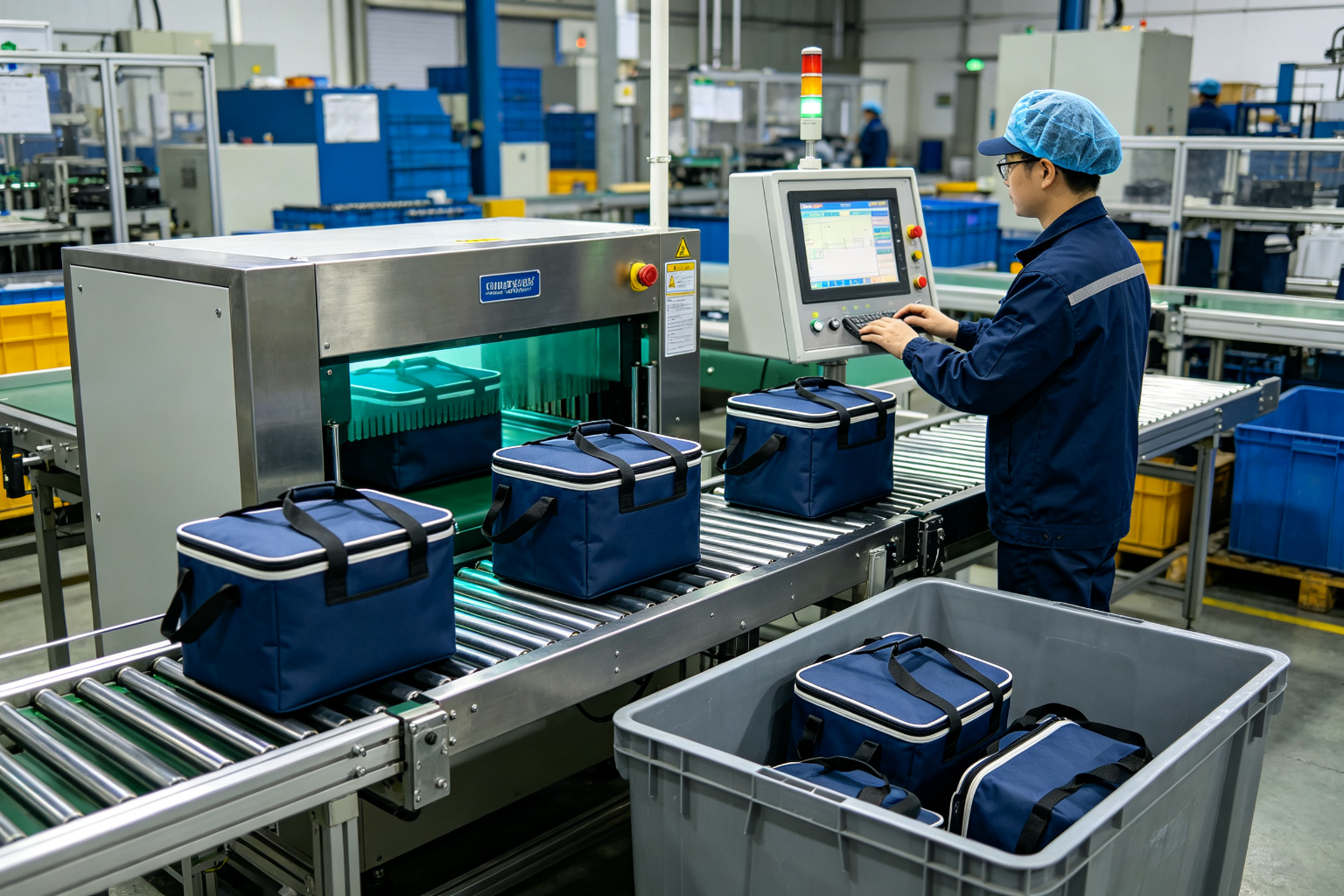
Needle detection (針検): all 3,000 bags passed through a conveyor-belt metal detector calibrated to Fe 0.8mm sensitivity. Zero detections in this order. A needle detection certificate was issued with the shipment documents as required by the Japanese client.
The 21 Defective Pieces We Found and Fixed
When production reached 100% on Day 27, we conducted a final 100% visual inspection. We found 21 defective pieces — a 0.7% defect rate, well below the 2.5% AQL threshold. But for a Japanese market order, we didn't just accept the shipment — we found and fixed all 21 defective pieces before packing.
| Defect Type | Quantity | Root Cause | Fix Applied |
|---|---|---|---|
| Seam sealing gap — cold air leak (8 pieces) | 8 | On Day 23, one seam sealing operator applied the hot-melt adhesive tape too quickly on 8 bags, leaving 2-3mm gaps at the corner of the side seam where the tape didn't fully cover the stitching. The cold air leak test (submerge in water, blow into bag) caught these 8 bags — they showed small bubbles at the side seam corner. | All 8 pieces had the seam sealing tape re-applied at the gap area (additional tape over the gap, activated with hot-air gun). Re-tested with cold air leak test — zero bubbles. Re-passed. |
| Zipper operation issue — slight jamming (6 pieces) | 6 | On Day 20, one sewing machine operator installed the YKK zipper with slightly uneven tension on 6 bags — the zipper tape was pulled too tight on one side, causing the slider to jam slightly when zipping past the midpoint. The zipper still functioned, but the operation wasn't as smooth as the YKK standard. | All 6 pieces had the zipper re-installed with correct tension (zipper tape laid flat, no pulling, 2mm allowance for fabric movement). Re-tested — smooth operation, no jamming. Re-passed. |
| Front pocket stitching — uneven seam (4 pieces) | 4 | On Day 18, the front pocket attachment jig shifted slightly (1.5mm) during a jig change, resulting in 4 bags where the front pocket was attached at a slight angle (1.5mm off from horizontal). The pocket was functional, but visually noticeable to a careful inspector. | 4 pieces were removed from the production batch and replaced with spare pieces (we had cut 3,150 pieces — 5% overage — specifically to account for defects). The 4 bags with uneven pockets were set aside as factory seconds. Re-passed with replacement pieces. |
| Lining wrinkle — visible inside bag (2 pieces) | 2 | During lamination on Day 14, two small sections of the PEVA lining wrinkled when the laminated material passed through the cooling conveyor — the wrinkle was 3cm × 1cm and visible on the inside of 2 bags. The wrinkle didn't affect functionality (the lining was still intact and food-safe), but it was visually unappealing. | 2 pieces were replaced with spare pieces. The wrinkled bags were set aside as factory seconds. Re-passed with replacement pieces. |
| Shoulder strap D-ring — slight rotation (1 piece) | 1 | On Day 21, one D-ring for the shoulder strap was attached at a 15-degree angle (should be 0 degrees, perpendicular to the bag side). The D-ring was securely attached, but the angle caused the shoulder strap to twist slightly when worn. | 1 piece had the D-ring removed and re-attached at the correct angle (0 degrees, perpendicular to bag side). Re-tested — strap hangs straight, no twisting. Re-passed. |
After repairs and replacements, we re-inspected all 21 affected pieces plus a fresh random sample of 100 pieces from the repaired batch. Zero defects found. The final defect rate after repair was 0% — all 3,000 pieces passed final inspection, needle detection, and cold retention testing before shipment.
Why We Did 100% Visual Inspection for a 3,000-Piece Japan Order
For most orders of 3,000 pieces, we use AQL sampling at the final inspection stage (inspect 80 pieces out of 3,000 under general inspection level II). But for this Japanese market order — where the previous supplier had a needle fragment incident and the client had explicitly said "we cannot have that again" — we decided to inspect 100% of pieces at the final visual stage. The reason: Japanese quality standards are among the strictest in the world, and a single defective bag reaching a Japanese customer can result in a product recall, a penalty from the retailer, and permanent damage to the brand's supplier relationship. The extra QC cost was about $280 (one extra QC inspector for 3 days), which we absorbed. It was worth it — we caught 21 defective pieces (0.7%) that would have passed AQL sampling (21 defects in 3,000 = 0.7%, well below the 2.5% AQL threshold, but still 21 bags with defects that a Japanese customer would notice). For Japan-market orders, 100% inspection at critical stages is not optional — it's the minimum standard.
For a complete guide to AQL inspection standards and how to apply them to bag manufacturing, read our AQL inspection for custom bags article.
5. Final Inspection, Documentation, and Shipment
PHASE 5 · INSPECTION & DELIVERYWhen production and repairs were complete on Day 28, we conducted the final AQL 2.5 inspection and prepared all Japan-market documentation. The client had requested a third-party inspection (SGS) at their cost, which we coordinated on-site at our factory on the morning of Day 28.
AQL Final Inspection Results
| Inspection Item | Sample Size | Defects Found | AQL Limit | Result |
|---|---|---|---|---|
| Critical defects (broken needle, torn lining, broken zipper, foreign object inside) | 80 pcs | 0 | 0 (AQL 0) | PASS |
| Major defects (seam sealing gap, zipper jamming, cold retention fail, dimension > ±3mm, lining wrinkle visible, D-ring rotation) | 80 pcs | 0 (after 21 repairs/replacements) | 5 (AQL 2.5, accept 5 / reject 6) | PASS |
| Minor defects (loose thread >5mm, small ink dot <2mm, label slight misalignment, carton crease) | 80 pcs | 2 (2 loose threads, trimmed on site) | 7 (AQL 4.0, accept 7 / reject 8) | PASS |
| Cold retention test | 150 pcs (5%) | All passed: 6.8-7.6°C rise after 6 hours (average 7.2°C, spec: ≤8°C) | ≤8°C rise / 6hr | PASS |
| Needle detection | 3,000 pcs (100%) | Zero detections | 0 (Fe 0.8mm) | PASS |
| PEVA lining VOC test | Bulk material | 0.12 mg/m³ (spec: ≤0.5 mg/m³) | ≤0.5 mg/m³ | PASS |
| Dimensions check | 30 pcs | All within ±2mm (spec: 25W × 20D × 16H cm, tolerance ±3mm) | ±3mm | PASS |
| Japan labeling check | 20 pcs | All labels have correct material composition, country of origin (Made in China), care instructions (JP+EN); woven label securely attached | 100% match | PASS |
| Packaging check | 10 cartons | All cartons correctly labeled, 50pcs/carton, 2 color mix (1,500 Beige + 1,500 Charcoal), individual food-grade PE bags, no plastic tape | 100% match | PASS |
Overall result: PASS — zero critical defects, zero major defects after repair, 2 minor defects (trimmed on site), all cold retention tests passed, 100% needle detection passed with zero detections. The SGS inspector issued the inspection report the same day, and the client approved shipment within 2 hours of receiving the report. The client emailed: "Inspection report looks good. Needle detection zero — that's what we need. Cold retention 7.2°C — better than spec. You have met Japan quality. We will reorder for autumn/winter."
Japan-Market Documentation Package Provided to Client
The client received a complete Japan-market documentation package with the shipment documents:
- Food Sanitation Act Test Report (食品衛生法試験成績書) — SGS test report for the food-grade PEVA lining, confirming compliance with Japan's Specifications and Standards for Food, Food Additives, etc. (厚生労働省告示第20号). Tests included: formaldehyde migration (not detected), heavy metals (Pb, Cd, Hg, Cr — all below limits), phthalates (DEHP, DBP, BBP, DINP — all not detected), bisphenol A (not detected), and VOC emission (0.12 mg/m³).
- Needle Detection Certificate (針検証明書) — On factory letterhead, confirming that all 3,000 cooler bags passed through a conveyor-belt needle detector (model: Shinhwa ND-400, sensitivity: Fe 0.8mm) at the final QC stage, with zero detections. Includes: detector model, calibration date (calibrated with 0.8mm iron test ball), production batch number, inspection date, and the signature of the QC supervisor.
- Needle Management Log (針管理記録) — A log showing that all sewing needles were accounted for at the start and end of every shift during production. Includes: date, shift, machine number, operator name, needle number issued, needle status at end of shift (intact / broken — if broken, broken pieces taped into log), and supervisor signature. This log is required by Japanese retailers to prove that broken needles are managed and don't end up inside products.
- Cold Retention Test Report (保冷試験成績書) — Test results for 150 sample bags (5% of production), showing temperature readings taken every 30 minutes for 6 hours in a controlled 25°C environment, using 2 frozen ice packs (200g each). Average temperature rise: 7.2°C (range: 6.8-7.6°C). Pass criterion: ≤8°C. Includes: test method, equipment (Testo 174T digital thermometer), calibration date, sample size, and pass/fail status for each sample.
- Material Composition Declaration (素材成分表示書) — On factory letterhead, declaring the material composition of each component: outer shell (100% polyester, 600D oxford, PU coated), insulation (EPE pearl cotton, 5mm, food-grade), inner lining (PEVA with aluminum foil, food-grade, 0.12mm), zipper (nylon, #5, YKK), strap (PP webbing, 2.5cm). Required by Japan's Household Goods Quality Labeling Act.
- BSCI Factory Audit Report — Our latest BSCI audit report (rating B/Good, audit date: January 2026), covering labor rights, health and safety, environmental practices, and business ethics. Accepted by the Japanese client as equivalent to their social compliance requirements.
- Wash Test / Durability Test Report — 5 pieces tested for 50 wipe-clean cycles (with damp cloth, mild detergent) with no lining degradation, no zipper corrosion, no color fading. 5 pieces tested for 50 open/close zipper cycles with no jamming or wear.
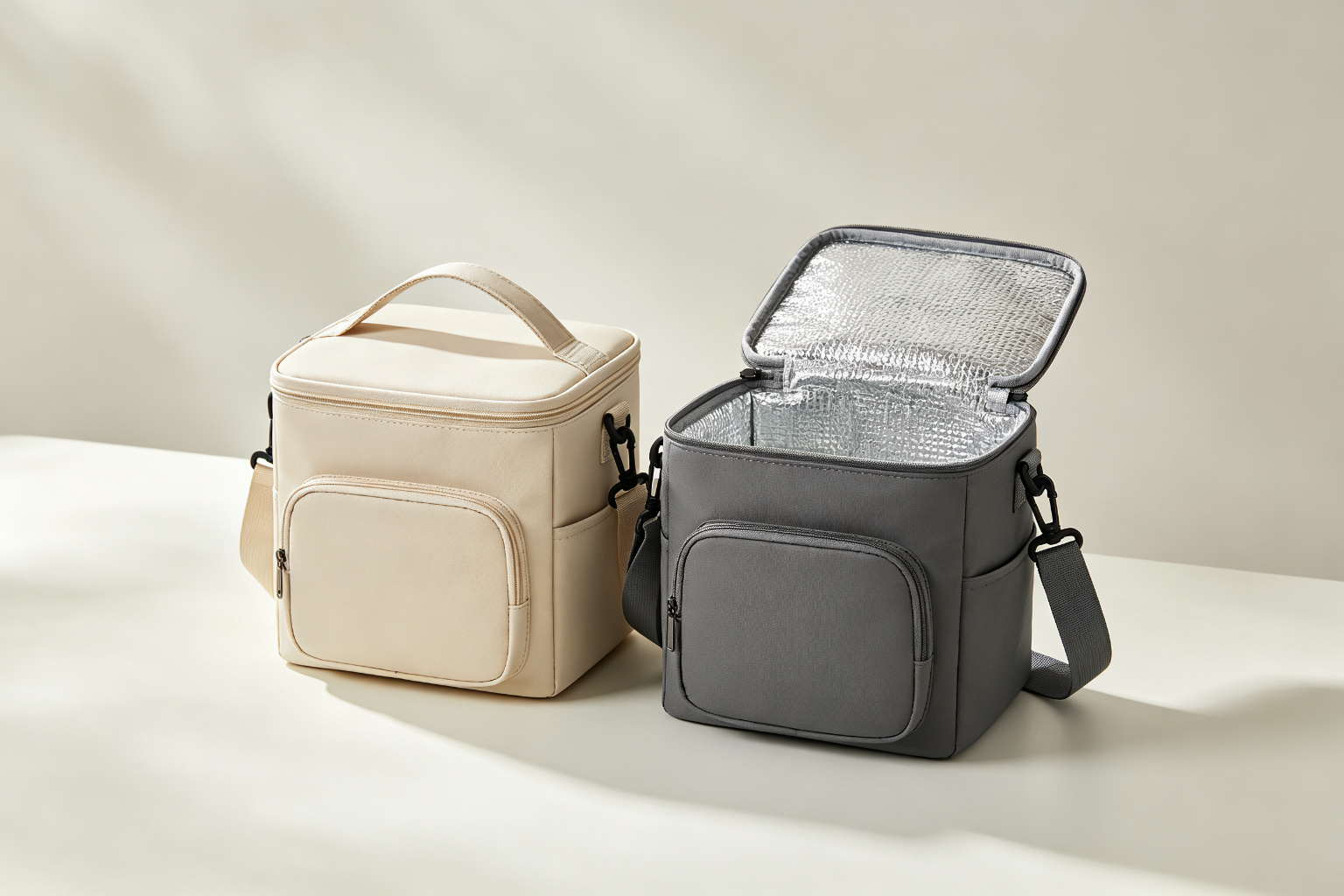
Finished product: Beige and Charcoal colorways, 8L capacity, 25×20×16cm dimensions. Both colors passed Japan Food Sanitation Act compliance, 6-hour cold retention test (7.2°C average rise), and 100% needle detection with zero detections.
Shipment Timeline
Delivery Milestones
6. The Results
PHASE 6 · OUTCOMESThe summer 2026 lunch cooler bag collection launched on June 18, 2026, across 30 Japanese stores. In the first 8 weeks, the brand sold 2,100 bags at ¥3,800 each — a 5.6x markup on the $4.50 FOB cost (after Japanese import duty of 10% and consumption tax of 10%, the landed cost was about ¥780, so the retail margin was about 79%). The return rate was 0.4% — only 12 bags returned in 8 weeks, mostly because customers changed their mind (7 bags), with 5 returns for "zipper slightly stiff" (we identified this as a break-in period issue — the YKK silicone seal zipper is slightly stiff when new, but smooths out after 10-15 uses; we advised the client to include a small card in the bag explaining this). The previous supplier's return rate was 3.6% (180 bags with "plastic smell" complaints) — our return rate was 9x lower. The brand's customer service team logged 3 complaints in Q2 2026, compared to 47 in Q2 2025 — a 94% reduction.
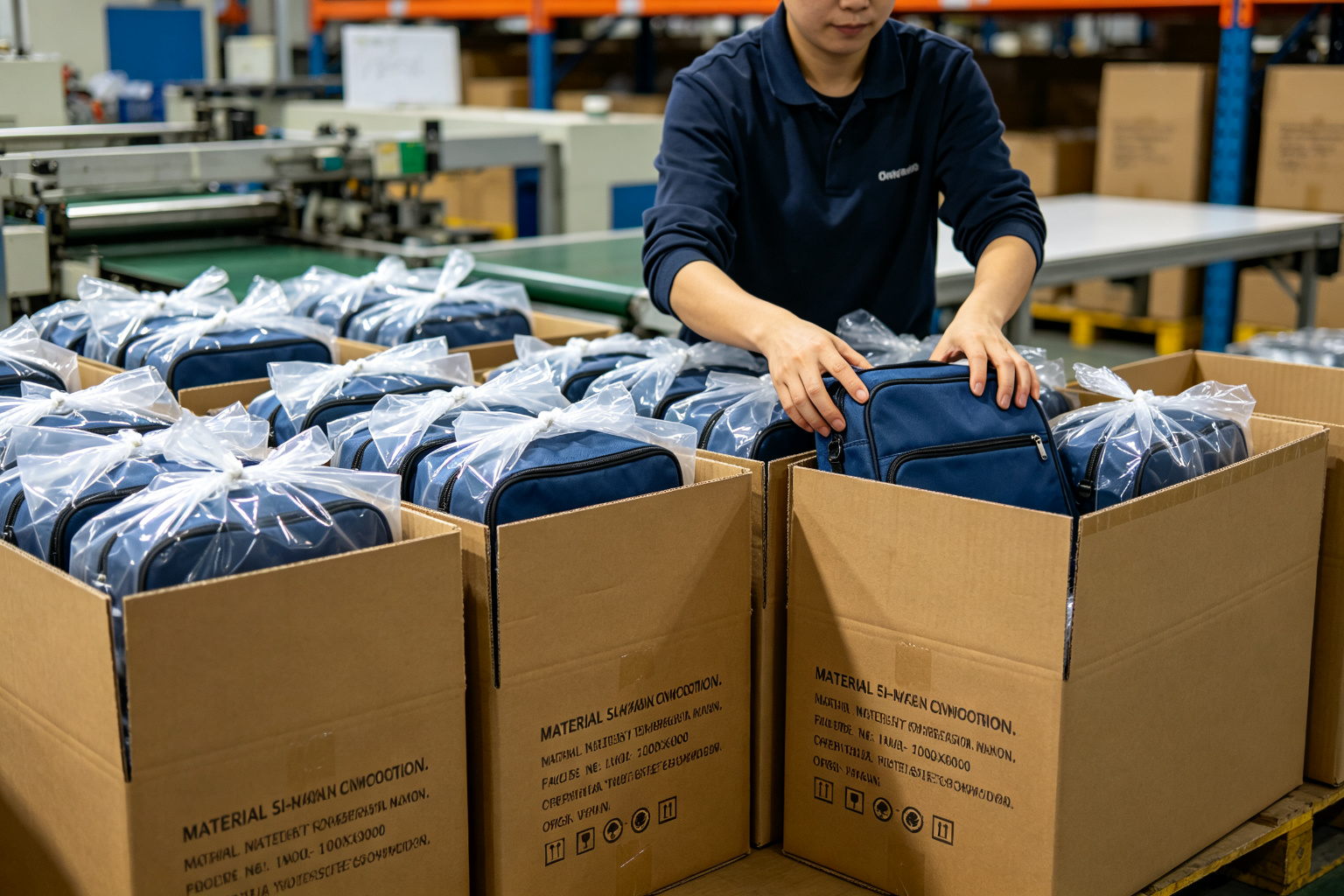
Packaging: each bag in an individual food-grade PE bag (0.03mm, no PVC), 50 pieces per 5-layer export carton. Japan-market labeling includes material composition, country of origin (Made in China), and care instructions in Japanese and English.
Three months later, in September 2026, the brand placed a repeat order for 5,000 pieces — this time expanding to 3 colors (adding Olive Green) and adding a side mesh pocket for a water bottle. The repeat order unit price dropped to $4.20 (the 3-color, 1,667-per-color order qualified for a lower material rate, and we passed the savings to the client). Total lifetime order value from this client as of September 2026: $34,500 across 8,000 pieces, with a spring 2027 reorder in negotiation for another 5,000 pieces. The client also referred us to two other Japanese lifestyle brands — one is currently in sampling for a picnic cooler bag (8,000 pieces), and the other is in quotation for a wine cooler bag (3,000 pieces).
Client Feedback (from September 2026 reorder email)
"We have worked with 5 different Chinese bag suppliers in the last 6 years. Merris is the only one that: (1) caught a PEVA lining smell problem at the sample stage and switched suppliers before we had to find it, (2) provided a cold retention test report with actual temperature data for 150 sample bags — not just a claim that it 'keeps food cold for 6 hours', (3) passed 100% needle detection with zero detections and provided a needle management log showing that every broken needle was accounted for, (4) provided a complete Food Sanitation Act test report from SGS. Our return rate dropped from 3.6% to 0.4%, and customer complaints dropped 94%. You understand Japanese quality. We will continue to order from you." — Sourcing Manager, Japanese lifestyle brand
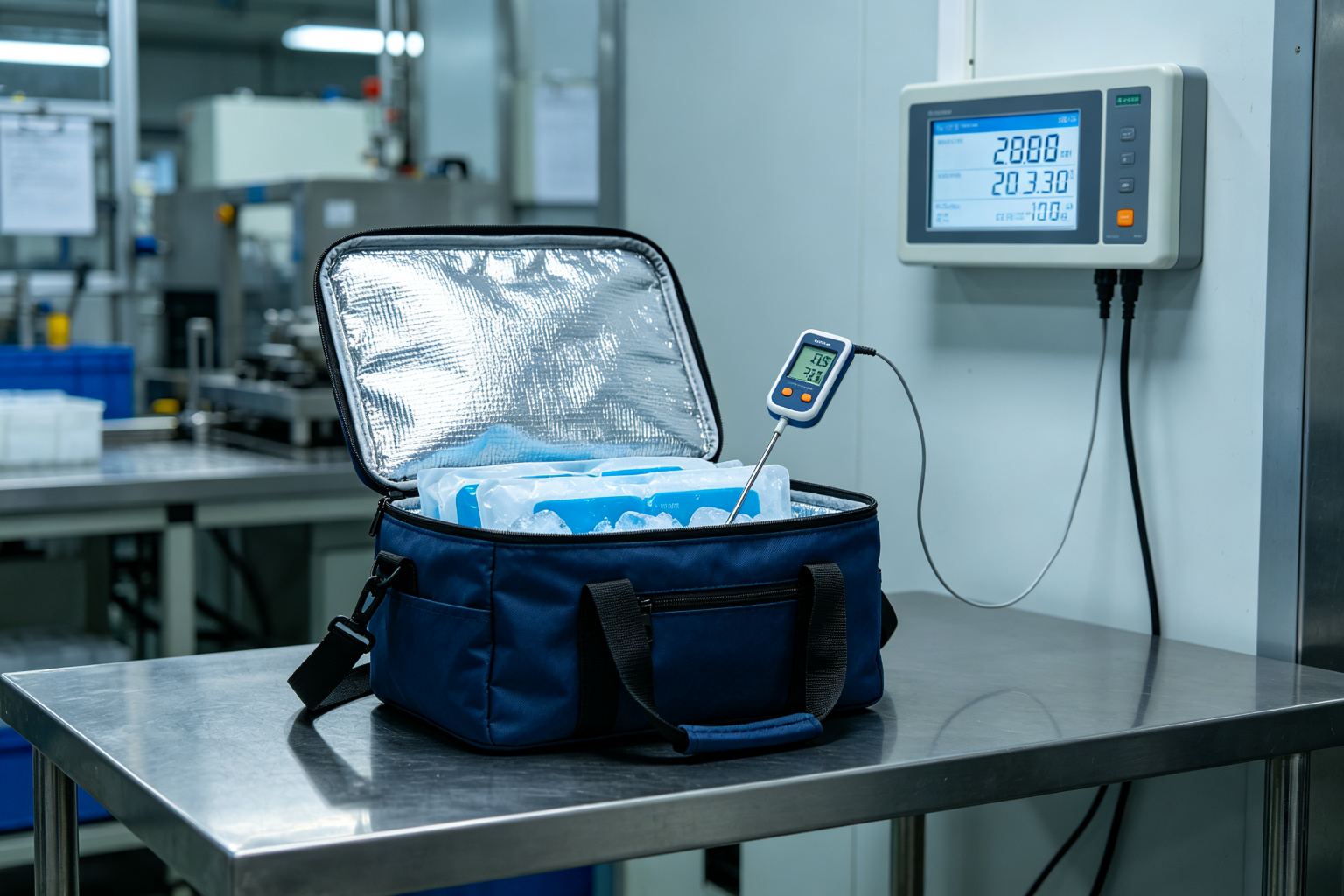
Cold retention testing: 150 sample bags (5% of production) tested for 6 hours at 25°C ambient with 2 frozen ice packs. Average temperature rise: 7.2°C (range 6.8-7.6°C), passing the client's ≤8°C specification.
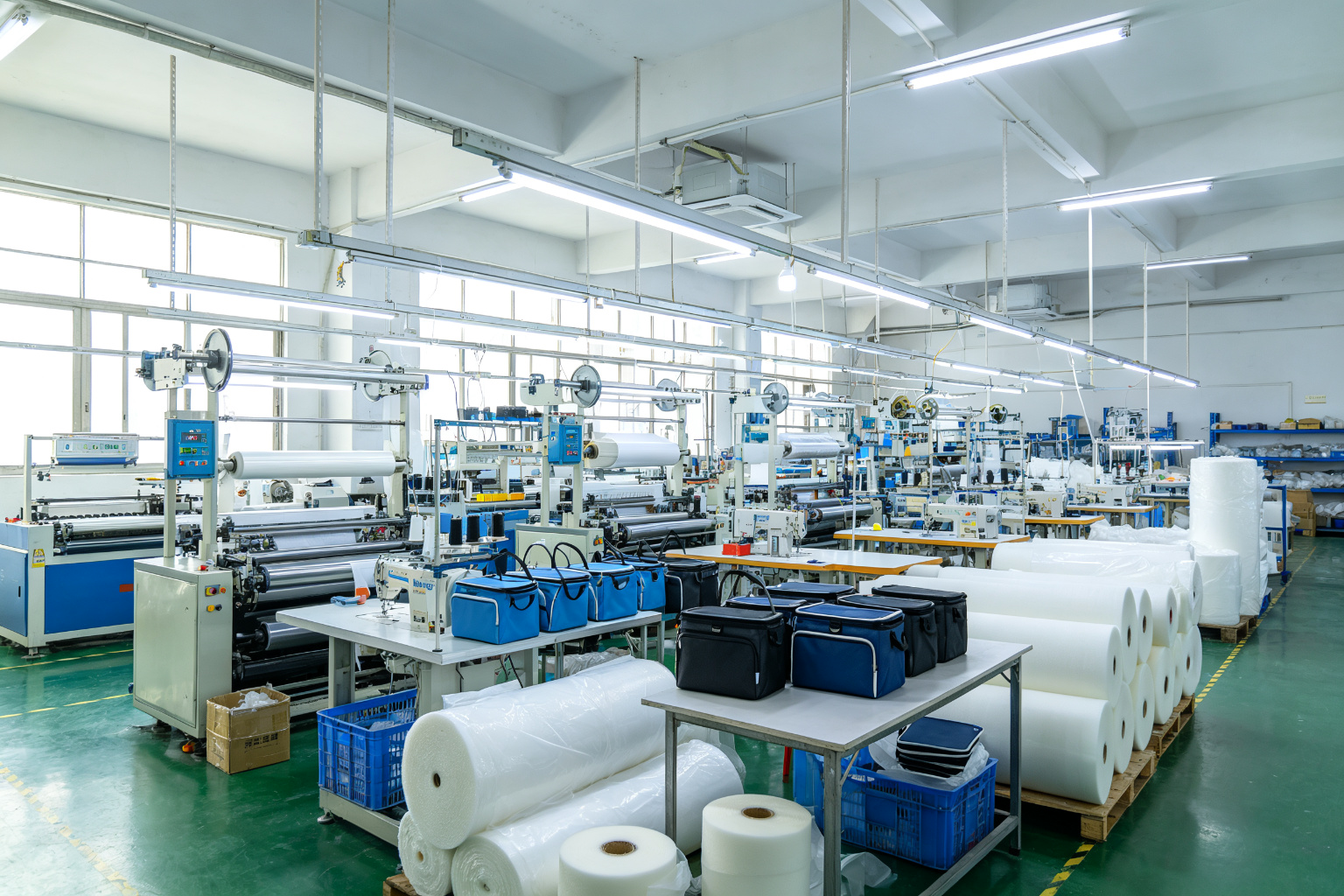
Our Dongguan factory: roller lamination machines for three-layer material bonding, 5 sewing machines on Line 3, 100% needle detection (Fe 0.8mm), 15-day bulk production, 0.7% pre-repair defect rate (21 pieces repaired).
7. Key Takeaways for Buyers Sourcing Cooler Bags for the Japanese Market
PHASE 7 · LESSONS LEARNEDThis project reinforced five lessons that apply to any custom cooler bag sourcing decision, especially for the Japanese market where food safety, needle detection, and quality standards are the strictest in the world:
Food-Grade PEVA Lining Must Be Tested for VOCs and Japan Food Sanitation Act Compliance — Don't Trust the Supplier's Claim
Many Chinese cooler bag suppliers claim their PEVA lining is "food-grade" but can't provide a test report from a Japan-recognized laboratory (JET, KAKEN, or SGS Japan). The PEVA lining may be food-grade in theory, but the adhesive used to laminate the PEVA to the aluminum foil may be solvent-based (containing toluene or other VOCs that off-gas and cause a chemical smell). Always require: (1) a Food Sanitation Act test report from a Japan-recognized laboratory, (2) a VOC emission test (target: ≤0.5 mg/m³, ideally ≤0.2 mg/m³), (3) a physical sample that you can smell yourself — if you can smell a chemical odor when you open the bag, the customer will smell it too. In this case study, we caught the PEVA smell at the sample stage (VOC 2.8 mg/m³) and switched to a water-based adhesive supplier (VOC 0.12 mg/m³) before bulk production. If we hadn't caught this, the client would have received 3,000 bags with chemical smell — a repeat of the previous supplier's failure and a guaranteed supplier delisting.
Cold Retention Depends on Three Factors: Insulation Thickness, Seam Sealing, and Zipper Quality — All Three Must Be Specified
A cooler bag's cold retention performance is determined by three factors, and all three must be correctly specified to meet a 6-hour / ≤8°C performance standard: (1) insulation thickness — 5mm EPE minimum for an 8L lunch bag (3mm or 4mm will fail), (2) seam sealing — all lining seams must be sealed with food-grade hot-melt adhesive tape to prevent cold air escape through stitching holes (unsealed seams reduce cold retention by 30-40%), (3) zipper quality — a double-track zipper with silicone seal is required (a standard zipper has gaps between the teeth that let cold air escape). If you only specify "5mm insulation" but don't specify seam sealing and a sealed zipper, the bag will still fail the cold retention test. In this case study, our first sample had 4mm insulation, unsealed seams, and a standard zipper — it achieved 9.8°C rise (failed). Our second sample had 5mm insulation, sealed seams, and a YKK double-track sealed zipper — it achieved 7.2°C rise (passed). Always require a cold retention test report with actual temperature data, not just a supplier claim.
Needle Detection (針検) Is Mandatory for Japan — Require 100% Detection, a Certificate, and a Needle Management Log
Broken needles inside textile products are a serious safety hazard in the Japanese market — a customer could be cut, or a child could swallow a needle fragment. Japanese retailers require all textile and bag products to pass through a needle detector at the final QC stage. Always require: (1) 100% needle detection for every bag (not sampling — every single bag must pass through the detector), (2) detector sensitivity of Fe 0.8mm or smaller (the tip of a broken sewing needle is about 0.8mm), (3) a needle detection certificate on factory letterhead with detector model, calibration date, and batch number, (4) a needle management log showing that all sewing needles are accounted for at the start and end of every shift (if a needle breaks, the broken pieces must be found and taped into the log, and the product being sewn must be set aside for inspection). In this case study, all 3,000 bags passed needle detection with zero detections, and we provided both the certificate and the needle management log. The client's incoming inspection also re-tested 100% of bags with their own needle detector — zero detections. This is the standard that Japanese retailers expect, and any supplier that can't meet it shouldn't be considered for Japan-market orders.
For Japan-Market Orders, Pay for 100% Inspection at Critical Stages — AQL Sampling Is Not Enough
AQL sampling is cost-effective for large orders where a 2-3% defect rate is acceptable. But for Japan-market orders — where quality standards are the strictest in the world, and a single defective bag can trigger a recall and supplier delisting — 100% inspection at critical stages (sewing, seam sealing, needle detection, final visual) is the minimum standard. The cost is typically $0.05-$0.15 per unit (one extra QC inspector for the production duration), and it catches defects that AQL sampling would miss. In this case study, we did 100% visual inspection and caught 21 defective pieces (0.7%) — these would have passed AQL sampling (0.7% is well below the 2.5% threshold), but 21 defective bags in a 3,000-piece order is 21 opportunities for a Japanese customer to receive a defective product and complain. For Japan-market orders, always ask your factory: "Can you do 100% inspection at the sewing, needle detection, and final visual stages for an additional fee?" Most factories will agree for $0.05-$0.15 per unit — it's the cheapest insurance you can buy for a Japan-market order.
Never Substitute Materials Below the Client's Specification — Even for Cost Savings, Without Testing First
In this case study, we made a mistake in the first sample: we used 4mm EPE insulation instead of the specified 5mm, trying to save $0.10 per unit ($300 on a 3,000-piece order). The 4mm insulation failed the cold retention test (9.8°C rise vs. ≤8°C spec), and we had to make a second sample with 5mm insulation — costing us an extra $450 in materials and labor, and delaying the sample approval by 3 days. The lesson: never substitute materials below the client's specification, even for cost savings, without testing first. If the client says "5mm EPE insulation," use 5mm EPE insulation. If you want to propose a cost-saving alternative (4mm insulation with a different construction), you must: (1) tell the client about the proposed substitution, (2) test the alternative against the client's performance specifications, (3) provide the test data to the client, and (4) get the client's written approval before using the alternative. Never make a material substitution silently — if it fails, you look incompetent; if it succeeds, the client may feel you cut corners. In this case study, we caught the 4mm insulation failure in our own lab (before sending the sample to the client), so the client never knew about the mistake — but we documented it internally as a quality lesson: "Never substitute materials below the client's specification, even for cost savings, without testing first."
For more on cooler bag materials and construction, explore our full custom cooler bag catalog. Before requesting prices, use our custom cooler bag RFQ checklist to define the material stack, test conditions, MOQ and delivery terms. For general sourcing advice, read our how to source custom bags from China guide and our 12-point factory checklist.
Have a Custom Cooler Bag Project?
Get a factory-direct quote within 8 Hours. We specialize in insulated lunch cooler bags, picnic cooler bags, wine cooler bags, and can coolers — 500 MOQ, free material swatches, 7-10 day custom samples, food-grade PEVA lining, Japan Food Sanitation Act compliance, 100% needle detection, and full cold retention testing.
Request a Free QuoteOr explore our full custom cooler bag catalog
Frequently Asked Questions
What materials are used in insulated cooler bags and which are food-safe?
Direct Answer: Cooler bags use three layers: an outer shell (600D polyester oxford or 420D nylon), insulation (5mm EPE foam), and a food-safe inner liner. Only PEVA or TPU linings are food-safe — PVC contains phthalates and is unsuitable for direct food contact.
- Outer Shell: 600D oxford / 420D nylon
- Insulation: 5mm EPE foam
- Food-Safe Liner: PEVA or TPU
- Avoid: PVC (phthalates)
Insulated cooler bags use three material layers: an outer shell (typically 600D polyester oxford or 420D nylon), an insulation layer (5mm EPE pearl cotton or 8mm foam), and an inner lining (food-grade PEVA, aluminum foil PEVA, or TPU). For food contact, only PEVA (polyethylene vinyl acetate) or TPU (thermoplastic polyurethane) linings are considered food-safe — PVC linings contain phthalates and are not suitable for direct food contact. In this case study, we used food-grade PEVA with aluminum foil coating that complies with Japan's Food Sanitation Act (厚生労働省告示第20号), with a test report from SGS confirming no harmful substance migration into food simulants and VOC emission of 0.12 mg/m³.
How long do insulated lunch cooler bags keep food cold?
Direct Answer: A 5mm EPE-foam cooler with food-grade PEVA lining holds food cold 4-6 hours at 25°C, rising 6-10°C. With two 200g ice packs, retention extends to 8-10 hours at under 8°C rise. This client's spec passed at 7.2°C rise after 6 hours.
- Cold Retention: 4-6 hours (no ice packs)
- With 2 Ice Packs: 8-10 hours, ≤8°C rise
- Insulation Minimum: 5mm EPE
- Passed Result: 7.2°C rise / 6 hours
A well-insulated lunch cooler bag with 5mm EPE foam insulation, food-grade PEVA aluminum foil lining, sealed seams, and a double-track sealed zipper will keep food cold for 4-6 hours at room temperature (25°C), with a temperature rise of 6-10°C depending on the bag's construction quality, the initial food temperature, and whether ice packs are used. With 2 frozen ice packs (200g each), cold retention extends to 6-8 hours with ≤8°C temperature rise. In this case study, the client required 6-hour cold retention with ≤8°C temperature rise at 25°C ambient — our bags achieved 7.2°C rise after 6 hours with 2 ice packs, passing the client's specification. The key factors are insulation thickness (5mm minimum), sealed seams (no gaps where cold air escapes), and a quality zipper closure (double-track zipper with silicone seal).
What is needle detection and why is it required for Japanese market bags?
Direct Answer: Needle detection is mandatory for bags exported to Japan: every finished item passes a conveyor metal detector calibrated to spot broken needles as small as 0.8mm. This 3,000-piece order passed at Fe 0.8mm sensitivity with zero detections, certified on factory letterhead.
- Standard: Japan needle detection (針検)
- Sensitivity: Fe 0.8mm
- Batch Tested: 3,000 pcs
- Result: Zero detections, certificate issued
Needle detection (針検) is a mandatory quality control process for textile and bag products exported to Japan, required by Japanese retailers and the Japan Household Goods Quality Labeling Act. It involves passing every finished product through a conveyor-belt metal detector calibrated to detect broken sewing needles (as small as 0.8mm) or other metal fragments that could have broken off during production and remained inside the product. If a bag triggers the detector, it is set aside, manually inspected with a handheld wand, and the metal fragment is removed — the bag is then re-scanned. In this case study, all 3,000 cooler bags passed through a needle detector (sensitivity: Fe 0.8mm) at the final QC stage, with zero detections. The client required a needle detection certificate with the shipment documents, which we provided on factory letterhead with the detector model, calibration date, and batch number. We also provided a needle management log showing that all sewing needles were accounted for at the start and end of every shift.
How much does a custom insulated cooler bag cost to manufacture?
Direct Answer: Custom insulated cooler bags cost $3.00-$8.50 FOB Shenzhen per unit for 1,000-10,000 pieces, scaling with insulation thickness and features; food-grade PEVA adds $0.30-$0.50. This 3,000-piece order (600D oxford, 5mm EPE, food-grade PEVA) came to $4.50 FOB per unit.
- FOB Unit Range: $3.00-$8.50
- Food-Grade PEVA Add-on: $0.30-$0.50
- This Order: $4.50 FOB / unit
- Quantity: 3,000 pcs
Custom insulated cooler bags typically cost $3.00-$8.50 FOB Shenzhen per unit for orders of 1,000-10,000 pieces, depending on size, insulation thickness, material quality, and features. Basic 6-can cooler bags with 3mm EPE insulation and PEVA lining start at $3.00-$4.00; medium lunch cooler bags with 5mm EPE insulation, food-grade PEVA aluminum foil lining, and front pocket cost $4.00-$6.00; large picnic cooler bags with 8mm foam insulation, hard bottom, shoulder strap, and multiple compartments cost $6.00-$8.50. Food-grade PEVA lining adds $0.30-$0.50 per unit compared to standard PVC lining. Seam sealing adds $0.08-$0.15 per unit. In this case study, the 3,000-piece order with 600D oxford outer, 5mm EPE insulation, food-grade PEVA aluminum foil lining, front pocket, adjustable shoulder strap, sealed seams, YKK double-track sealed zipper, and Japan Food Sanitation Act compliance came to $4.50 FOB per unit.
What certifications are required for cooler bags sold in Japan?
Direct Answer: Food-contact cooler bags for Japan must meet the Food Sanitation Act (Notification No. 20) limiting formaldehyde, phthalates, and BPA migration, plus needle detection and material/origin labeling. We supplied an SGS PEVA test report, needle-detection certificate, woven labels, and a BSCI audit report.
- Core Standard: Food Sanitation Act, No. 20
- Required Docs: SGS test report + needle cert
- Labeling: Material + country of origin
- Social Doc: BSCI audit report accepted
Cooler bags with food-contact linings sold in Japan require compliance with the Food Sanitation Act (食品衛生法), specifically the Specifications and Standards for Food, Food Additives, etc. (厚生労働省告示第20号), which limits harmful substance migration (formaldehyde, heavy metals, phthalates, bisphenol A, VOCs) from food-contact materials into food simulants. A test report from a Japan-recognized laboratory (such as JET, KAKEN, or SGS Japan) is typically required by Japanese retailers. Additionally, the Japan Household Goods Quality Labeling Act (家庭用品品質表示法) requires proper labeling of material composition, country of origin, and care instructions. For bag products specifically, needle detection (針検) is a de facto requirement for all Japanese retailers, with a needle detection certificate and needle management log expected. In this case study, we provided: (1) food-grade PEVA lining test report from SGS (compliant with Japan Food Sanitation Act), (2) needle detection certificate, (3) needle management log, (4) cold retention test report (150 samples, 6-hour test), (5) material composition and origin labeling on the woven label, and (6) BSCI factory audit report (accepted by the Japanese client as equivalent to their social compliance requirements).