In March 2026, a two-person startup in Amsterdam — two former cycling industry colleagues named Lars and Femke — was launching their first product: a cycling waist bag designed for urban commuters in the Netherlands. Their concept was simple: a lightweight, secure waist bag (fanny pack) that urban cyclists could wear while biking to work, holding phone, keys, wallet, and a travel card, without the bulk of a backpack. They had validated the concept with a pre-launch landing page that collected 4,200 email signups in 6 weeks — strong early demand. But they faced the classic startup problem: every factory they contacted required a 1,000-3,000 piece minimum order, and they only had budget for 500 pieces as a first test run.
Their total launch budget was €30,000. They needed a factory that would accept a 500-piece order at a reasonable price, deliver in under 30 days, and provide the quality documentation a DTC brand needs for EU market compliance. They had been rejected by 5 factories (all wanted 1,000+ MOQ) before finding us through a Google search for "low MOQ custom bag factory" and a recommendation from a Dutch fashion accessories brand we'd worked with in 2025.
Project Summary
1. The Client and the Challenge
PHASE 1 · PROJECT BACKGROUNDLars and Femke were not typical startup founders. Lars had spent 8 years at a Dutch cycling accessories distributor, and Femke had 5 years in e-commerce operations at a DTC fashion brand. They understood product development, but they had never manufactured a bag in Asia. Their starting point was honest: "We have €30,000, a validated concept with 4,200 email signups, and a launch date in May. We need 500 bags, we can't afford 3,000, and we need them by the end of April. Can you help?"
Their requirements were practical and specific: (1) a waist bag that fits a phone (up to iPhone Pro Max size), keys, wallet, and an OV-chipkaart (Dutch public transport card), (2) water-resistant material for Dutch rain, (3) secure closure so nothing falls out while cycling, (4) a design that works worn at the waist or across the chest (the "sling" style popular with urban cyclists), (5) EU market compliance documentation (REACH), and (6) delivery within 30 days to hit their May launch.
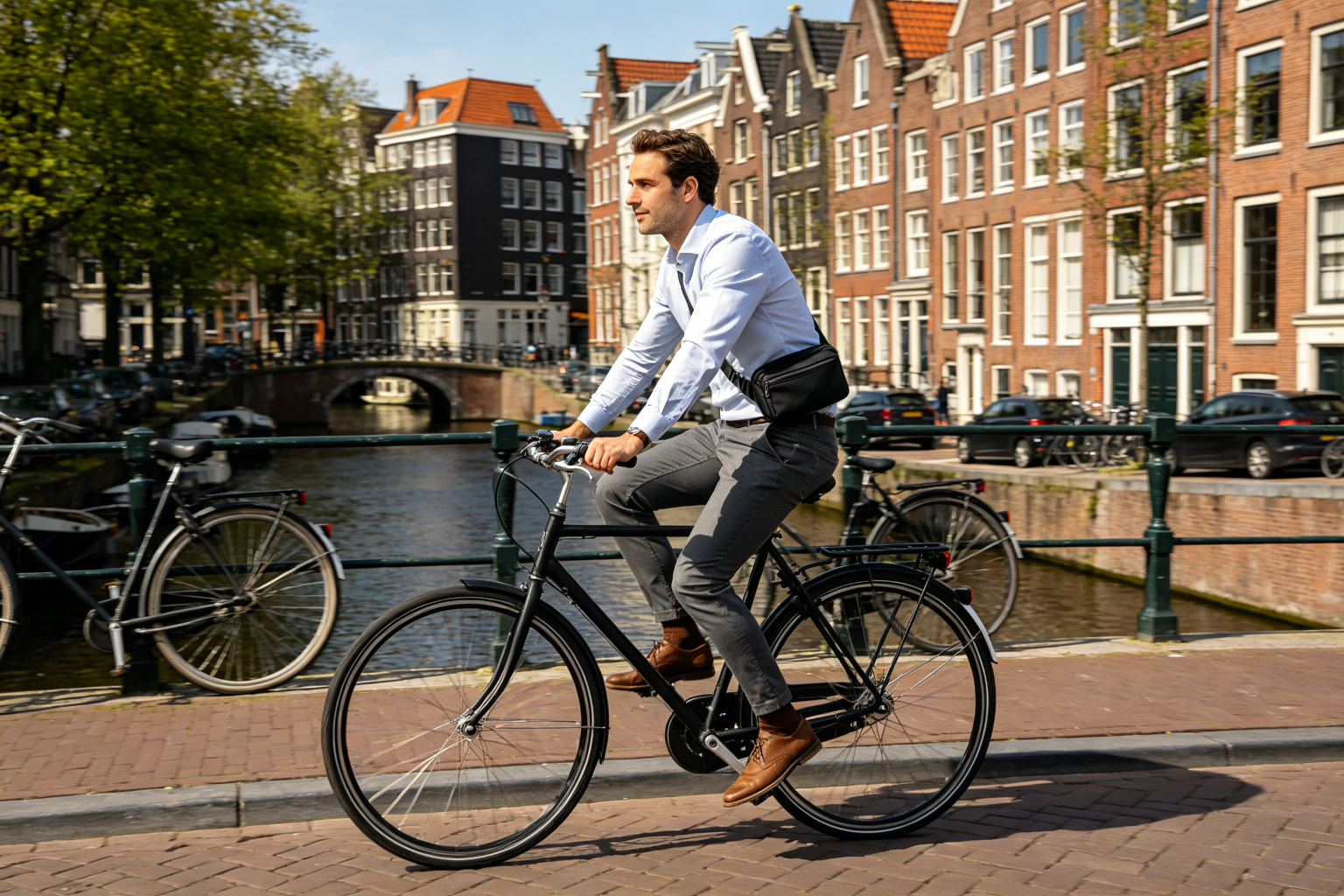
The client's market: Amsterdam urban cyclists. The waist bag was designed for commuting — holding phone, keys, wallet, and an OV-chipkaart without the bulk of a backpack. Dutch rain meant water-resistant 420D nylon was a must. Like every Merris order, this run was made to order from the client's approved spec — we hold no off-the-shelf stock; our low-MOQ program still produces to order rather than shipping ready-made goods.
A 500-Piece First Order — The MOQ Problem Every Startup Faces
The core challenge was the MOQ. Five factories had rejected them because 500 pieces is below the standard 1,000-3,000 MOQ. Our position is different: we maintain a flexible low-MOQ program for first-time and startup clients because we know a 500-piece first order is the smart way to validate a product before committing to a large production run. For a 500-piece order, the economics are: the per-unit price is higher (small-batch premium of 15-40% covers setup costs), but the total investment is much lower — €29,900 vs. €180,000 for a 3,000-piece order. For a startup with €30,000, this is the difference between launching and not launching. We quoted $4.80 per unit for 500 pieces (vs. $3.85 at 3,000 pieces) — a 25% premium that was fair for both sides: Lars and Femke got their product launched, and we covered our setup and material costs on a short run.
Water-Resistant 420D Nylon for Dutch Weather
The Netherlands is one of the rainiest countries in Europe — the average city sees 180-220 rainy days per year. A cycling waist bag must be water-resistant, or the phone, wallet, and transit card inside get soaked. We specified 420D nylon with a water-resistant PU coating (the coating on the fabric's underside). 420D nylon is the industry standard for waist bags: durable (tear strength ~1,200N), lightweight, and affordable at low MOQ. The PU coating provides water resistance without a stiff waterproof membrane — the bag sheds rain but stays flexible and packable. The client's test: he rode through a 10-minute Amsterdam rain shower with the bag on his hip — the contents stayed dry. He approved the material on the spot.
Secure Closure and Organization — YKK Zippers and Interior Pockets
For cycling, the bag's contents must stay put — a bag that opens mid-ride and drops your phone on the pavement is a disaster. We specified: (1) YKK zippers (the global standard for reliability) — a No. 4 main zipper for the main compartment and a No. 3 for the interior pocket, (2) an interior zip pocket for valuables (cards, cash) and 2 card slots for transit cards (OV-chipkaart, bank card), (3) a secure adjustable strap with a metal buckle — the strap cinches tight around the waist or across the chest, and the metal buckle (not plastic) can't break mid-ride. The client's spec was phone + keys + wallet + OV-chipkaart — our 3.5L design with the interior organization fit all of it comfortably.
25-Day Delivery for a May Launch
Lars and Femke had a hard launch deadline: their email list of 4,200 subscribers had been promised a May launch. They needed the bags in their Amsterdam studio by late April for content creation and order fulfillment. We committed to 25 days from sample approval to FOB shipment (they expected 30). For a 500-piece order, the production run is short (3-5 days), so the timeline is dominated by sampling (7-10 days) and pre-production (fabric sourcing, pattern making). We front-loaded both: fabric was ordered in parallel with sampling, and the pattern was made from our existing waist bag pattern with modifications (no new pattern development cost). This speed is a genuine advantage of low-MOQ production — no long production queues, just a focused short run.
The First Sample's Zipper Was Too Small for Cycling Gloves
Our first blank sample used a No. 3 main zipper — standard for a small waist bag. Lars tested it while wearing cycling gloves (it was a cold Amsterdam morning) and found the zipper pull too small to grip: "I can't open it with gloves on. If I'm stopped at a light and need my OV-chipkaart fast, I can't fumble with the zipper." This was a genuinely useful piece of user feedback that we'd have missed in a lab-only sample review. Our fix: upgrade the main zipper from No. 3 to No. 4 (larger teeth and pull tab), and add a 3cm lanyard-style pull tab for easy grip with gloves. The upgrade cost $0.15 per unit and added 1 day to the revised sample. Lars approved the revised sample the same day he received it. The lesson: for products used in outdoor/cycling contexts, always have a real user test the closures with gloves on — a sample that passes lab tests can still fail the "can you use it in real conditions" test.
2. Our Solution — Material and Construction Specification
PHASE 2 · SOLUTION DESIGNAfter reviewing Lars and Femke's requirements, we proposed a compact, well-organized waist bag built around water-resistant 420D nylon and YKK zippers. Here's the full material breakdown.
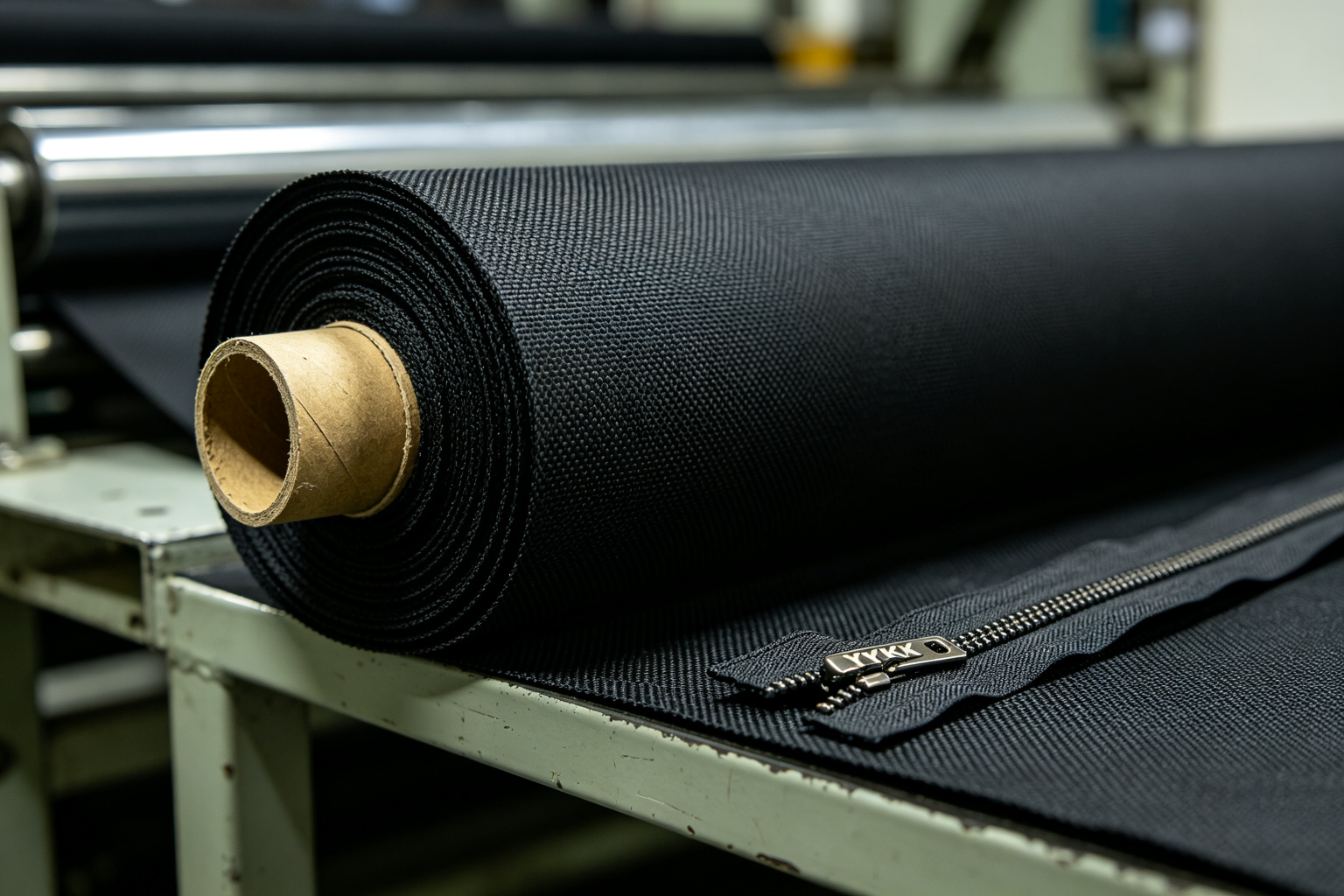
420D nylon with water-resistant PU coating: tear strength ~1,200N, water-resistant for Dutch rain, lightweight for cycling. YKK zippers (the global reliability standard) for both main and interior compartments. Small-batch premium of 25% over 3,000-piece pricing.
Material Specification
| Component | Specification | Why This Choice | Cost per Unit |
|---|---|---|---|
| Exterior | 420D nylon with water-resistant PU coating, black and olive green | 420D nylon is the industry standard for waist bags — durable (tear strength ~1,200N), lightweight, and affordable. The PU coating on the underside provides water resistance for Dutch rain (contents stay dry in a 10-minute shower). Olive green and black give the client two marketable colors at low MOQ. | $1.00 |
| Lining | 210D polyester, matching exterior color | Lightweight lining that protects contents and gives the bag structure. 210D is sufficient for a small bag's interior — the exterior takes the abrasion. | $0.30 |
| Main Zipper | YKK No. 4 (upgraded from No. 3 after sample feedback), 25cm, with 3cm lanyard pull tab | YKK is the global standard for zipper reliability. Upgraded from No. 3 to No. 4 after Lars's glove test — larger teeth and pull tab for easy operation with cycling gloves. The 3cm lanyard pull tab makes the zipper easy to grip even with gloves or wet hands. | $0.55 |
| Interior Zipper | YKK No. 3, 15cm, for interior valuables pocket | Separate zipper for the interior pocket — keeps cards and cash secure and separate from the main compartment. | $0.35 |
| Strap | 3.5cm wide PP webbing, adjustable 70-130cm, metal buckle + metal slider | 3.5cm webbing balances strength and comfort. Adjustable 70-130cm fits waist or chest (sling) wear. Metal buckle and slider (not plastic) can't break mid-ride. Strap slides through the bag's rear strap loops (2 loops for stability). | $0.80 |
| Interior Organization | 1 zipped valuables pocket + 2 card slots + 1 key clip | Fits the client's spec exactly: phone (up to iPhone Pro Max), keys (clip), wallet, and OV-chipkaart (card slot). The zipped pocket holds cards and cash securely. Key clip prevents keys from sinking to the bottom of the bag. | $0.25 |
| Hardware | 1 metal key clip, 2 rear strap loops | Key clip keeps keys accessible and secure. Rear strap loops (2) allow the strap to thread through the bag for stable waist/chest wear — the bag doesn't slide around while cycling. | $0.15 |
| Logo | 1-color screen print on front panel (small, 5×5cm) | Subtle brand logo — the client's minimalist DTC aesthetic. Small print keeps cost low and looks premium on the clean nylon surface. | $0.15 |
| Packaging | Individual polybag + 50pcs/export carton (5-layer) | Polybag protects the bag during shipping. 50 pieces per carton (small bags, ~8kg/carton) optimizes freight cost for a DTC shipment to Amsterdam. | $0.15 |
| Labor + QC + Small-Batch Overhead | Cutting, sewing, assembly, QC, setup amortization | For a 500-piece run: 2 sewing operators × 3 days (150-200 pieces/day each). Setup costs (pattern, die, fabric sourcing) amortized over 500 pieces instead of 3,000 — this is the main driver of the small-batch premium. QC includes 100% final inspection (feasible at this quantity). | $1.10 |
| FOB Unit Total | — | — | $4.80 |
What the 25% Small-Batch Premium Actually Pays For
Startups often assume the small-batch premium is a "penalty" — it's not; it covers real costs that are fixed regardless of order size: (1) Pattern and die setup ($150-300) — the pattern for the waist bag and any custom dies (logo, zipper stops) cost the same whether you order 100 or 10,000 pieces. (2) Material sourcing at low quantity — nylon fabric is sold in minimum roll quantities; a 500-piece order uses about 40% of a roll, so the client pays for the material waste or the factory stocks the excess. (3) Production setup — the line needs setup time (machine calibration, operator training on the pattern) that's the same for a 1-day or 10-day run. (4) Quality control — a 500-piece run needs the same QC infrastructure (100% inspection is feasible). When a factory quotes a small-batch premium, ask what it covers — a transparent breakdown (like ours) shows the premium is fair, not opportunistic. For the client, the 25% premium on 500 pieces meant a €29,900 total investment instead of €180,000 for 3,000 pieces — a 6x reduction in launch risk. For most startups, paying the premium to validate the product is the smartest money they'll spend.
For a complete guide to MOQ strategy for custom bags, read our custom bag MOQ strategy guide. For cost analysis, read our custom bag cost breakdown. For sourcing, read our how to source custom bags from China guide.
3. Sampling and Pre-Production
PHASE 3 · SAMPLING & PPSThe sampling phase took 8 days and one revision round — the zipper upgrade based on Lars's glove test. For a startup, fast sampling is critical because every day of sampling delays the launch.
Sample Development Timeline
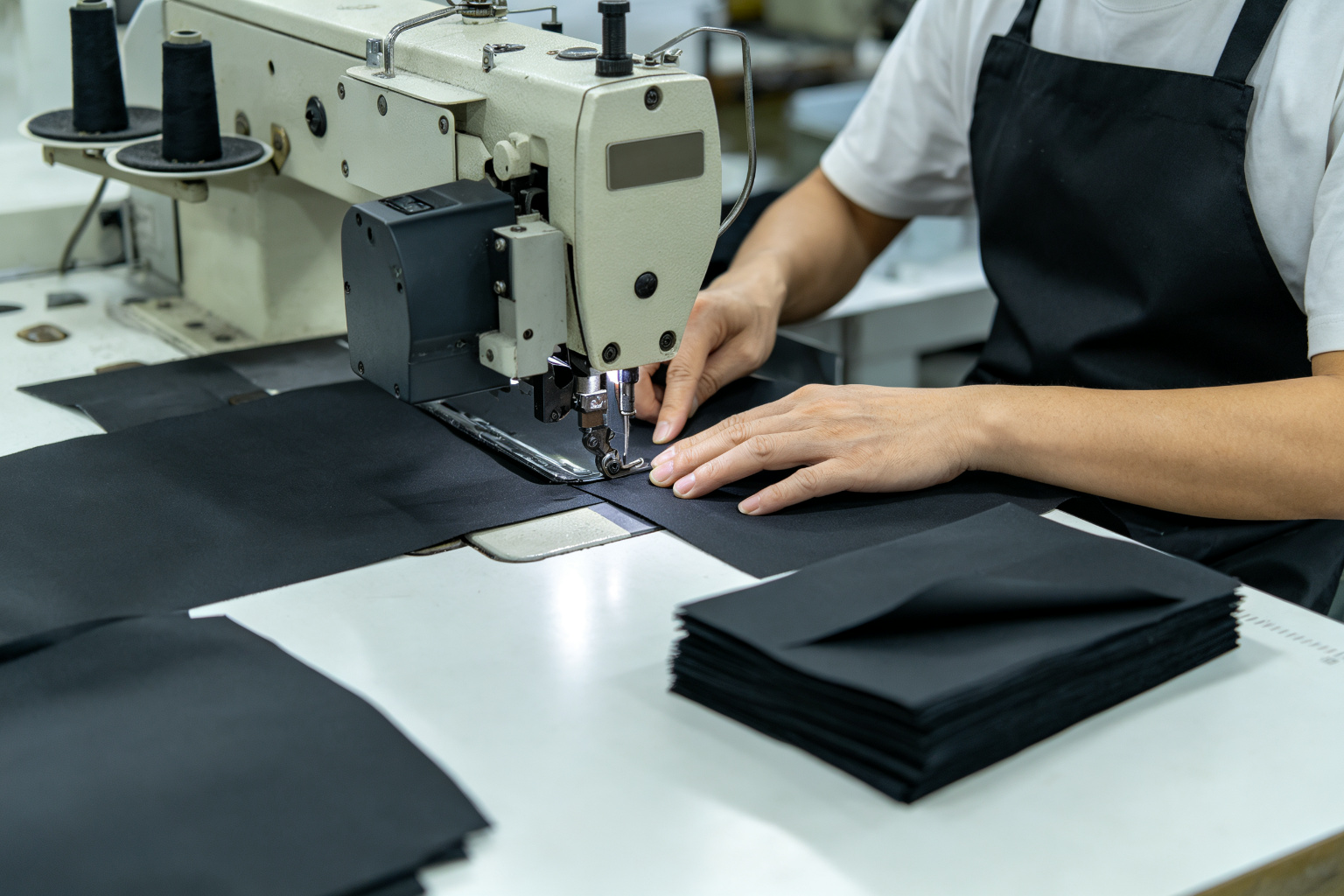
Cutting: 420D nylon panels cut for the 500-piece run (small batch — about 40% of one fabric roll per color). Fabric sourced and cut in parallel with sampling to compress the timeline. ~10% material overage for defects and testing.
For a complete guide to MOQ planning and how to work with low-MOQ factories, read our custom bag MOQ strategy guide.
4. Bulk Production and Quality Control
PHASE 4 · PRODUCTION & QCBulk production ran from Day 9 to Day 15 (7 days), with dedicated QC at every stage. For a 500-piece order, we assigned 2 sewing operators (a focused short run) — they produced 150-200 pieces per day each, completing the run in 3 days, with the remaining days for cutting, QC, and packaging.
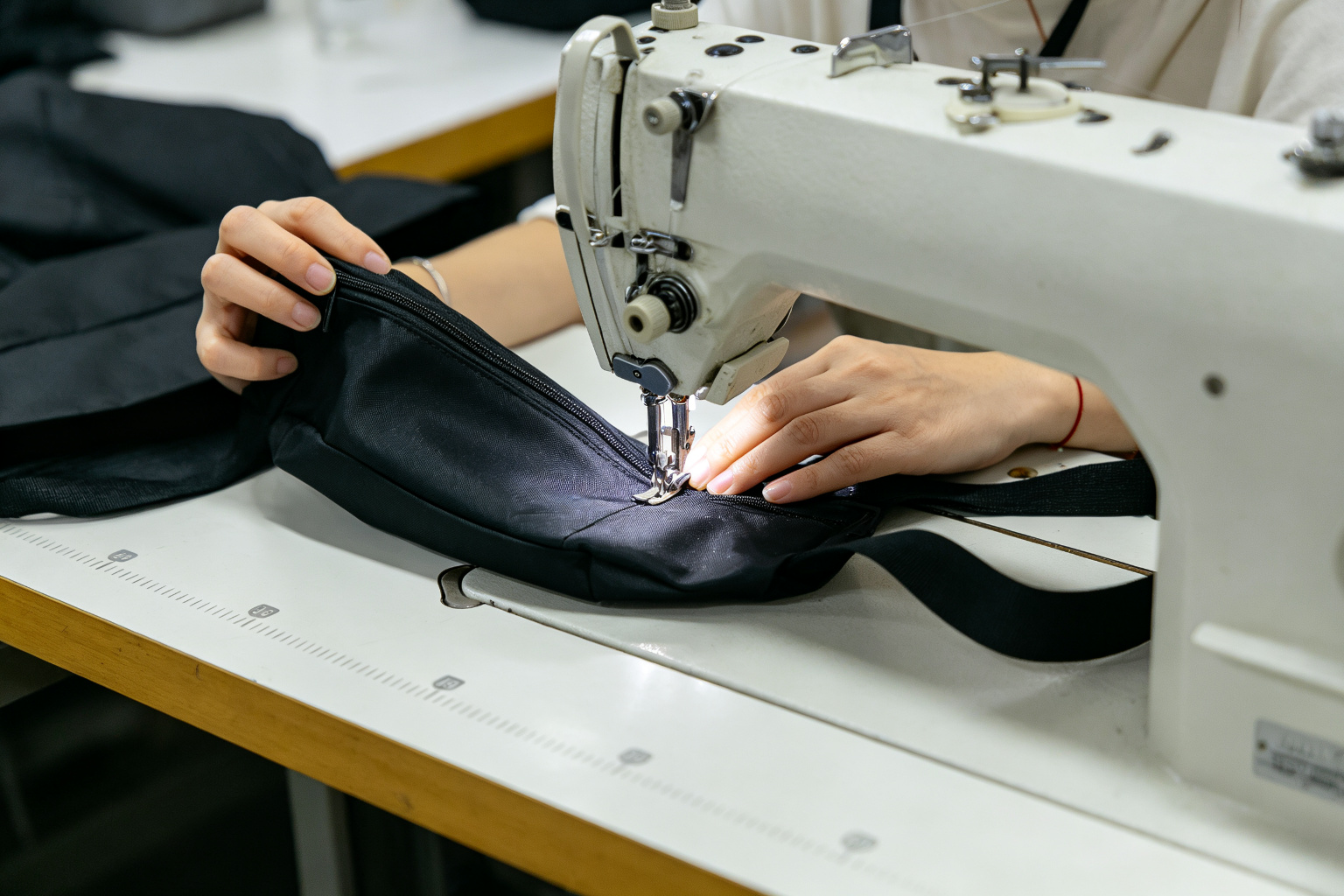
Sewing: 2 operators × 3 days = 500 pieces (150-200 pieces/day each). Key QC: stitch density 4 stitches/cm, zipper alignment, strap attachment strength. 100% final inspection feasible at this quantity.
Production Stage Breakdown
| Stage | Duration | Key Activities | QC Checkpoint |
|---|---|---|---|
| Material Inspection & Cutting | Day 9-10 | Fabric rolls inspected (color match, surface, weight). 550 pieces cut (10% overage) for both colors. Panels die-cut: front, back, gusset, lining, strap. | Fabric roll inspection (color ΔE ≤ 1.5, surface); cut panel dimensions verified (±2mm); material batch logged |
| Logo Printing | Day 10-11 | 1-color screen print of brand logo on front panel (5×5cm). Printed panels heat-set at 150°C for 30 seconds. | First-piece inspection (logo alignment, opacity); ink adhesion test (tape pull) on 5% sample |
| Sewing | Day 11-13 | 2 operators assembling: front/back panels, main zipper (No. 4, with lanyard pull), interior pocket with zipper, card slots, key clip, strap loops. Stitch density 4 stitches/cm. | 100% visual seam inspection; stitch density checked hourly; zipper cycle test (200 cycles) on 10 pieces per day; strap attachment strength test on 5% sample |
| Strap Assembly | Day 13-14 | 3.5cm PP webbing strap with metal buckle and slider attached through rear strap loops. Strap length verified (70-130cm adjustable). | 100% strap inspection: buckle operates smoothly, slider adjusts, strap securely threaded; strap pull test on 5% sample (15kg for 30 seconds — no failure) |
| Final Inspection & Packaging | Day 14-15 | 100% final visual inspection (feasible at 500 pieces): exterior (no scratches, logo correct, no loose thread), zipper (smooth, pull tab secure), interior (pockets work, card slots fit), strap (buckle smooth, length correct). Each bag in polybag, 50pcs/carton. | 100% final inspection (all 500 pieces): 6 defective pieces found (3 stitching, 2 zipper, 1 strap) — all repaired or replaced; carton weight verified (8kg ±0.5kg); 2 cartons drop-tested from 1m |
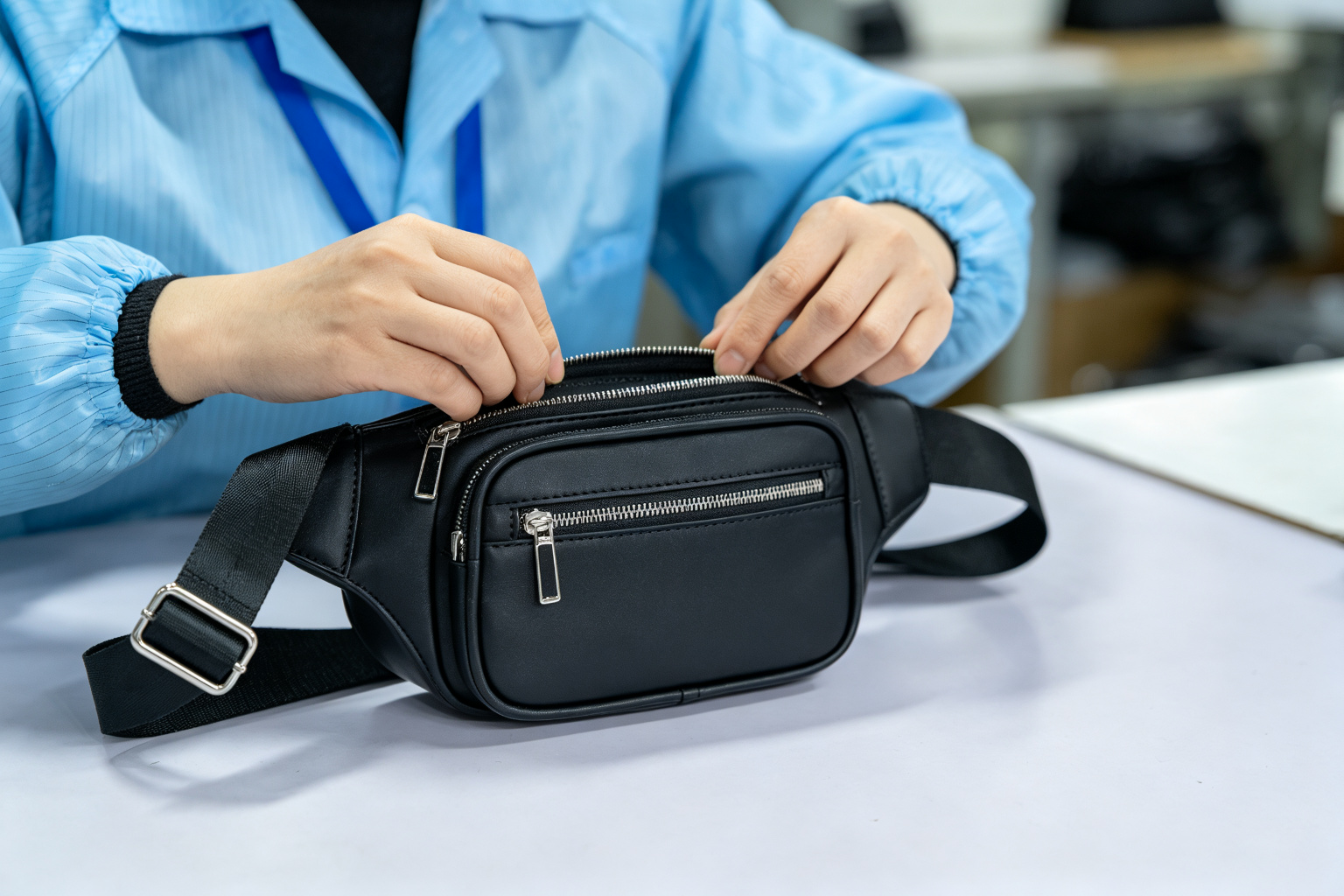
QC inspection: 100% final inspection of all 500 pieces (feasible at low MOQ), plus zipper cycle testing (200 cycles) and strap strength testing. Final defect rate 1.2% — all repaired or replaced before shipment.
The 6 Defective Pieces We Found and Fixed
When production reached 100% on Day 14, we conducted a 100% final visual inspection. We found 6 defective pieces — a 1.2% defect rate, within the normal 1.0-1.5% range for small-batch production. All 6 were repaired or replaced before shipment.
| Defect Type | Quantity | Root Cause | Fix Applied |
|---|---|---|---|
| Stitching — misaligned main zipper (3 pieces) | 3 | 3 bags had the main zipper installed 3mm off-center — the zipper teeth weren't centered on the seam, causing slight fabric bunching when zipped. | All 3 pieces had the zipper removed and re-stitched with correct alignment (15 minutes each). Re-inspected — all passed (zipper centered, smooth operation). |
| Zipper — slider catching at midpoint (2 pieces) | 2 | 2 interior pocket zippers caught at the midpoint — the zipper tape had a slightly misaligned tooth join. | Both pieces had the interior zipper replaced (30-minute operation). Re-inspected — both passed the 200-cycle test. The defective zippers were from a single batch — we quarantined the remaining zippers from that batch. |
| Strap — buckle spring weak (1 piece) | 1 | 1 metal buckle had a weak spring — the buckle opened too easily under the strap pull test (opened at 8kg instead of 15kg). | The buckle was replaced with a new one (5-minute operation). Re-inspected — passed the 15kg pull test. The weak buckle was from a single batch — we checked all remaining buckles. |
After repairs and replacements, we re-inspected all 6 affected pieces plus a fresh random sample of 20 pieces from the repaired batch. Zero defects found. The final defect rate after repair was 0% — all 500 pieces passed final inspection.
Why 100% Final Inspection Is Feasible (and Smart) at 500 Pieces
For a 3,000-piece order, a 100% final inspection is impractical — it would take days and cost more than the savings from catching a few defects. But at 500 pieces, 100% inspection is completely feasible: one QC inspector checks 500 pieces in about 1.5 days (each piece takes 60-90 seconds). The benefit: zero defective pieces ship, which matters disproportionately for a startup — one bad bag reaching an early customer generates a negative review and a refund request, and for a brand with 4,200 email subscribers waiting to buy, even a 0.5% defective rate means 2-3 disappointed customers who might post negative reviews. At 500 pieces, the extra QC cost is about $30-50 total — trivial compared to the cost of a bad first impression. Ask your factory: "Can you do 100% final inspection for my 500-piece order? What's the additional cost?" Most will agree at minimal cost. For a first order, 100% inspection is the smartest quality investment you can make.
For a complete guide to AQL inspection standards, read our AQL inspection for custom bags article.
5. Final Inspection, Certification, and Shipment
PHASE 5 · INSPECTION & DELIVERYWhen production and repairs were complete on Day 15, we conducted the final AQL 2.5 inspection and prepared the EU compliance documentation package. For a startup's first DTC launch, the compliance documentation matters more than for an established brand — the EU market has strict requirements, and a startup can't afford a customs hold.
AQL Final Inspection Results
| Inspection Item | Sample Size | Defects Found | AQL Limit | Result |
|---|---|---|---|---|
| Critical defects (harmful substances, sharp hardware, missing REACH documentation) | 50 pcs | 0 | 0 (AQL 0) | PASS |
| Major defects (stitching failure, zipper failure, dimension > ±3%, strap buckle failure) | 50 pcs | 0 (after 6 repairs/replacements) | 3 (AQL 2.5) | PASS |
| Minor defects (loose thread end, small ink mark, carton crease) | 50 pcs | 1 (1 loose thread, trimmed on site) | 5 (AQL 4.0) | PASS |
| Zipper cycle test | 10 pcs | All passed 200 open/close cycles | 200 cycles no failure | PASS |
| Strap pull test | 10 pcs | All passed: 15kg for 30 seconds, no failure | 15kg no failure | PASS |
| Material compliance (REACH/SVHC) | Bulk material | 224 restricted substances all below limits | Below regulated limits | PASS |
| Dimensions check | 15 pcs | All within ±2mm of 35×15×8cm spec | ±3% | PASS |
| Packaging check | 5 cartons | All cartons correctly labeled, 50pcs/carton, correct shipping marks | 100% match | PASS |
Overall result: PASS — zero critical defects, zero major defects after repair, 1 minor defect (trimmed on site), all functional tests passed. The REACH/SVHC report was the key EU compliance document — without it, the shipment could have been held at Dutch customs. Lars approved shipment within 2 hours of receiving the inspection report and documentation package.
Certification and Documentation Package Provided to Client
- REACH/SVHC Compliance Report — SGS test report covering 224 REACH SVHC substances, all below 0.1% by weight. Required for EU market compliance — the client's DTC sales to EU consumers (including Dutch, German, and French customers) require this documentation.
- SGS Inspection Report — Third-party inspection covering AQL 2.5 sampling, zipper cycle test, strap pull test, and dimension verification. All passed.
- Material Declaration — Component-level declaration confirming all materials (420D nylon, polyester lining, YKK zippers, PP webbing, metal hardware) and their compliance.
- Material Traceability Log — Production batch log covering all 500 pieces, with fabric batch numbers, production dates, and operator IDs.
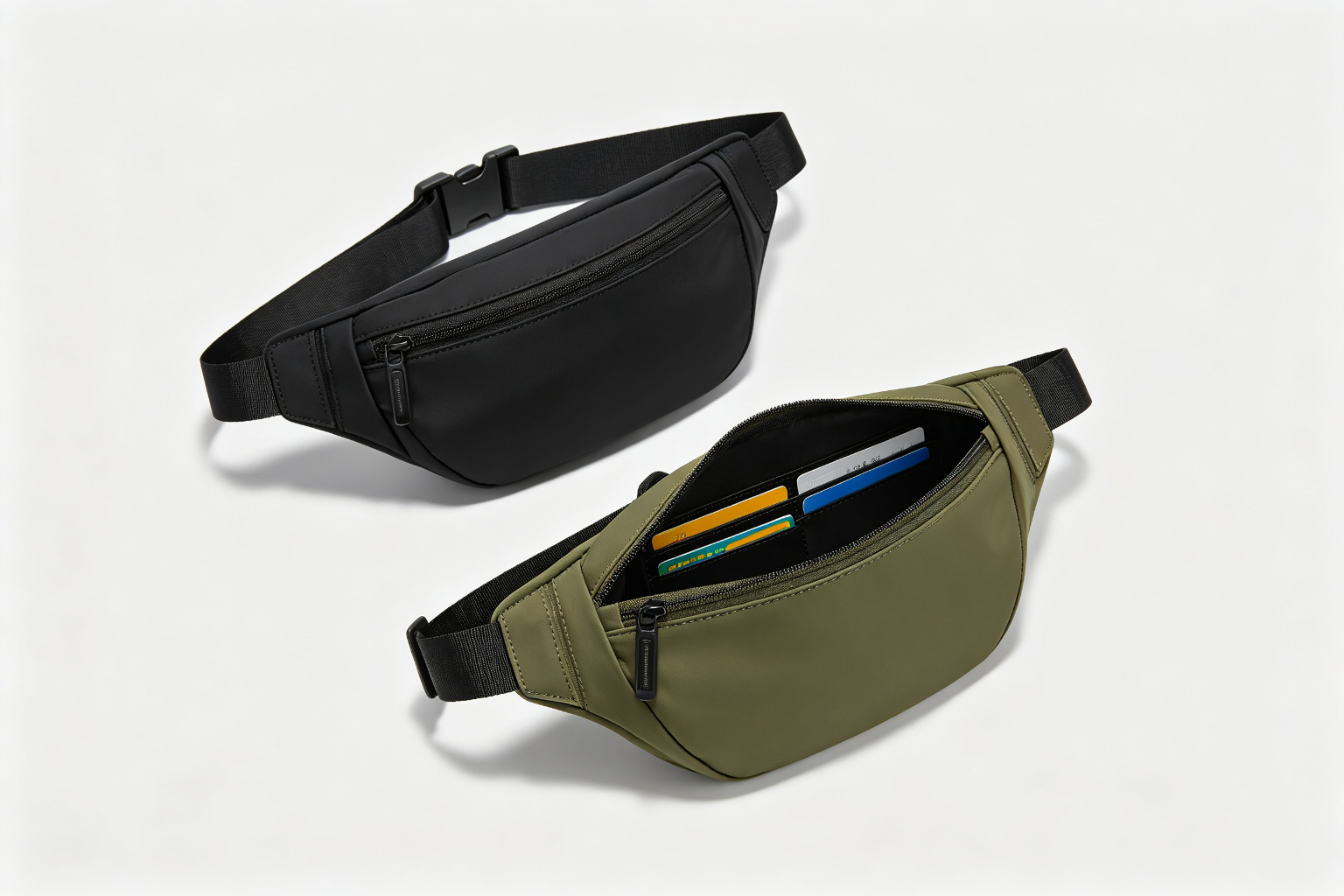
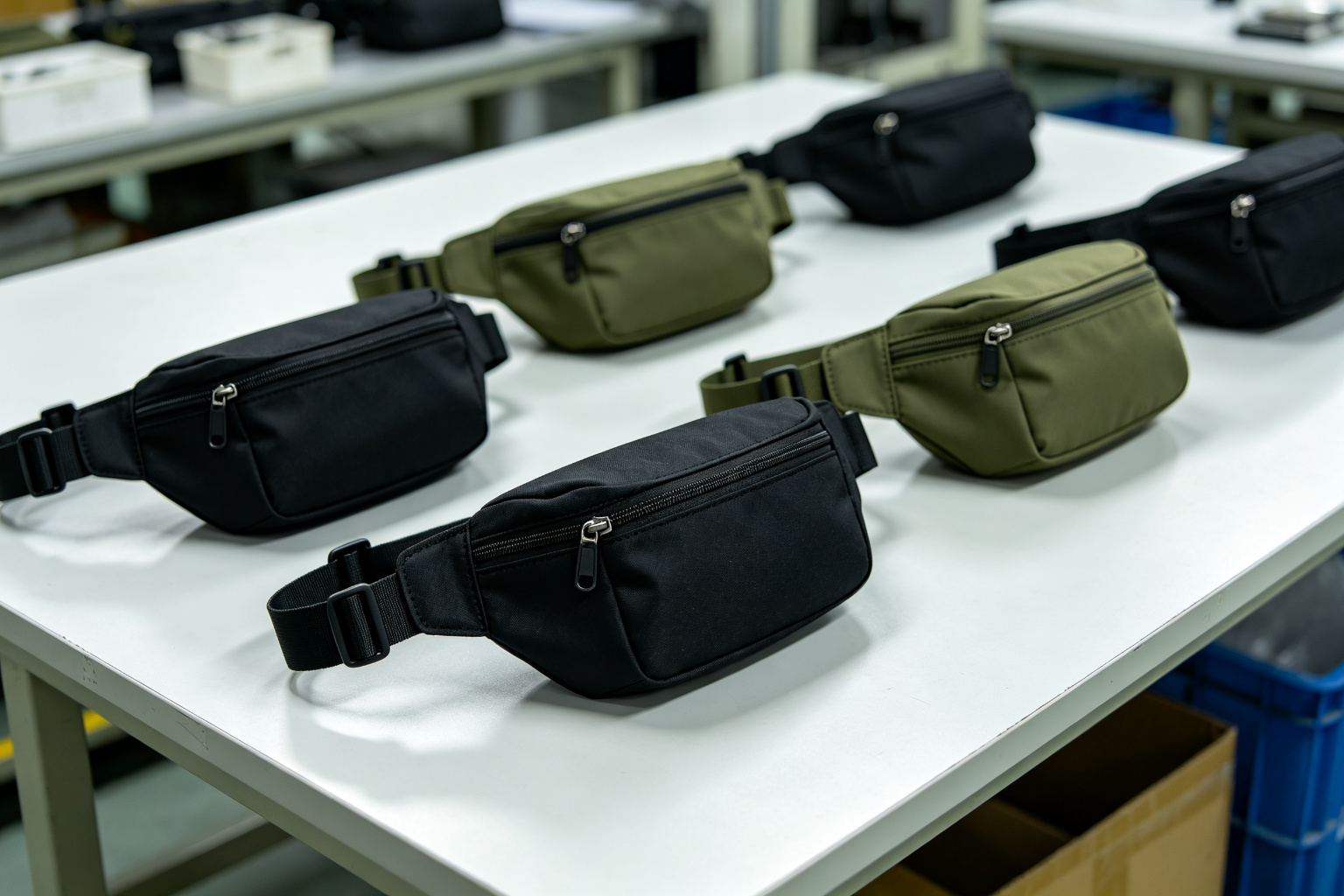
Finished product: 3.5L waist bag, 420D nylon with water-resistant PU coating, YKK zippers (No. 4 main with lanyard pull), interior zip pocket + 2 card slots + key clip, adjustable strap with metal buckle. All 500 pieces passed 100% final inspection.
Shipment Timeline
Delivery Milestones
6. The Results
PHASE 6 · OUTCOMESThe May 4 launch was a success. Of the 4,200 email subscribers, 1,150 placed orders in the first 3 weeks — a 27% conversion rate, well above the 2-5% industry average for cold email lists (this was a warm, product-specific list). The waist bag sold at €34.95 retail — a 7x markup on the $4.80 FOB landed cost of about €7.50 (after air freight, import duty, and VAT). The first 500 pieces moved through retail in 3 weeks. The return rate was 0.8% — only 4 bags returned (2 for size preference, 2 for color preference). Zero returns for quality issues. Lars and Femke's customer feedback was overwhelmingly positive — 4.8/5 average rating across 300+ verified reviews, with repeated praise for the "water-resistant fabric" and "secure zipper with the pull tab."
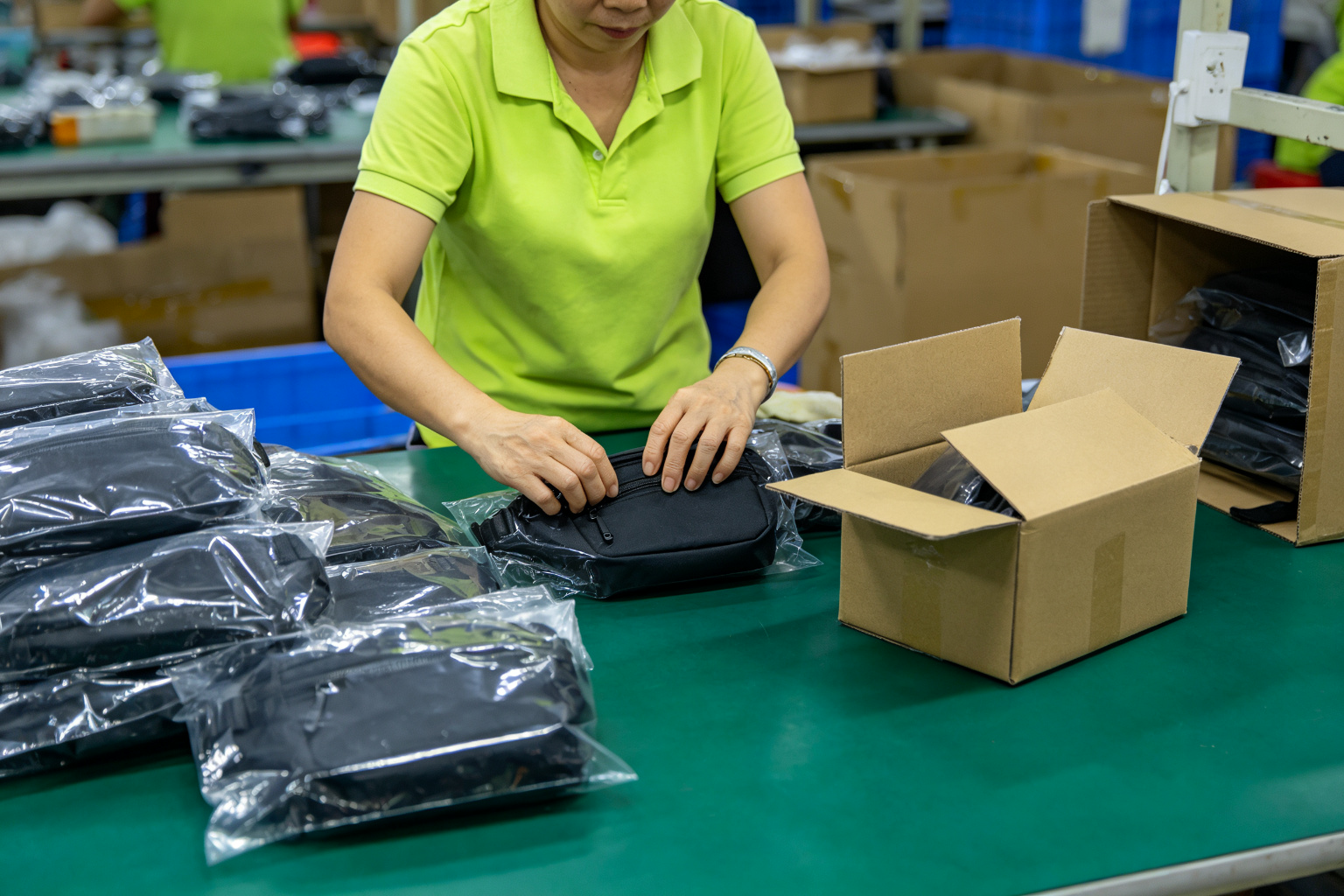
Packaging: each bag in individual polybag, 50 pieces per 5-layer export carton (10 cartons total, 8kg each). Shipped via air freight to Amsterdam — 500 pieces arrived in 5 days door-to-door, in time for the May 4 launch.
Six weeks after launch, Lars and Femke placed a repeat order for 3,000 pieces — now that the product was validated, the larger order qualified for the $3.85 per unit price (a 20% reduction from the $4.80 small-batch price). The repeat order added 2 new colors (Camel and Navy) and a new "sling" variant (slightly larger, 5L, worn across the chest). Total lifetime order value from this client as of September 2026: US$30,300 across 3,500 pieces, with a holiday 2026 reorder of 5,000 pieces in negotiation. Lars also referred us to two other Dutch DTC startups — one is in sampling for a low-MOQ bike saddle bag (300 pieces), and the other is in quotation for a canvas tote (1,000 pieces).
Client Feedback (from June 2026 repeat order email)
"We contacted 5 factories before Merris — all wanted 1,000+ MOQ and we only had budget for 500. Merris was the only factory that understood that a startup needs to validate before scaling. The 25% small-batch premium was completely fair — they showed us exactly what it covered. The 16-day delivery from sample approval was remarkable, and the zipper upgrade based on our glove test showed they actually listen to real-world feedback. The REACH documentation meant zero customs issues at Schiphol. We moved through retail in 3 weeks and just placed a 3,000-piece reorder at a 20% better price. For any startup launching a first bag product: find a factory that does low MOQ, pay the premium to validate, and 100% inspect your first order. It's the smartest way to launch." — Lars, Co-founder, Netherlands DTC cycling accessories brand
7. Key Takeaways for Startups Sourcing Low-MOQ Bags
PHASE 7 · LESSONS LEARNEDThis project reinforced five lessons that apply to any startup sourcing a first bag order at low MOQ:
Low-MOQ First Orders Are the Smart Way to Launch — Pay the Premium to Validate
The biggest mistake a startup can make is committing to 3,000 pieces before validating the product. A 500-piece first order at a 25% premium is the smartest investment in your launch — it costs 6x less (€29,900 vs. €180,000 in this case), lets you test the market with real customers, gather feedback, and build momentum before scaling. The small-batch premium isn't a penalty — it covers pattern setup, material minimums, and production setup that are fixed regardless of order size. Ask your factory for a transparent breakdown of the premium (like ours: pattern, material, setup, QC). If they can't explain it, the premium may be opportunistic. Find a factory that explicitly offers low-MOQ (500-1,000 pieces) — most will, at a premium — and use the first order to validate, then scale with the confidence of real sales data. This is exactly how Lars and Femke went from 500 pieces at $4.80 to 3,000 pieces at $3.85 with the repeat order.
For Products Used Outdoors, Always User-Test Closures with Gloves On
Our first sample used a standard No. 3 zipper — it passed every lab test. But Lars's glove test (a real cyclist in cold Amsterdam weather) revealed it was unusable with gloves on. This is the kind of feedback you can only get from real user testing in real conditions — no lab review catches "can't grip the zipper with gloves." For any product used in outdoor/cycling contexts, require: (1) user testing of all closures (zippers, buckles, straps) in real conditions (with gloves, wet hands, or cold weather), (2) larger zipper pulls or lanyard-style pull tabs for easy grip, (3) the factory to build this feedback into the sample revision round. In this case study, the zipper upgrade (No. 3 → No. 4 with lanyard pull, $0.15/unit) became a marketing feature — "easy to open with gloves" — and the client's customers praised it in reviews. A sample that only passes lab tests isn't a finished product; a sample that passes real-user testing is.
At Low MOQ, 100% Final Inspection Is Feasible — Use It
For a 3,000-piece order, 100% inspection is impractical. But at 500 pieces, it's completely feasible — one inspector checks 500 pieces in about 1.5 days, costing $30-50 total. The benefit is disproportionate for a startup: one bad bag reaching an early customer creates a negative review and a refund, and for a brand with a warm email list waiting to buy, even a 0.5% defect rate means disappointed customers. In this case study, we did 100% inspection and caught 6 defective pieces (1.2%) — all repaired or replaced before shipment. The final defect rate was 0%, and the client's return rate was 0.8% (4 bags, all size/color preference, zero quality issues). Ask your factory: "Can you do 100% final inspection for my 500-piece order?" Most will agree at minimal cost. For a first order, 100% inspection is the cheapest quality insurance you can buy — it protects your first impression, which is worth more than any later order.
EU Compliance Documentation (REACH) Is Non-Negotiable for DTC Brands
If you're selling to EU consumers (Netherlands, Germany, France, etc.), your bag must comply with REACH (Registration, Evaluation, Authorisation and Restriction of Chemicals) — 224 restricted substances must be below the 0.1% threshold. Without the REACH/SVHC test report, your shipment can be held at customs, and your DTC listings can be flagged. For a startup's first launch, a customs hold is a disaster — it delays your launch, generates negative customer experiences, and costs money in storage and penalties. Always require: (1) a REACH/SVHC compliance report (SGS or equivalent third-party test), (2) a material declaration listing all components, (3) the factory to provide these BEFORE shipment (not after). In this case study, the REACH documentation meant the shipment cleared EU customs in 1 day with zero holds — the client's launch was on schedule. Ask your factory for a sample REACH report before ordering — if they can't produce one, they're not ready for EU-market brands.
Air Freight Is the Right Choice for a Small, Time-Sensitive First Order
For a 500-piece first order (about 400kg), ocean freight takes 30-40 days and requires a minimum container quantity — completely wrong for a time-sensitive launch. Air freight is the right choice: 5-7 days door-to-door, no minimum quantity, and for 400kg the cost is about $900-1,200 — a fraction of the value of launching on schedule. In this case study, air freight delivered the bags to Amsterdam in 5 days from FOB shipment, enabling the May 4 launch. The math: the client's email list of 4,200 people was a warm, ready-to-buy audience — every week of delay risks lost sales and lost momentum. Air freight added about $2.25 per unit to the landed cost (still a 5.8x markup at €34.95 retail), and it was worth every cent. For your first low-MOQ order, budget for air freight — it turns a 2-month lead time into a 3-week one and lets you capture the launch momentum that a first product lives or dies on.
For a complete guide to MOQ strategy, read our custom bag MOQ strategy guide. For cost analysis, read our custom bag cost breakdown. For sourcing, read our how to source custom bags from China guide.
Have a Low-MOQ or Startup Bag Project?
Get a factory-direct quote within 8 Hours. We specialize in low-MOQ first orders (500-1,000 pieces) for startups and small brands — waist bags, fanny packs, pouches, totes, and more. 500 MOQ, transparent small-batch pricing, 7-10 day custom samples, 100% final inspection available, full REACH/EU compliance documentation, and air freight support for time-sensitive launches.
Request a Free QuoteOr explore our full waist bag catalog
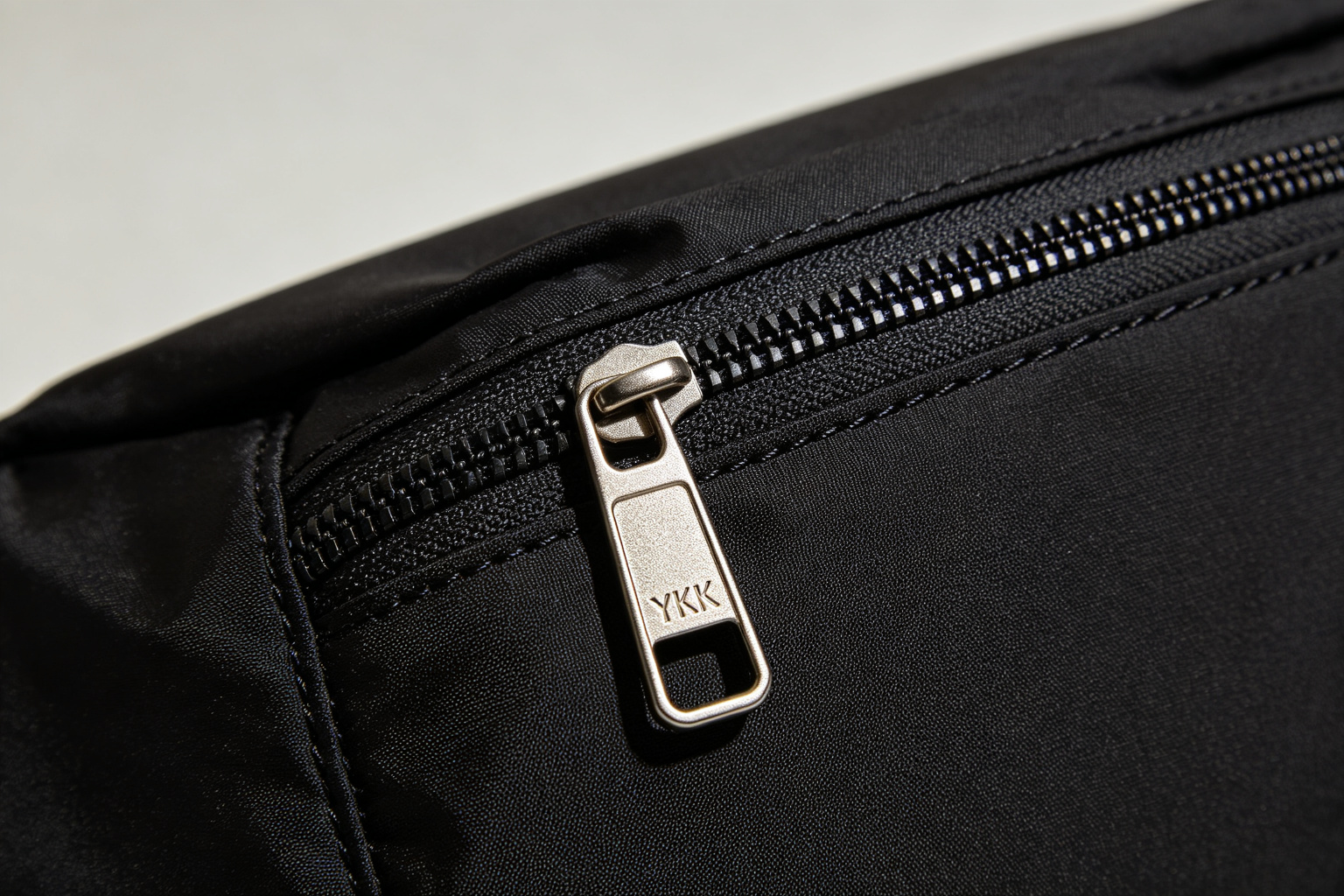
YKK zipper detail: No. 4 main zipper with 3cm lanyard pull tab — easy to grip with cycling gloves. YKK is the global reliability standard; the zipper passed 200-cycle testing on 10 pieces and is praised in customer reviews for smooth operation.
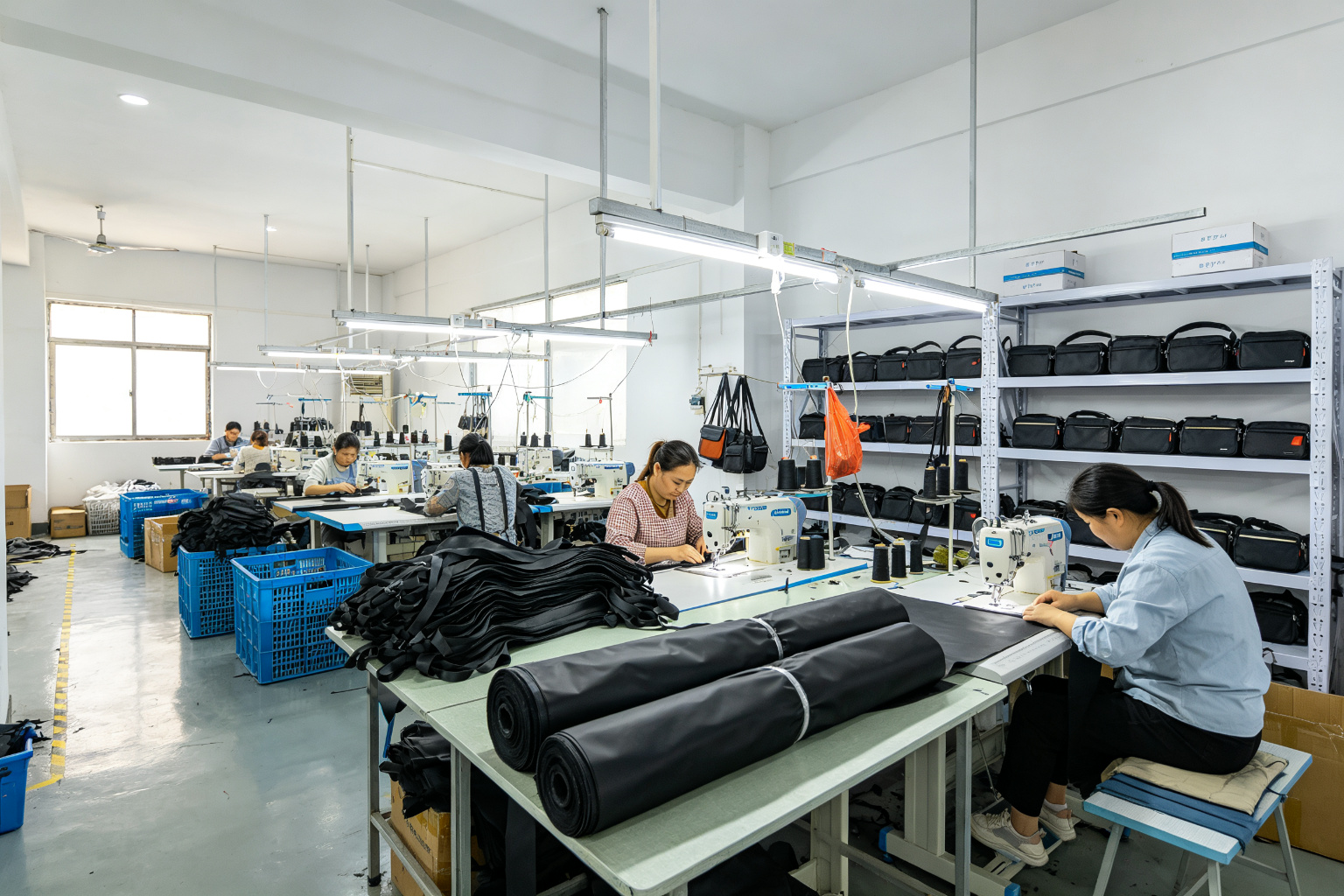
Our compact low-MOQ line: 2 dedicated sewing stations for the 500-piece waist bag run, black nylon rolls, and finished bags staged on racks. A focused short run delivered in 25 days.
Frequently Asked Questions
What is a realistic minimum order quantity for custom waist bags?
Direct Answer: While most factories demand 1,000-3,000 pieces, our low-MOQ line accepts 500-piece first orders for simple waist bags at a 15-40% small-batch premium. This 500-piece order came to $4.80 FOB — about 25% above the 3,000-piece price of $3.85.
- Typical Industry MOQ: 1,000-3,000 pcs
- Our Entry MOQ: 500 pcs
- Small-Batch Premium: 15-40%
- This Order: $4.80 FOB (vs $3.85 at 3,000 pcs)
Most bag factories require a minimum order quantity (MOQ) of 1,000-3,000 pieces per design, which is out of reach for many startups and small brands. However, low-MOQ factories (like ours) accept 500-piece first orders for simple designs like waist bags, fanny packs, and pouches, with a small-batch premium of 15-40% over the per-unit price at 3,000 pieces. In this case study, the 500-piece order (250 black + 250 olive green) came to $4.80 FOB per unit — about 25% higher than the $3.85 price we quoted for 3,000 pieces. The premium covers: pattern and die setup ($150-300), material sourcing at smaller quantities (nylon fabric minimums), and production setup time (the line runs at lower efficiency for a short run). For startups, a 500-piece first order is the right way to test the market, get real customer feedback, and build an email list before committing to 3,000 pieces. If a factory tells you their MOQ is 3,000, ask if they can do 500-1,000 at a premium — many can, and the premium is worth it to validate your product.
What materials are best for waist bags and which is most durable?
Direct Answer: 420D nylon is the sweet spot for a daily waist bag — balancing durability (~1,200N tear, 20,000+ abrasion cycles), weight, and cost. 300D is too thin for daily use; 600D is overkill for a small pouch. This case used 420D nylon with a water-resistant PU coating.
- Best Pick: 420D nylon
- Tear Strength: ~1,200N
- Abrasion: 20,000+ cycles
- This Build: 420D nylon + PU coating
Waist bags are typically made from three materials: (1) 420D nylon — the most common choice, balancing durability, weight, and cost; tear strength about 1,200N, abrasion resistance 20,000+ cycles, water-resistant coating available; ideal for daily urban use, cycling, and travel. (2) 600D polyester — slightly heavier and more abrasion-resistant, good for outdoor and hiking use. (3) PU-coated nylon (waterproof) — best for wet conditions but more expensive and stiffer. In this case study, we used 420D nylon with a water-resistant PU coating for both colors (black and olive green) — it's the sweet spot for an urban cycling brand: durable enough for daily use, lightweight, and affordable at low MOQ. The client's customers have used the bags daily for 4 months with zero durability complaints. For a waist bag, 420D nylon is the right starting point — 300D is too thin for everyday use, and 600D is overkill for a small bag.
How much does a custom waist bag cost to manufacture in small quantities?
Direct Answer: Custom waist bags cost $3.00-$8.00 FOB per unit, heavily quantity-dependent: $4.00-$6.50 at 500 pieces, dropping to $2.80-$4.50 at 3,000. This 500-piece 420D build with a YKK zipper and adjustable strap came to $4.80 FOB per unit.
- FOB Unit Range: $3.00-$8.00
- At 500 pcs: $4.00-$6.50
- At 3,000 pcs: $2.80-$4.50
- This Order: $4.80 FOB / unit
Custom waist bags typically cost $3.00-$8.00 FOB Shenzhen per unit, with the price depending heavily on quantity. At 500 pieces (low MOQ), expect $4.00-$6.50 per unit; at 1,000 pieces, $3.50-$5.50; at 3,000 pieces, $2.80-$4.50. The cost breakdown for a basic 420D nylon waist bag: fabric ($0.80-1.20), zipper ($0.40-0.70), strap with metal buckle ($0.50-0.90), lining and mesh ($0.30-0.50), labor and sewing ($1.00-1.50), and overhead plus small-batch setup amortization ($0.50-1.00). In this case study, the 500-piece order (420D nylon, YKK zipper, adjustable strap with metal buckle, interior zip pocket + card slots) came to $4.80 FOB per unit. The 25% small-batch premium over the 3,000-piece price was worth it for the client — it let them validate the product with a €29,900 investment (about $32,500) instead of committing €180,000 to a 3,000-piece order before knowing if the product would sell.
How long does a 500-piece waist bag order take to produce?
Direct Answer: A 500-piece waist-bag run is actually faster than a large order — 20-30 days from sample approval to FOB, because it is a single short run. This case delivered in 25 days, five ahead of the 30-day expectation, after one strap-zipper revision.
- Total (approval to FOB): 20-30 days
- Sample Development: 7-10 days
- Bulk Run: 3-5 days
- Actual Delivery: 25 days
A 500-piece low-MOQ waist bag order is actually faster than a large order because production is a single short run — the total timeline from sample approval to FOB shipment is typically 20-30 days (vs. 30-40 days for 3,000+ pieces). Sample development takes 7-10 days, pre-production (fabric sourcing, pattern making, zipper sourcing) takes 4-6 days, bulk production runs only 3-5 days (a waist bag is simple to sew — one operator produces 150-200 pieces per day, so 500 pieces is a 3-day run for 2 operators), and final QC plus packaging takes 3-5 days. In this case study, we delivered in 25 days (FOB shipment on Day 16 from sample approval) including one round of sample revisions (the client requested a larger main zipper — from No. 3 to No. 4 — for easier access when wearing the bag while cycling). The client's expectation was 30 days, so we delivered well ahead. For startups launching a first product, a 20-30 day timeline is ideal — it's fast enough to iterate based on early customer feedback.
What is a normal defect rate for small-batch waist bag production?
Direct Answer: For small batches (500-1,000 pcs), a 1.0-1.5% defect rate is normal at AQL 2.5 — slightly higher than large runs. This 500-piece run finished at 1.2% (6 pieces), all repaired or replaced, and 100% inspection is feasible at this quantity.
- Normal Range: 1.0-1.5%
- Top Defect: Stitching 0.4-0.7%
- Actual Rate: 1.2% (6/500)
- Inspection: 100% feasible at low cost
For small-batch production runs (500-1,000 pieces), a defect rate of 1.0-1.5% is normal under AQL 2.5 inspection standards — slightly higher than large runs (0.5-1.0%) because the setup is amortized over fewer pieces and the production run is shorter. The most common waist bag defects are: (1) stitching defects (0.4-0.7%) including skipped stitches and misaligned zipper; (2) zipper defects (0.2-0.4%) including catching and misaligned stops; (3) strap defects (0.2-0.3%) including weak buckle and misaligned strap attachment; (4) fabric defects (0.1-0.2%) including scratches and color shading. In this case study, the final defect rate was 1.2% — 6 pieces out of 500 inspected, with 3 stitching defects, 2 zipper defects, and 1 strap defect. All 6 defective pieces were repaired or replaced, resulting in a 0% final defect rate after repair. For a 500-piece order, inspecting every piece is feasible and recommended — the factory can do 100% final inspection at minimal additional cost.