
Quick answer: how should a buyer verify PFAS-free DWR?
An evidence-ready PFAS-free DWR brief is a custom-bag specification that connects the destination market and each treated component to a defined chemistry scope, current supplier declarations, suitable test evidence and lot records. Lock approved material and finish codes in the BOM, and require written approval before any supplier, coating or formulation change.
A bag can pass a spray test and still have an unsupported chemistry claim. The opposite problem also occurs: a fabric mill may provide a broad statement, but the finished bag contains a coated zipper tape, printed logo or lining from another supplier. Buyers therefore need two separate approval tracks: performance and chemical evidence. Our waterproof custom-bag construction guide explains the performance side; this article deals with evidence and control.

The EU dates are not one blanket rule for every bag
Commission Regulation (EU) 2024/2462 added a targeted restriction for PFHxA, its salts and PFHxA-related substances to REACH Annex XVII. From 10 October 2026, the listed limits apply to textiles, leather, fur and hides in clothing and related accessories for the general public; the recitals name handbags as an example. From 10 October 2027, the restriction extends to other consumer textiles, leather, fur and hides not already covered by the first group.
The limits in that entry are 25 ppb for the sum of PFHxA and its salts and 1,000 ppb for the sum of PFHxA-related substances, measured in homogeneous material. The regulation also contains exemptions and transitional provisions. Those numbers describe one defined PFHxA restriction; they do not by themselves prove that a product is free from every substance in the much broader PFAS family.
Related accessories
Handbags are named in the EU regulation’s recitals. Document why a bag is classified here and apply the relevant 2026 date and limits.
Other consumer textiles
Some bag types may fall into the other-textiles group, for which the listed PFHxA restriction begins in October 2027.
Specialist products
PPE, medical devices and construction textiles have stated exceptions. A marketing label does not establish that an exception applies.
Map chemistry touchpoints before requesting documents
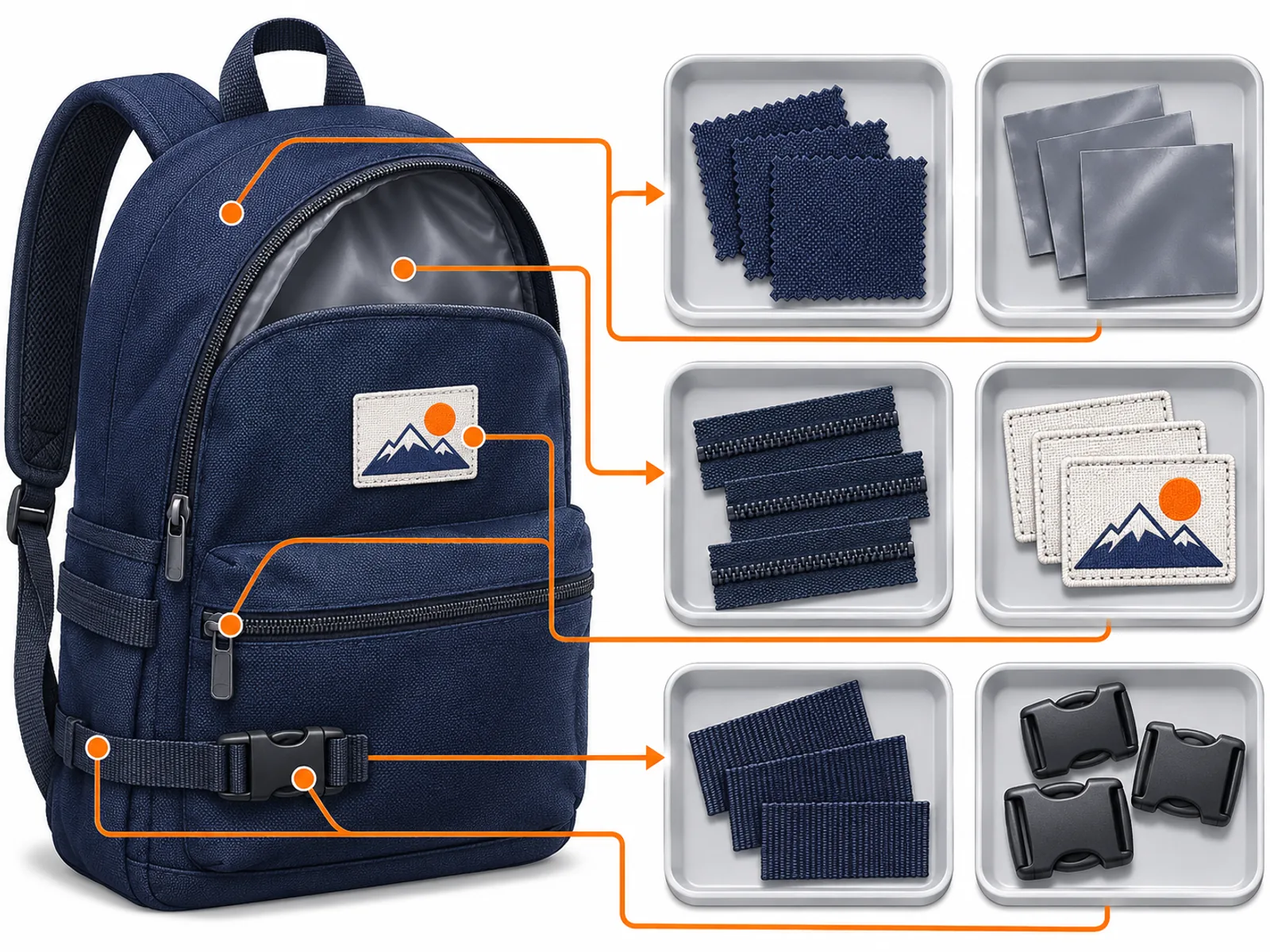
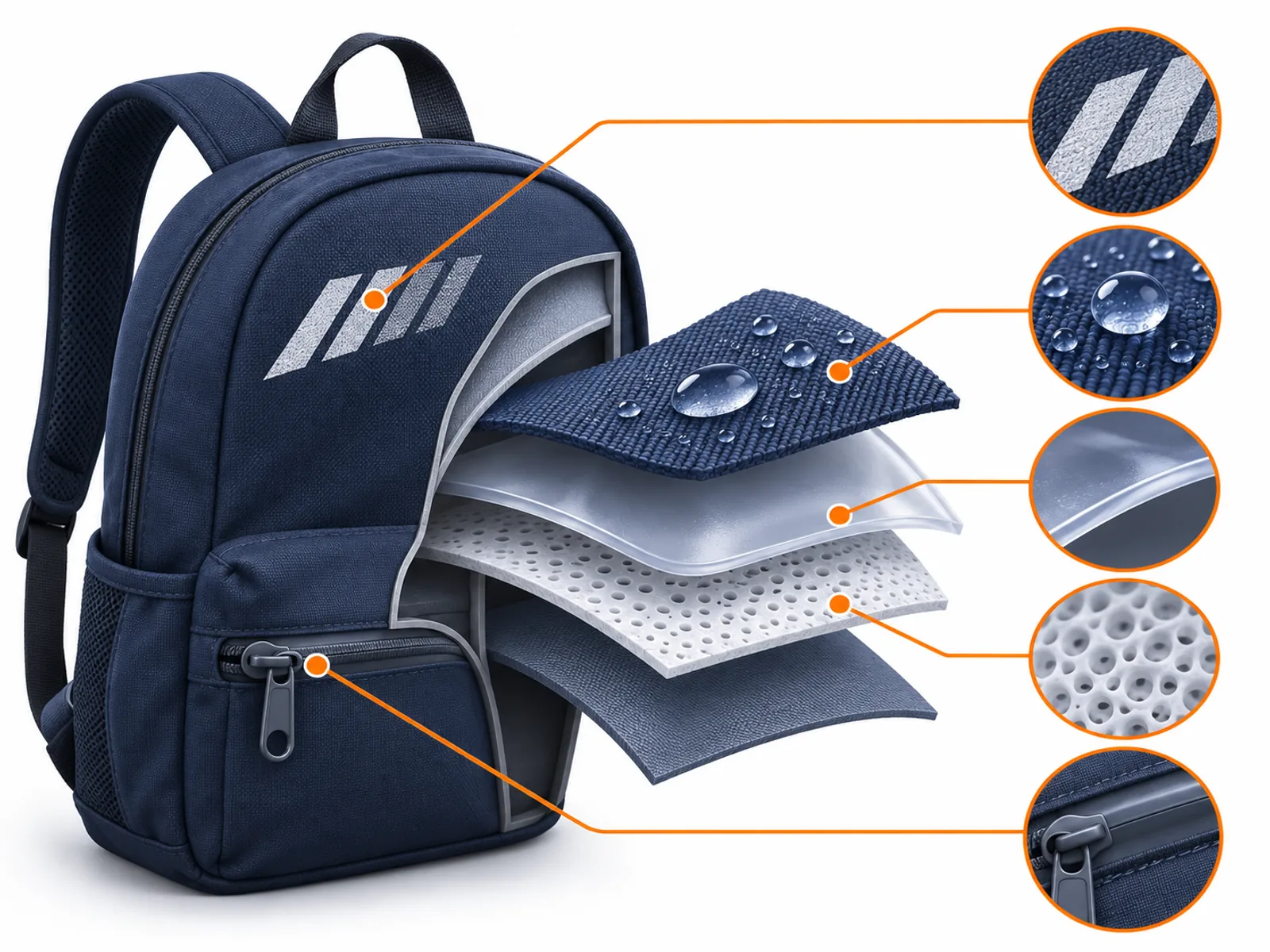
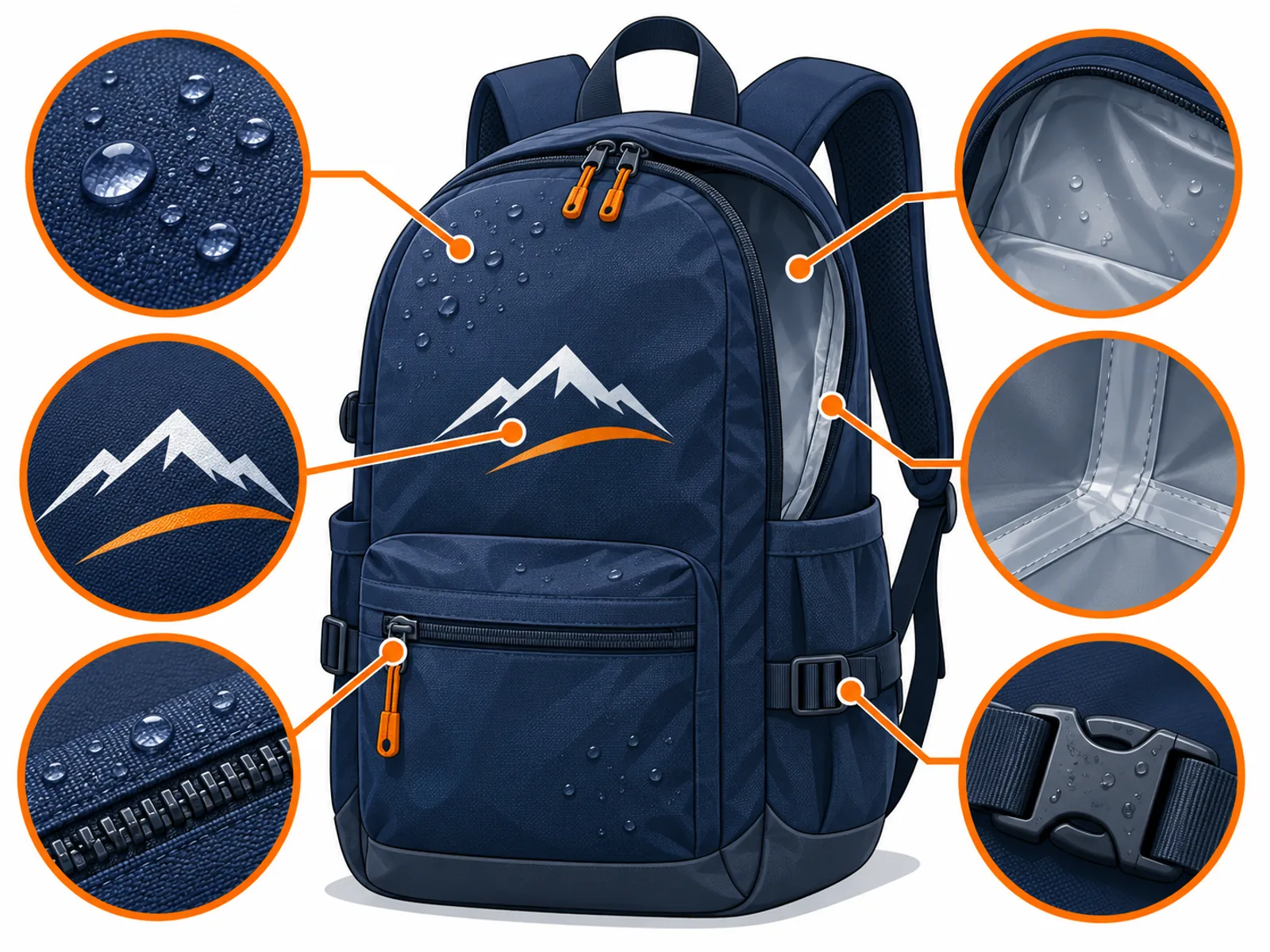
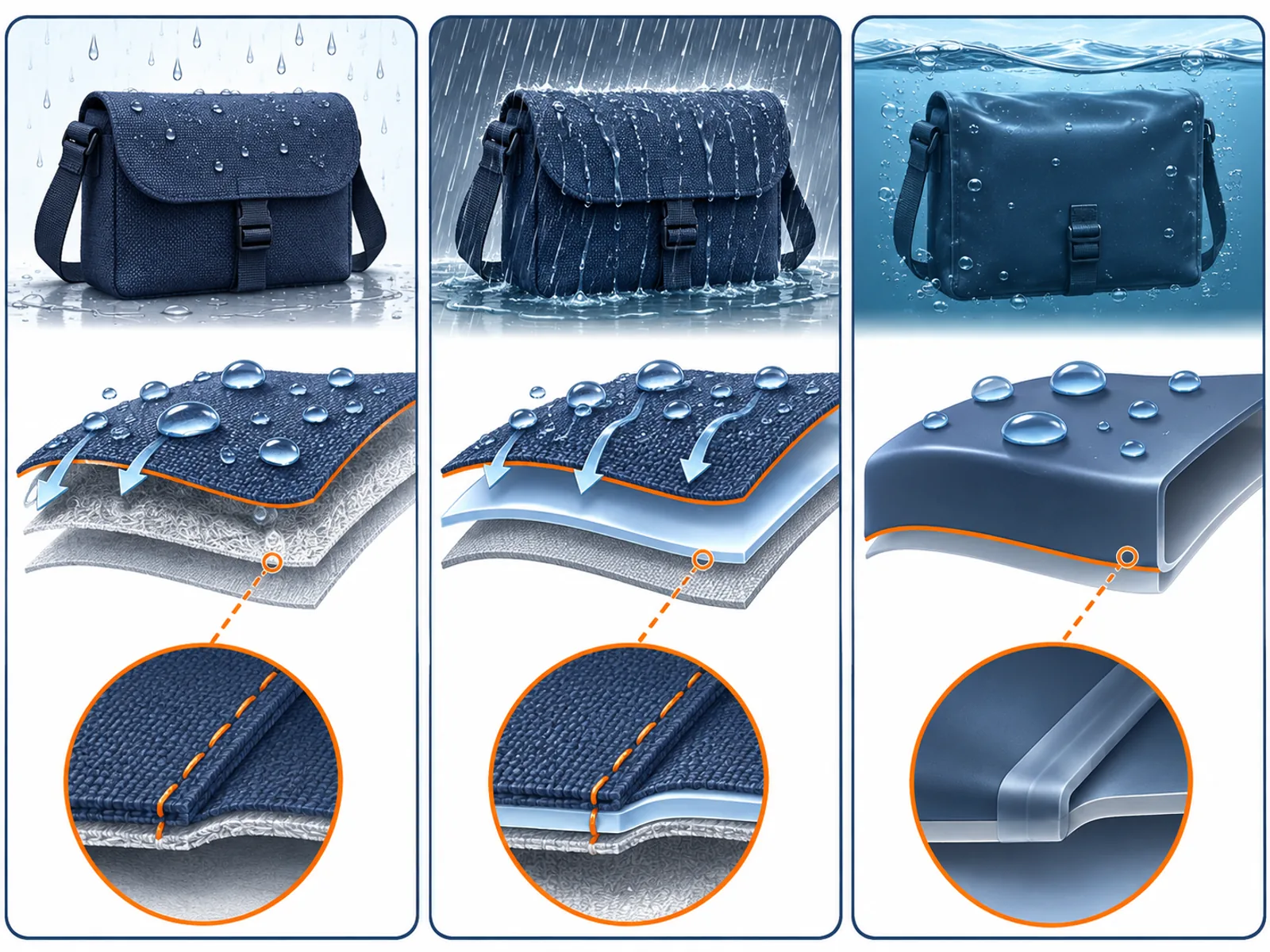
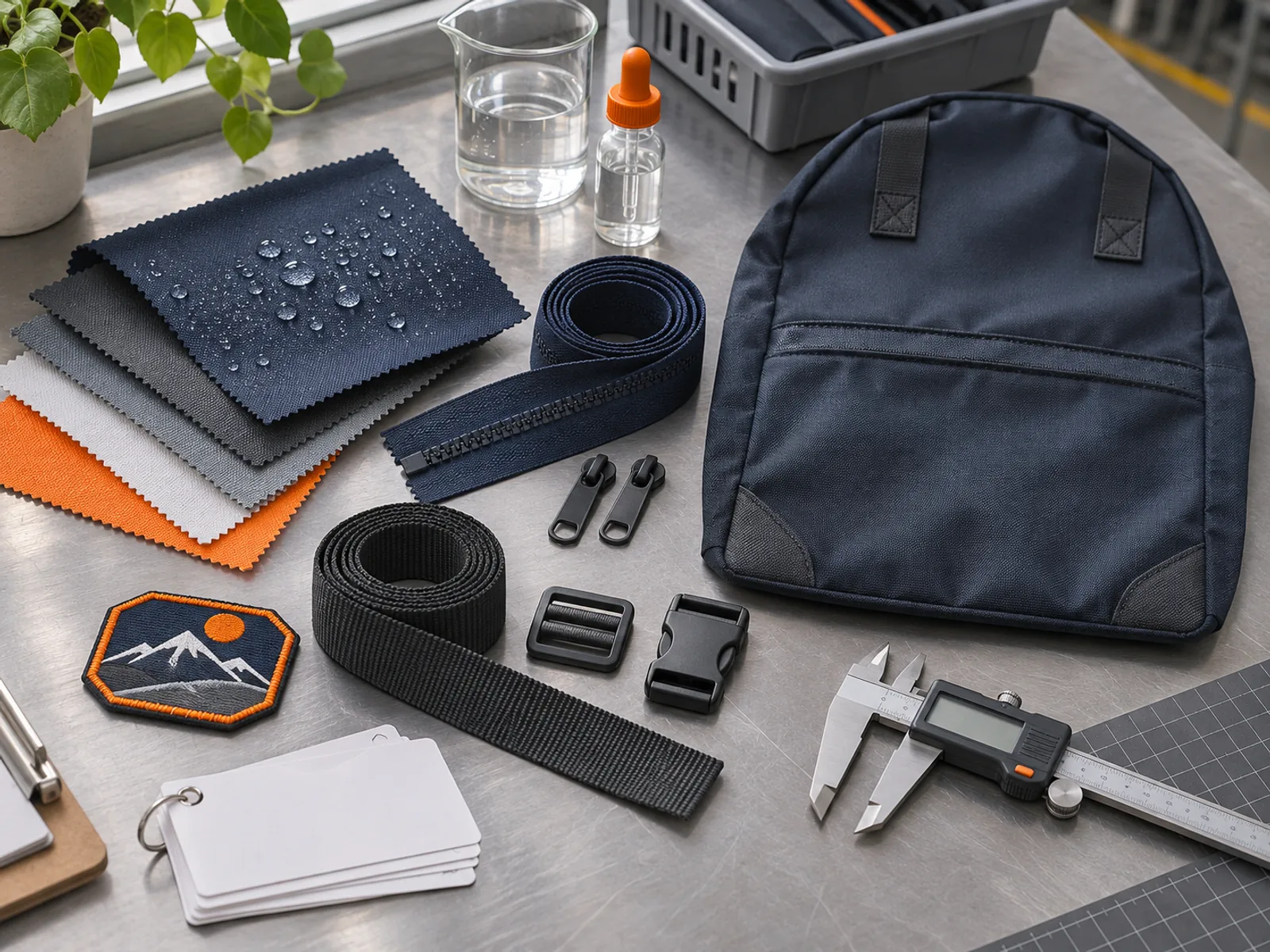
Water repellency may come from a surface finish, but a water-resistant bag is a system. The shell can carry a DWR finish. A PU or TPU coating may sit on the reverse. A membrane may be laminated between layers. Zipper tapes, logo inks, seam tapes, anti-soil finishes and hardware coatings can have different formulations and suppliers. Not every component is automatically high risk, but each intentionally treated or coated component should appear on the review map.
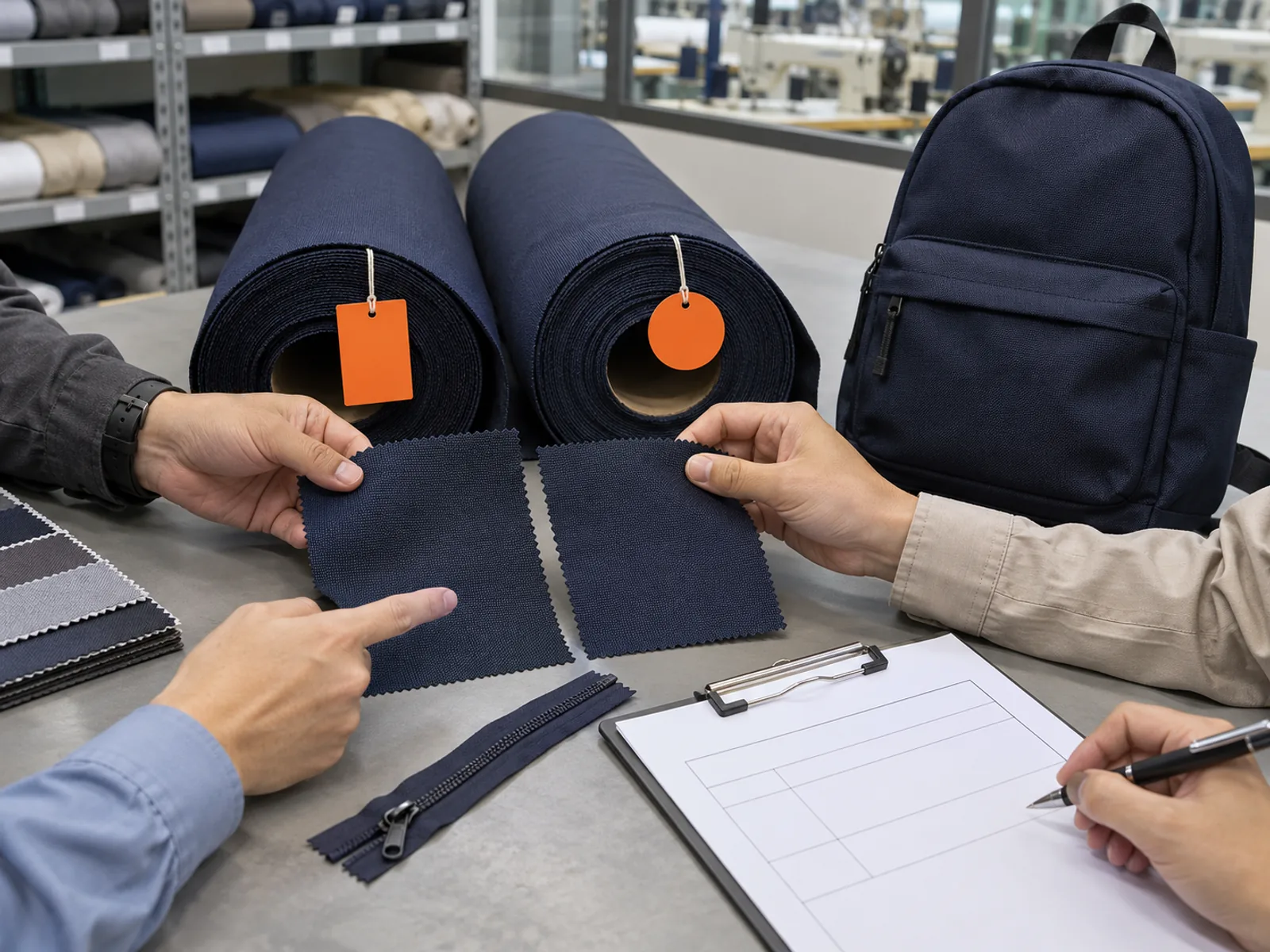
Use the current custom bag materials guide to identify the construction first. Then ask the factory to list the supplier, material code, finish code and intended function for every relevant component. “Oxford fabric” or “waterproof zipper” is too broad for evidence matching.
Separate performance words from chemical claims
Water-repellent describes how the face material sheds light surface water under defined conditions. Water-resistant is a product-level performance description that still needs a method and acceptance criterion. Waterproof should be tied to a complete construction and test, not inferred from DWR. PFAS-free is a chemistry claim whose scope must be defined. These terms answer different questions.
“C0,” “PFC-free,” “fluorocarbon-free” and “PFAS-free” are also not interchangeable evidence categories. They may be useful supplier or market terms, but the purchase specification must state what is prohibited, which components are covered and what proof the buyer accepts. A declaration that only says “eco coating” is not reviewable.

Build an evidence packet, not a folder of unrelated PDFs
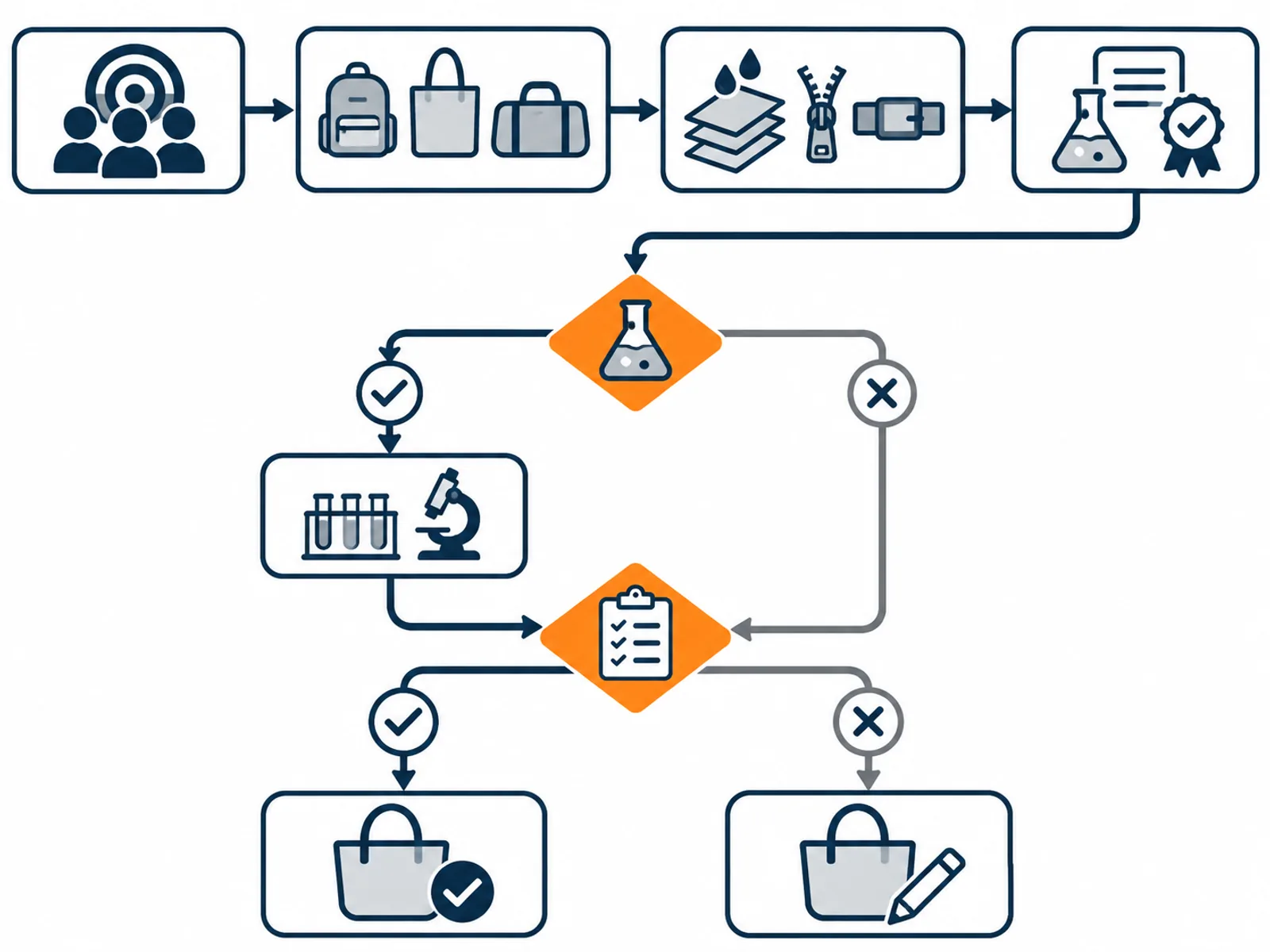
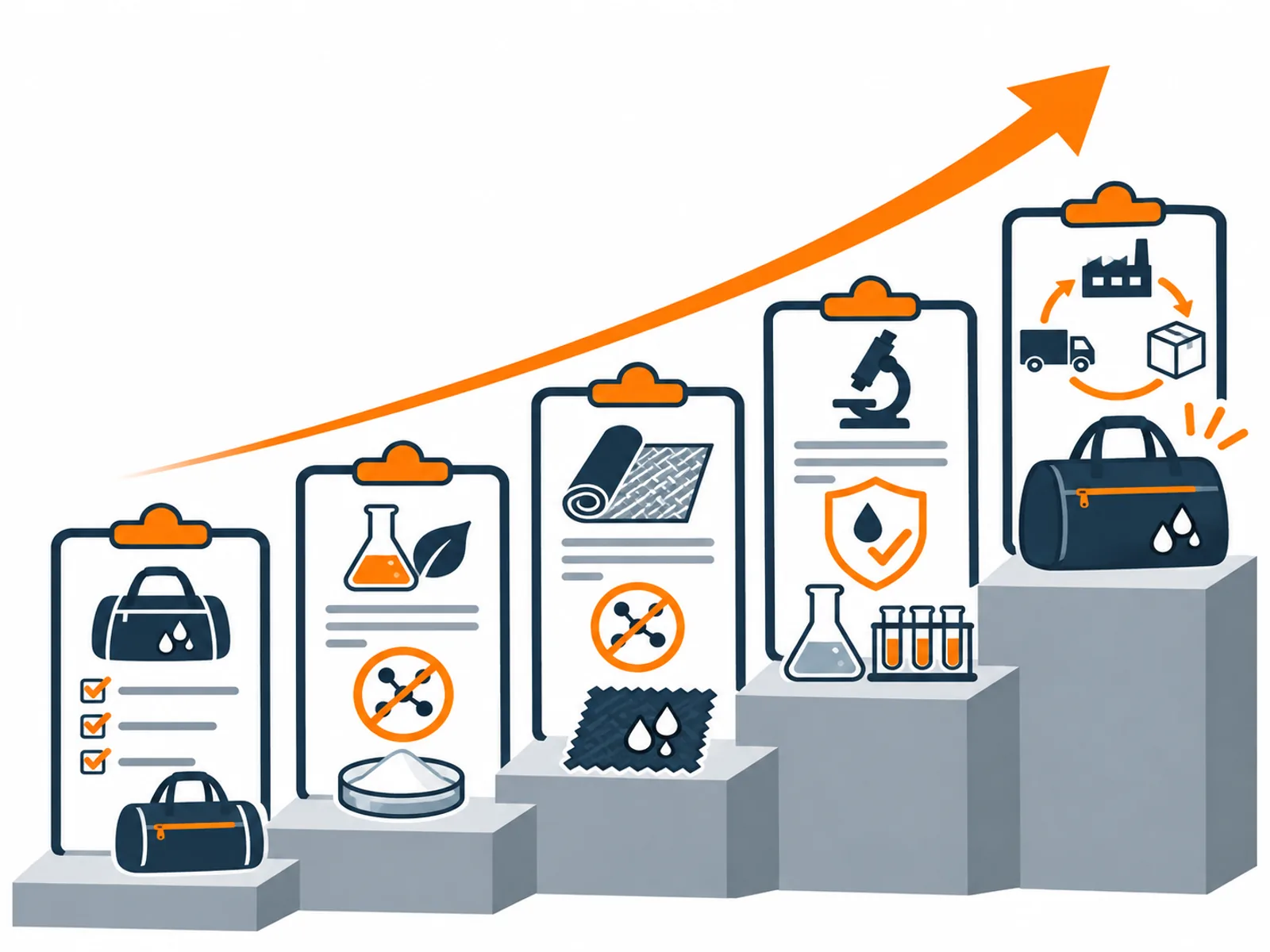
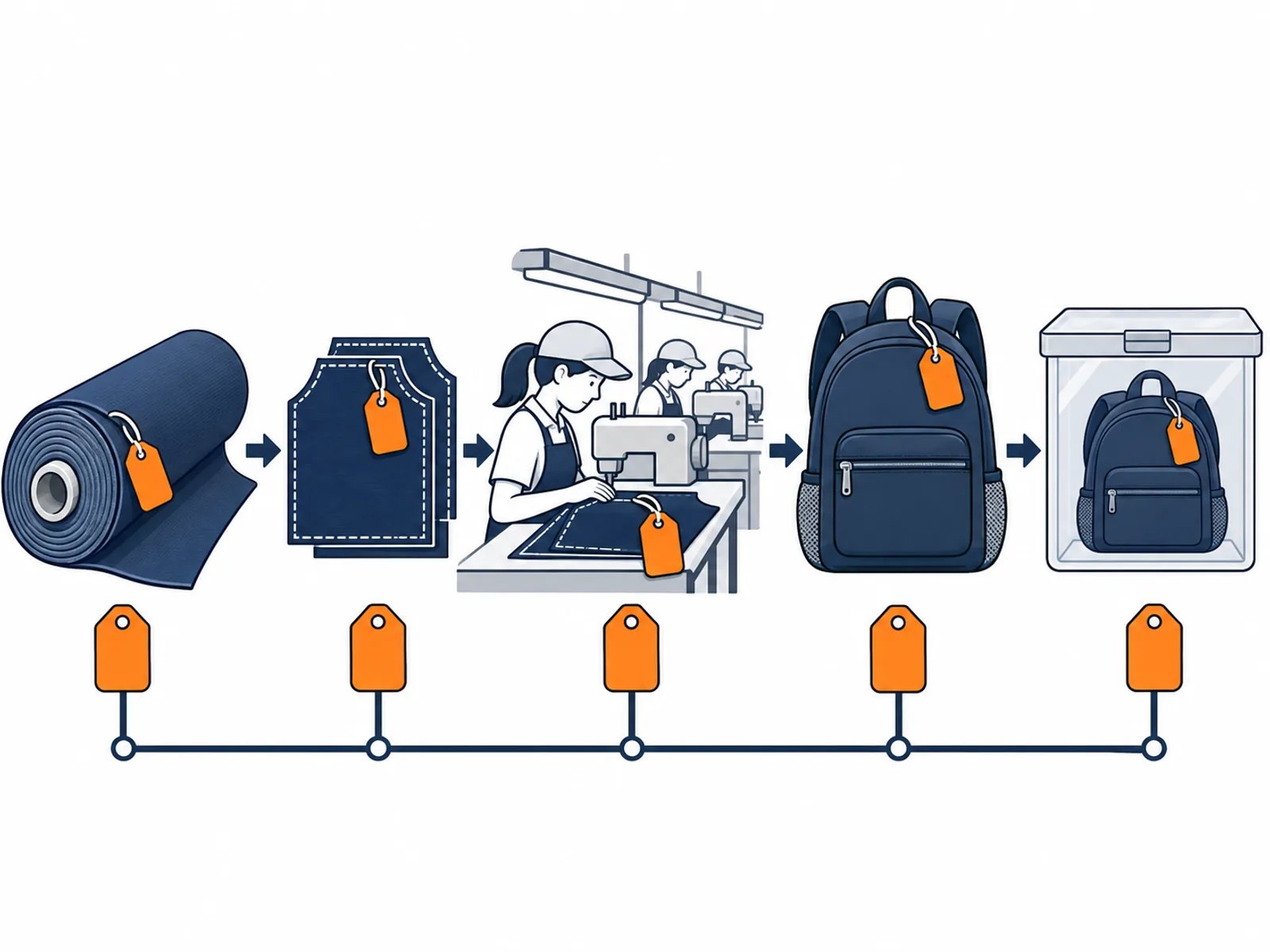
A strong evidence packet lets another person trace the finished bag back to the approved inputs. It should answer six questions:
- Requirement: Which market, regulation, retailer RSL or voluntary claim is being addressed?
- Scope: Which PFAS group, analytes or intentional-use rule does the requirement cover?
- Identity: Which supplier, material and finish codes match the declaration and test sample?
- Method: Is the method suitable for the matrix and are reporting limits low enough for the stated threshold?
- Date and lot: Is the evidence current and connected to the material used in the order?
- Change control: What happens if the mill, chemical, finish, coating or component changes?
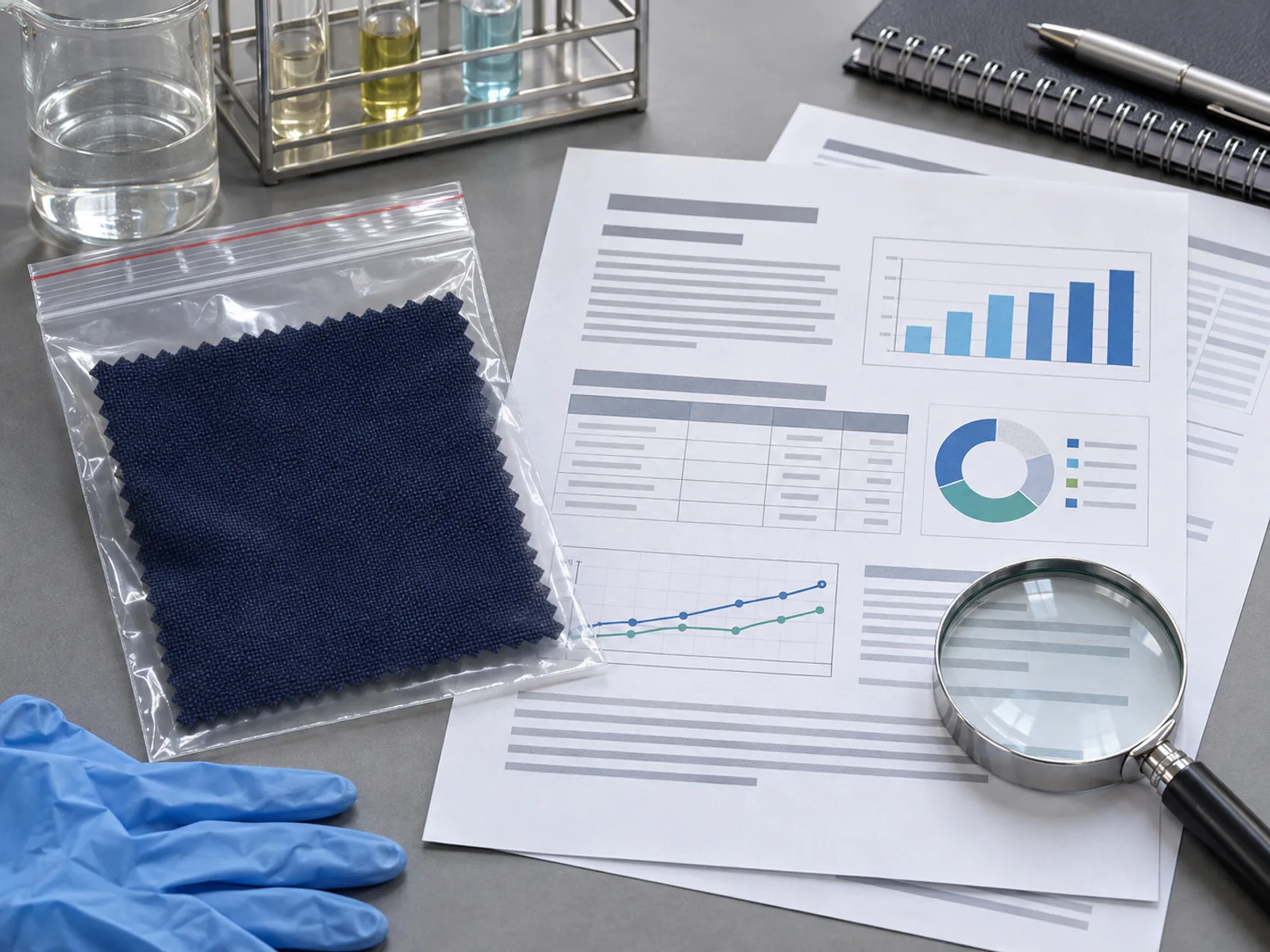
The French government FAQ notes that no single harmonized method currently covers PFAS analysis across every affected product matrix. It advises using technically suitable methods capable of checking the applicable limits and recognizes supplier documentation as one possible form of evidence. This is why a report title alone is not enough: the buyer needs the analyte scope, matrix, method and limits of quantification.

Translate the requirement into the RFQ and tech pack
Do not wait until the pre-production sample to ask whether the finish is fluorinated. Put the destination, product classification, restricted-chemistry scope, evidence deadline and change-control rule in the first RFQ. The custom bag tech-pack guide shows where material codes, supplier references and revision control belong.
Supplier shall disclose all intentionally applied water-, oil- or stain-repellent treatments for the shell, lining, zipper tape, print, seam tape and coated components. Before material approval, supplier shall provide current declarations linked to each material and finish code and any buyer-required test evidence. No supplier, formulation, coating, finish or material-code substitution may enter sampling or bulk production without written buyer approval and an evidence review.
Control the evidence through sampling and bulk production
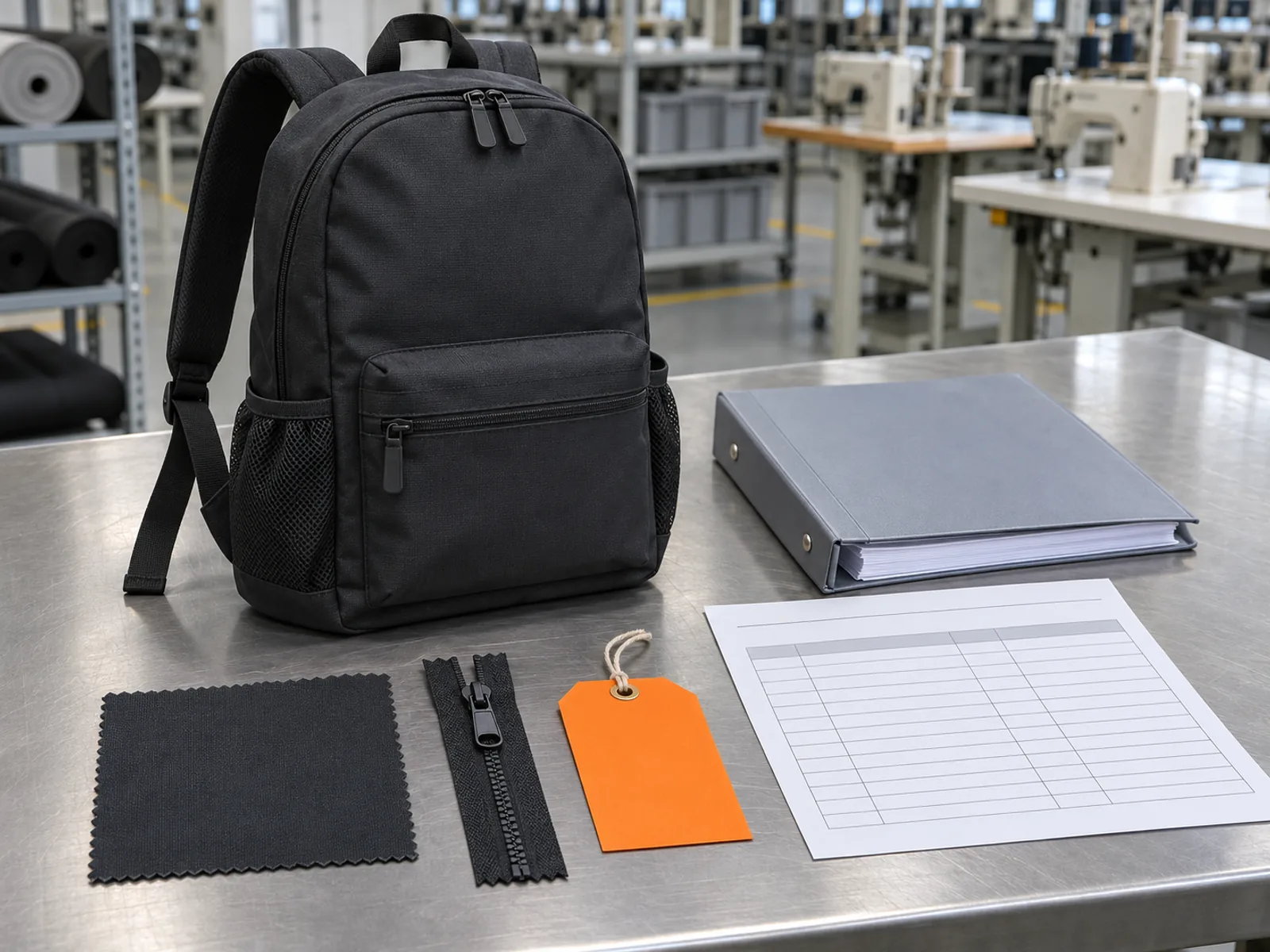
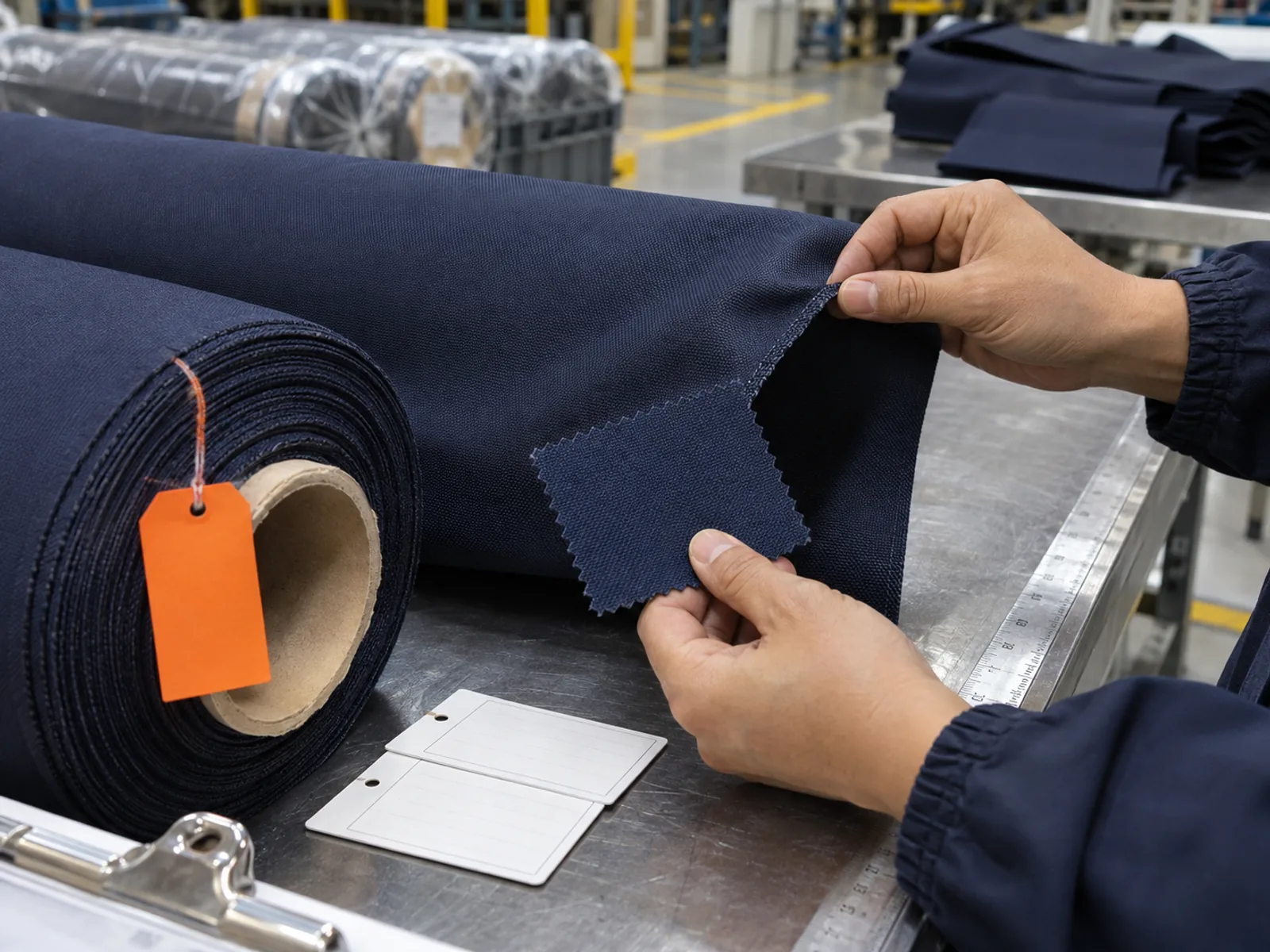
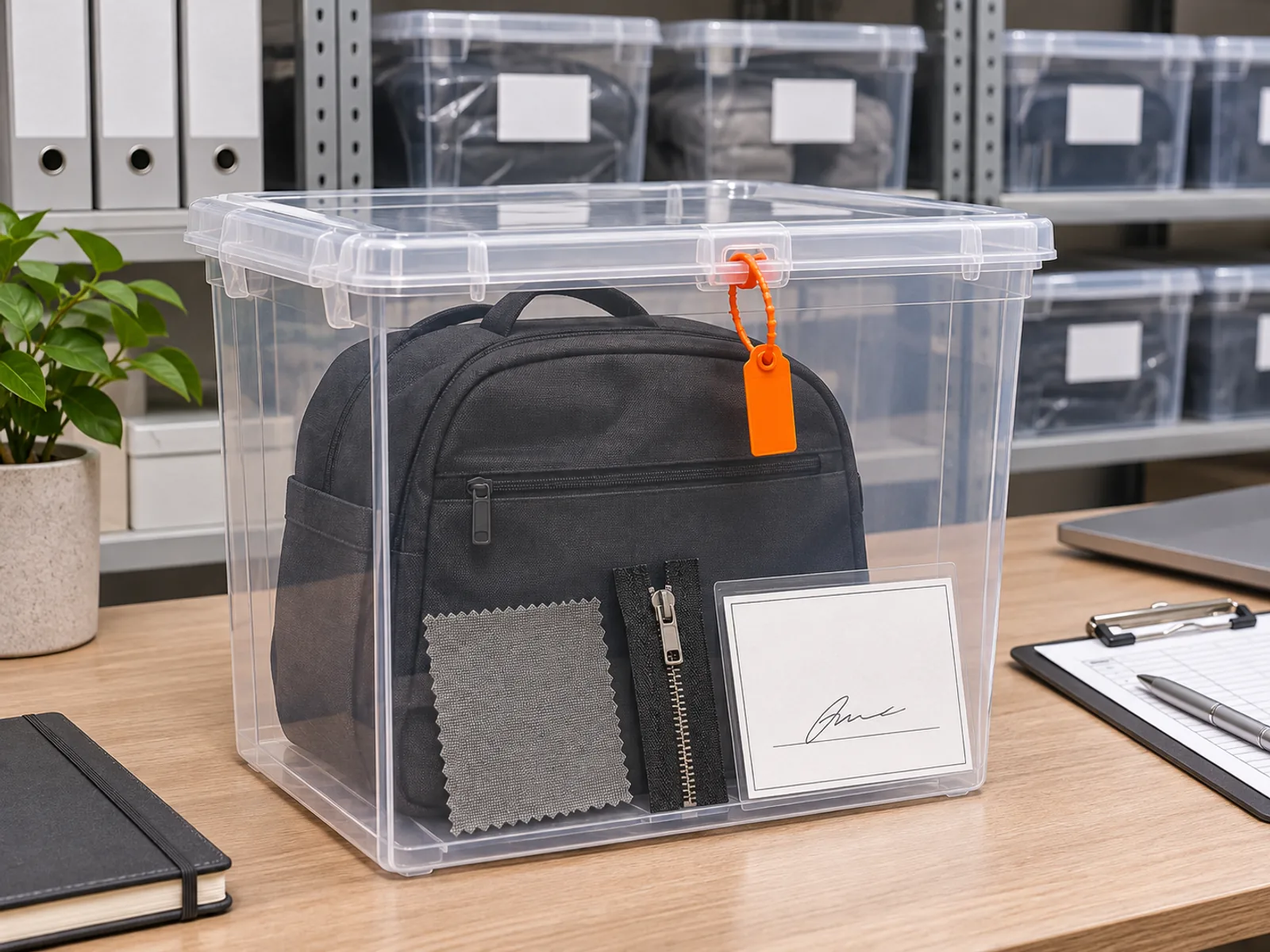
The approved pre-production sample should carry the current BOM revision, fabric code, finish code, color or dye lot reference, component list and evidence index. Incoming rolls are checked against those records. Cutting tickets and production records retain the material lot. A sealed finished sample and component swatches remain available after shipment for investigation or repeat orders.
If a coating is unavailable and the mill proposes a “similar C0 finish,” stop the substitution at the approval gate. Similar hand feel and spray behavior do not prove identical chemistry or documentation. Review the new declaration, determine whether new testing is required, update the BOM and obtain written approval before cutting.
Test chemical evidence and water performance separately
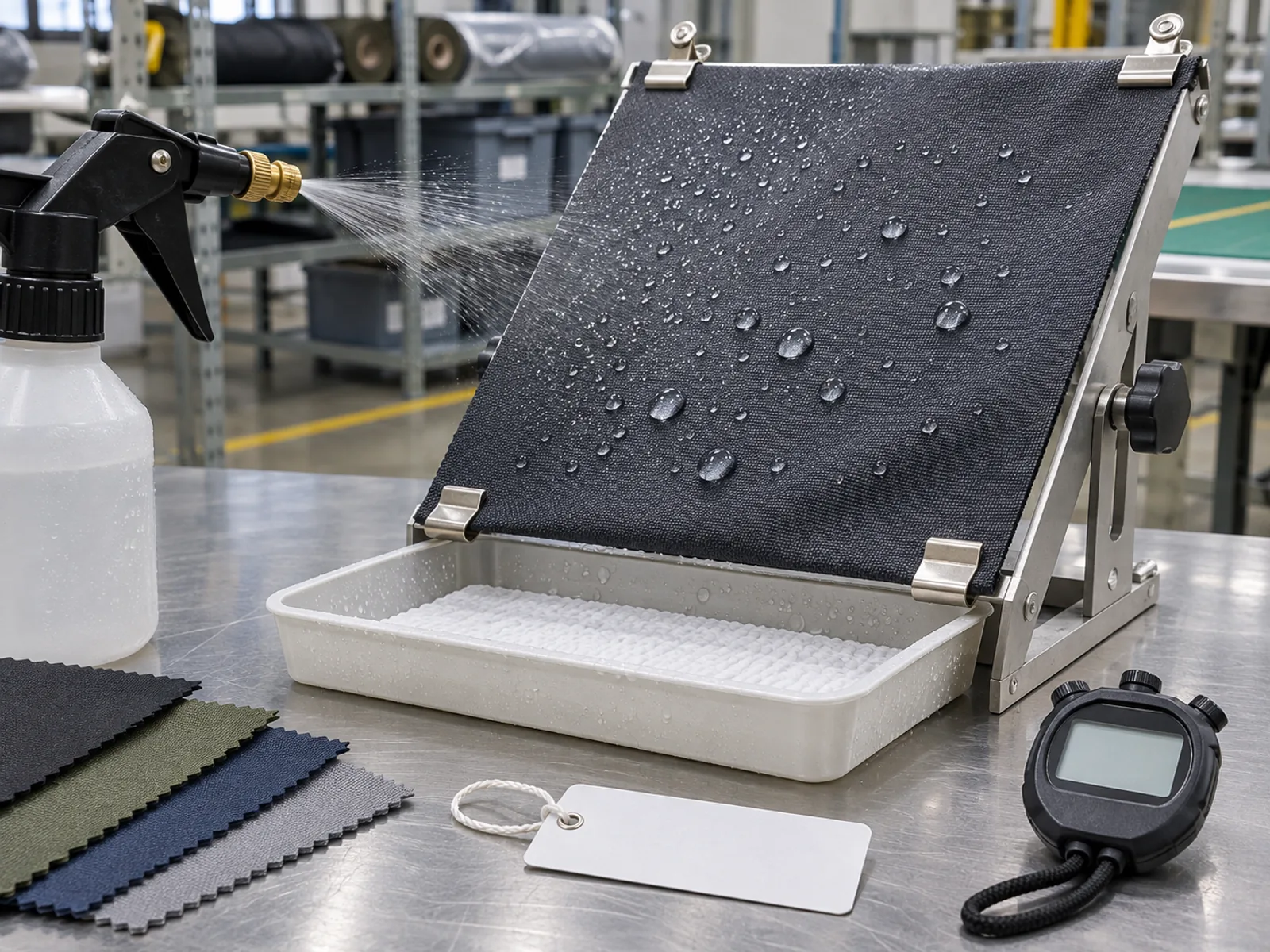
A controlled spray or rain test can show whether the approved finish meets the buyer’s water-repellency target. It cannot identify the chemical formulation. Chemical testing can address a defined analyte scope but does not prove that a finished bag resists rain. The two results belong beside each other, not in place of each other.
Claims that should trigger a pause
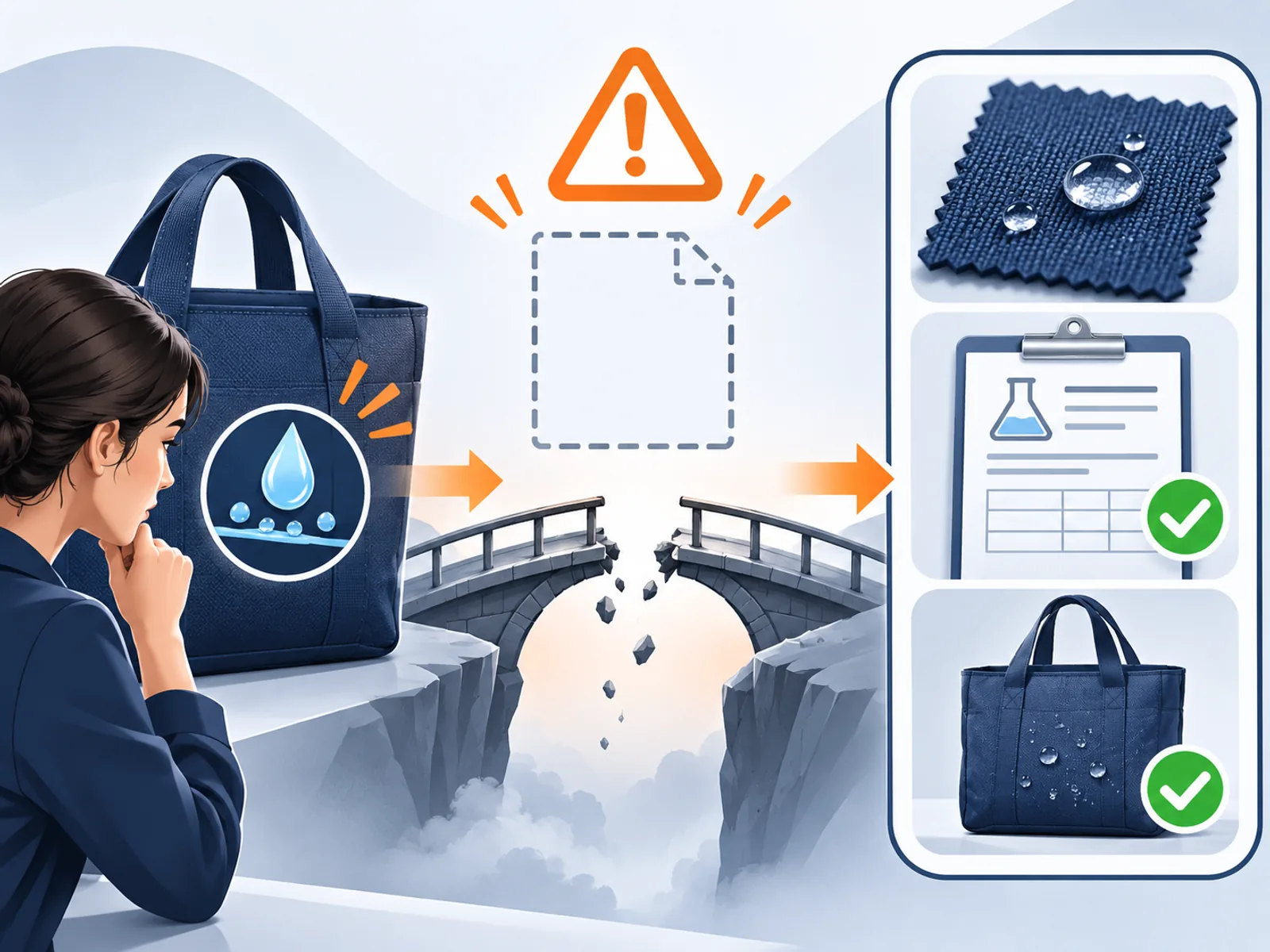
- “PFAS-free” appears on the quotation, but the supplier cannot define what the statement covers.
- The report belongs to a different fabric code, color, coating or supplier.
- Only the face fabric is documented although coated trims and printed components are present.
- The lab’s reporting limits are higher than the regulatory or buyer threshold.
- A new coating is introduced after sample approval without a revised declaration.
- The supplier treats “passes REACH” as one universal test rather than identifying the applicable restriction.
Need an evidence-ready custom bag quotation?
Send the destination market, bag construction, performance target, restricted-substance specification, evidence expectations, quantity and delivery window. Merris identifies missing component and document fields before material approval. Custom bags are made to order from a 500-piece MOQ; sampling is normally 5–7 days, bulk production is about 30 days after approval, and trade terms are FOB Shenzhen or EXW.
Request a Material ReviewFrequently asked questions
Does EU Regulation 2024/2462 apply to handbags and backpacks?
Direct answer: The regulation expressly covers clothing-related accessories such as handbags from 10 October 2026 and other consumer textiles from 10 October 2027. Classification can depend on the product and intended use, so document the classification and legal basis used for each bag program rather than assigning every bag one date.
Does C0 DWR automatically prove that a bag is PFAS-free?
Direct answer: No. C0 is a commercial shorthand, not a complete evidence package. Define the restricted chemistry in the purchase specification, then connect the claim to the exact material code, current supplier declarations, suitable test evidence when required and production-lot traceability.
Is a fabric supplier declaration enough for a PFAS-free bag claim?
Direct answer: A declaration is useful but may not be sufficient by itself. Check its scope, date, material and finish codes, restricted-substance definition and signatory. Use a product risk assessment to decide whether technically suitable laboratory evidence is also required.
Which bag components should be checked for PFAS?
Direct answer: Map every intentionally treated or coated component, including shell finish, coating or membrane, printed areas, coated zipper tapes, seam tapes, linings and relevant hardware finishes. Evidence follows each homogeneous material, not only the finished product name.
Must a material be checked again after a supplier or coating change?
Direct answer: Treat a supplier, formulation, coating, finish or material-code change as a controlled change. Reconfirm declarations and determine whether new testing is needed before the substitute enters bulk production. Update the BOM and approval record even when the new fabric looks the same.