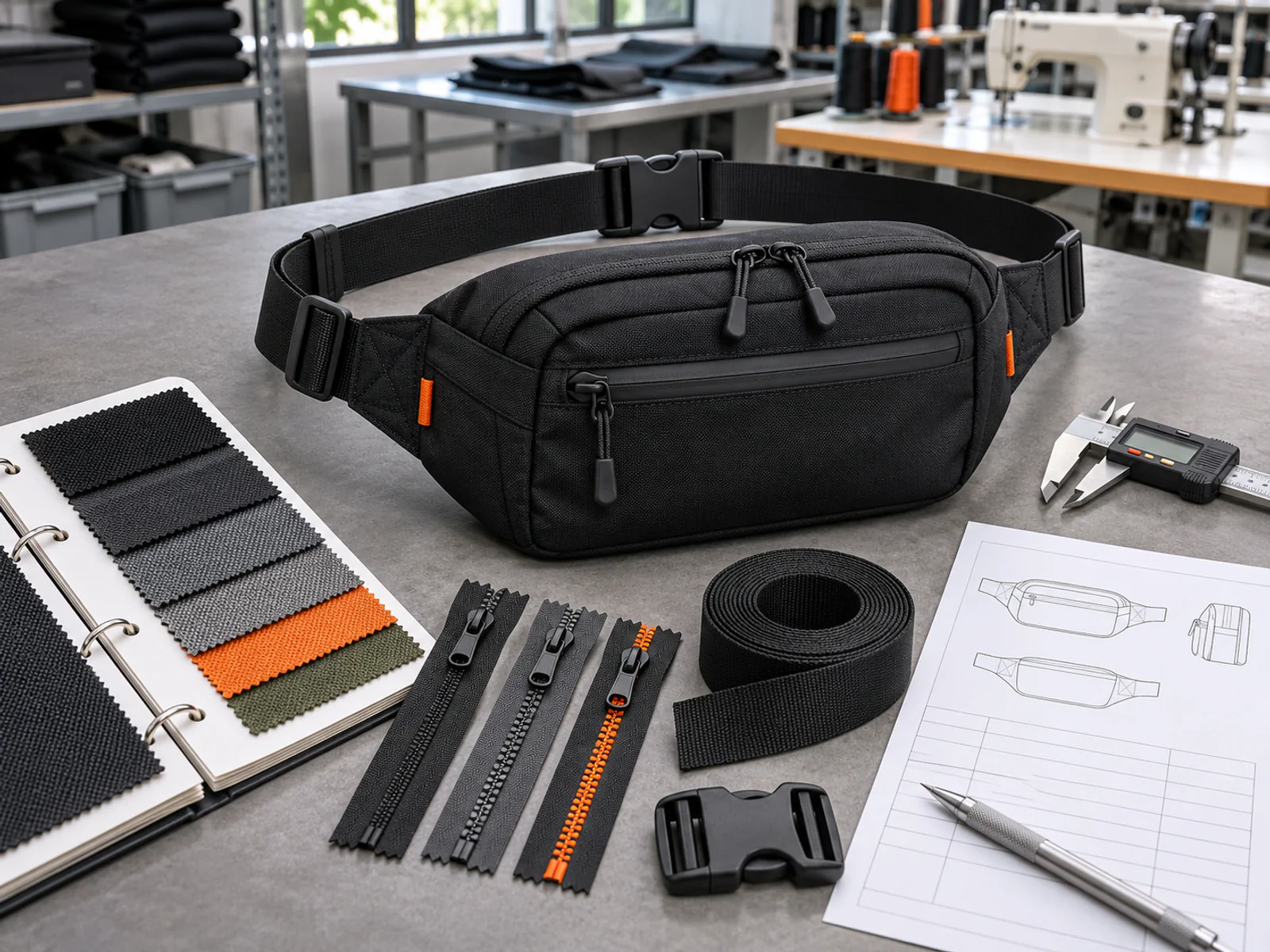
Quick answer: what belongs in a waist bag specification?
A factory-ready waist bag specification identifies the exact shell and lining constructions, coating, zipper chain and slider, buckle resin and size, webbing fiber and width, adjustment range, reinforcement and seam geometry. It also states dimensional tolerances, functional tests and approval records. Denier, “water-resistant” or “heavy-duty” alone are not measurable acceptance criteria.
Waist bags look simple because the body is small. In use, however, the same product is curved around the body, opened with one hand and carried from two narrow strap anchors. A weak decision at the zipper curve, webbing adjuster or side seam can dominate the whole result. The commercial custom waist bag range shows possible shapes; this article deals with the engineering choices behind those shapes so it does not compete for the same “manufacturer” search intent.
Start with use conditions, not a favorite fabric name
Write down the carried items, target volume, wearing position, climate, expected service life, decoration and retail price band. A lightweight festival pouch, a running belt and a tool waist pack should not inherit the same bill of materials. If the bag will carry a large phone and power bank, for example, the zipper opening and strap anchor matter as much as the shell fabric.
Daily urban
Prioritize hand feel, color consistency, zipper comfort and a clean silhouette. Moderate abrasion resistance may be sufficient when the bag is not dragged or overloaded.
Travel and outdoor
Consider abrasion, rain exposure, glove-friendly pullers, stable webbing and secure internal organization. Define performance by method, not by the word “outdoor.”
Promotional
Control cost without making invisible substitutions. Lock the fabric code, usable strap range, logo position and minimum functional checks.
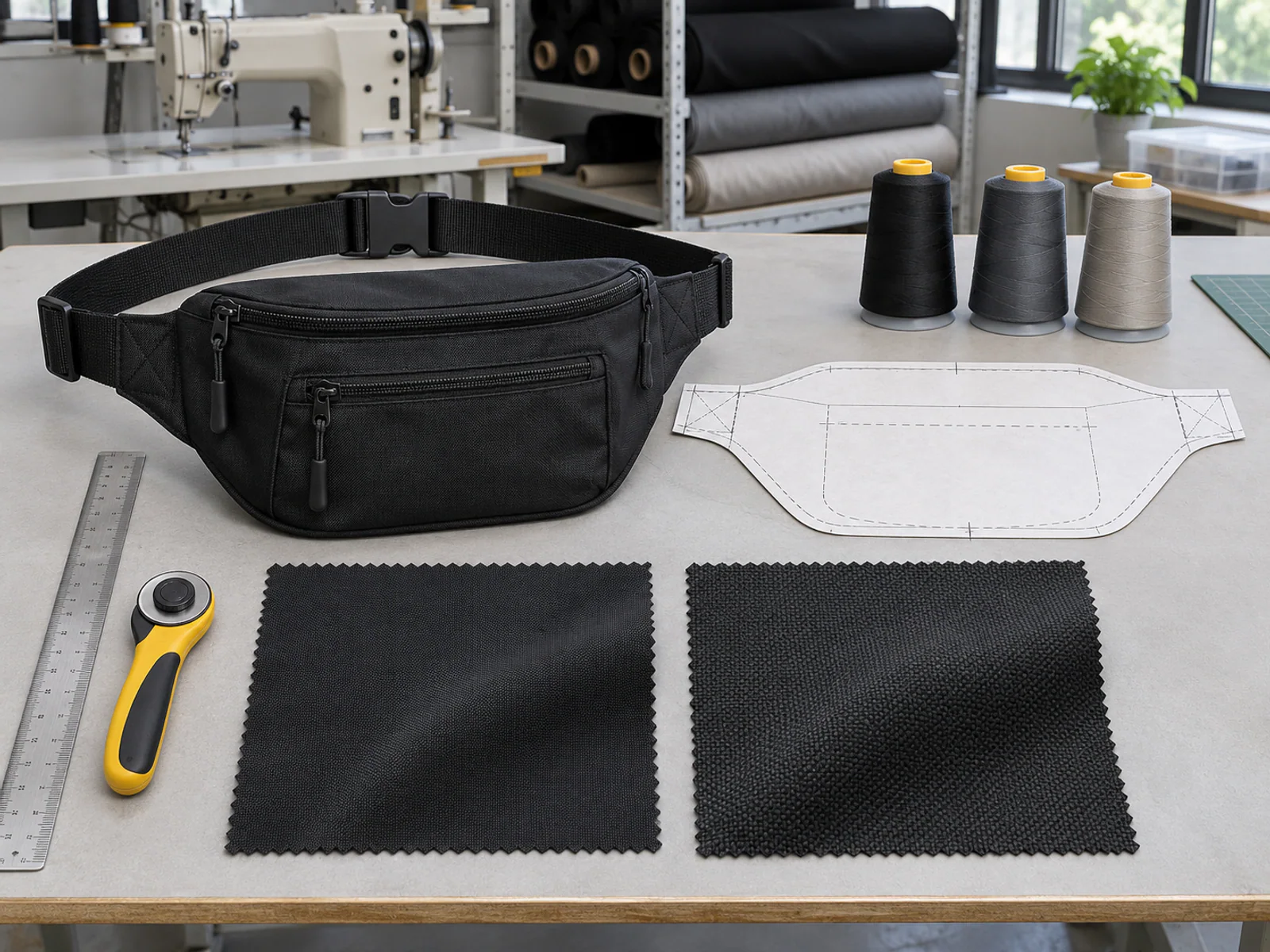
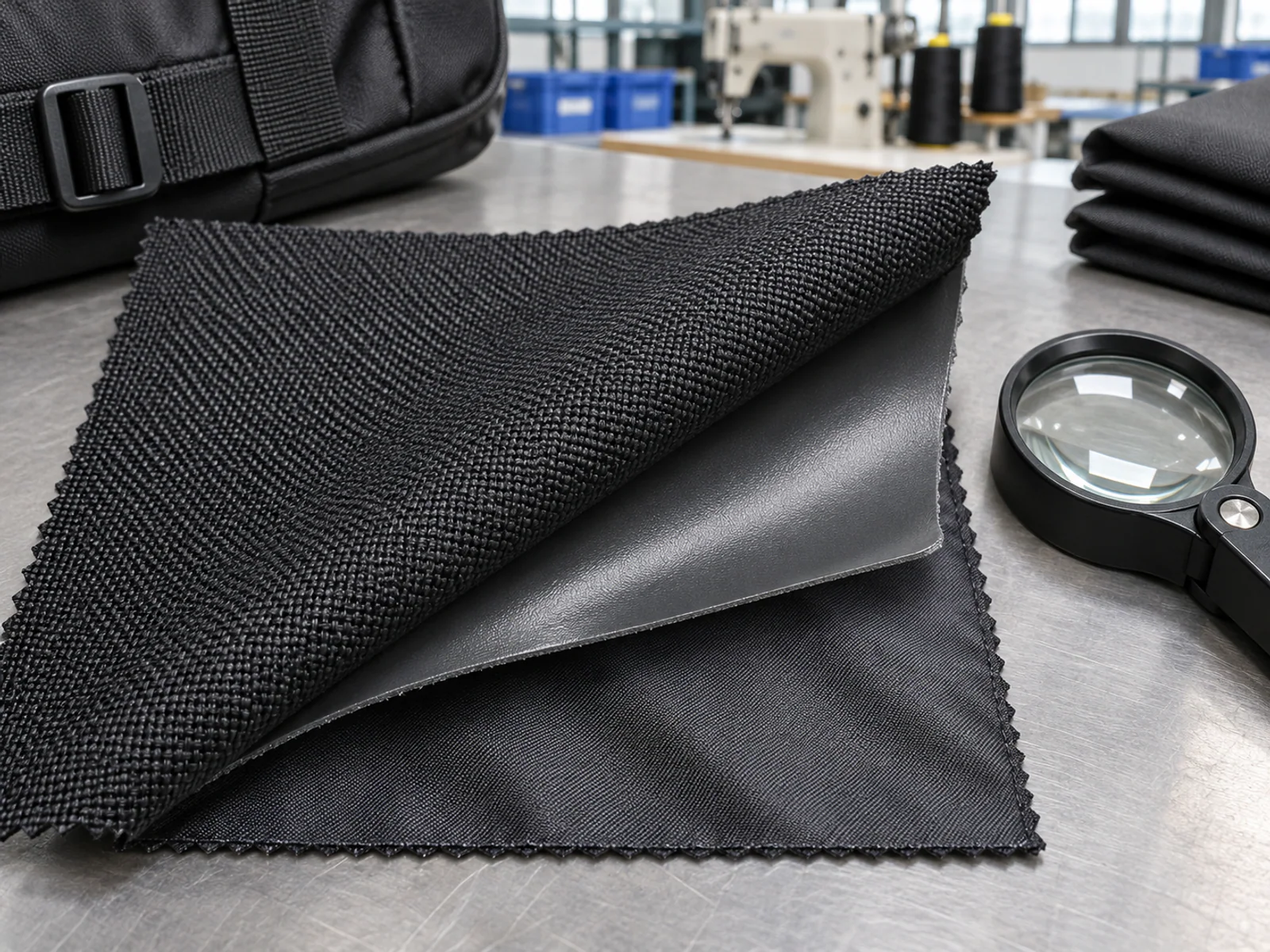
Choose a complete fabric construction
“420D nylon” and “600D polyester” are not quality grades. Two mills can produce visibly different fabrics under the same short name. The purchase description should include supplier and article code, fiber, nominal denier, weave, finished mass if relevant, coating or lamination, face finish, color standard and approved hand feel. Use the bag materials reference to define the vocabulary, then seal the actual swatch used for pricing and sampling.
| Decision | What to specify | Why it matters |
|---|---|---|
| Shell | Exact construction, weight, coating, finish and color master | Controls appearance, abrasion, stiffness and sewing behavior |
| Lining | Fiber, weight, color, coating and pocket use | A pale thin lining can show dirt or tear at pocket corners |
| Interlining | Foam, board or nonwoven type, thickness and placement | Controls shape without making every seam bulky |
| Color | Physical standard, viewing light and tolerance | Black shell, tape, webbing and buckle rarely match automatically |
For black programs, compare the shell, zipper tape, webbing, lining and molded parts together. A Pantone number is a target, not proof that different substrates will look identical. The main-site guide to custom bag color approval and repeat-order matching explains how lab dips, physical masters and retained references connect across orders.
Specify the zipper as a system
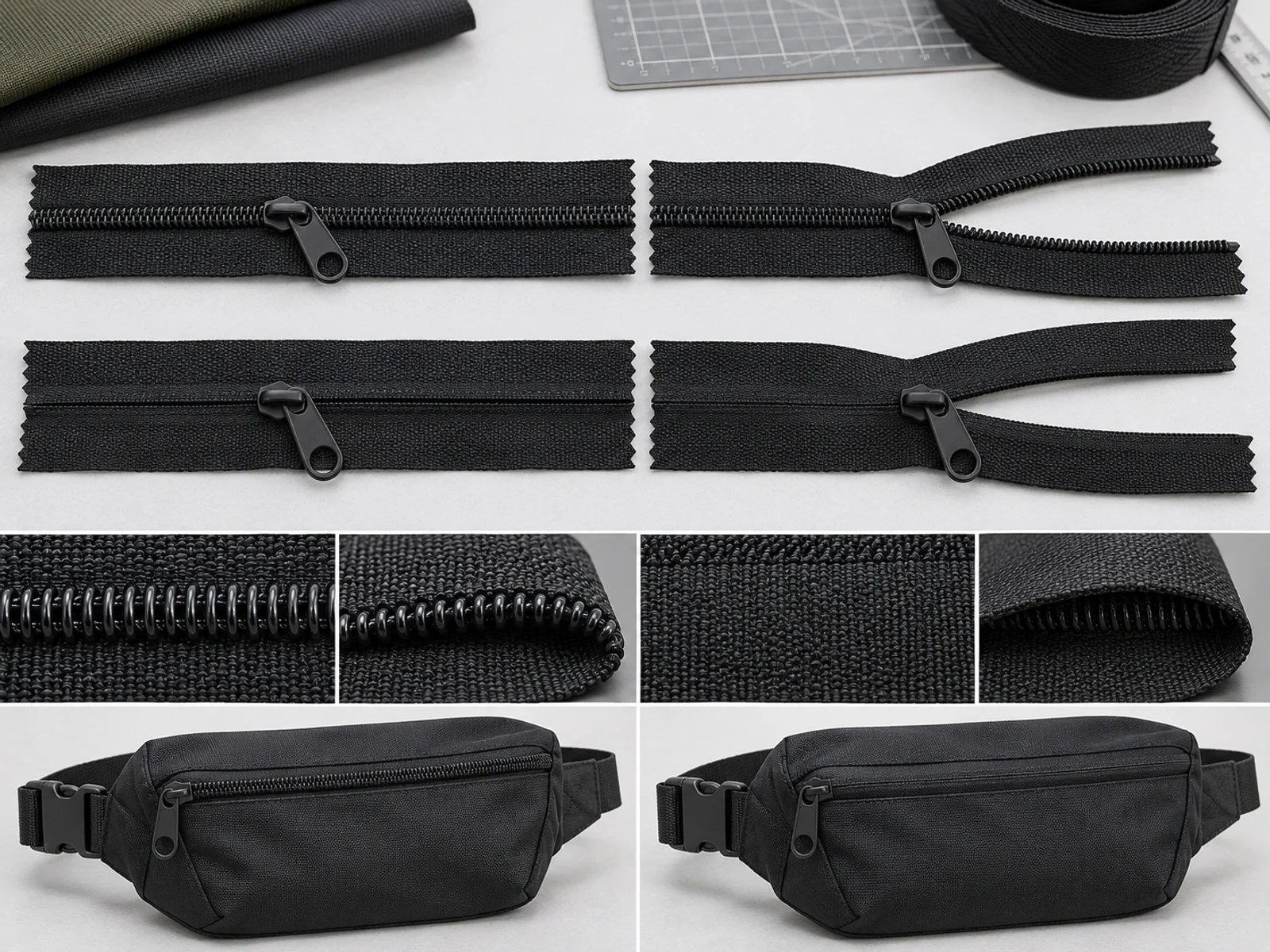
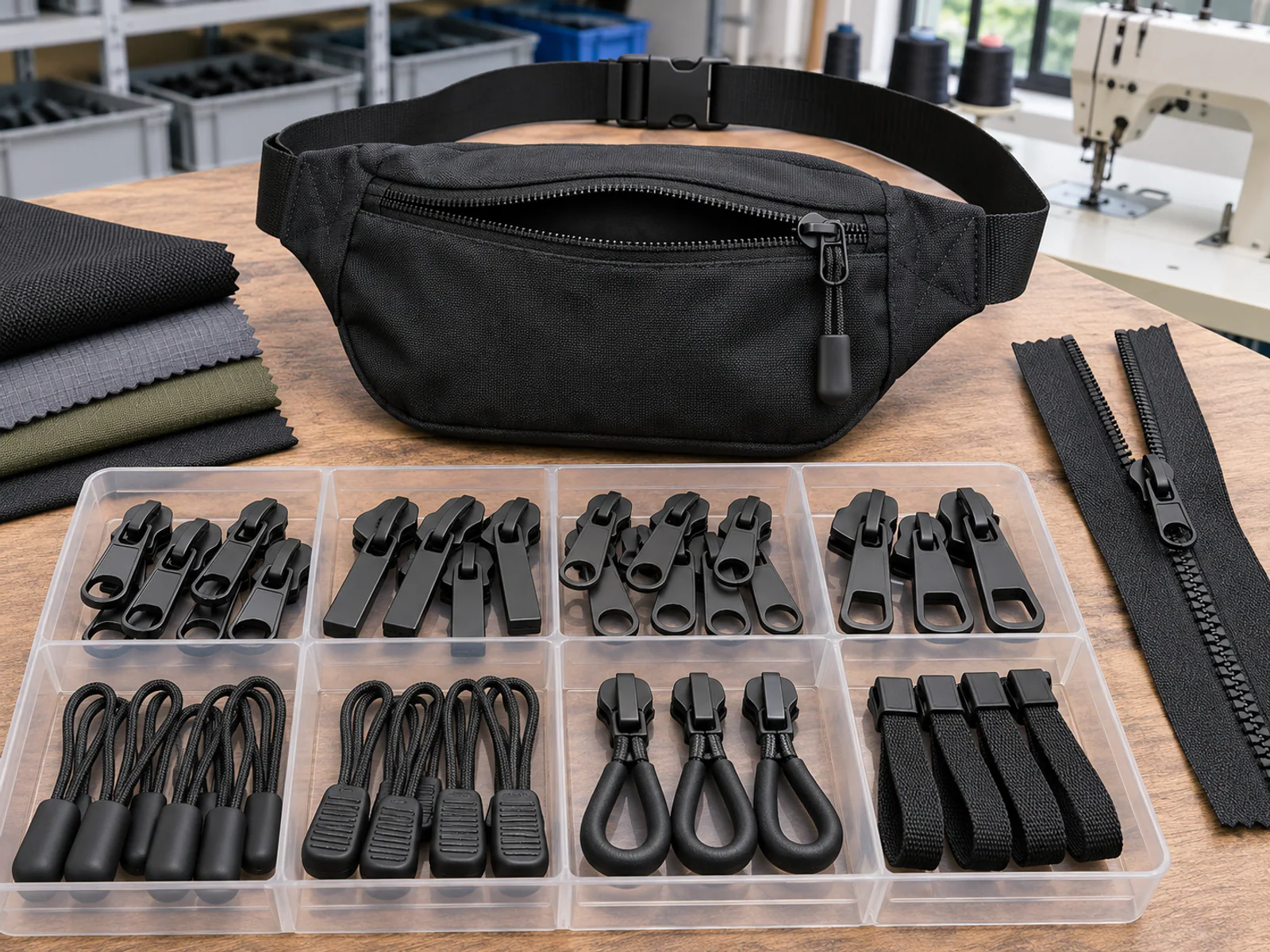
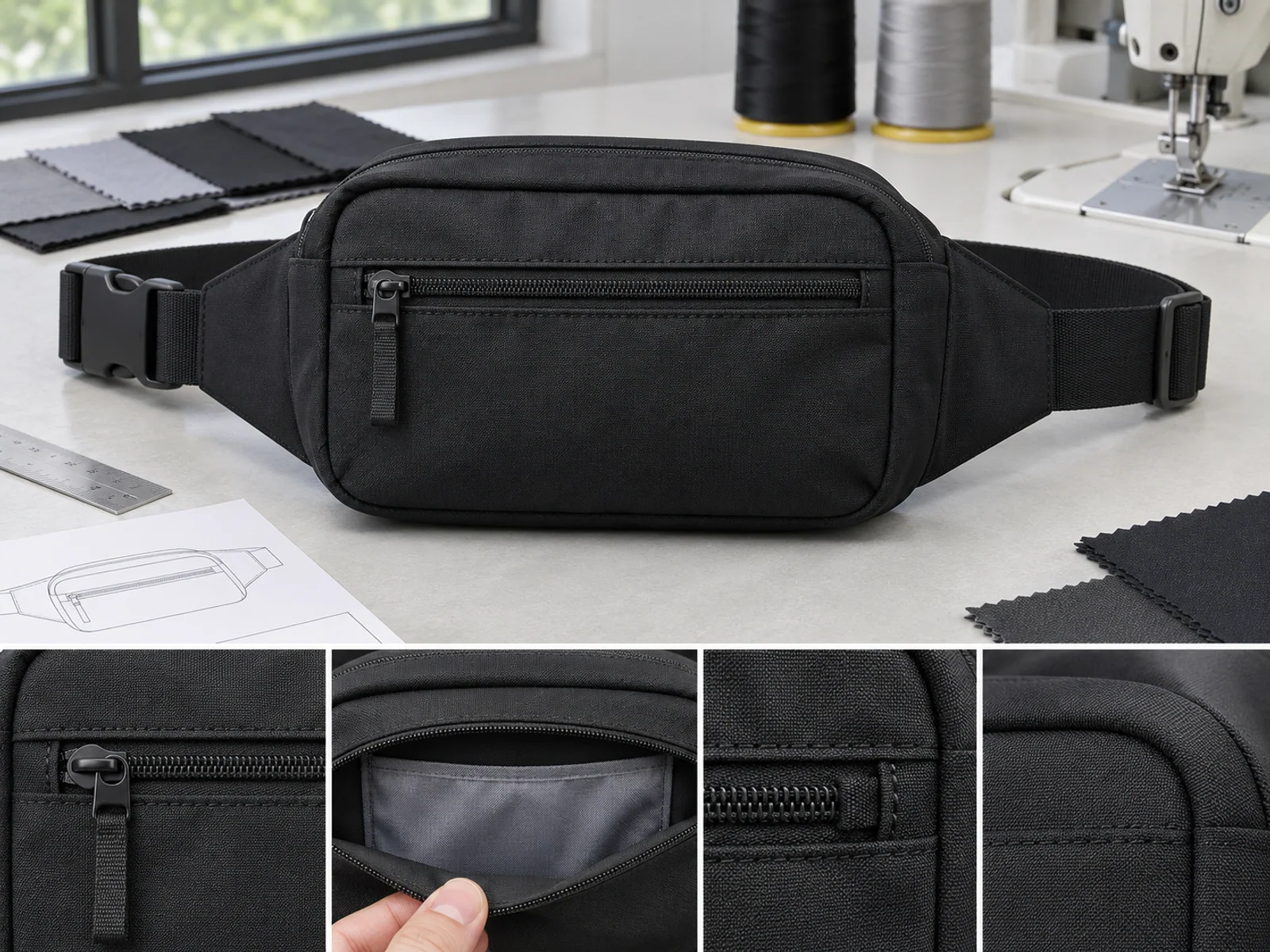
A waist bag zipper is forced around a tight curve and often pulled from an angle. Define coil or molded construction, chain size, tape, slider, lock behavior, puller, top and bottom stops, opening length and color. If rain protection matters, state whether the requirement is only coated tape or a tested finished opening; a reverse coil is visually clean but is not automatically waterproof.
Match buckle, webbing and adjuster as one assembly
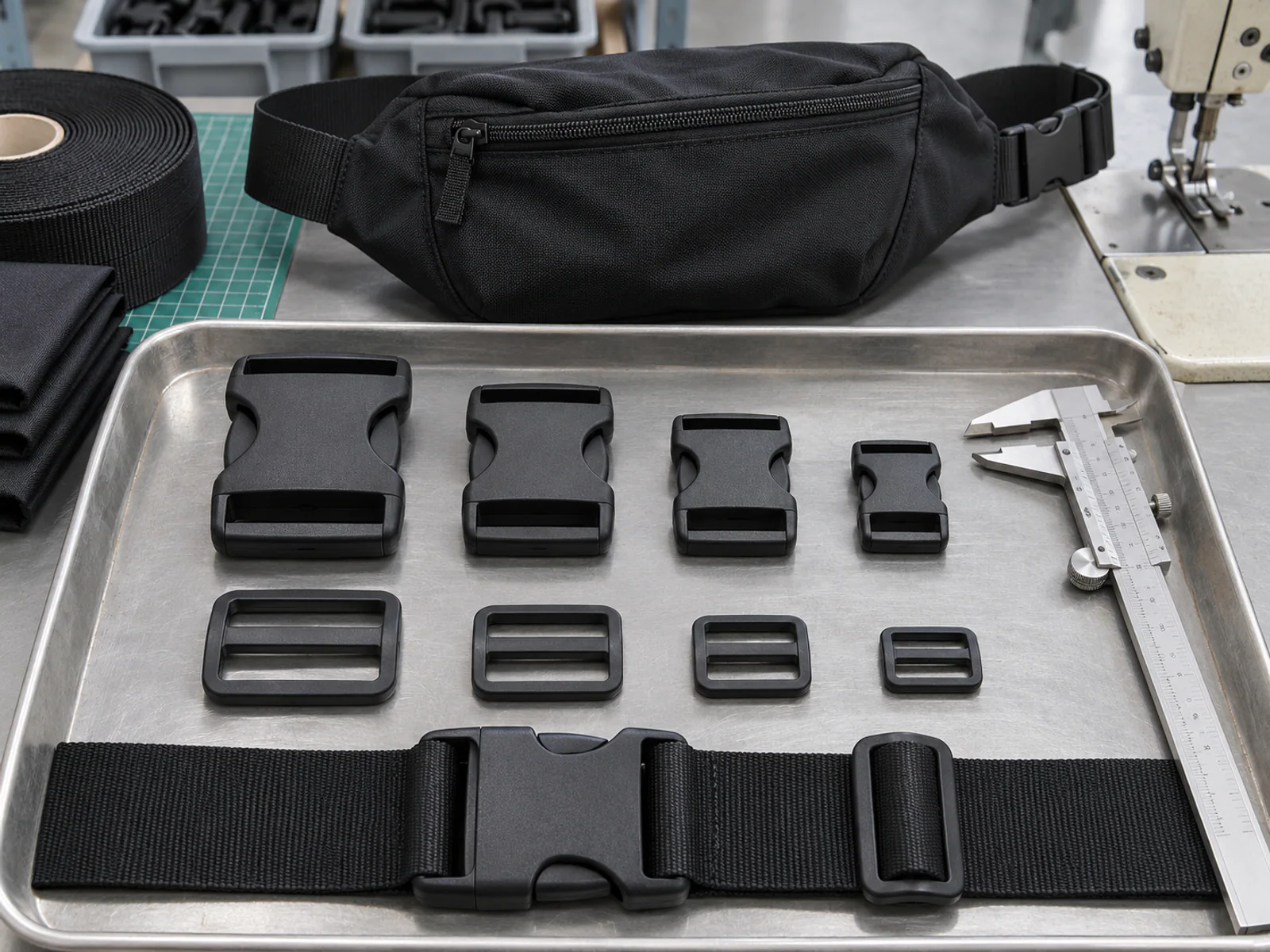
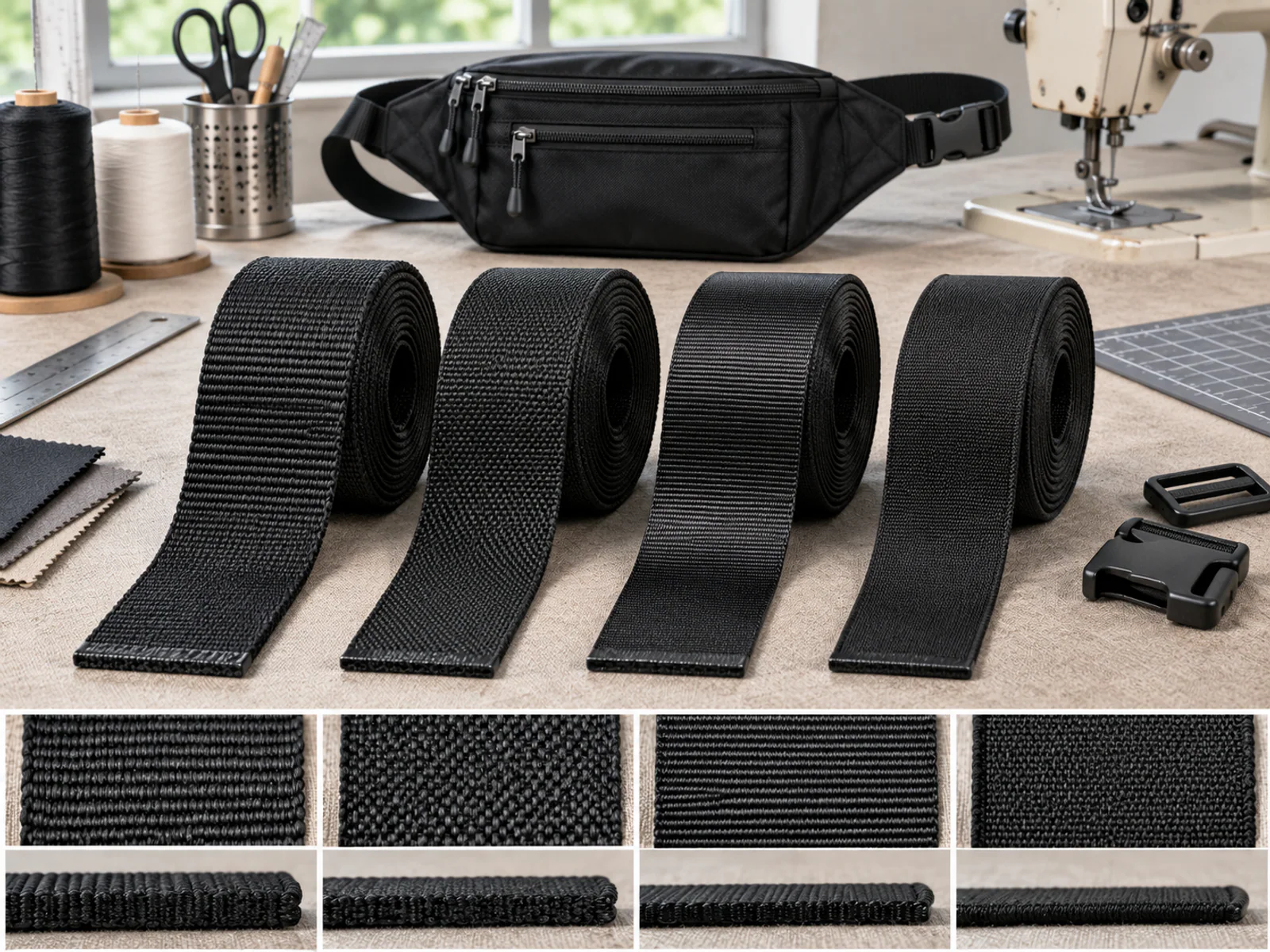
Do not approve a buckle by appearance alone. Record its supplier code, nominal size, resin, finish, operating direction and compatibility with the selected webbing. The webbing specification should cover fiber, width, thickness or mass, weave, color, hand and cut-edge finish. A 38 mm buckle does not guarantee that every 38 mm webbing will hold without creep.
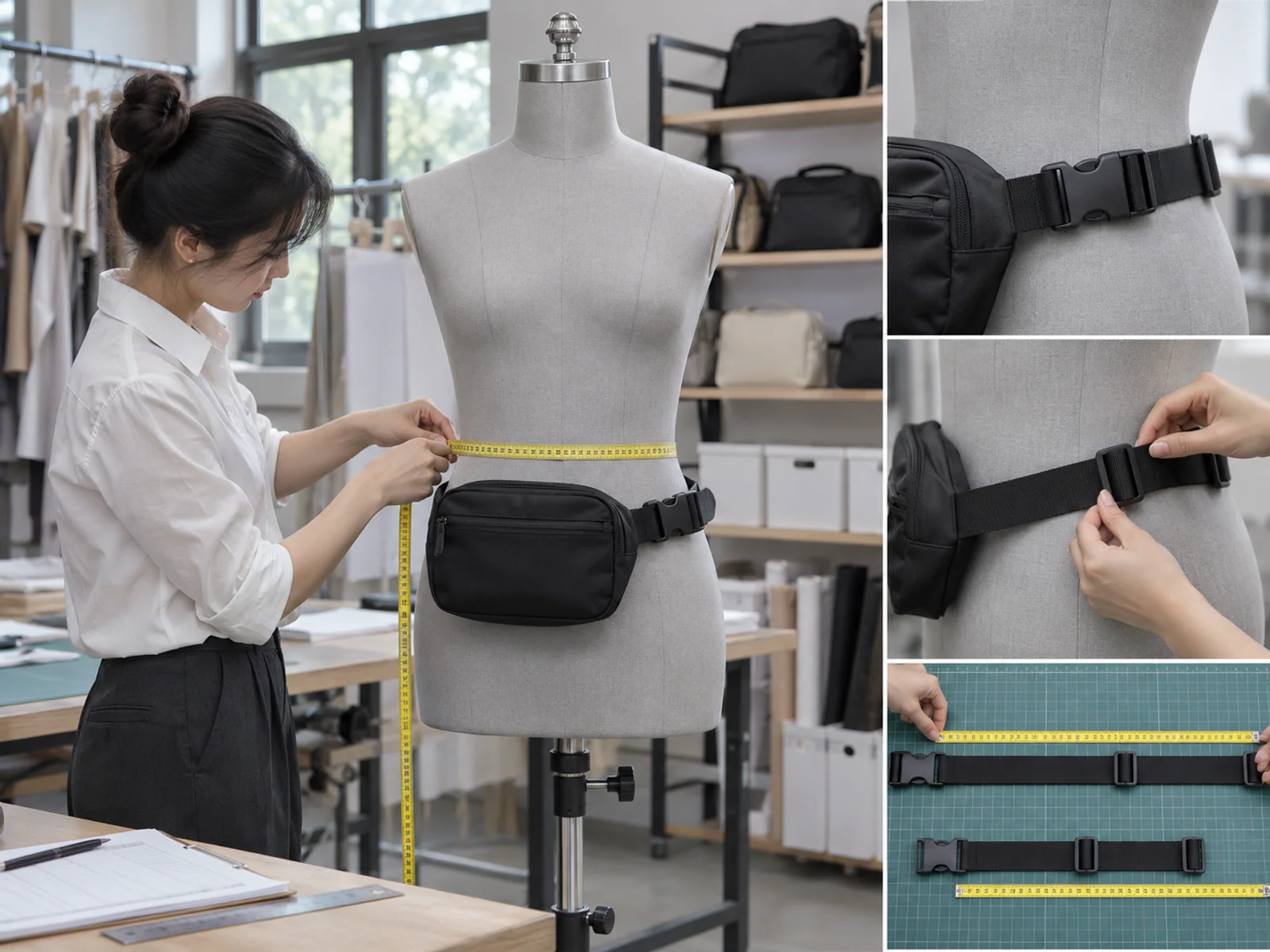
Engineer the load path before counting stitches
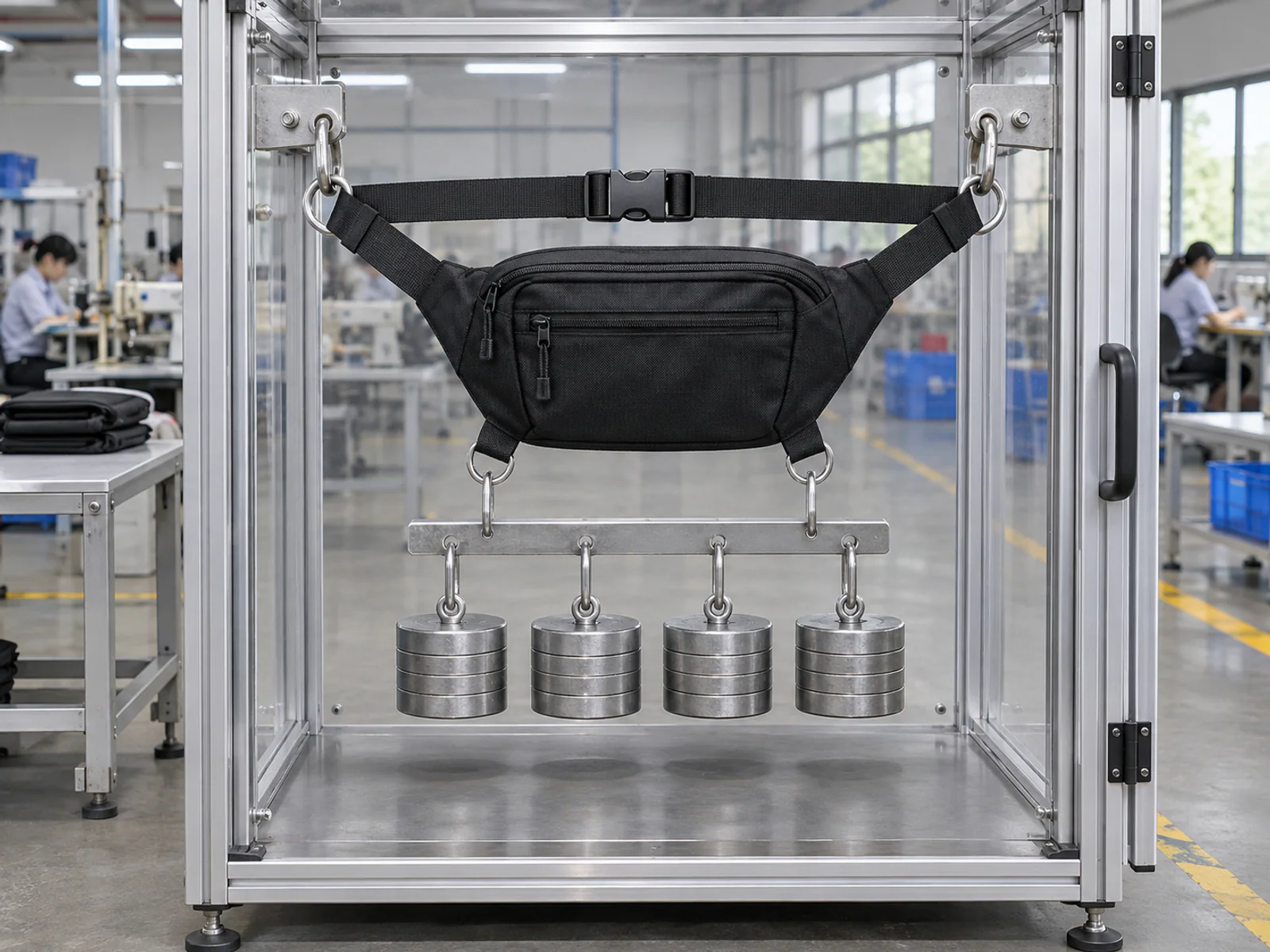
Strap failure often begins behind the visible bartack. If the webbing ends at a thin side panel, the stress concentrates at one line of stitching. A better design carries the webbing into the side seam or across an internal reinforcement so force spreads through several layers. The tech pack should show insertion depth, reinforcement dimensions, seam allowance, stitch pattern and thread.
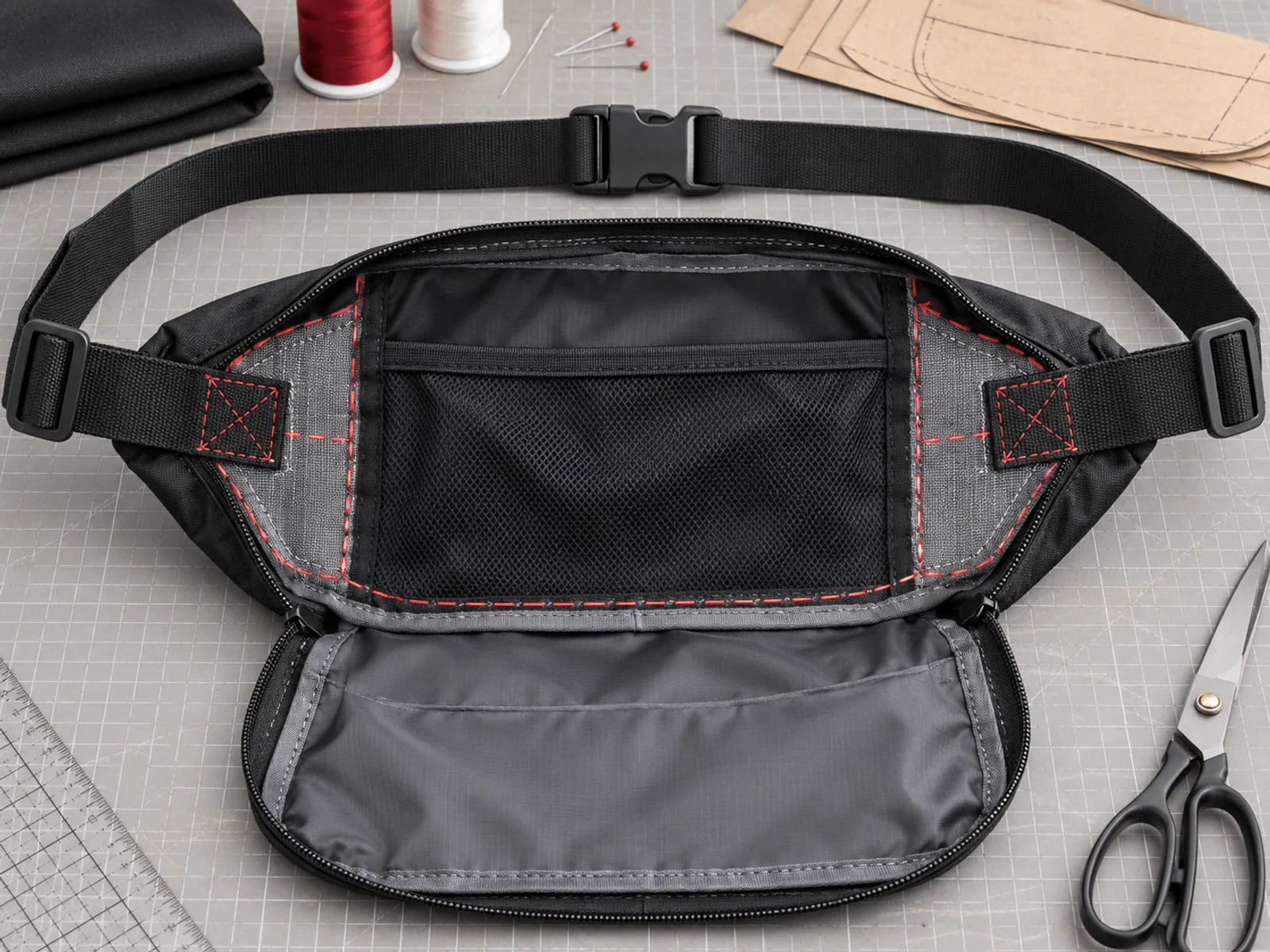
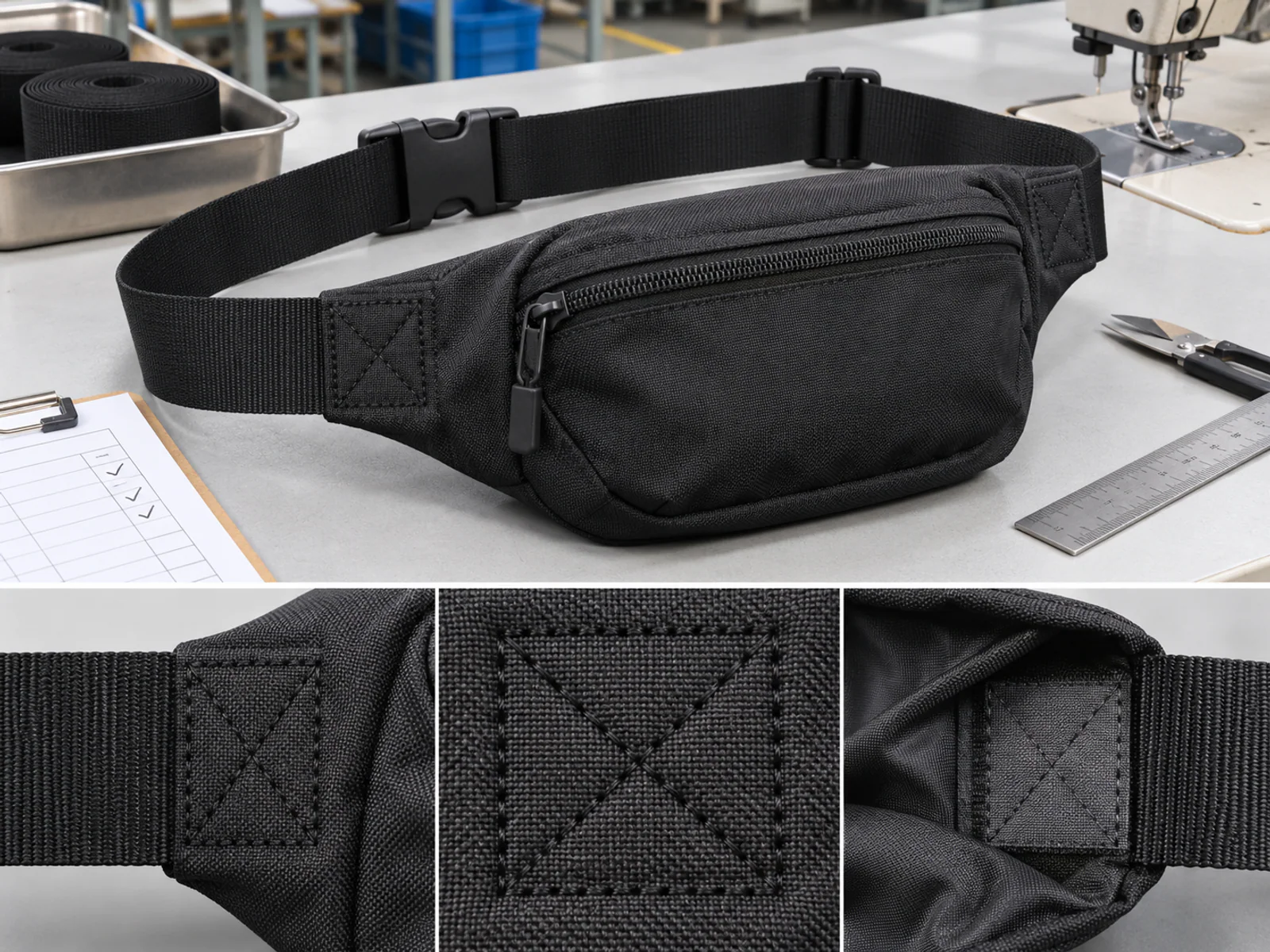
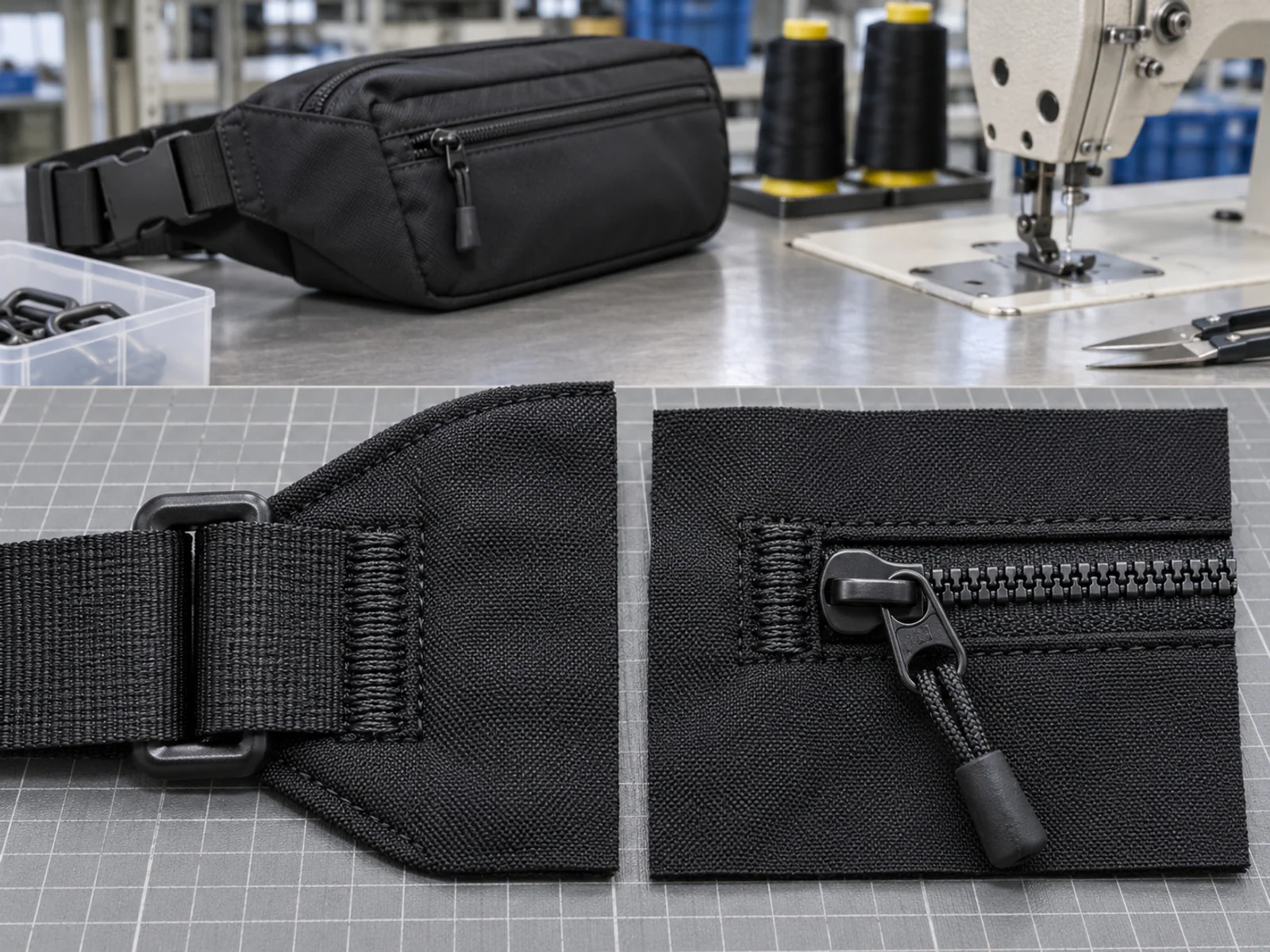
Control the inside: lining, binding and pocket geometry
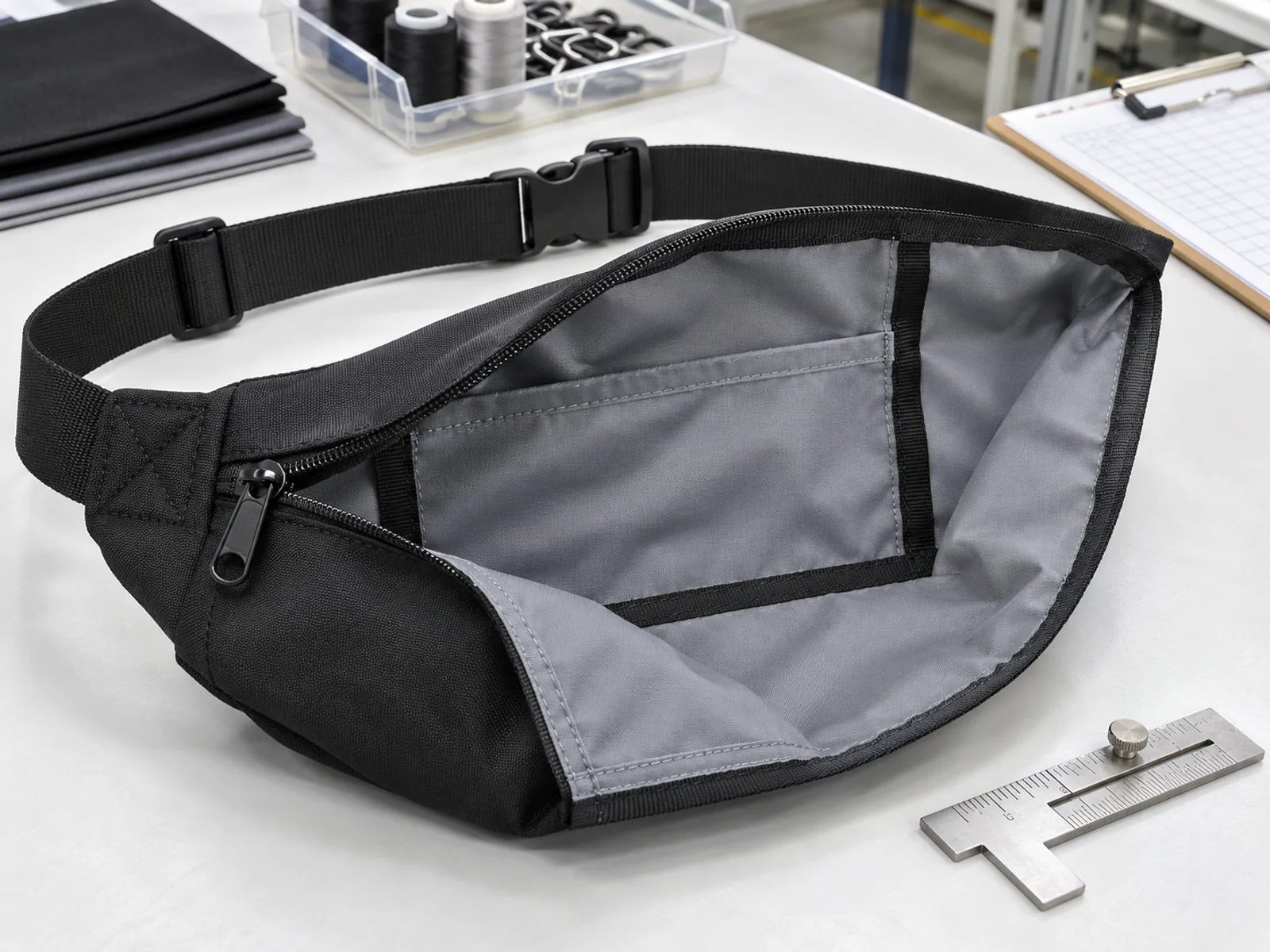
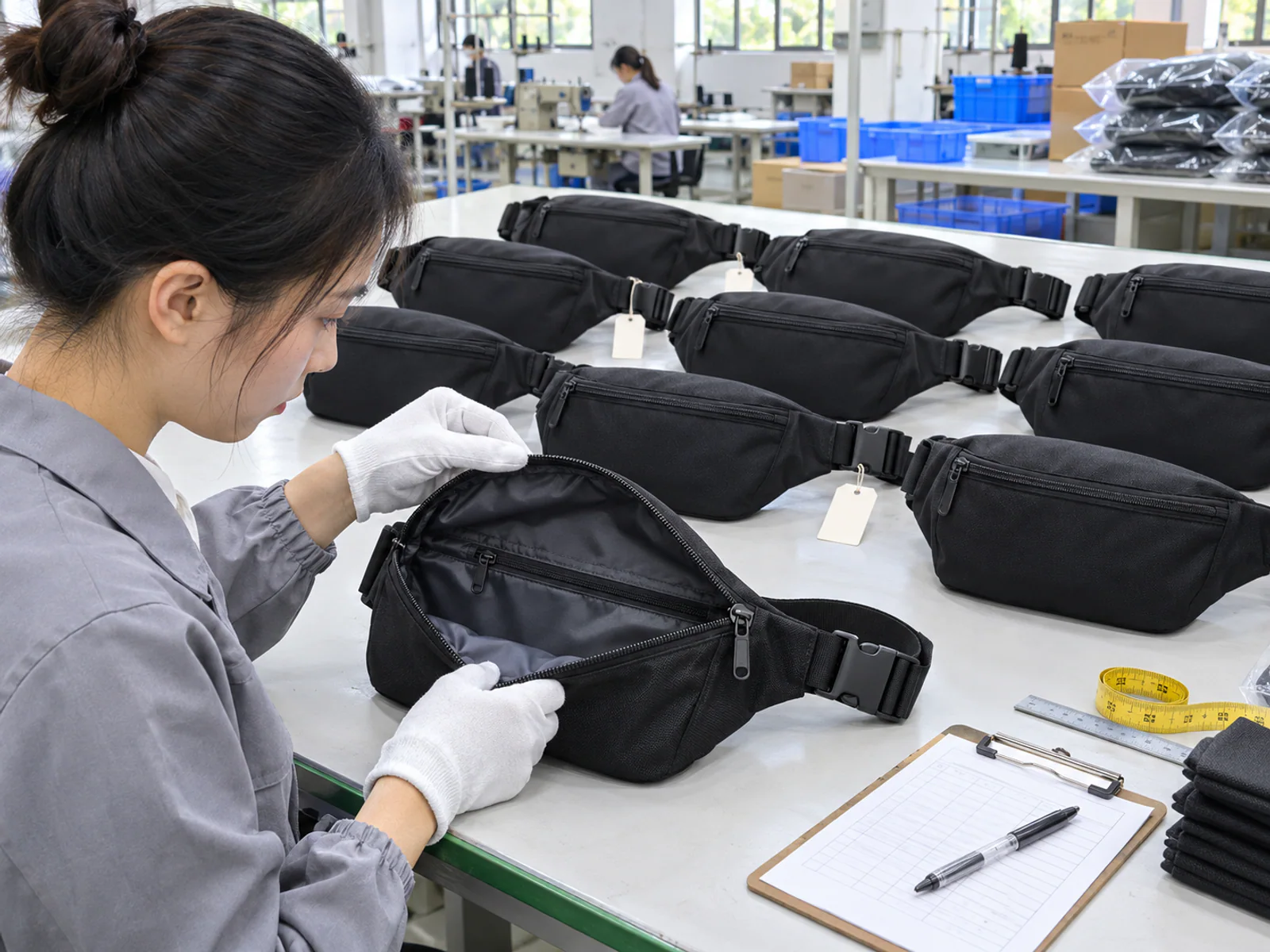
The inside determines whether the bag feels finished after months of use. Specify whether seams are bound, turned or bagged out; define the binding width and color; prevent raw coating edges from rubbing against contents. Pocket corners need enough seam allowance and reinforcement to resist the repeated push of keys or a phone.
Use the prototype to close ambiguous decisions
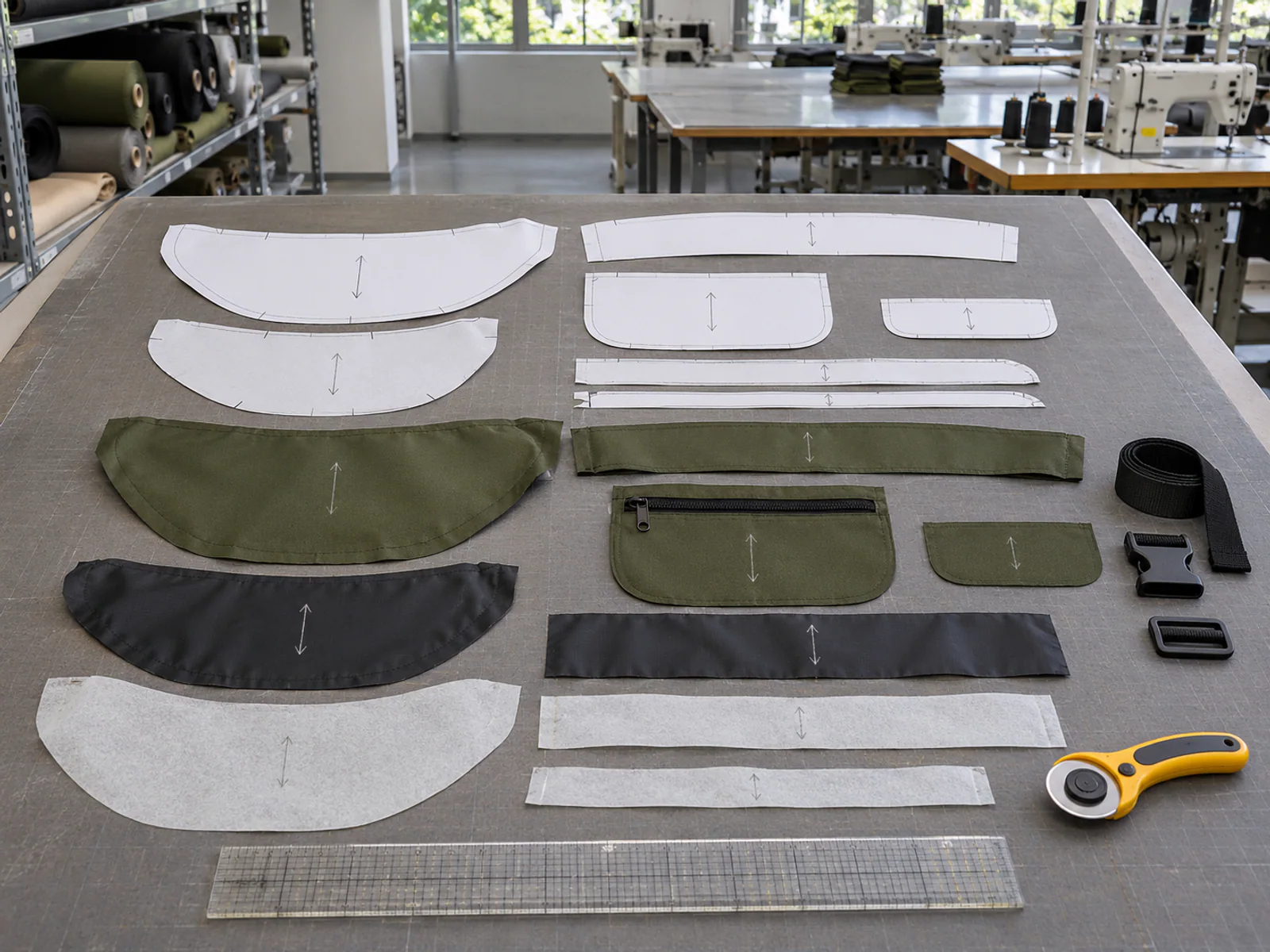
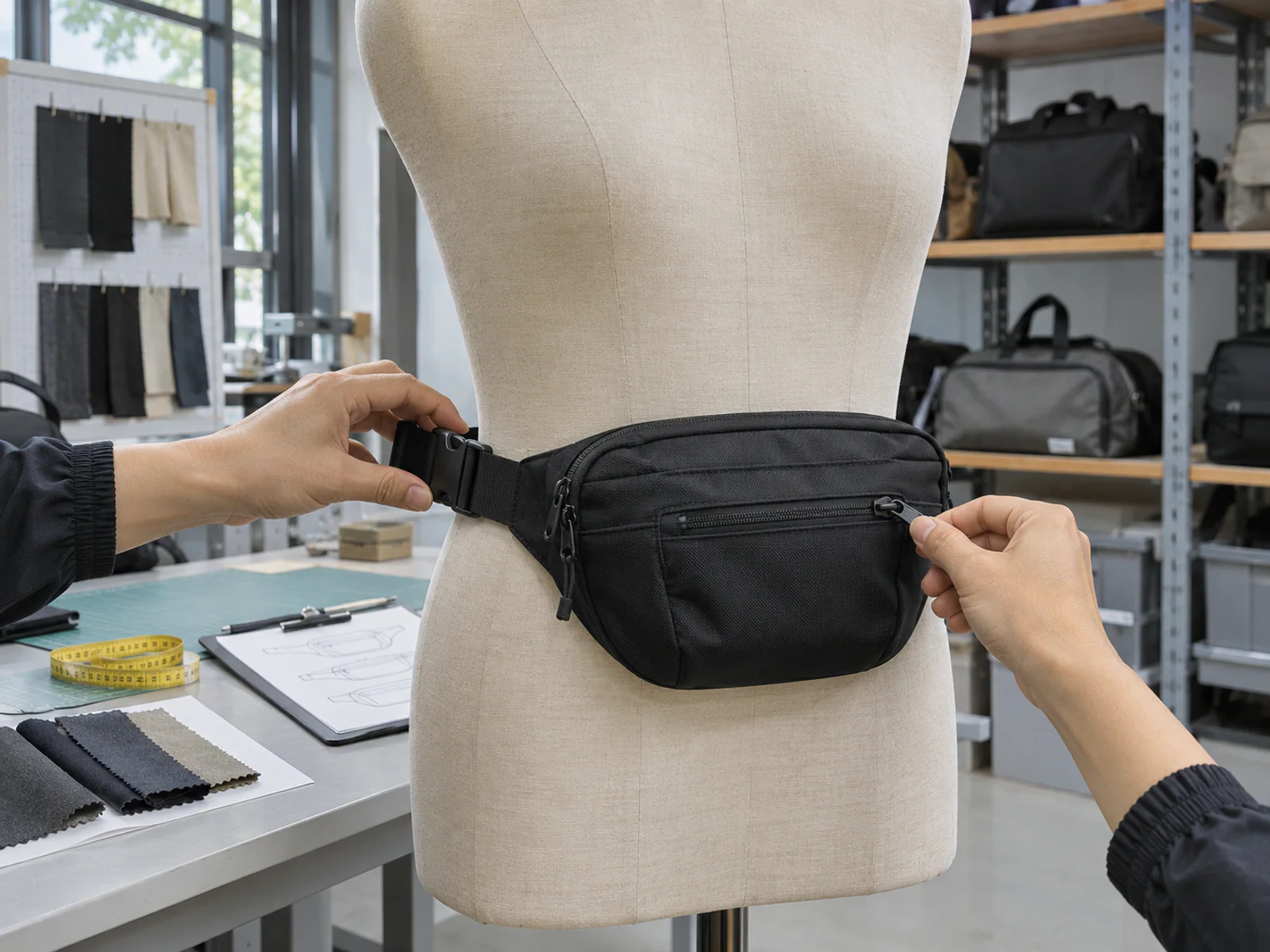
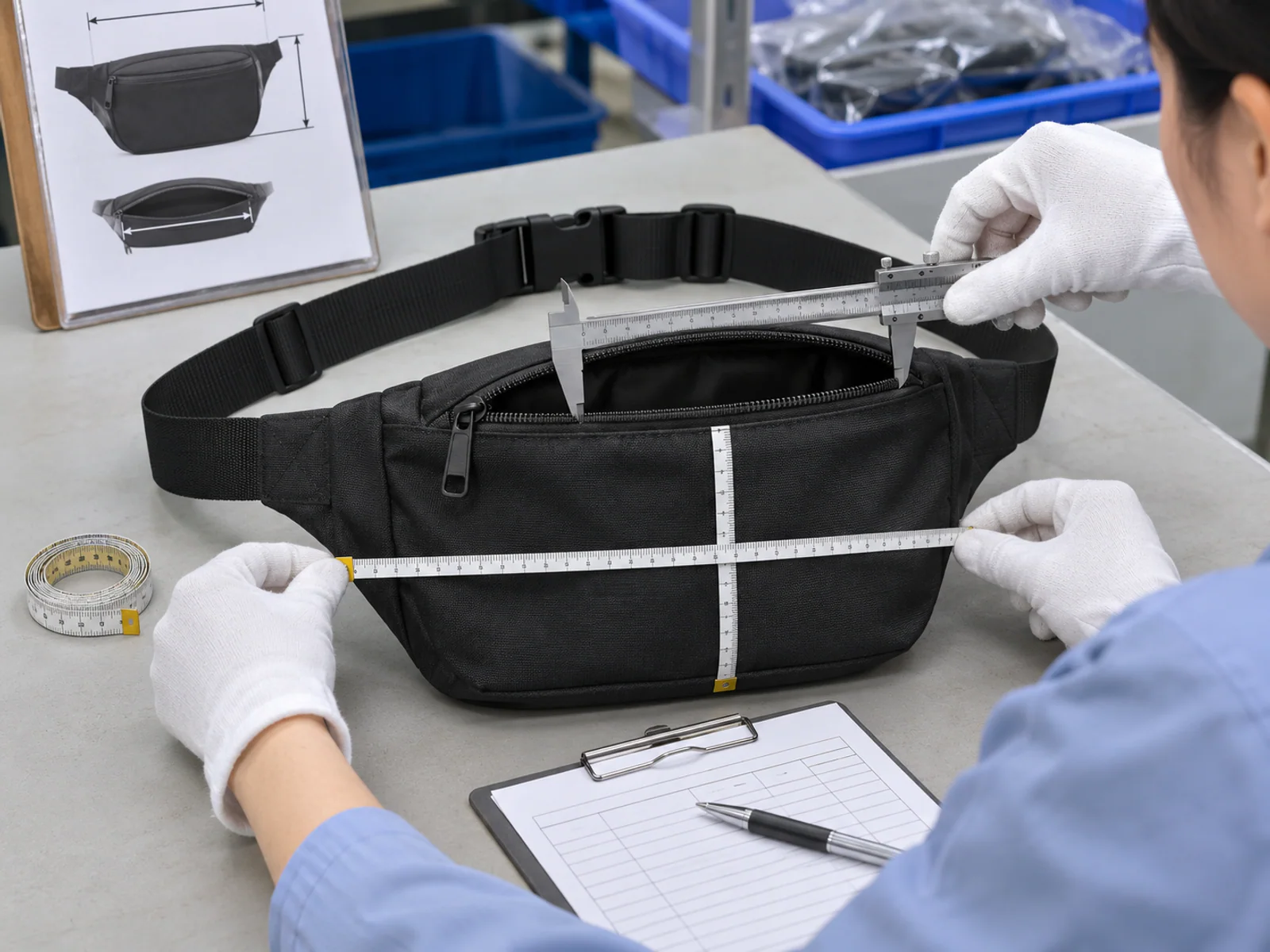
A custom bag tech pack should direct the sample, but the sample should also improve the tech pack. Measure pattern-dependent curves, verify pocket access with intended contents and record adjustments as a new revision. Do not write “same as sample” without keeping a sealed sample and component board; the phrase becomes meaningless when the sample moves or materials change.
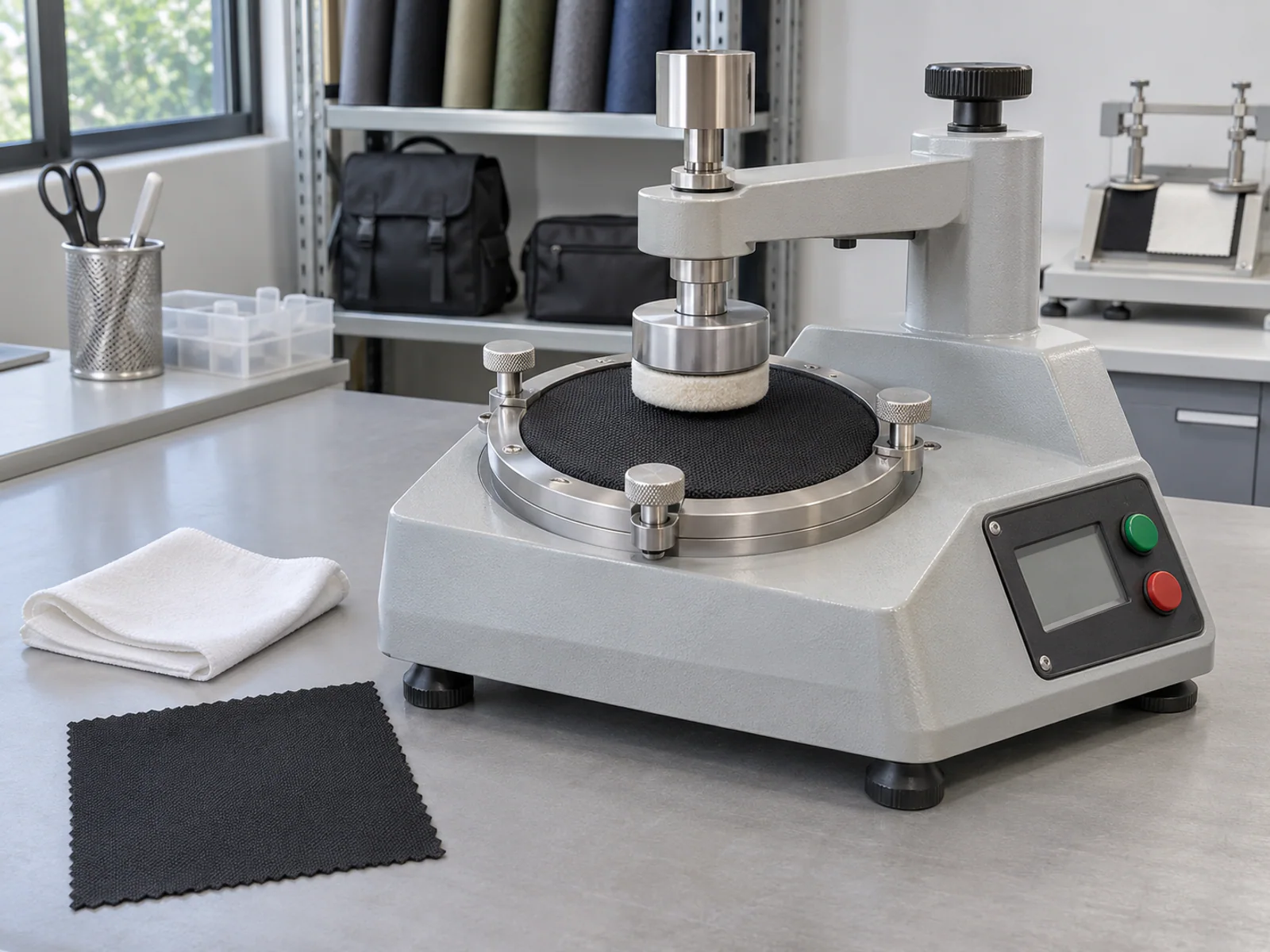
Convert sample approval into measurable release checks
Acceptance criteria should be chosen for the product, not copied blindly from another buyer. The table below is a drafting framework, not a universal standard. Put the agreed values in the purchase specification and define the conditioning, load, cycle count and failure rule where relevant.
| Checkpoint | Record at approval | Release evidence |
|---|---|---|
| Dimensions | Finished width, height, depth, opening and strap range with tolerances | Measured sample and inspection sheet |
| Zipper | Component codes, installed operation and strength requirement | Functional check plus agreed component or lab test |
| Strap assembly | Webbing, buckle, adjuster, anchor geometry and slip limit | Static or cyclic finished-bag test under defined conditions |
| Color | Approved physical standards for each substrate | Controlled-light comparison and rubbing result if required |
| Workmanship | Seam allowance, stitch appearance, symmetry and defect classes | In-line control and pre-shipment AQL inspection |
Seal one approval set for production and repeat orders
The golden sample should travel with a controlled approval set: shell and lining swatches, webbing, zipper, buckle, color masters, logo reference, current BOM and tech-pack revision, measurement sheet and signed deviations. Incoming inspection then checks named materials, while in-line QC checks hidden construction before it is covered.
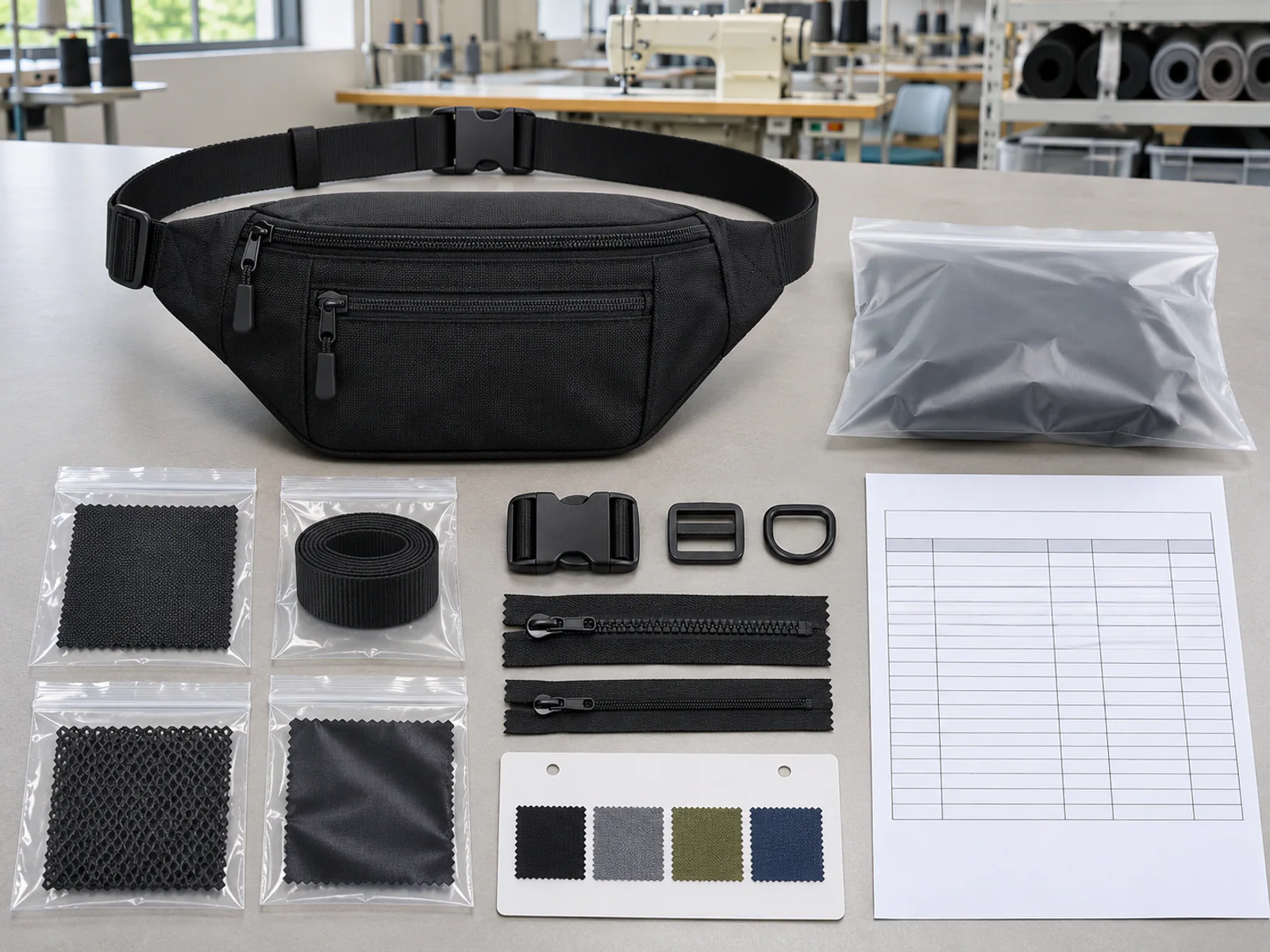
Quote against the attached waist bag drawing and target use. Identify shell, lining, coating, zipper, buckle and webbing by supplier and article code. State any assumption separately. No component, coating, color standard, reinforcement or construction change may enter sampling or bulk production without written buyer approval. The pre-production sample, component board, BOM revision and agreed functional checks together form the production reference.Need a factory review of your waist bag brief?
Send the drawing or reference sample, intended contents, dimensions, strap range, material or performance target, logo, order quantity, packaging, market and test requirements. Merris will flag missing construction decisions before quotation. Custom production starts from 500 pieces; sampling is normally 5–7 days and bulk production about 30 days after approval, subject to material and project requirements.
Request a Specification ReviewFrequently asked questions
What is the best material for a custom waist bag?
Direct answer: There is no universal best material. Choose a specific fabric construction and finish against the intended load, abrasion exposure, hand feel, water-resistance target, print method and price point. Approve the exact supplier code and physical swatch rather than only a fiber name or denier.
Is nylon or polyester better for a waist bag?
Direct answer: Nylon often offers a soft technical hand and strong abrasion performance, while polyester can provide stable color, broad sourcing and cost control. Actual performance depends on yarn, weave, weight, coating and finishing, so compare tested constructions rather than judging the fiber alone.
Which zipper should a buyer specify for a waist bag?
Direct answer: Specify chain type and size, tape material and color, slider type, puller, stops, opening length and any water-resistance requirement. Then approve operation, chain strength and puller security on the curved finished opening, not only on a loose zipper sample.
How should waist bag strap anchors be reinforced?
Direct answer: The webbing should extend into a reinforced side panel or seam so the load is spread beyond the visible bartack. Define reinforcement material, insertion depth, seam allowance, stitch pattern and a finished-bag load test. More stitches are not a substitute for a sound load path.
What should be checked before approving a waist bag sample?
Direct answer: Check dimensions and capacity, fit range, fabric and color, zipper operation, buckle compatibility, webbing slippage, pocket access, seam allowance, reinforcement, appearance and agreed functional tests. Record results against tolerances and seal the approved sample and component set.
What information does a factory need to quote a custom waist bag?
Direct answer: Send a drawing or reference sample, dimensions, compartment layout, target material or performance, strap range, hardware, logo method, color, quantity, packaging, market and test requirements. A factory can then identify missing decisions before calculating a reliable quotation.