An insulated backpack can look convincing in a product photograph while leaving the buyer unable to compare quotations. “600D Oxford, PEVA and 8 mm foam” still does not define the foam density, liner construction, seam method, zipper opening, reinforcement, payload, temperature test or acceptable result. Two factories can use those same three material names and build products with different capacity, stiffness, leakage risk and thermal behavior.
The practical approach is to specify the backpack as a system. Start with the use case and payload. Then define the outer shell, insulation, liner, joints, closure and harness. Finally, write the test conditions that will decide whether the sample is accepted. Buyers who are still comparing forms can review the custom backpack manufacturing category and the insulated cooler bag range before locking the brief.
Quick answer: what determines insulated backpack performance?
Thermal performance depends on the complete construction: exposed surface area, insulation type and continuity, liner, seams, zipper and lid geometry, payload, cooling media, ambient temperature and opening frequency. Specify those variables together. Approve a sample only after a repeatable test shows the temperature curve, leakage behavior and carrying function under the intended use conditions.
Start with the use case, not the foam thickness
A compact lunch backpack, an outdoor day cooler and a food-delivery pack are different products even when all three use Oxford cloth and a reflective liner. The lunch product may prioritize a light, foldable body. An outdoor model may need comfortable shoulder straps, external pockets and resistance to ground abrasion. A delivery pack may need a square opening, internal dividers, wipe-clean surfaces and stability when mounted or carried.
Write the payload in physical terms. List the actual containers, bottles, ice packs or prepared meals, their dimensions, their starting temperature and the required orientation. A nominal liter value does not show whether the opening is wide enough, whether containers stack safely, or how much internal space the insulation consumes.
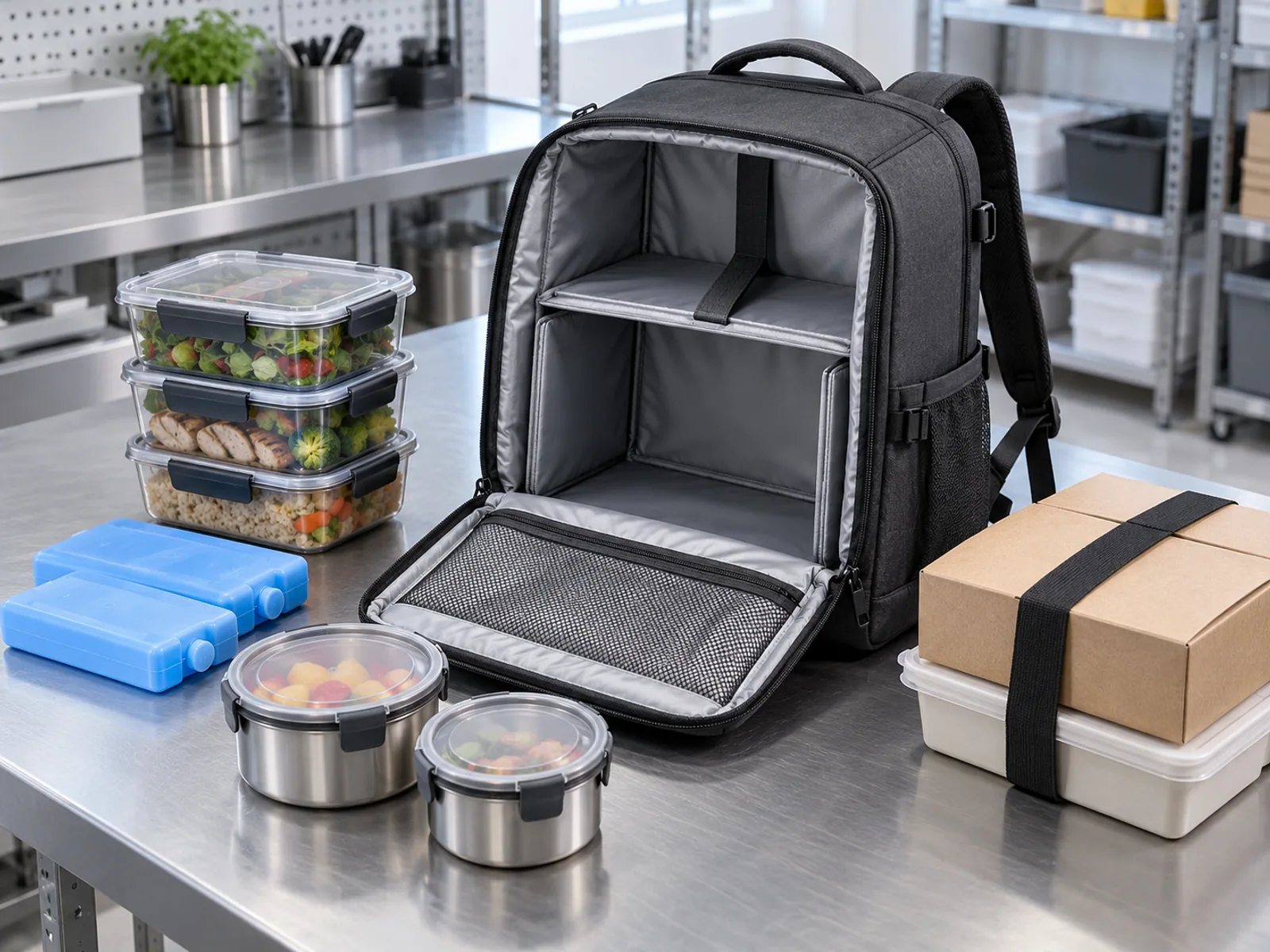
Lunch and promotion
Prioritize low weight, easy cleaning, compact packing and a realistic short-use test. Avoid adding stiffness that makes the bag uncomfortable or expensive to ship.
Outdoor retail
Balance thermal hold, abrasion, weather exposure, back-panel comfort, access and loaded carrying. Test the product while walking, not only while it sits on a bench.
Food delivery
Prioritize usable cube capacity, stable partitions, frequent opening, spill cleaning, reflective details where required and reinforced carry points.
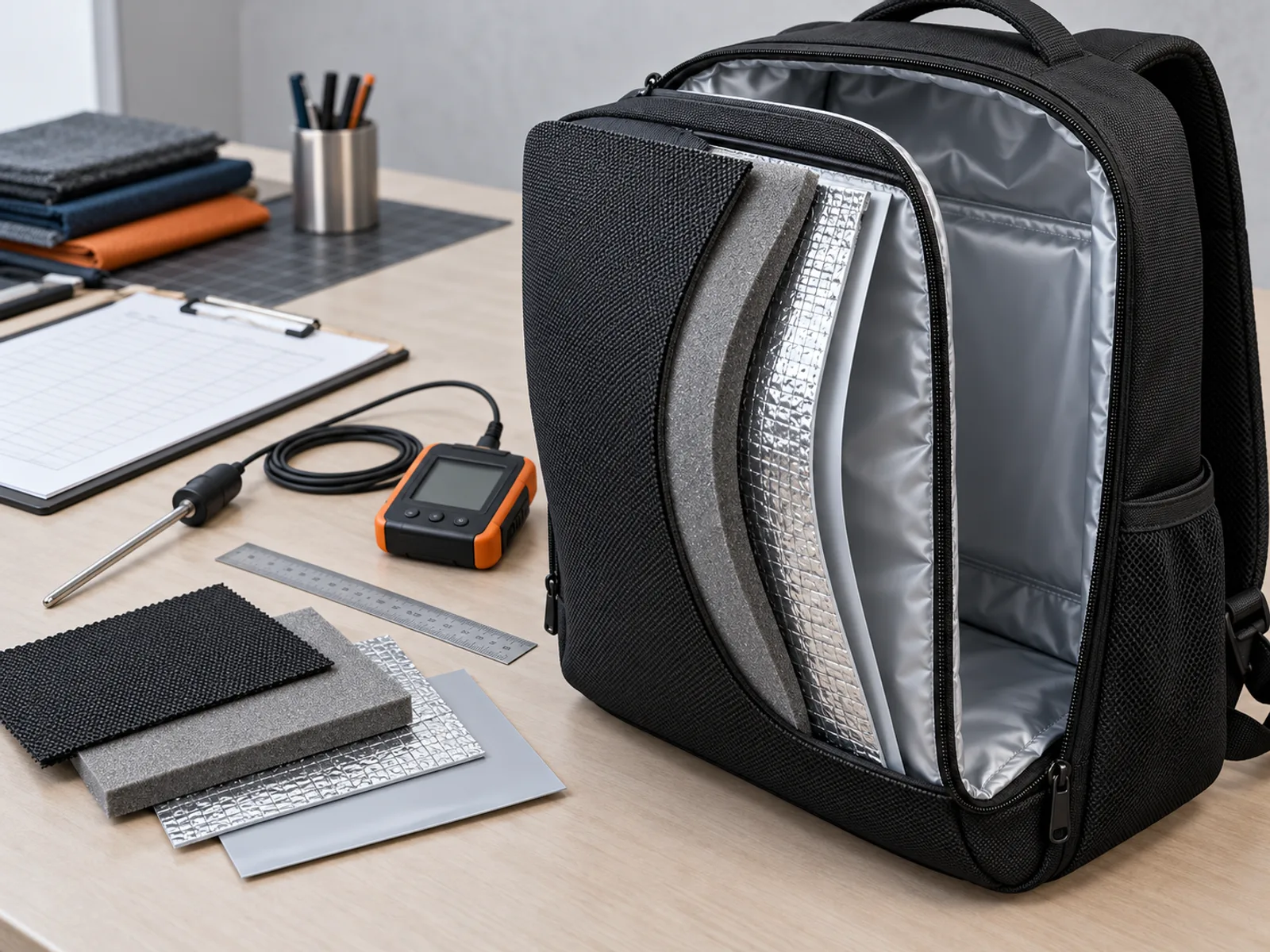
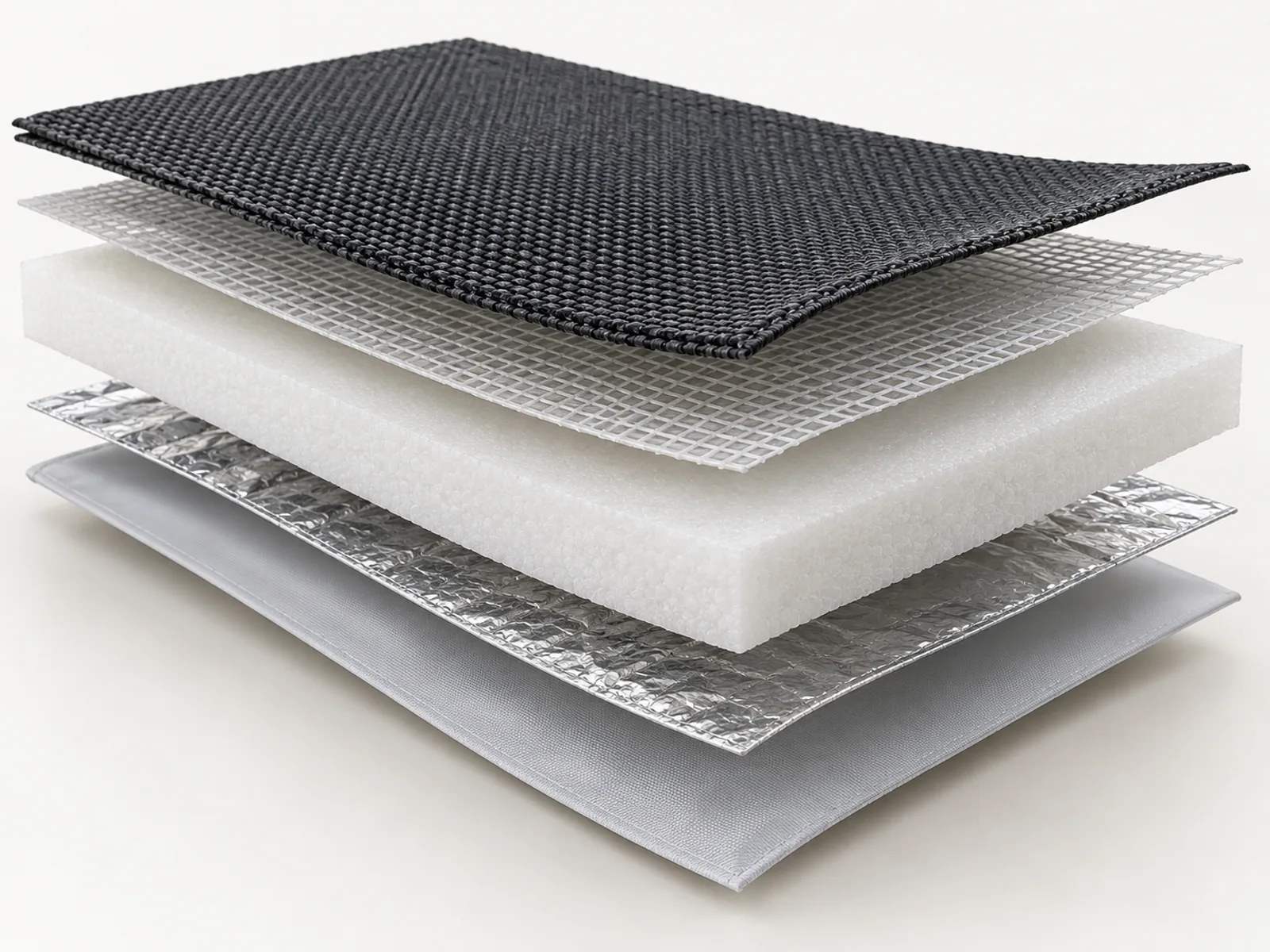
The material stack: six layers and interfaces to specify
| Layer or interface | What to specify | What can go wrong |
|---|---|---|
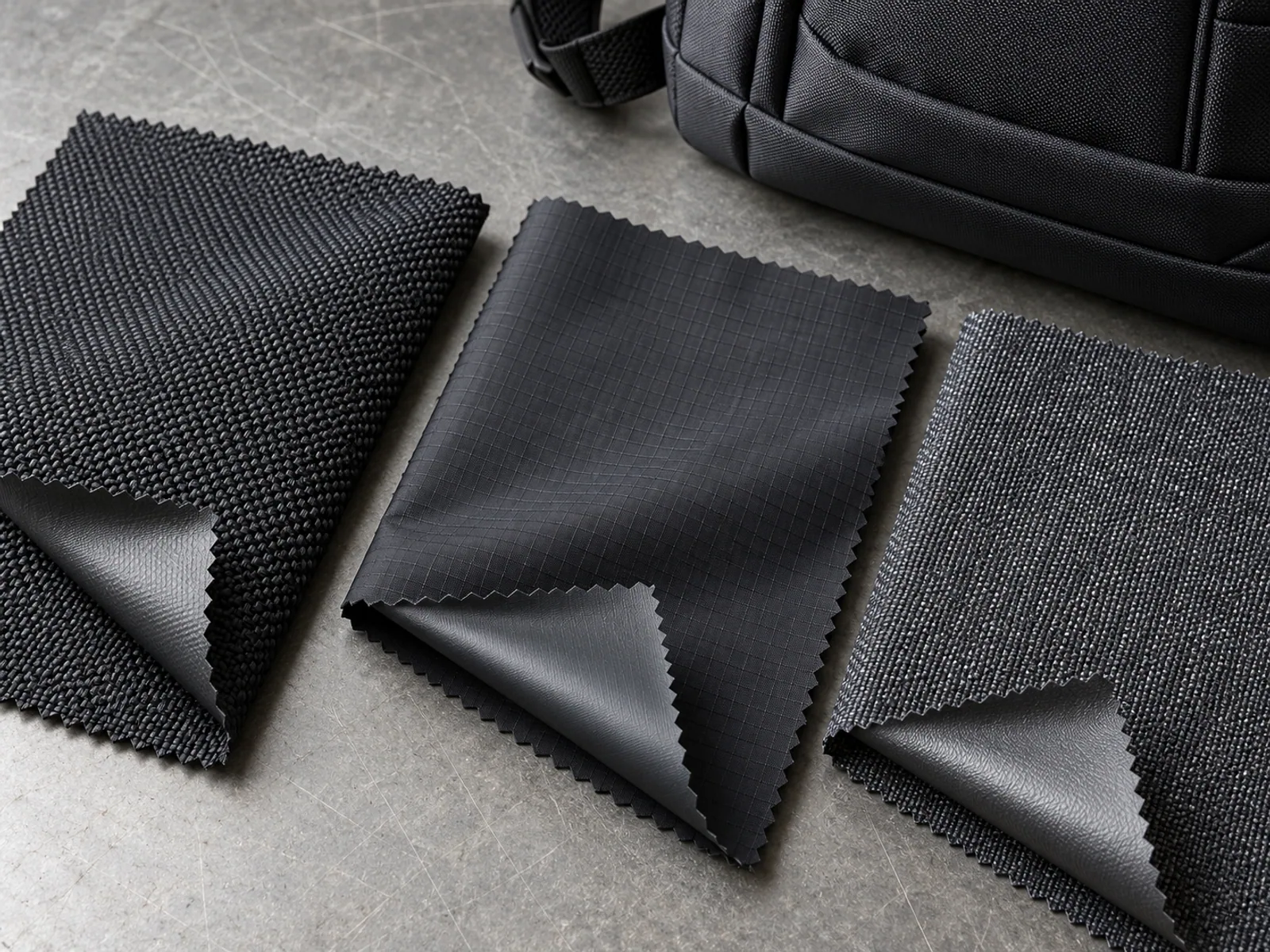
| Outer shell | Fiber, construction, finished weight or denier, coating/backing, color source and surface requirement | A denier number is treated as proof of water resistance or durability. |
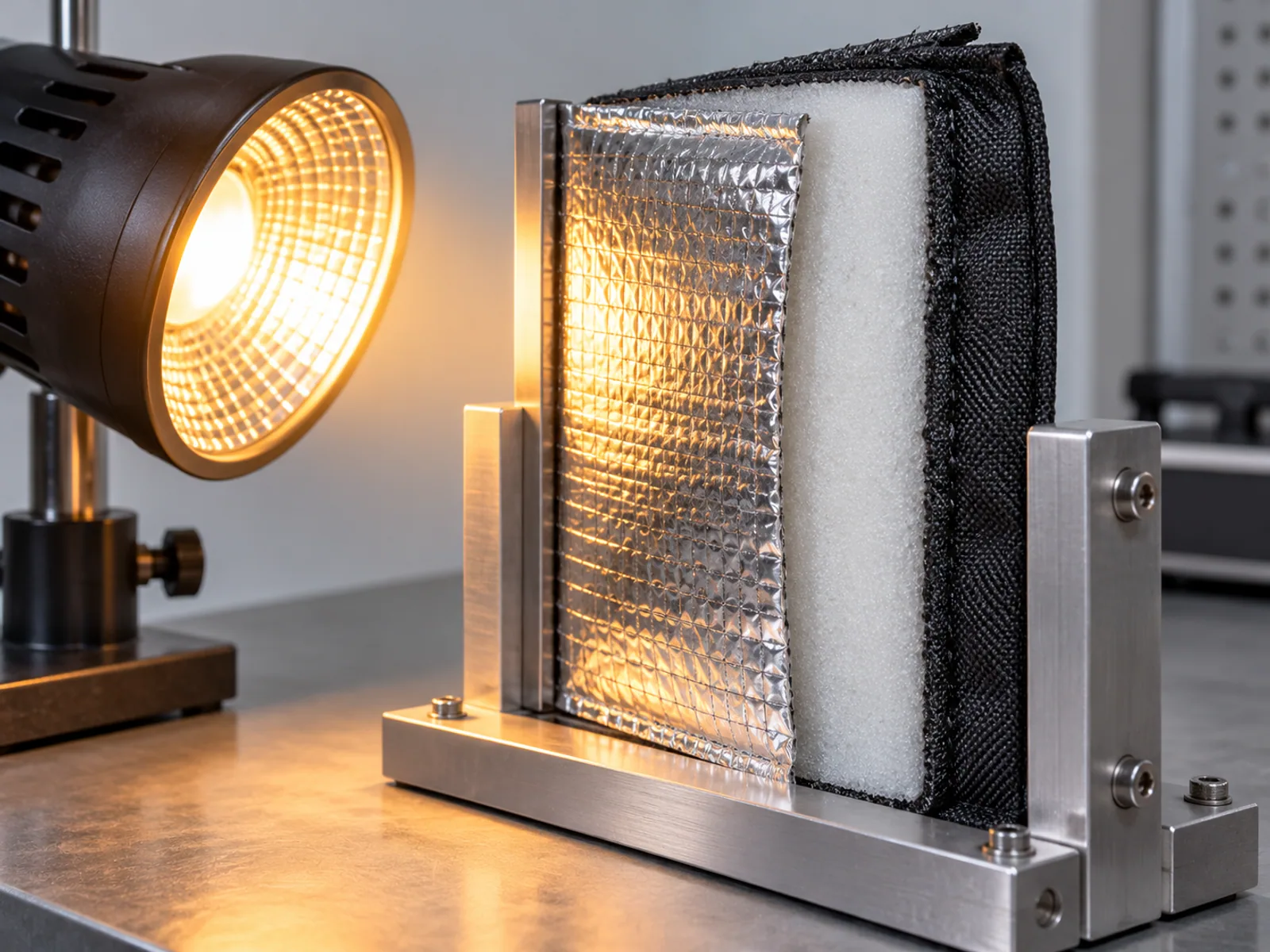
| Insulation | Foam family, thickness range, density or approved reference, recovery and placement | Thin areas, compressed corners or gaps create thermal bridges. |
| Reflective barrier | Whether it is a separate film, laminated foam face or part of the liner | A reflective-looking surface is mistaken for the main insulation. |
| Inner liner | Material, thickness, finish, color, joining method and cleaning requirement | The liner passes a material check but fails at needle holes or corners. |
| Closure and joints | Zipper, lid overlap, binding, seam tape or welding, drainage and leak target | Warm air enters through the opening or liquid escapes through assembled seams. |
| Harness and structure | Back panel, shoulder straps, handle, base, reinforcement and intended carry load | The insulated box holds temperature but is unstable or uncomfortable when loaded. |
How to choose the foam without buying a marketing label
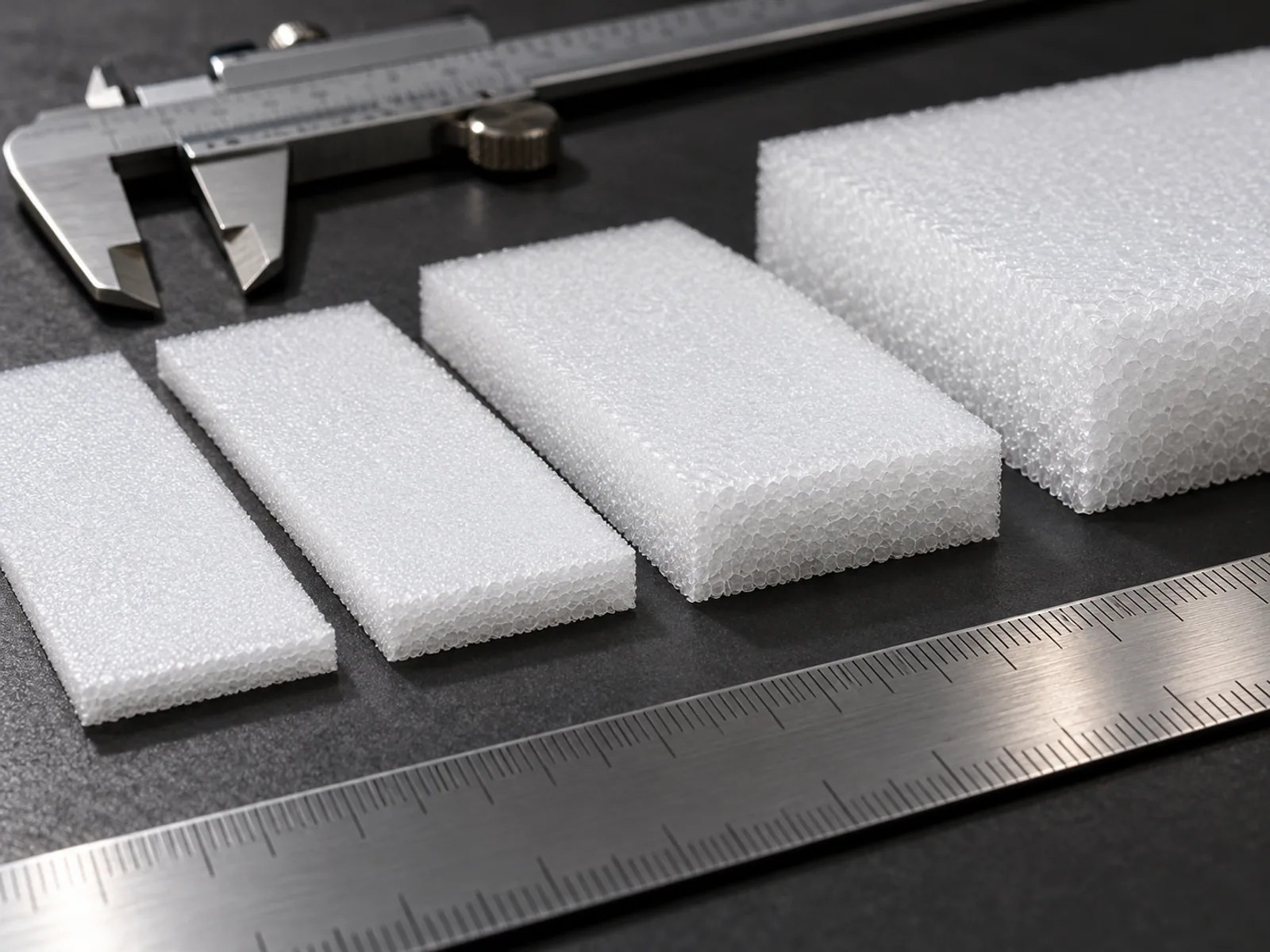
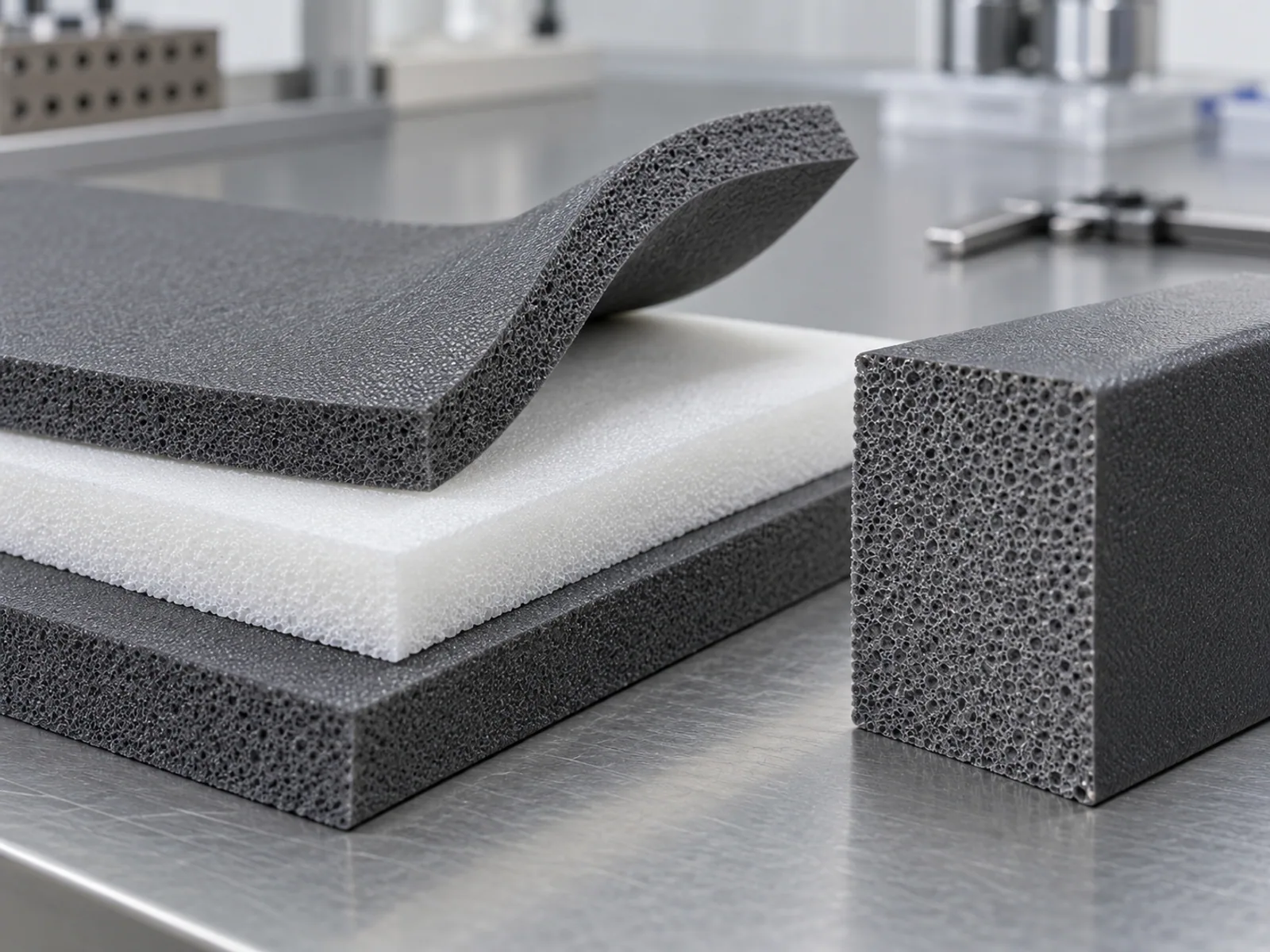
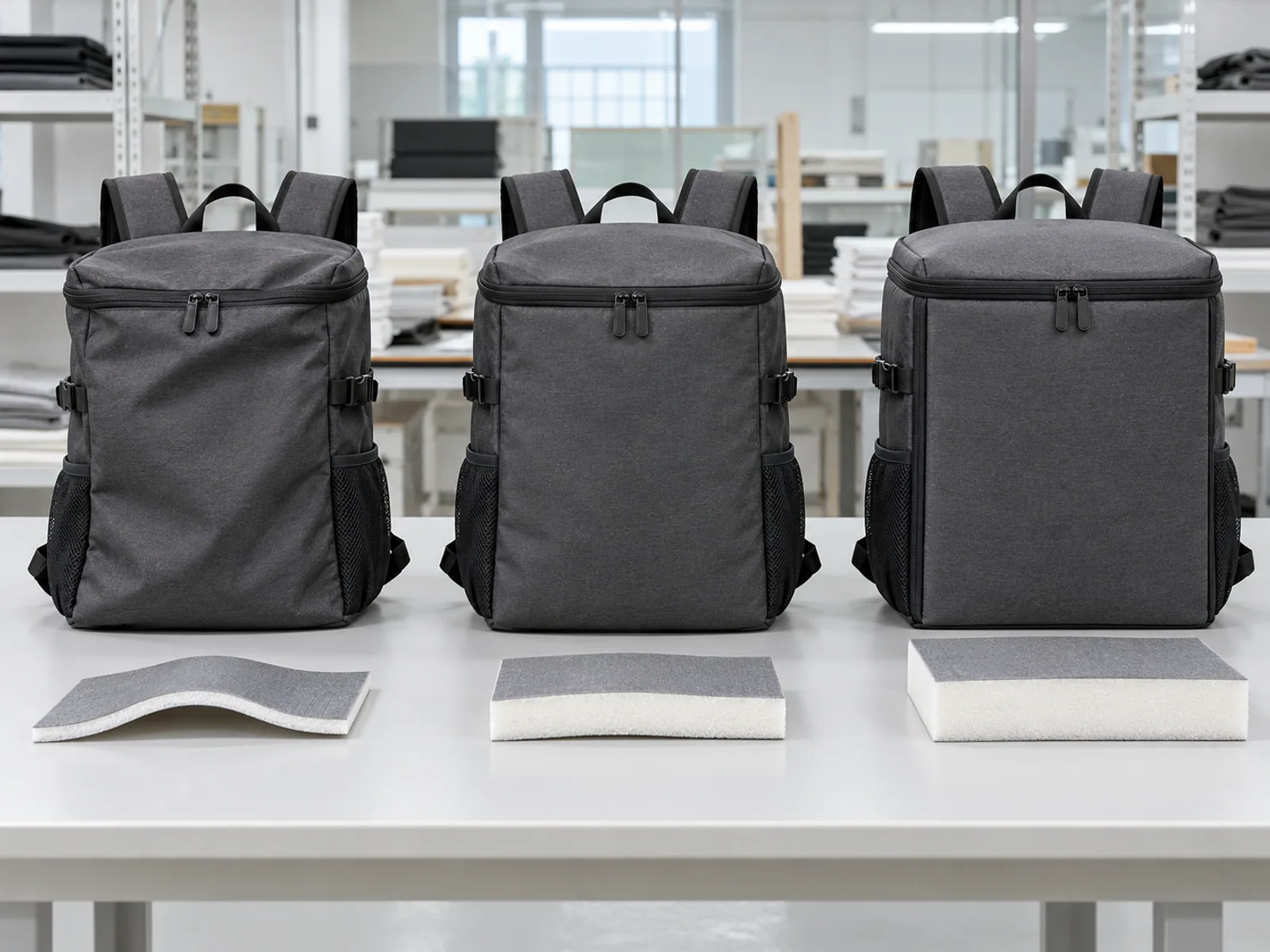
Flexible closed-cell foams are common in sewn cooler backpacks because they can slow heat transfer while allowing the body to bend. A buyer should not approve “EPE foam” or another family name by itself. The quotation and sample record should identify the intended thickness, an approved physical reference and where the foam is installed. If the back, lid or base uses a different build, show each panel separately.
Thicker insulation is not automatically the best choice. It reduces internal capacity for the same outside dimensions, increases carton volume and may make the body difficult to fold. Low-density foam can compress at seams and under the payload. A very stiff structure may hold its shape but transfer more load to the shoulders. Ask for at least two material-stack options when the target is unclear, then compare them using the same payload and test protocol.
Check continuity, not only nominal thickness
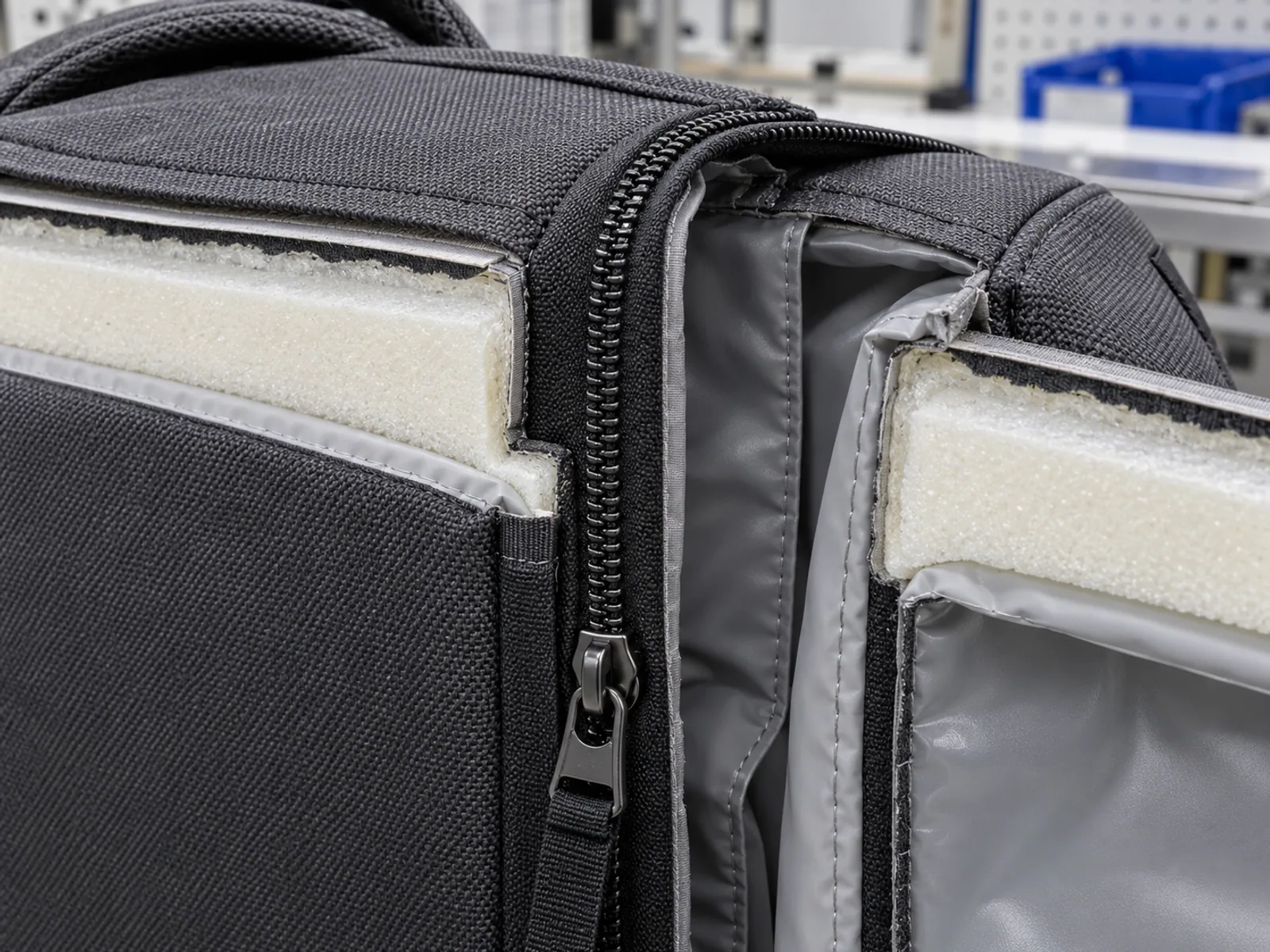
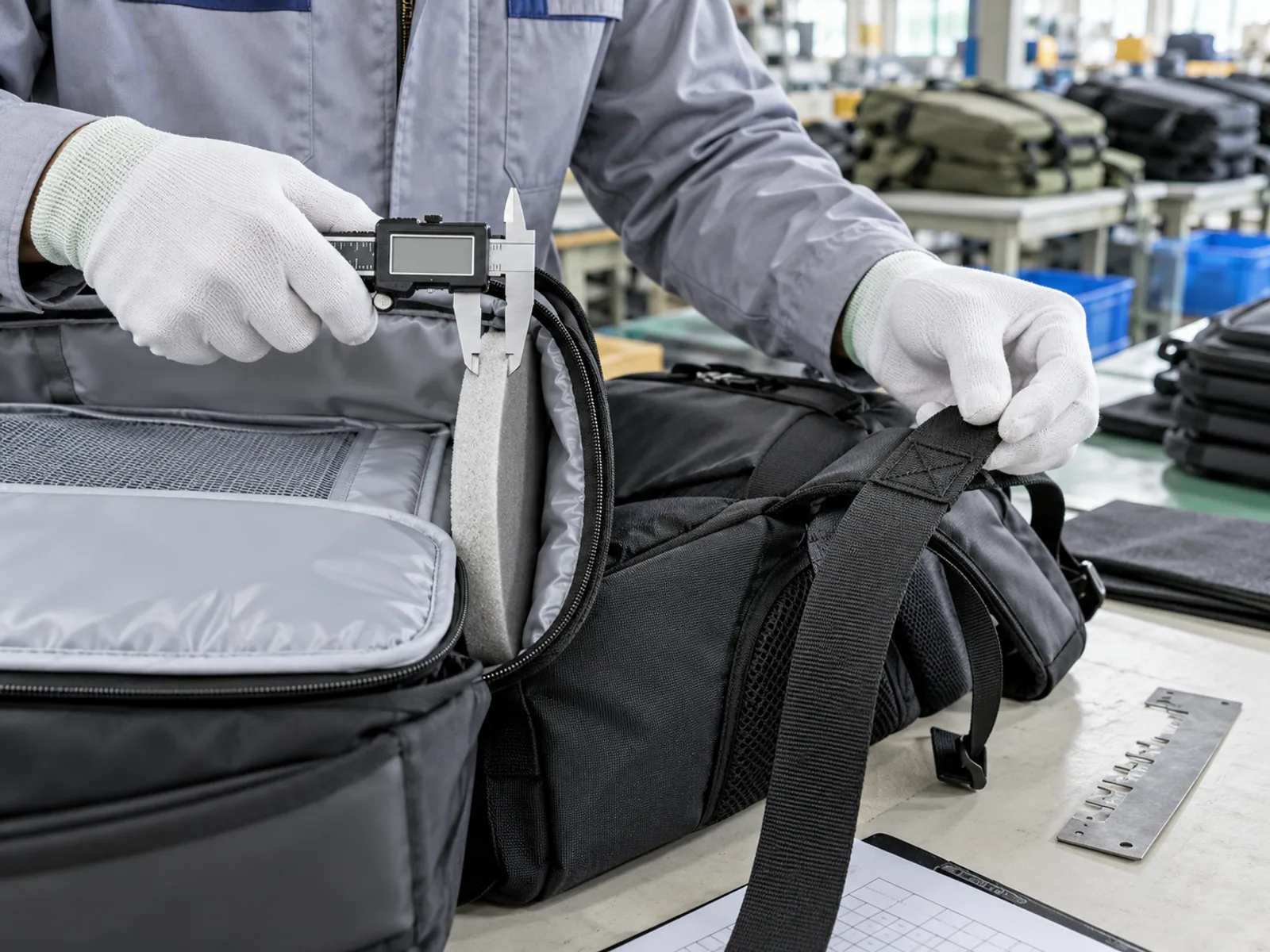
Heat does not travel only through the center of a panel. Corners, seams, zipper tapes, handle anchors and divider attachment points can interrupt the insulation. During sample review, feel and measure the complete perimeter. Look for foam that has shifted during sewing, been trimmed too far from the edge, or been crushed by binding. The weakest path can dominate the result even when the main panel is well insulated.
PEVA, TPU and reflective liners: define the job first
PEVA is frequently selected for flexible cooler-bag liners, but its name does not establish a grade, thickness or compliance status. TPU-based laminates may suit projects needing different flexibility or joining behavior. Reflective films can help form a wipe-clean interior or radiant barrier, but a thin metallic surface should not be presented as a substitute for the foam layer.
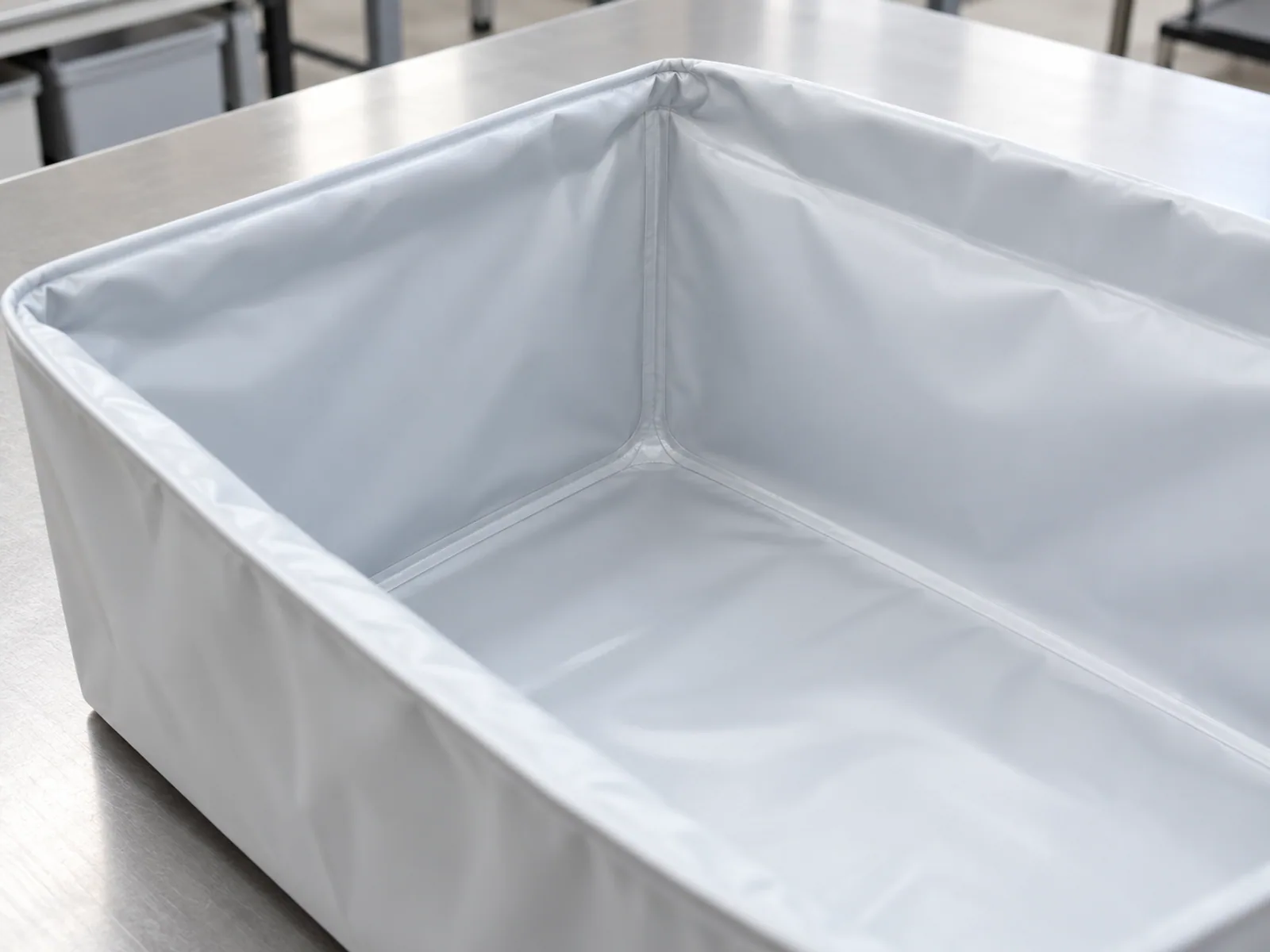
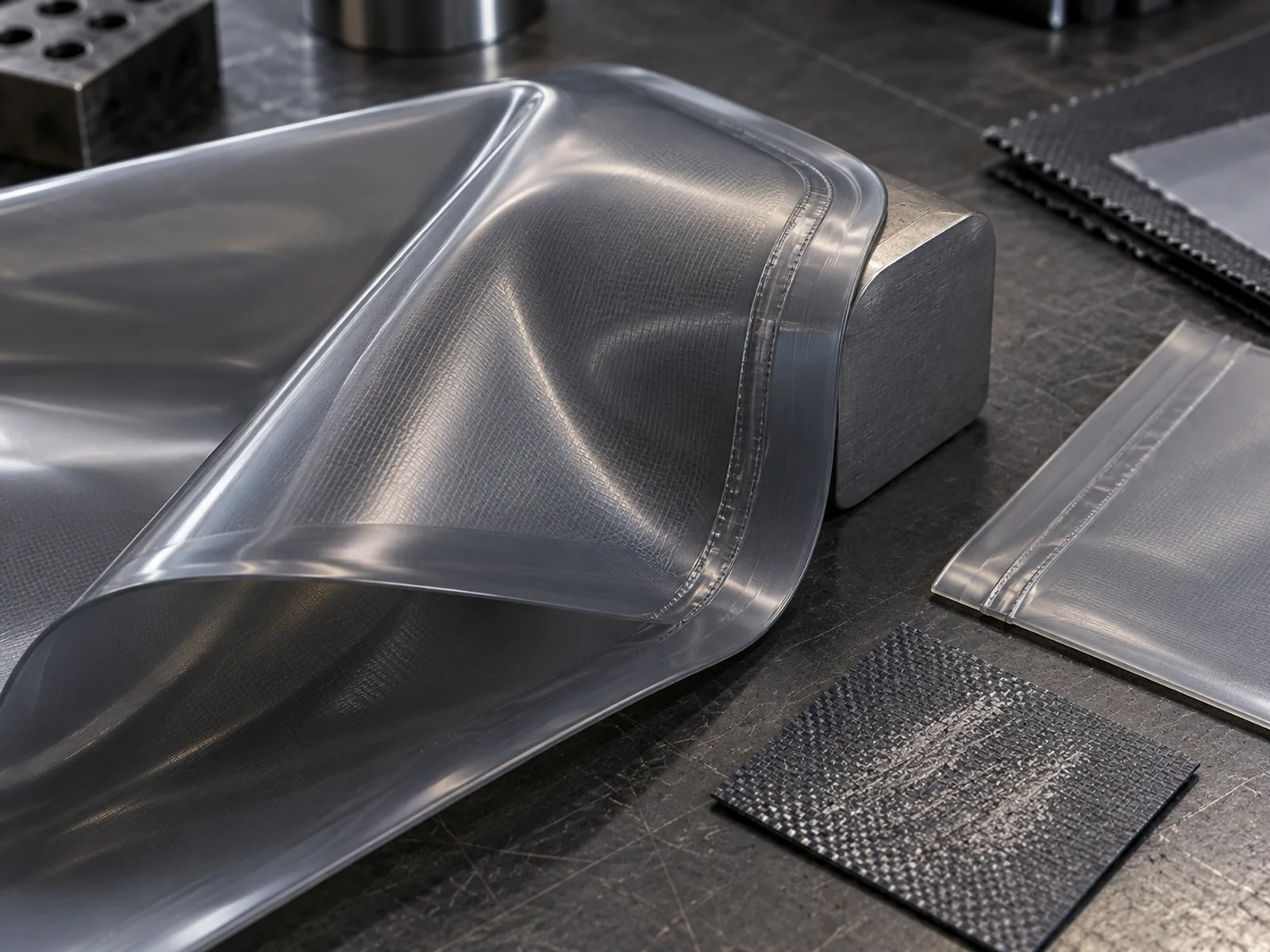
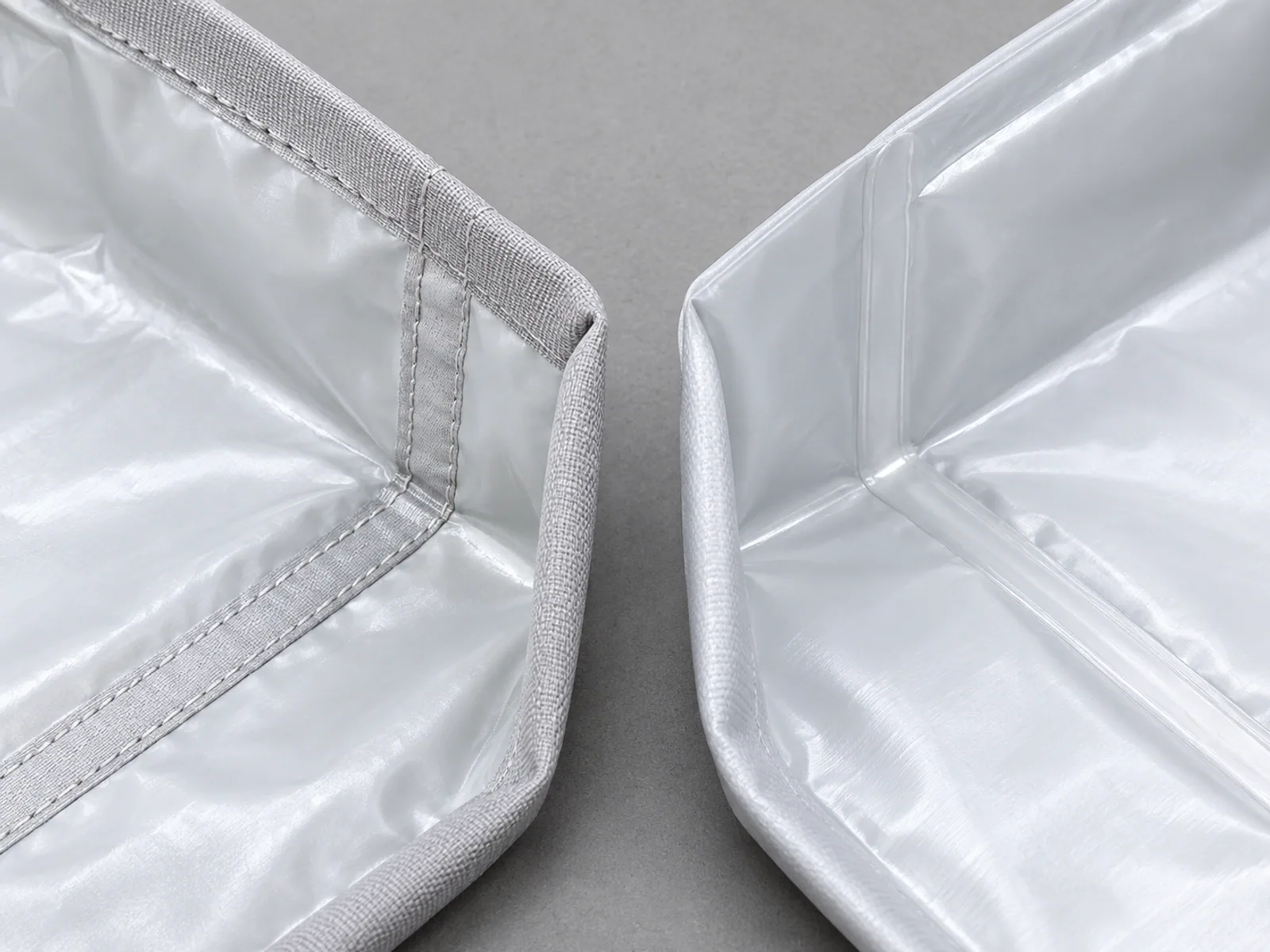
Decide whether the liner is expected to contain condensation, resist a short spill, or form a watertight tub. These are different acceptance levels. A sewn liner with edge binding may be adequate for packaged food and ice packs while still allowing water through needle holes. A welded liner can provide a higher level of liquid containment, but its film, weld width, corner geometry and production method must be validated together.
Leakproof, waterproof and insulated are three separate claims
An insulated backpack may keep a payload cooler without being waterproof. A coated shell may resist light rain while the zipper admits water. A liner may hold a short spill while the outer seams are not sealed. Keep the claims separate in the RFQ and sample approval.
- Insulated: the assembled product slows temperature change under defined conditions.
- Leak-resistant: the inner construction contains a defined amount of liquid for a defined time with an agreed pass criterion.
- Water-resistant exterior: the shell and construction resist external wetting under a stated exposure method.
- Waterproof: a stronger claim that requires a complete construction and a relevant, documented test—not a coated fabric alone.
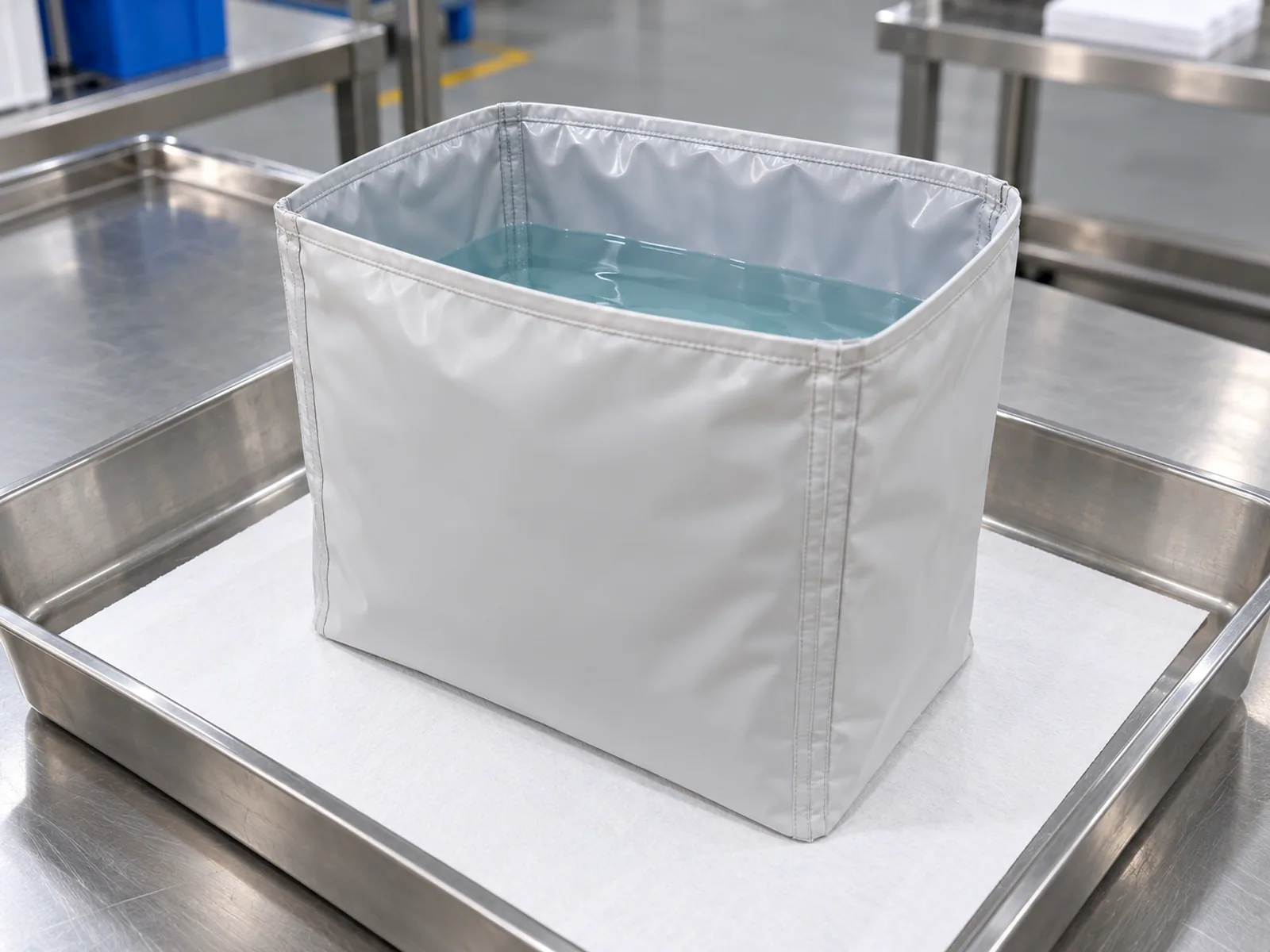
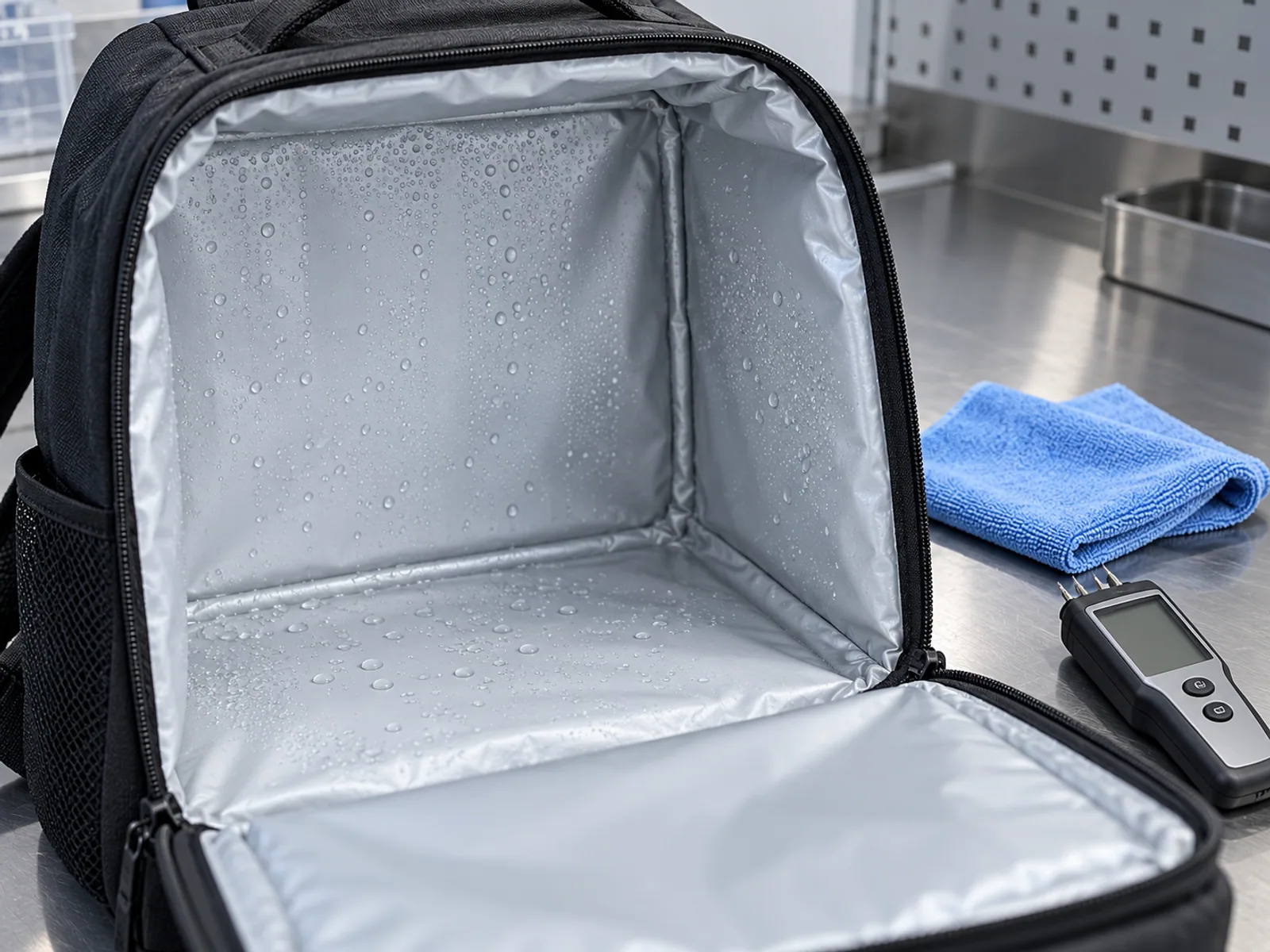
If the project requires immersion, medical transport or a regulated cold chain, a general consumer cooler-backpack specification is not enough. Define the specialist validation and documentation with a qualified test provider before quoting production.
Write a thermal test that another person can repeat
“Keeps cold for eight hours” is not an engineering specification unless the test conditions are disclosed. An empty bag, a bag packed with chilled cans and a bag loaded with warm meals plus ice packs will produce different curves. So will a climate-controlled room and direct summer sun.
| Test field | What the approval record should state |
|---|---|
| Sample identity | Style, sample stage, revision, material lot and date |
| Conditioning | How the bag, payload and cooling media were stored before the test |
| Ambient condition | Temperature range, location and whether there was radiant heat, airflow or sunlight |
| Payload | Item type, count, mass, arrangement and starting temperature |
| Cooling media | Ice-pack type, mass, placement and starting condition |
| Use cycle | Closed test or an agreed opening duration and frequency |
| Sensors | Probe model if relevant, number, position and logging interval |
| Pass rule | The temperature limit, maximum rise or comparison result and required duration |
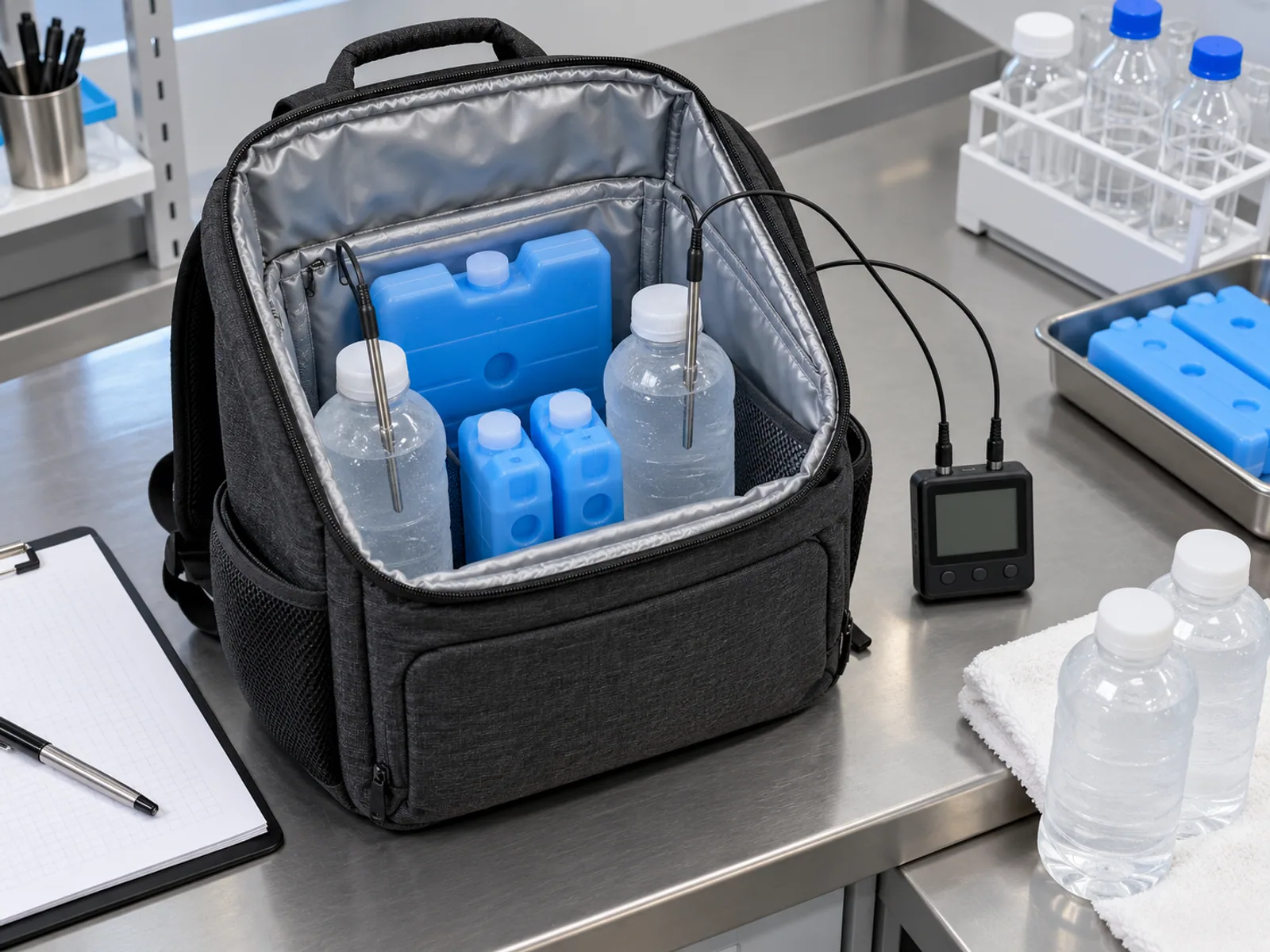
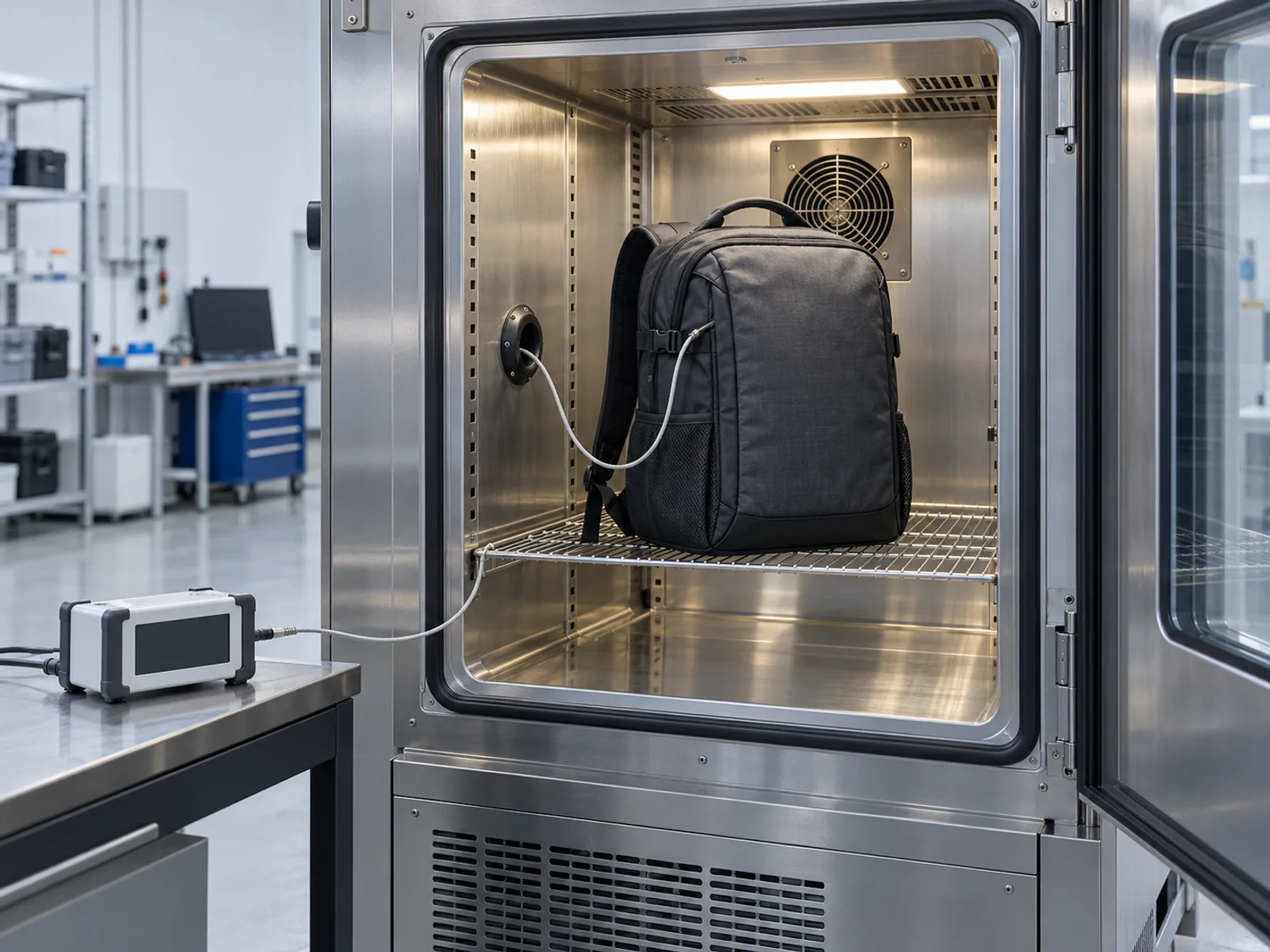
Run competing constructions under the same protocol. Record the full temperature curve rather than only the final reading. If one sample starts colder or contains more ice, the result cannot be used as a fair material comparison.
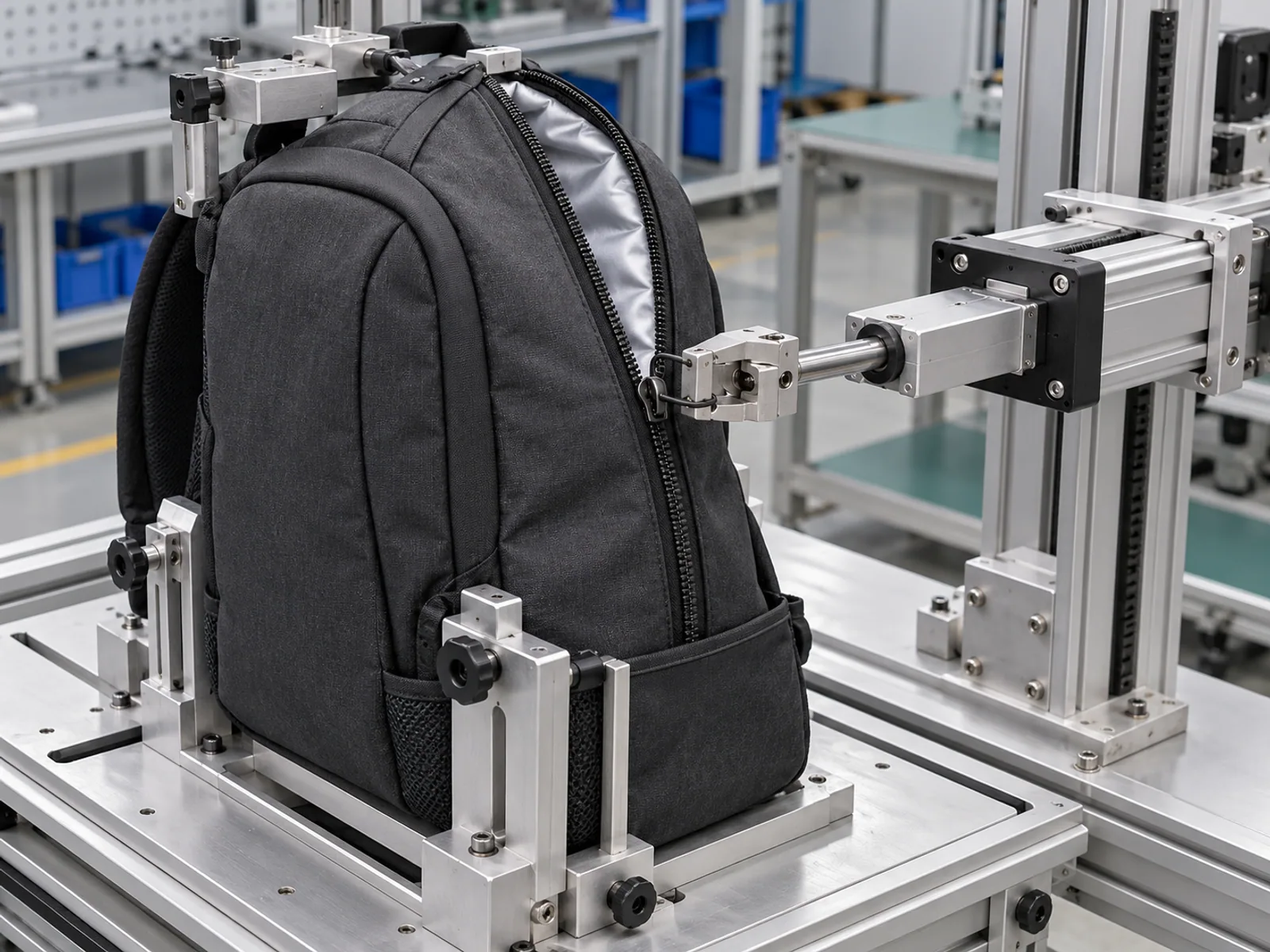
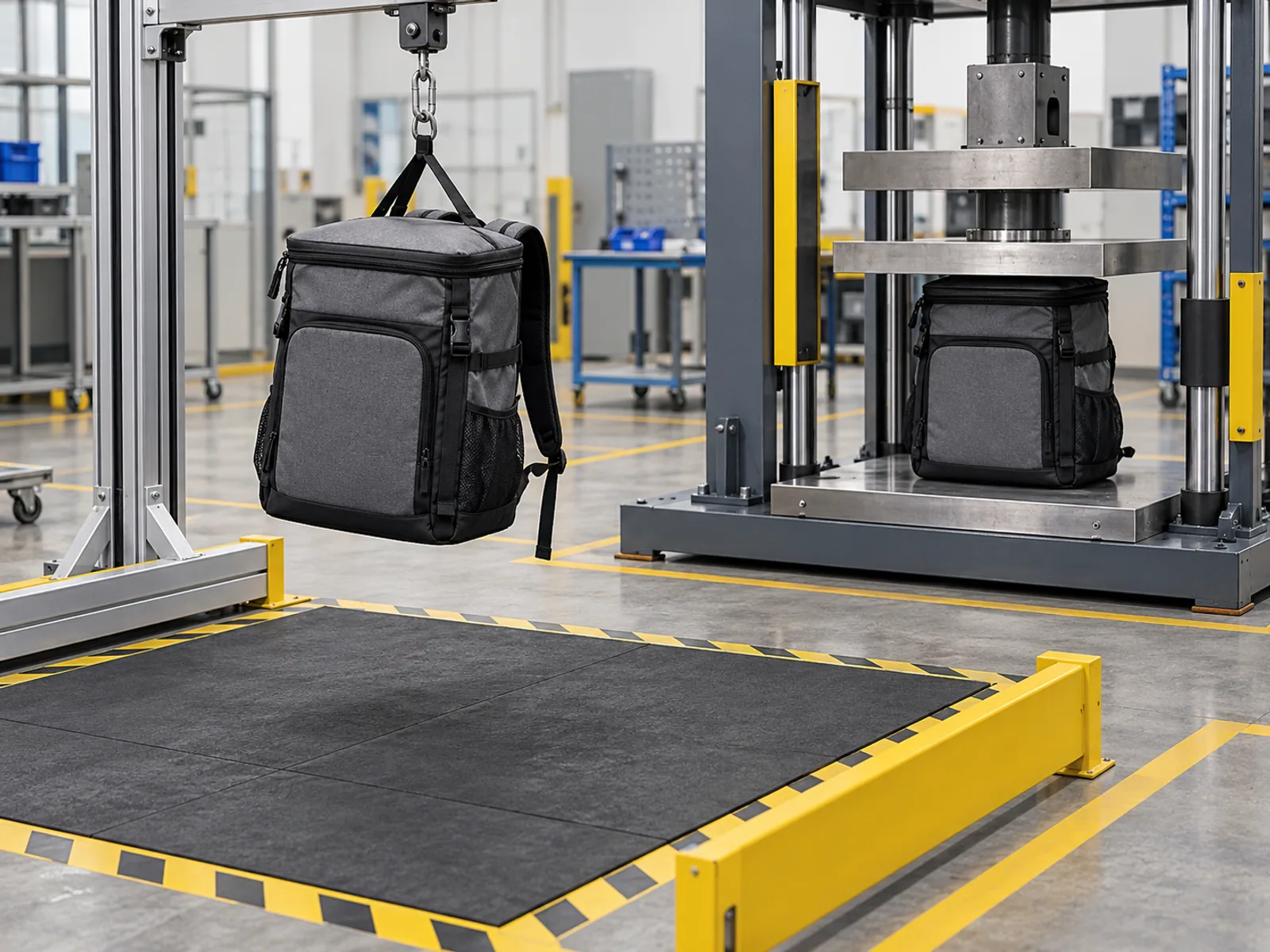
Material choice is only the proposed construction. Before bulk production, use documented factory test methods for custom cooler bags to verify thermal retention, liner leakage, carry-point strength, loaded drop behavior and zipper function under agreed conditions.
Do not let thermal performance hide the backpack function
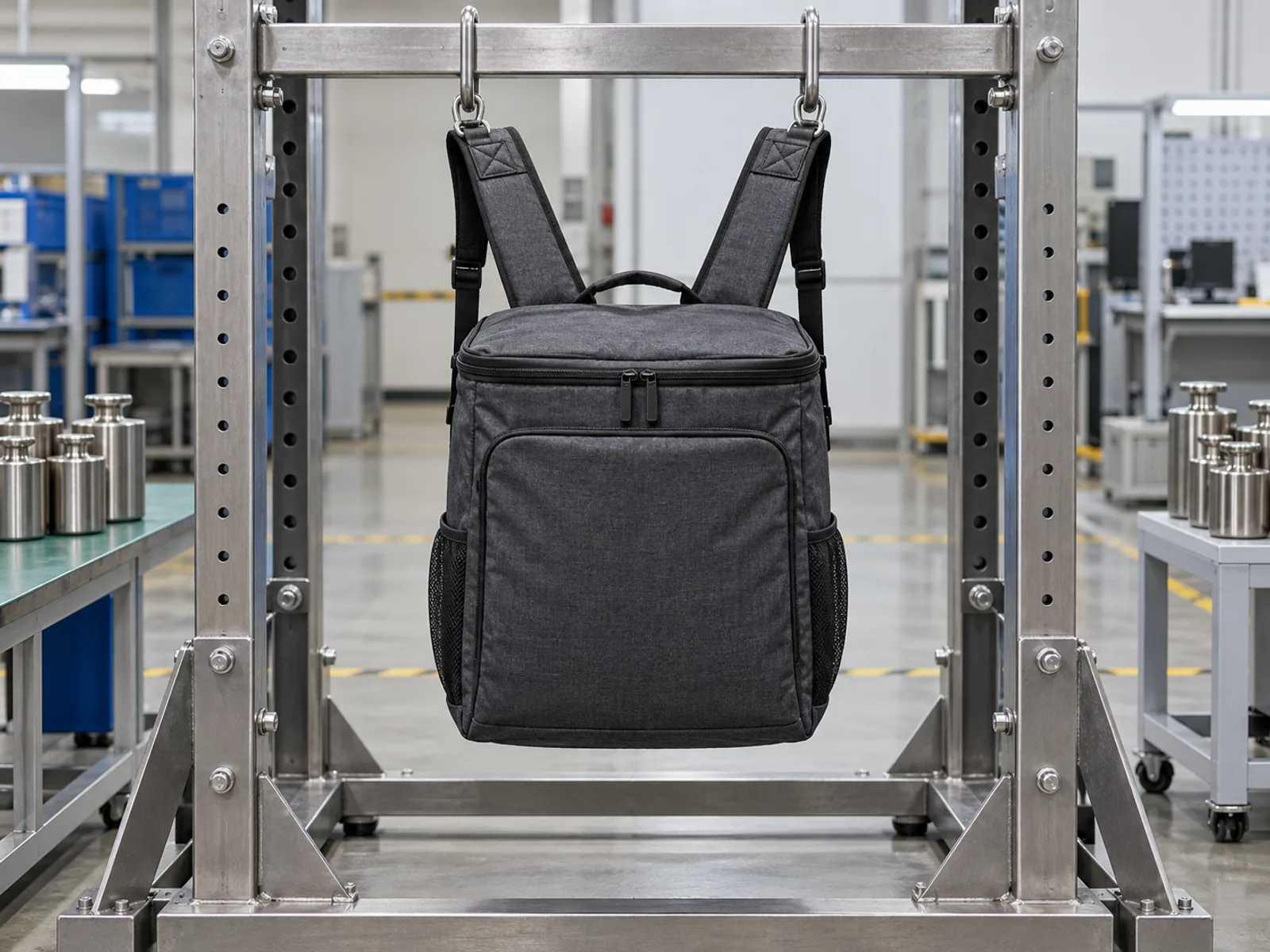
A cooler with excellent bench-test results can still fail as a backpack. Load it with the intended contents and evaluate the center of gravity, shoulder-strap spacing, strap adjustment, back-panel pressure, top-handle balance and opening access. A tall delivery pack needs different stabilization from a small leisure cooler. When the payload is dense, reinforce the shoulder anchors into the structural panels rather than attaching them only to the surface fabric.
Inspect the loaded base as well. A removable board can improve stability but changes cleanability and packing. A soft base may reduce carton volume but allow containers to tilt. The correct choice follows the use case, not a universal “premium” construction.
A buyer's sample-acceptance matrix
| Approval area | Evidence to keep | Reject or resample when |
|---|---|---|
| Dimensions and capacity | Measurement sheet plus loaded photos | The stated payload does not fit through the opening or changes the intended shape. |
| Material stack | Signed swatches, cross-section photo and BOM revision | Foam, liner, coating or panel build differs from the quoted specification. |
| Thermal test | Protocol, raw log and sample identity | The test conditions changed or the agreed temperature criterion was missed. |
| Liner and leakage | Test volume, duration and seam photos | Liquid reaches a prohibited seam, panel or exterior area. |
| Carry system | Defined payload, test duration and anchor inspection | Straps slip, stitches open, panels deform or the load cannot be carried safely. |
| Cleaning and odor | Cleaning method and post-cleaning inspection | The liner traps residue, delaminates or retains an unacceptable odor. |
| Packaging | Folded sample, unit pack and carton pack | Folding permanently crushes the insulation or damages the liner. |
What to put in an insulated backpack RFQ
- State the user, use environment and intended sales market.
- List the real payload, starting temperature and required orientation.
- Give finished dimensions, usable internal dimensions and opening clearance.
- Define the outer shell direction, color source and surface requirements.
- Ask the factory to identify the complete foam and liner construction for every panel.
- Separate condensation, spill containment, exterior rain resistance and waterproofing requirements.
- Provide the thermal test protocol and acceptance rule—or ask the supplier to propose one for written approval.
- State the loaded carry requirement, compartments, dividers, shoulder straps and reinforcement points.
- Provide logo artwork, placement, quantity by color, packaging, destination and required ship date.
- Require all assumptions, substitutions and exclusions to appear in the quotation.
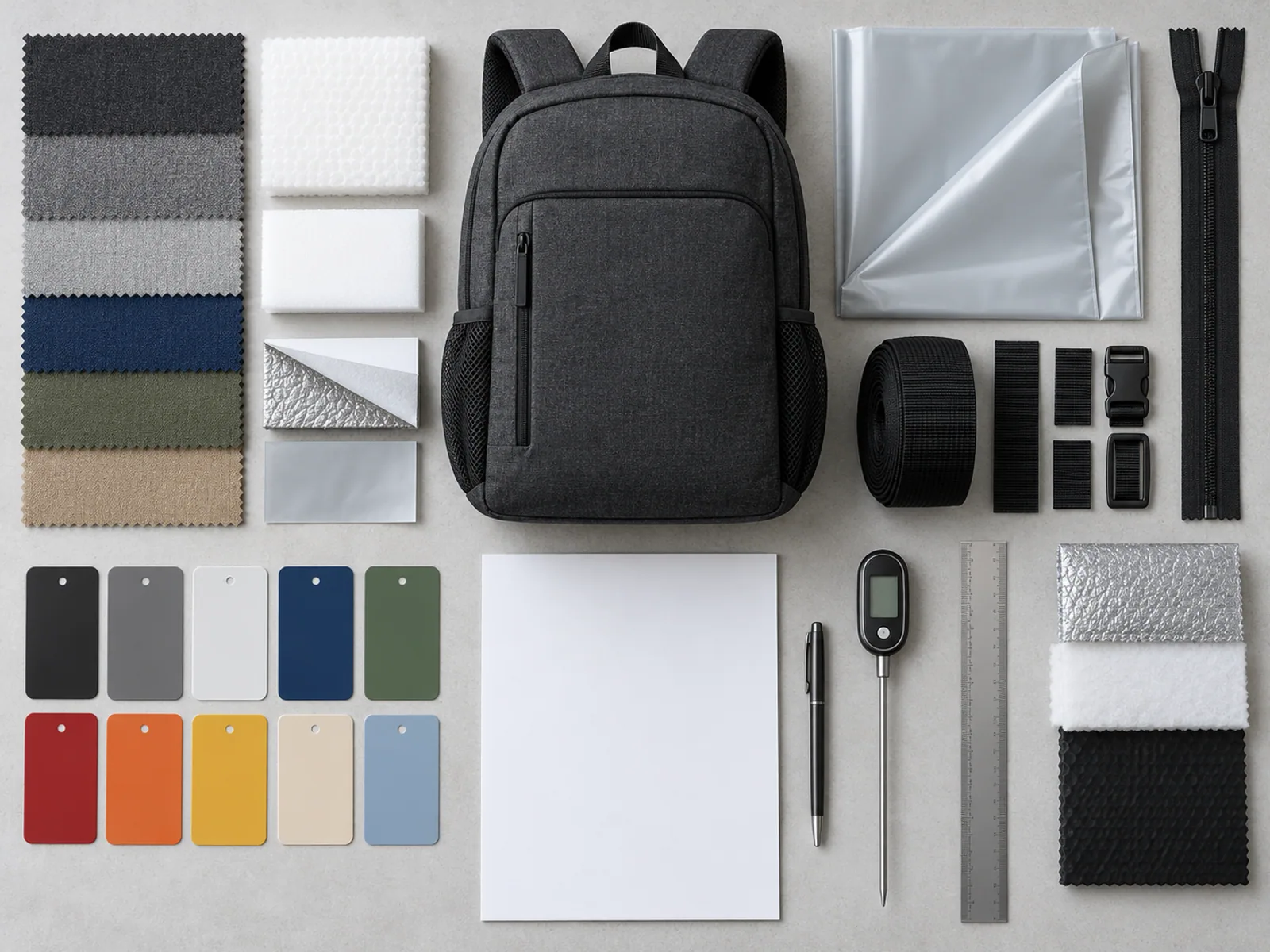
For a more detailed quotation handoff, use the 12-point cooler bag RFQ checklist. A real production example is documented in the custom insulated cooler bag case study. If a patterned consumer style is closer to your brief, review this insulated backpack construction reference; its listed dimensions and materials apply to that model only and should not be copied into a different project without review.
Have an insulated backpack brief?
Send the payload, dimensions, material direction, thermal target, test conditions, quantity and destination. Merris will identify the open specification fields before preparing a sample quotation.
Request a Specification ReviewFrequently asked questions
What materials are used inside an insulated backpack?
Direct answer: An insulated backpack normally combines an outer textile, a flexible foam layer, an inner barrier or liner, joint construction, reinforcement and a closure. The names alone do not define performance. Record thickness or approved references, panel placement, seam method and test conditions in the BOM and sample approval.
Is thicker foam always better for a cooler backpack?
Direct answer: No. Thicker foam can slow heat transfer and add structure, but it reduces usable capacity, increases packed volume and can make the bag stiff. Compare alternatives under the same thermal protocol and loaded carry test before selecting the production build.
How should thermal performance be tested?
Direct answer: Define ambient temperature, starting temperature, payload, cooling media, sensor positions, opening schedule and pass criterion before the test. Record the full curve and sample revision. Results from different conditions should not be compared as though they measure the same performance.
Does a PEVA liner make an insulated backpack leakproof?
Direct answer: No. PEVA identifies a material family, not a finished containment system. Needle holes, corners, binding, zipper construction and drainage details can leak. Define the required containment level and test the assembled sample with a stated liquid volume, orientation and duration.
What should a buyer send for an insulated backpack quotation?
Direct answer: Send the use case, payload, dimensions, capacity, material direction, thermal target and test protocol, leakage requirement, carrying load, artwork, quantity per color, packaging, destination market and requested ship date. Ask the factory to separate assumptions and optional upgrades.