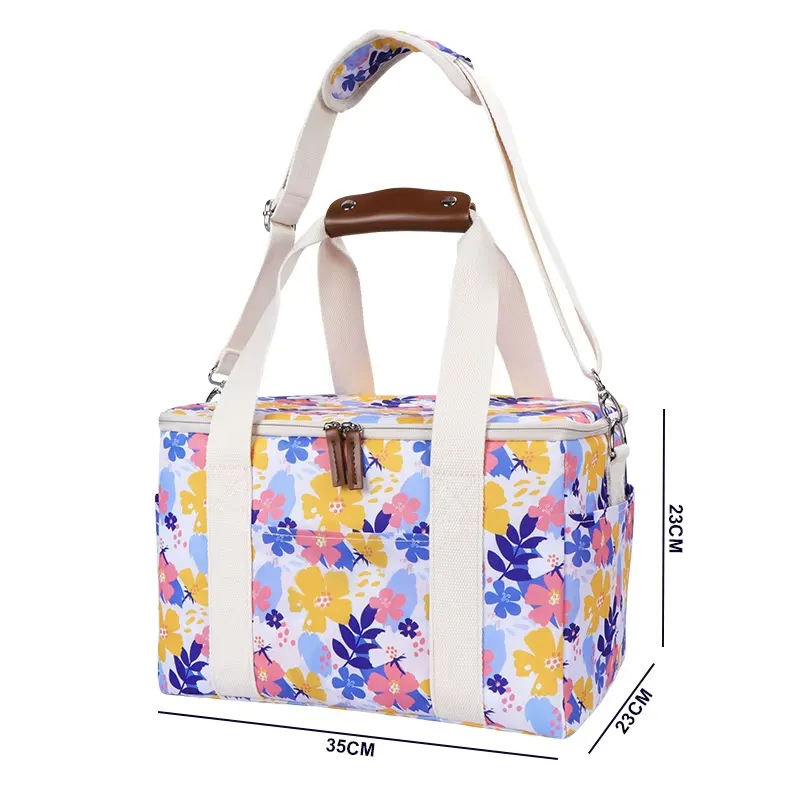
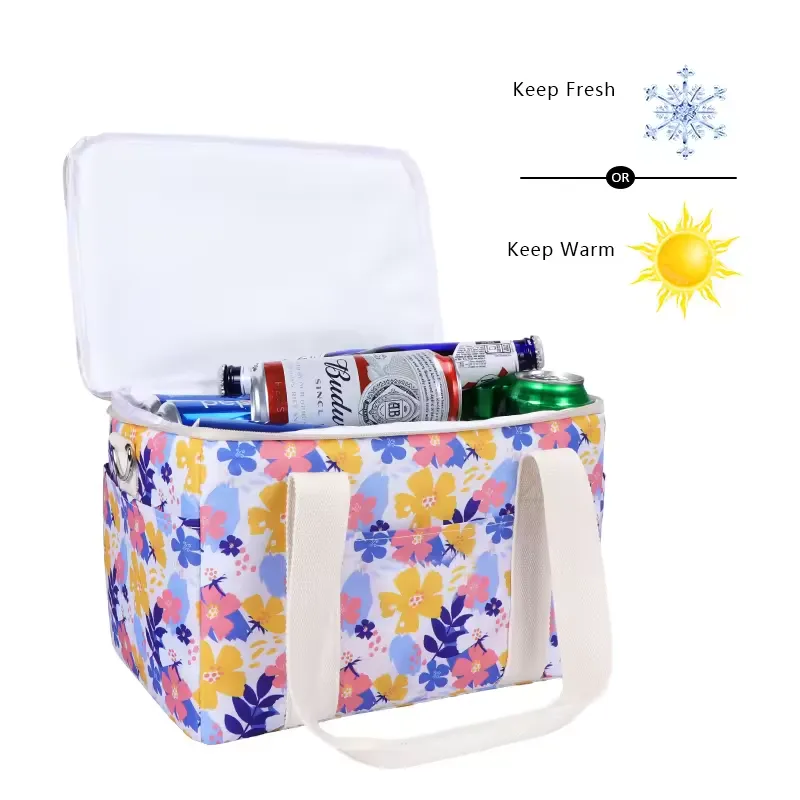
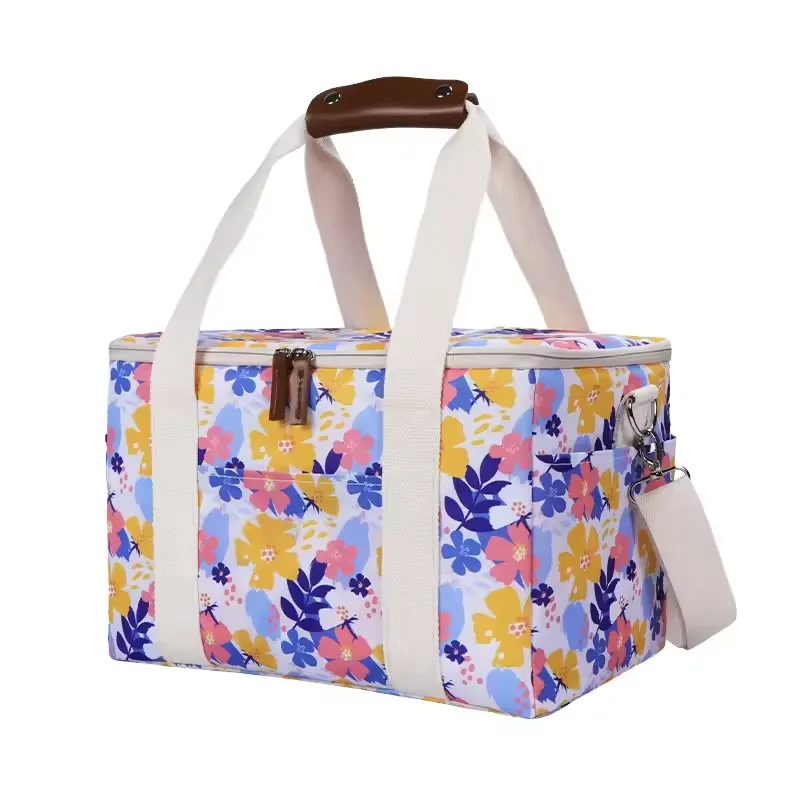
Custom Insulated Canvas Lunch Bags
- Premium meal subscription services requiring branded, reusable protective transit insulation.
- Corporate gifting configurations focused on eco-conscious workplace health and wellness applications.
- High-tier lifestyle and cosmetic accessory brand product catalog extensions.
- Environmental alternative packaging deployments focused on reducing single-use EPS elements.
- Multi-Layer Insulation Matrix: The composite insulation shell registers an optimal thermal resistance index, effectively containing inner temperatures against standard environments.
- Certified Food Contact Safety: Our food-grade interior aluminum membranes undergo testing to meet global export criteria for chemical safety.
- Fused Fluid Barriers: Interior liner connections are joined via automated electronic heat welding, providing complete leak resistance across the inner basin.
- Industrial Branding Implementation: High-precision embroidery, multi-layer vulcanized silk-screen printing, and woven labels are executed directly at initial assembly stages.
🔬 Merris Factory Thermal Retention Test Protocol
| Test Condition | Initial Temp | Temp at 4 Hours | Temp at 8 Hours |
|---|---|---|---|
| 25°C Ambient, 8mm EPE Foam + PEVA | 2.0°C (Ice Pack) | 5.8°C | 9.4°C (< 10°C Safety Threshold) |
* Tested according to Merris Internal QA Protocol #TP-2026-COOLER. Results validated per batch.
Insulated Lunch Bag Production Facility Tour
Explore our ISO-certified manufacturing lines dedicated to food-safe canvas lunch bag assembly and thermal performance validation.
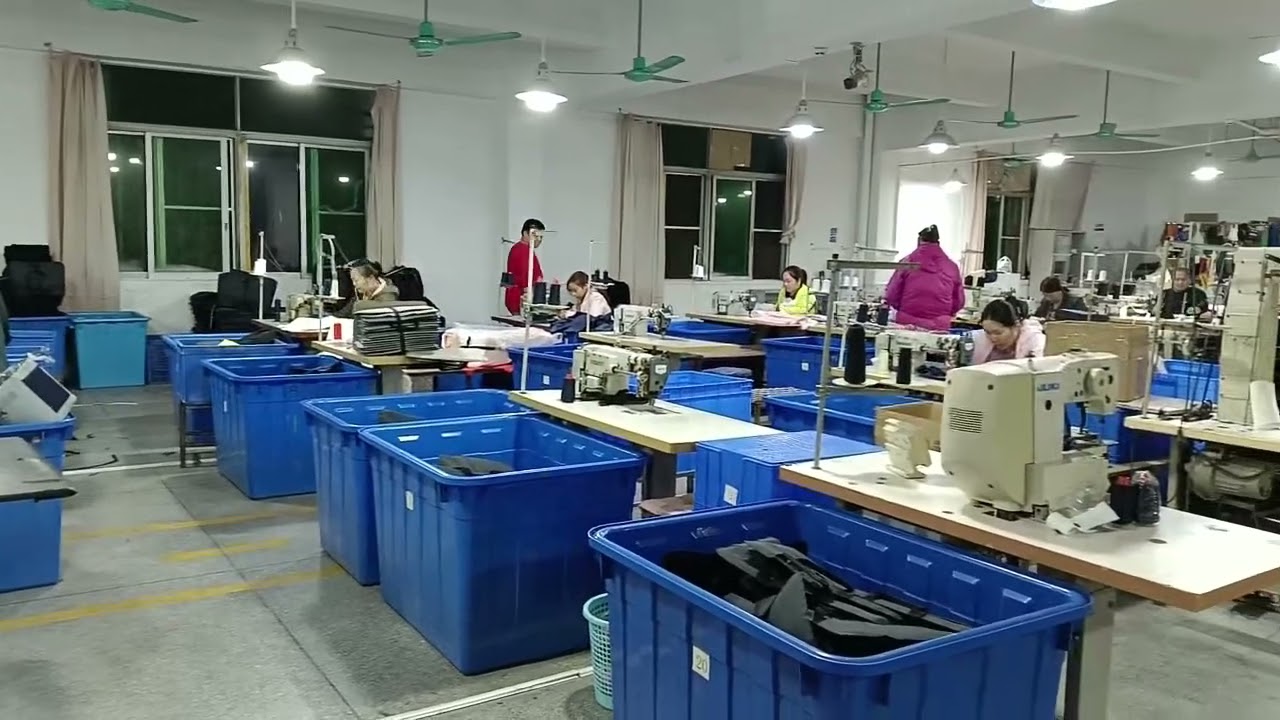
Factory Capabilities: Automated Fabric Cutting | Heat-Sealed Foil Lining | Thermal Chamber Testing | Food-Safe QA Inspection
Related Custom Products
Product FAQ
Technical details for procurement teams
Direct Answer: Our thermal cores hold core food temperature for 6-8 hours, using 3-5mm closed-cell EPE foam sandwiched between heavy 12oz cotton canvas and a reflective aluminum layer to cut thermal bridging.
- Retention: 6-8 hours
- Core: 3-5mm closed-cell EPE foam
- Exterior: 12-16oz organic cotton canvas
- Dimensions: 25 x 15 x 20 cm (custom)
Direct Answer: Yes. Every run uses FDA-compliant, BPA-free interior aluminum linings meeting EU LFGB and US FDA food-contact specs, with full material traceability documentation shipped with each order.
- Lining: FDA-compliant, BPA-free aluminum
- Standards: EU LFGB + US FDA food contact
- Documentation: material traceability per shipment
Direct Answer: Instead of stitched seams that create needle punctures, we apply a 0.2mm high-frequency thermal weld to the aluminum lining, producing a seamless, fluid-impermeable barrier.
- Seam Method: 0.2mm high-frequency thermal weld
- Result: seamless, fluid-impermeable barrier
- Alternative Avoided: stitched seams (needle punctures)
Direct Answer: At the 500-piece MOQ we support precision embroidery, high-density silk-screen printing, heavy-duty woven labels and Pantone color matching across all canvas panels.
- MOQ: strictly 500 pcs per color run
- Branding: embroidery, silk-screen, woven label
- Color: custom Pantone dyeing
Direct Answer: Technical prototyping and counter-samples complete within 7 days, and mass production takes exactly 30 days after official sample approval and lab sign-off.
- Sample Lead Time: 7 days
- Production Output: 30 days after sign-off
- Logistics Hub: FOB Dongguan / Shenzhen
Direct Answer: Yes. Our engineering office runs a Design for Manufacturability analysis within 48 hours of asset submission, calculating high-stress stitch positions and zipper insulation efficiency.
- DFM Review: within 48 hours
- Reviewed Items: stress stitch positions, zipper insulation
- Sample Lead Time: 7 days
Request Your Thermal Bag Quote
Receive material samples, thermal test data, and pricing within 8 hours.